

 Freedom Index
Listen to the article
Wanted Colombian rebel leader Aníbal Hernández Garavito was irate when he called into the local Es el Colmo (“It’s the last straw”) radio program at 5:48 a.m. on March 14, 2025. His voice raised, Hernández slammed the station’s critical coverage of his guerrilla group, but show host Gustavo Chicangana Álvarez refused to be bullied.
Hernández, who had a $13,000 bounty on his head for killing Colombian army soldiers, claimed that his gunmen were a force for progress. However, Chicangana pushed back. Speaking on behalf of the rebel group’s victims, the journalist grilled Hernández over the group’s alleged crimes, such as drug smuggling, kidnappings and child recruitment, which have plunged the southern Colombian department of Guaviare into violence.
“The people want to know why you are extorting farmers and business owners,” Chicangana declared during the 20-minute conversation. “They feel strangled by these demands for payments.”
Over the next few days Chicangana, a veteran news director of Caracol Radio Guaviare, based in the department capital of San José del Guaviare, put the heated exchange behind him and moved on to other stories. But according to sources in the Colombian attorney general’s office, Chicangana’s critical questioning had angered the guerrillas to the point that they marked the journalist for death.
Escaping death: ‘This guy suddenly appeared’
Hernández’s rebel group, called the Bloque Jorge Suárez Briceño, had “held a meeting and decided to assassinate the journalist,” a government investigator not authorized to speak on the record told CPJ on condition of anonymity.
On the evening of July 5, Chicangana and his wife, Ana Milena Torres, were leaving their house in San José del Guaviare when they were confronted by a man with a revolver. The man, later identified by authorities as Wilmer Perea, fired a series of shots at them from point-blank range.
“I fell to the floor and put my hands over my face,” Chicangana remembered, pain welling up in his eyes. “I was trying to get away from the bullets, to get away from death.”
Torres was grazed in the chin while Chicangana was hit by four bullets. His injuries were so severe that he was evacuated to a hospital in the Colombian capital of Bogotá —a nine-hour overland trip with police escorts— where he underwent emergency surgery that saved his life.
The shooting brought nationwide attention to the growing dangers faced by reporters working in the most remote areas of Colombia. On November 19, Chicangana was named “Journalist of the Year” at Colombia’s Simón Bolívar National Journalism Prize ceremony.
In giving Chicangana the award, the prize jury said his “struggle to continue reporting the news amid so many threats symbolizes the courage, resistance and tenacity of regional journalists throughout Colombia.”
Yet in some regions, Chicangana warned that violence, instability and a lack of resources and support are pushing some journalists out of the profession altogether.
Guerrilla fighters following FARC’s footsteps
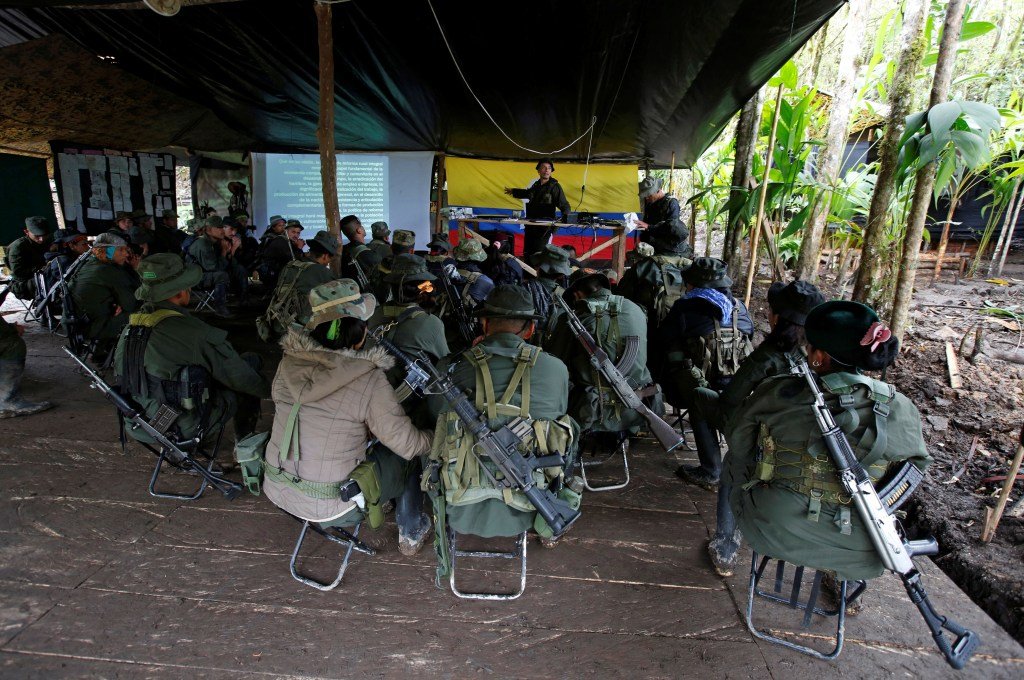
Security for journalists —and the Colombian population in general— improved in the wake of a 2016 peace treaty that disarmed the Revolutionary Armed Forces of Colombia, the country’s largest guerrilla group, known as the FARC, that had been fighting since the 1960s.
But over the past five years, thousands of former guerrillas grew frustrated with the peace accord, re-armed and went on a recruiting spree, forming so-called FARC dissident groups like the one that ordered the attack on Chicangana. Rather than trying to overthrow the government, these groups mainly fight among themselves over the profits from drug trafficking, illegal goldmining, extortion, and other criminal ventures.
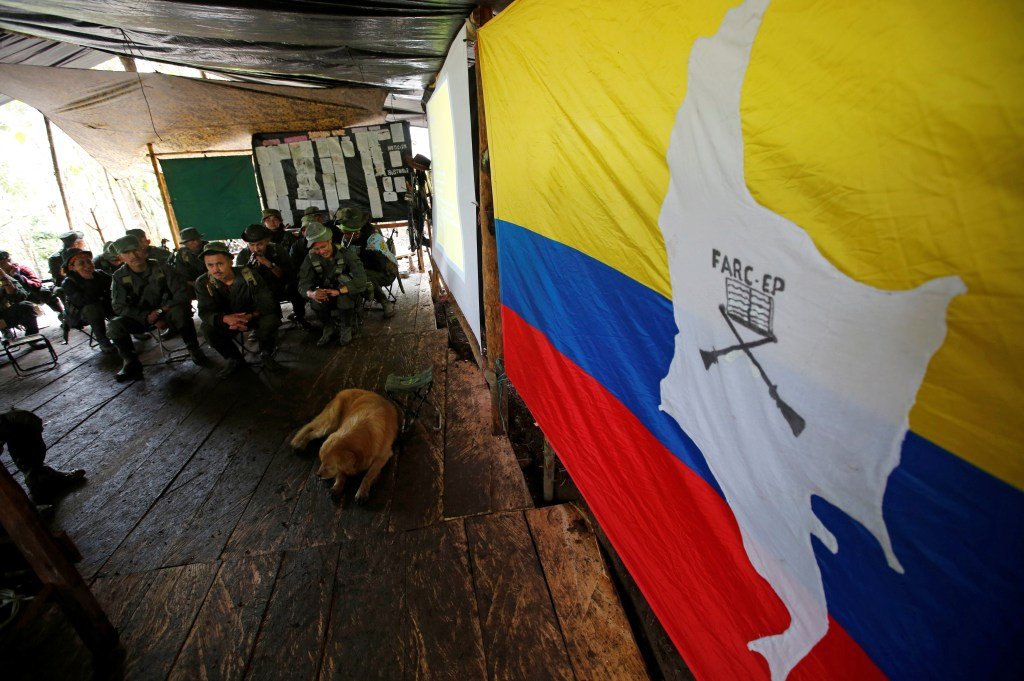
Colombian military intelligence estimated that these illegal militias now have more than 25,000 fighters, according to a report in Bogotá’s El Tiempo newspaper. The militias mostly operate in rural areas and small towns where the presence of police and army troops can be sporadic, leaving journalists especially vulnerable. In addition, media workers face threats from corrupt politicians and unscrupulous business owners who often object to watchdog reporting.
According to CPJ’s database, seven of the eight journalists killed in Colombia over the past five years covered local news in small cities, towns or rural areas, though it remained unclear who ordered such killings.
An investigation published last month by the Bogotá-based Foundation for Press Freedom (FLIP) found that violence against regional journalists has intensified while constant threats from armed groups, politicians and business owners have led to widespread self-censorship.
In its examination of 34 Colombian townships, FLIP found that 24% of media outlets had received threats and that 41% avoided covering sensitive topics for fear of reprisals. As a result, the report says, in many smalltown newsrooms “silence speaks louder than words.”
A voice born for reporting the truth
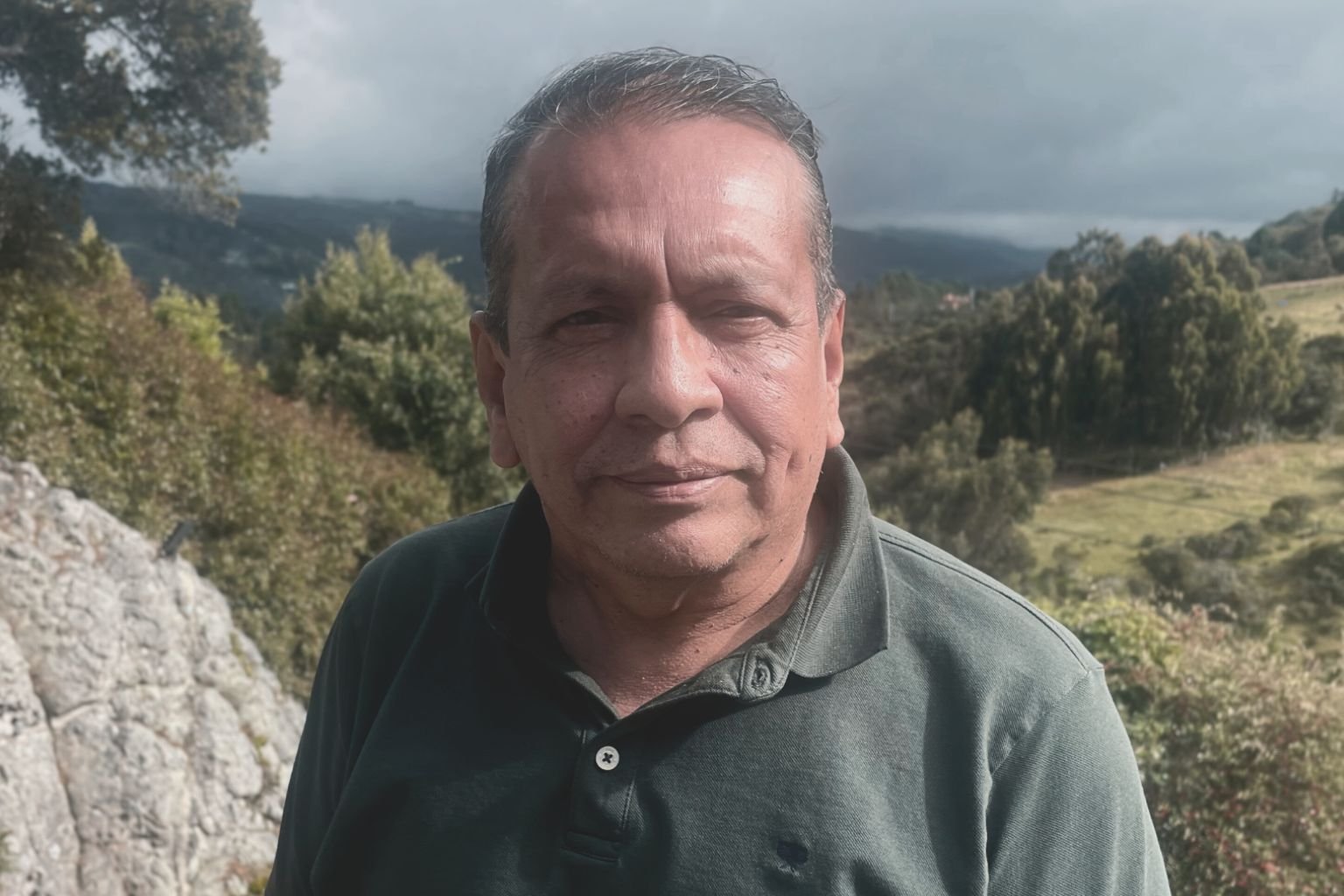
Chicangana, 62, grew up in central Huila department where, as a boy he imitated the sports announcers describing soccer games on the radio. He worked at several regional stations in Colombia before moving to Guaviare where he met and married Torres. She recalls being struck by Chicangana’s mellifluous baritone that was a natural for radio.
“I fell in love with his voice,” she told CPJ.
In 2003, Chicangana joined Caracol Radio Guaviare, one of a small handful of media outlets operating in the Guaviare department.
“Caracol has been, by far, the most aggressive station in denouncing abuses by the armed groups,” Juan Pablo Ramírez, a government human rights delegate in Guaviare, told CPJ. “But that has left its journalists exposed to threats, and not just Gustavo but his whole team.”
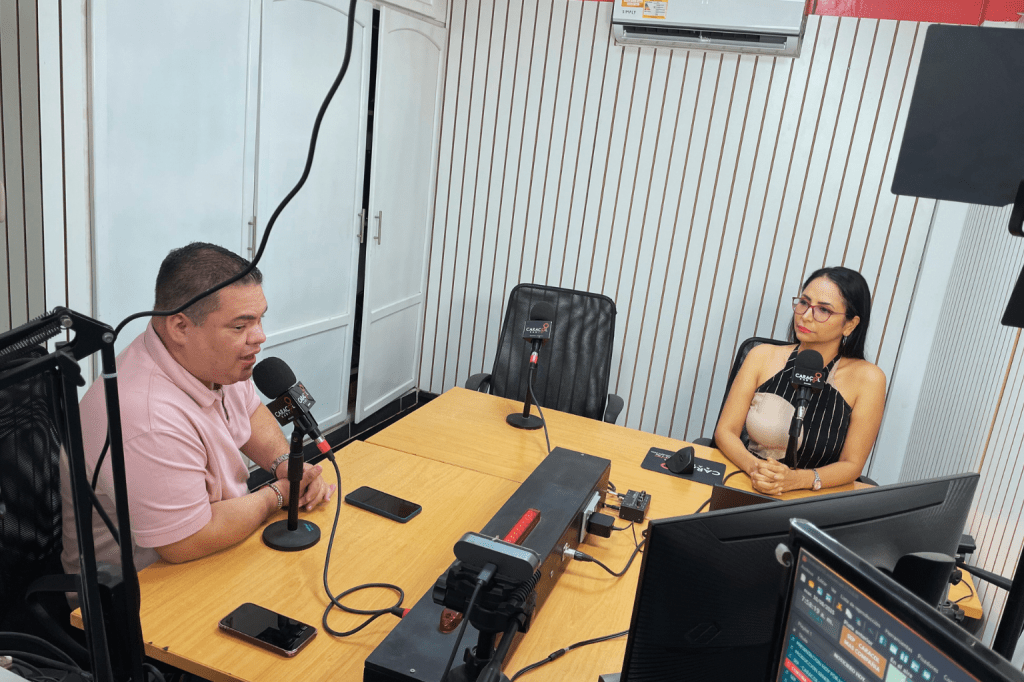
Station director and co-founder Erika Londoño and reporter Camilo Ramírez have received so many threats that, along with Chicangana, they have been assigned bodyguards and vehicles by the Colombian government’s National Protection Unit.
“As our audience has grown so have the threats,” Londoño told CPJ as bodyguards stood watch outside the radio station building in San José del Guaviare. “The security situation is worse than ever.”
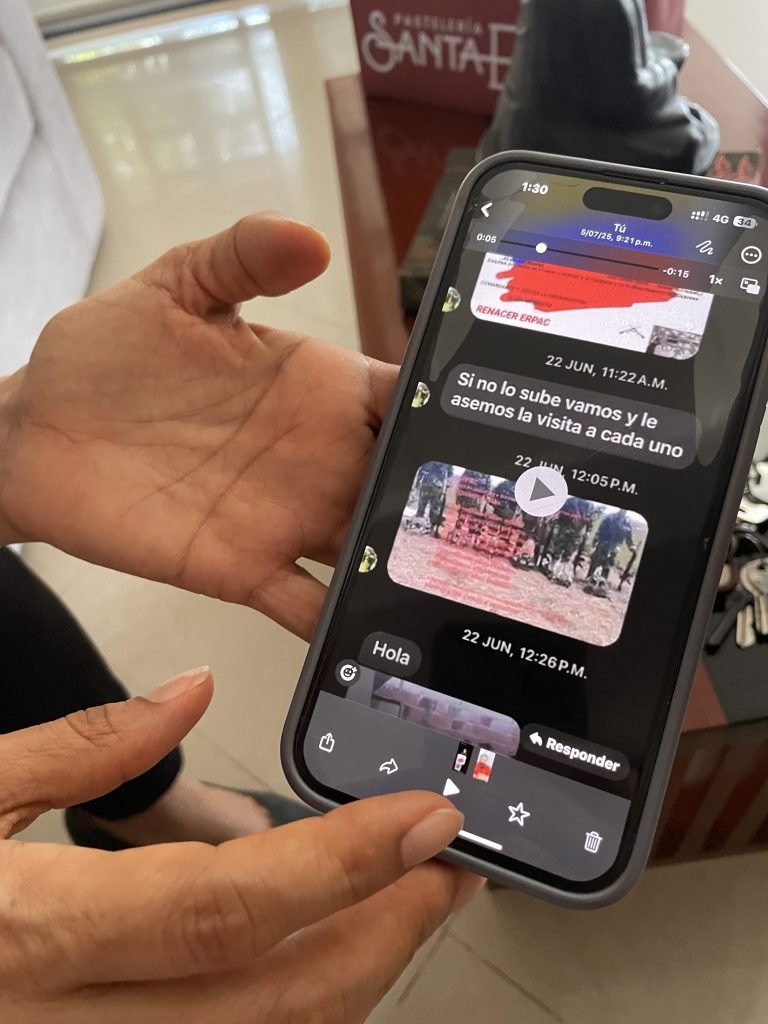
Londoño explained that the now-defunct FARC guerrillas, which used to control much of the countryside, were politically savvy, courted journalists to secure positive coverage, and even had a designated press spokesperson. But the current crop of illegal armed groups takes a more aggressive approach in their bid to control what journalists report and often threaten those who investigate their crimes.
“I’ve been threatened six times in the past five years,” Camilo Ramírez told CPJ in an interview in the backseat of his government-issued SUV.
Although CPJ research shows that the vast majority of journalist murders in Colombia have gone unsolved and unpunished, investigators say they are making progress in the Chicangana case.
The investigator from the Attorney General’s office told CPJ that the attack was ordered by a rebel faction led by Alexander Díaz, a former FARC guerrilla who remains in hiding. The group paid 2 million Colombian pesos (about US$528) to Manuel Canturi and Alberto Araujo, rebel collaborators in San Jose del Guaviare, who in turn hired Perea, the gunman, to kill Chicangana. All three men have been arrested.
“There have been giant steps forward in the investigation,” Chicangana said.
In August, Hernández, the rebel who sparred with Chicangana on the air, was shot dead by a Colombian army sniper.
‘Radio is in my blood’
Chicangana still has a bullet lodged in his neck and another near his spine because doctors said it would be too risky to remove them. Physical therapists are helping Chicangana regain the use of his right arm, which was also pierced by a bullet, and he’s seeing a psychologist to deal with recurring nightmares about the attack.
When Chicangana received his “Journalist of the Year” award, his arm was in a sling, making it difficult for him to shake hands with jury members and pick up his medallion and diploma.
Torres, who is taking painkillers for her chin wound, was wearing a motorcycle helmet at the time of the attack which she thinks may have deflected the bullets and saved her life.
“It’s a miracle that we are both still alive,” Torres told CPJ during a break from her work as a physical therapist in San José del Guaviare.
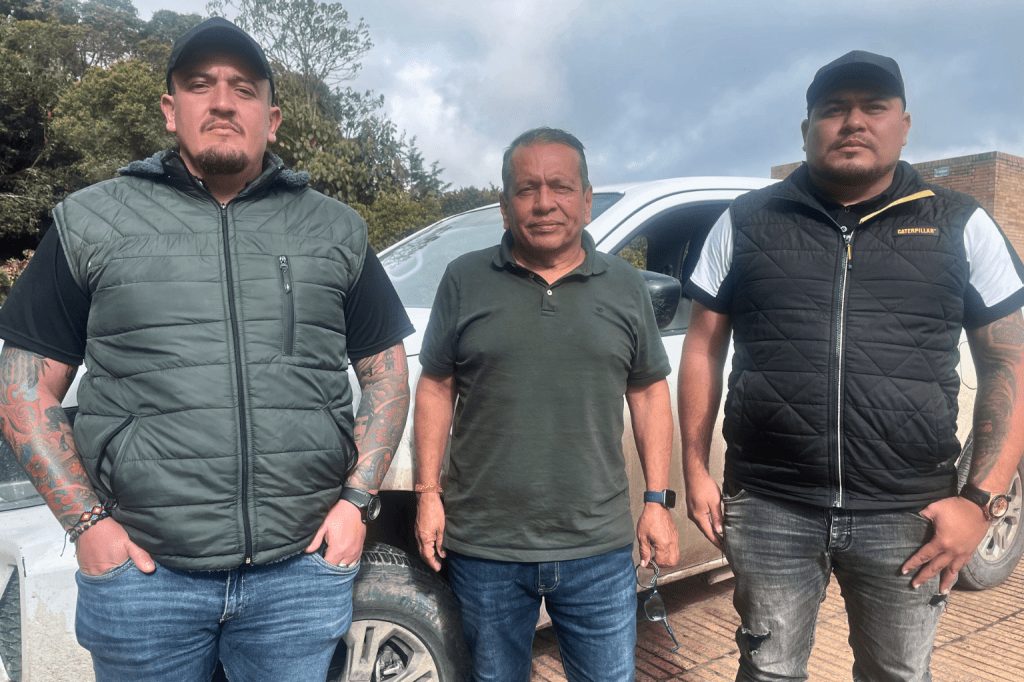
Now, the couple must decide what to do next. Declaring that “radio is in my blood,” Chicangana wants to get back to work. But he has yet to return to San José del Guaviare because it may still be too dangerous.
To avoid provoking more threats and attacks, Caracol Radio Guaviare has reduced its reporting on child recruitment, extortion, and other rebel crimes. Due to the risks, reporter Camilo Ramírez says he no longer ventures into the countryside to look for stories. And he’s extremely careful about his on-air language.
“You change words,” Ramírez says. “Instead of calling them ‘criminals’ and ‘delinquents,’ you refer to them on the air as ‘irregular groups.’”
As for the contentious 20-minute interview with Hernández that nearly led to his death, Chicangana has mixed feelings. Although it was a news scoop, he thinks it was a mistake to give so much airtime to a wanted criminal.
“These groups want to use us,” Chicangana says. “But we must not become megaphones for criminals.”
Editor’s note: CPJ Andes Correspondent John Otis served on the prize jury that awarded Chicangana Colombia’s “Journalist of the Year.”
Read the full article here
Fact Checker
Verify the accuracy of this article using AI-powered analysis and real-time sources.