

 Freedom Index
Listen to the article
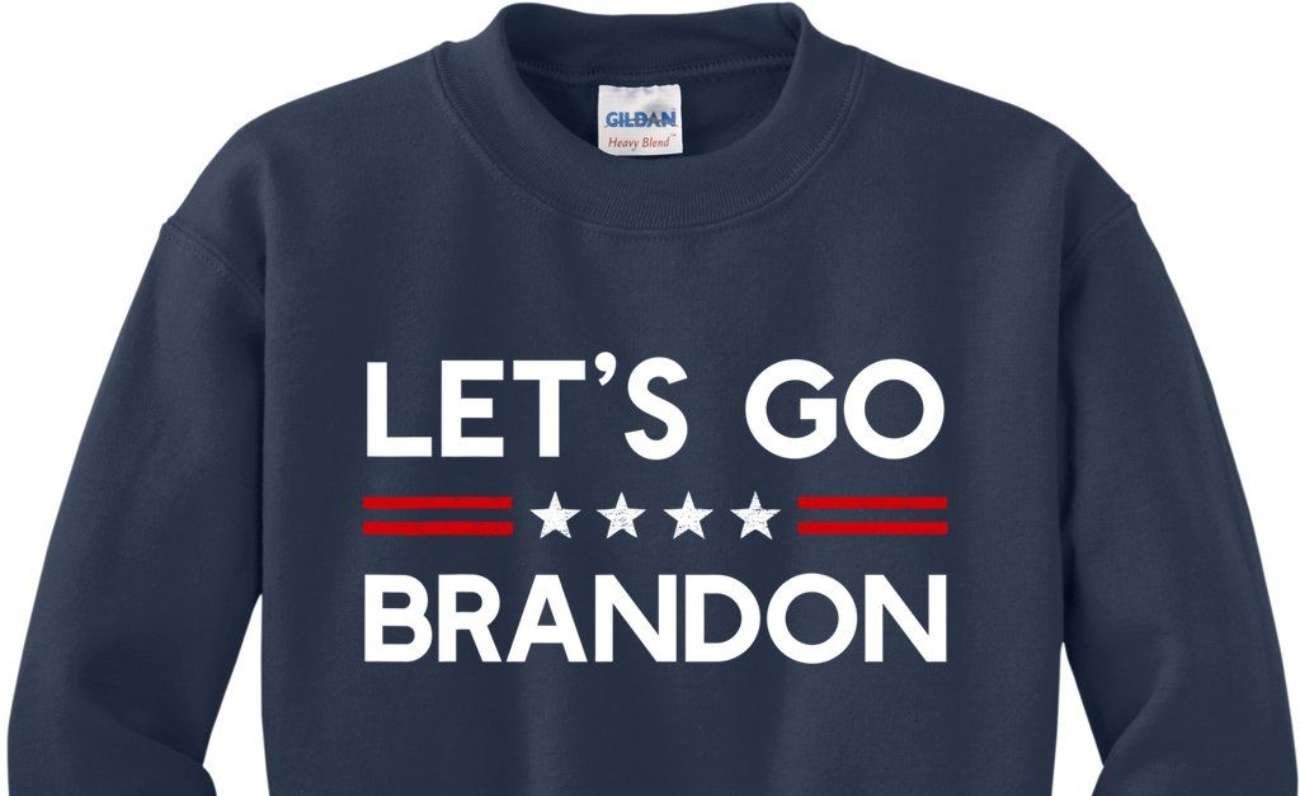
By contemporary political standards, the phrase “Let’s Go Brandon,” a mocking reference to former President Joe Biden, is pretty mild. But officials at Tri County Middle School in Howard City, Michigan, deemed it intolerable when it was displayed on sweatshirts that two students—a sixth-grader and his brother, an eighth-grader—had received as Christmas gifts from their mother. By requiring the boys to remove their sweatshirts, their mother argued in a 2023 lawsuit, the school violated their First Amendment rights.
Not so, a divided panel of the U.S. Court of Appeals for the 6th Circuit ruled this month in B.A. v. Tri County Schools, “because the school reasonably understood the slogan ‘Let’s Go Brandon’ to be vulgar.” Judge John K. Bush vigorously disagreed. “If we allow schools the power to censor political speech by recharacterizing it as vulgarity,” he warns in his dissent, “we risk turning disagreement with political speech into justification for its censorship—something the First Amendment flatly forbids.”
The argument between Bush and his colleagues hinges largely on the question of how much weight should be assigned to the origin of the message on the boys’ sweatshirts. When NBC Sports reporter Kelli Stavast interviewed race car driver Brandon Brown after he won a NASCAR contest at Alabama’s Talladega Superspeedway on October 2, 2021, the crowd could be heard chanting “Fuck Joe Biden.” Stavast either misheard or misrepresented those words, saying, “You can hear the chants from the crowd, ‘Let’s Go Brandon.'”
That episode gave birth to the political meme that offended officials at Tri County Middle School. “From the beginning,” Judge John Nalbandian notes in the 6th Circuit’s majority opinion, “the expression had a wide range of meanings. Some saw it as merely a euphemism for what the crowd really said. Others used it as a shibboleth to express
antipathy towards the then-President and his policies. And still others used it to question what they perceived as liberal bias in the media—based on the theory that NBC had been trying to hide the anti-Biden sentiment on display at Talladega.”
In defense of its sweatshirt censorship, the school district emphasized the first interpretation. Given its history, school officials said, “Let’s Go Brandon” was tantamount to “Fuck Joe Biden,” a phrase that ran afoul of a dress code forbidding “attire with messages or illustrations that are lewd, indecent, vulgar, or profane.”
The Foundation for Individual Rights and Expression, which represented the plaintiffs, argued that a euphemism, which is designed to avoid vulgarity, cannot be “reasonably interpreted” as falling into that category. Or as several linguistic scholars put it in a 6th Circuit brief supporting the plaintiffs, “This case is not about swearing; it is about not swearing.”
The 6th Circuit did not buy it. “The plaintiffs concede that a school could prohibit students from saying ‘Fuck Joe Biden,'” Nalbandian writes. “And yet they insist that the euphemism ‘Let’s Go Brandon’ is distinct—even though many people understand that slogan to mean ‘Fuck Joe Biden.'” Given that reality, he says, “it’s not clear that the school administrators acted unreasonably in determining that the euphemism still conveyed that vulgar message.” To the contrary, “the uncontroverted origin of the slogan shows a plainly vulgar meaning.”
Bush thinks that position gives short shrift to the meanings that the phrase acquired after Stavast misreported the Talladega chant. “‘Let’s Go Brandon!’—regardless its origin—has evolved into a widely recognized political slogan used to express opposition to a now-former president,” he writes. “It is not vulgar on its face, nor so socially deviant that it must be sanitized from student expression.”
These dueling interpretations matter because of what the Supreme Court has said about the First Amendment rights of public school students. In the 1969 case Tinker v. Des Moines Independent Community School District, which involved students who wore black armbands to protest the Vietnam War, the Court recognized that students do not “shed their constitutional rights to freedom of speech or expression at the schoolhouse gate.” It held that “the prohibition of expression of one particular opinion, at least without evidence that it is necessary to avoid material and substantial interference with schoolwork or discipline, is not constitutionally permissible.” But the justices qualified that general rule in subsequent decisions, including one that is particularly relevant here.
In the 1986 case Bethel School District No. 403 v. Fraser, the Supreme Court held that the First Amendment did not bar the suspension of a high school student who had given a “lewd speech” in support of a candidate for student body vice president. Here is the speech that got Matthew Fraser into trouble:
I know a man who is firm—he’s firm in his pants, he’s firm in his shirt, his character is firm—but most…of all, his belief in you, the students of Bethel [High School], is firm.
Jeff Kuhlman is a man who takes his point and pounds it in. If necessary, he’ll take an issue and nail it to the wall. He doesn’t attack things in spurts—he drives hard, pushing and pushing until finally—he succeeds.
Jeff is a man who will go to the very end—even the climax for each and every one of you. So vote for Jeff for A.S.B. vice-president—he’ll never come between you and the best our high school can be.
Given the setting, the Supreme Court thought, that extended sexual joke was not protected by the First Amendment. “Surely it is a highly appropriate function of public school education to prohibit the use of vulgar and offensive terms in public discourse,” Chief Justice Warren Burger said in the majority opinion. “Indeed, the ‘fundamental values necessary to the maintenance of a democratic political system’ disfavor the use of terms of debate highly offensive or highly threatening to others. Nothing in the Constitution prohibits the states from insisting that certain modes of expression are inappropriate and subject to sanctions. The inculcation of these values is truly the ‘work of the schools.’ The determination of what manner of speech in the classroom or in school assembly is inappropriate properly rests with the school board.”
Nalbandian and 6th Circuit Judge Karen Nelson Moore, who joined his opinion, thought the exception recognized in Fraser readily covers “Let’s Go Brandon” sweatshirts. Fraser “involved a school assembly speech that had a rather elaborate sexual metaphor instead of explicitly vulgar or obscene words,” Nalbandian writes. “And yet the Supreme Court had no reservation in holding that the school was not required to tolerate ‘lewd, indecent, or offensive speech and conduct.'” That decision, he says, “demonstrates that a school may regulate speech that conveys an obscene or vulgar message even when the words used are not themselves obscene or vulgar.”
Bush sees an important difference between Fraser’s speech, which repeatedly alluded to sexual intercourse, and “Let’s Go Brandon,” which is not about sex at all. Unlike Fraser’s speech, “‘Let’s Go Brandon!’ is not plainly lewd,” Bush writes. “At most, the phrase indirectly references the use of the word ‘f*ck’ as an intensifier in the Talladega crowd’s chant—a word the students themselves never used. The words ‘f*ck’ or ‘f*cking,’ along with other swear words, are commonly used today to convey emphasis or strong emotion, rather than for their literal, sexual meaning.” After all, “the crowd did not chant the word at Talladega to advocate having sex with the former President.”
Since the Fraser exception does not apply to “Let’s Go Brandon,” Bush says, the majority should have applied the Tinker test, which allows restrictions on student speech only when they are “necessary to avoid material and substantial interference with schoolwork or discipline.” The school district in this case never claimed that the censored sweatshirts posed any such threat.
Bush also emphasizes that the sweatshirts, unlike Fraser’s speech, clearly aimed to communicate a political position. In fact, he notes, they could only be deemed “vulgar” based on the assumption that they expressed criticism of then-President Biden.
The majority “attempts to distinguish the armbands in Tinker by claiming that the sanctions here are linked to the vulgar content alluded to by ‘Let’s Go Brandon!’ and not the political content,” Bush writes. “But the phrase itself is innocuous when divorced from the political message.”
Imagine “a football player named Brandon making a big play, or a young student named Brandon winning a schoolyard race,” Bush says. “Expressions of ‘Let’s Go Brandon!’ in those situations—whether written on a sign or cheered by the crowd—would be understood as expressions of encouragement and support….The phrase can be used in everyday speech without any vulgar connotation. It only becomes ‘vulgar’ once the political message is assigned to it. The supposed vulgarity in ‘Let’s Go Brandon!’ comes from its euphemistic association with a criticism of a political official. Without the political viewpoint attached to the words, no school administrator could possibly view the words ‘Let’s Go Brandon!’ as vulgar.”
Unlike the speech at issue in Fraser, “the double meaning behind these words is a political one, not a sexual one—so instead of deserving less protection, it deserves more,” Bush writes. “Under the majority’s rule, school officials now have the unrestrained discretion to declare speech vulgar as soon as it is imbued with a political message, so long as the school administrator could reasonably understand the message to include an offensive connotation. The inextricable link between the political viewpoint being expressed by the sweatshirts and the determination of vulgarity shows that it is not the vulgar content of the words themselves, but the political content that is actually being censored.”
If “Let’s Go Brandon” is “treated as vulgar only because of its political implications—and not because of the actual words used—then the restriction is not really about lewdness at all,” Bush says. “It is, presumably, about viewpoint in some form or fashion. That distinction is constitutionally significant. The school cannot justify censorship by labeling speech as ‘vulgar’ when, in reality, it is being restricted because of the message.”
Under Tinker, Bush argues, courts cannot “delegate to school officials unfettered discretion to censor student speech, especially when that speech carries such clear political overtones. Accordingly, we must apply the Tinker standard and conclude that the school’s actions were not justified by actual or reasonably forecasted disruption to school operations.”
Read the full article here
Fact Checker
Verify the accuracy of this article using AI-powered analysis and real-time sources.