Close Menu
FSNN | Free Speech News NetworkFSNN | Free Speech News Network
  • Home
  • News
    • Politics
    • Legal & Courts
    • Tech & Big Tech
    • Campus & Education
    • Media & Culture
    • Global Free Speech
  • Opinions
    • Debates
  • Video/Live
  • Community
  • Freedom Index
  • About
    • Mission
    • Contact
    • Support
Trending

Grayscale wants to bring the world’s hottest crypto trading frenzy to your brokerage account

2 hours ago

Bitcoin options signal extreme fear as downside protection premium hits new all-time high, says VanEck

3 hours ago

Announcing The Winners Of The 8th Annual Public Domain Game Jam

3 hours ago
Facebook X (Twitter) Instagram
Facebook X (Twitter) Discord Telegram
FSNN | Free Speech News NetworkFSNN | Free Speech News Network
Market Data Newsletter
Saturday, March 21
  • Home
  • News
    • Politics
    • Legal & Courts
    • Tech & Big Tech
    • Campus & Education
    • Media & Culture
    • Global Free Speech
  • Opinions
    • Debates
  • Video/Live
  • Community
  • Freedom Index
  • About
    • Mission
    • Contact
    • Support
FSNN | Free Speech News NetworkFSNN | Free Speech News Network
Home»News»Media & Culture»Tariffs at the Supreme Court: Trump Wants To Retcon the Law
Media & Culture

Tariffs at the Supreme Court: Trump Wants To Retcon the Law

News RoomBy News Room5 months agoNo Comments4 Mins Read1,914 Views
Share Facebook Twitter Pinterest Copy Link LinkedIn Tumblr Email VKontakte Telegram
Tariffs at the Supreme Court: Trump Wants To Retcon the Law
Share
Facebook Twitter Pinterest Email Copy Link

Listen to the article

0:00
0:00

Key Takeaways

Playback Speed

Select a Voice

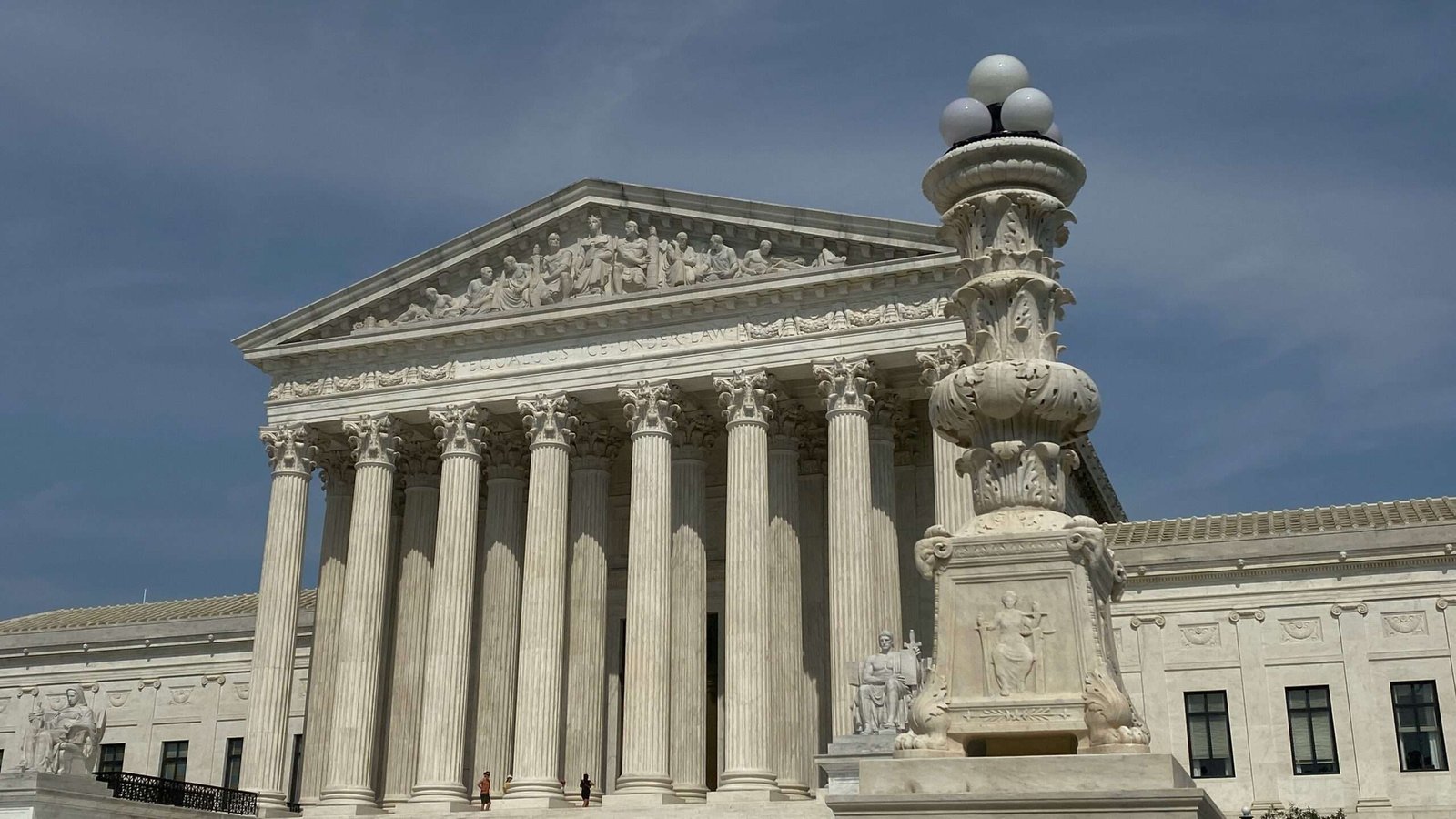
The fate of President Donald Trump’s tariffs may hinge on whether a majority of the U.S. Supreme Court is willing to accept that the words written in federal statutes might not mean what they plainly say.

As you’d expect, there were a lot of different arguments thrown around during Wednesday’s critical oral arguments, where the Trump administration claimed sweeping powers to impose tariffs on nearly all imports while attorneys for a variety of plaintiffs said Trump had overstepped the authority granted by Congress. Overwhelmingly, however, the debate seemed to center on perhaps the most basic of questions when it comes to interpreting the law: Did Congress mean what it said when it wrote the law?

The law in question is the 1977 International Emergency Economic Powers Act (IEEPA), which the Trump administration has used as the legal justification for the vast majority of new tariffs imposed this year. The text of that law grants a variety of powers to the president to “regulate,” “block,” “nullify,” “restrict,” “modify,” and so on.

As the justices pointed out over and over again on Wednesday, however, the law does not say “tariff.” Nor does it give the president the power to impose taxes.

“There are a lot of verbs, but none of them include generating revenue, either directly or as a side effect,” noted Justice Ketanji Brown Jackson at one point. 

The administration’s argument hinges on the word “regulate,” which Solicitor General D. John Sauer argued should be understood as allowing tariffs.

“There is a lot in ‘regulate’ that is not spelled out there,” Sauer said. Earlier, during a similar exchange with Justice Neil Gorsuch, Sauer fell back on a similar claim: “Tariffing is the quintessential way of regulating importation.”

Several of the justices seemed skeptical of that idea. Justice Amy Coney Barrett, in particular, pressed Sauer to offer any other statute where the word “regulate” was assumed to grant the power of raising taxes. Sauer struggled to respond.

This gets to the core of the tariff case, which goes beyond a normal dispute over policy and asks a serious question about the separation of powers in the constitutional system. If the chief executive can read new meanings into the words that Congress has written in the laws it passed, then there are effectively no limitations on what the president can do.

There are other reasons—maybe even better ones—why the Supreme Court ought to be skeptical of the Trump administration’s emergency tariff powers. Trump’s use of IEEPA seems to run afoul of the so-called “major questions” doctrine, which says the executive branch can only exercise powers that Congress has explicitly granted. The U.S. Supreme Court invoked that doctrine in other recent high-profile cases, including the 2023 ruling that struck down then-President Joe Biden’s student loan forgiveness scheme. The tariffs would also have to pass the similar “non-delegation” test, which says Congress cannot delegate core responsibilities to the executive branch.

Before even getting to those larger questions, however, the justices should think deeply about how far the Trump administration is trying to stretch the meaning of words.

“The president is seeking to set aside all of our trade treaties, unilaterally, under the word ‘regulate,'” said Neal Katyal, the attorney representing a group of businesses challenging the tariffs. “I just don’t think it can bear that weight.”

In an exchange between Sauer and Justice Sonia Sotomayor, the justice suggested that the administration would be on more solid legal ground if it weren’t seeking to tariff imports but restrict them outright—after all, she noted, the IEEPA statute plainly allows a president to block or restrict imports.

“It has a lot of verbs,” she concluded, referring to IEEPA. “It just doesn’t have the one you want.”

Read the full article here

Fact Checker

Verify the accuracy of this article using AI-powered analysis and real-time sources.

Get Your Fact Check Report

Enter your email to receive detailed fact-checking analysis

5 free reports remaining

Continue with Full Access

You've used your 5 free reports. Sign up for unlimited access!

Already have an account? Sign in here

Share. Facebook Twitter Pinterest LinkedIn Tumblr Email Telegram Copy Link
News Room
  • Website
  • Facebook
  • X (Twitter)
  • Instagram
  • LinkedIn

The FSNN News Room is the voice of our in-house journalists, editors, and researchers. We deliver timely, unbiased reporting at the crossroads of finance, cryptocurrency, and global politics, providing clear, fact-driven analysis free from agendas.

Related Articles

Media & Culture

Announcing The Winners Of The 8th Annual Public Domain Game Jam

3 hours ago
Media & Culture

Today in Supreme Court History: March 21, 1989

10 hours ago
Media & Culture

Seattle’s Minimum Wage Laws Backfired on Uber and Lyft. Now the Union Wants To Limit Drivers.

11 hours ago
Media & Culture

Blame U.S. Regulations for China’s Dominance in Rare-Earth Minerals

12 hours ago
Media & Culture

California Democrats May Have To Choose Between 2 Republicans in November’s Gubernatorial Race

13 hours ago
Media & Culture

Same Lies, New War: Trump and the Iraq Playbook

14 hours ago
Add A Comment

Comments are closed.

Editors Picks

Bitcoin options signal extreme fear as downside protection premium hits new all-time high, says VanEck

3 hours ago

Announcing The Winners Of The 8th Annual Public Domain Game Jam

3 hours ago

Crypto firms are ditching hundreds of workers to bet the house on AI

4 hours ago

SEC Crypto Guidance Is a Major Step, but More Is Needed: Analyst

4 hours ago
Latest Posts

How DeFi is quietly rebuilding the fixed-income stack for institutional capital

5 hours ago

Bitcoin Options Flag Traders’ Fear As Iran War Carries On

5 hours ago

Polymarket’s 5-cent signal was the only thing that got the Netanyahu rumors right

6 hours ago

Subscribe to News

Get the latest news and updates directly to your inbox.

At FSNN – Free Speech News Network, we deliver unfiltered reporting and in-depth analysis on the stories that matter most. From breaking headlines to global perspectives, our mission is to keep you informed, empowered, and connected.

FSNN.net is owned and operated by GlobalBoost Media
, an independent media organization dedicated to advancing transparency, free expression, and factual journalism across the digital landscape.

Facebook X (Twitter) Discord Telegram
Latest News

Grayscale wants to bring the world’s hottest crypto trading frenzy to your brokerage account

2 hours ago

Bitcoin options signal extreme fear as downside protection premium hits new all-time high, says VanEck

3 hours ago

Announcing The Winners Of The 8th Annual Public Domain Game Jam

3 hours ago

Subscribe to Updates

Get the latest news and updates directly to your inbox.

© 2026 GlobalBoost Media. All Rights Reserved.
  • Privacy Policy
  • Terms of Service
  • Our Authors
  • Contact

Type above and press Enter to search. Press Esc to cancel.

🍪

Cookies

We and our selected partners wish to use cookies to collect information about you for functional purposes and statistical marketing. You may not give us your consent for certain purposes by selecting an option and you can withdraw your consent at any time via the cookie icon.

Cookie Preferences

Manage Cookies

Cookies are small text that can be used by websites to make the user experience more efficient. The law states that we may store cookies on your device if they are strictly necessary for the operation of this site. For all other types of cookies, we need your permission. This site uses various types of cookies. Some cookies are placed by third party services that appear on our pages.

Your permission applies to the following domains:

  • https://fsnn.net
Necessary
Necessary cookies help make a website usable by enabling basic functions like page navigation and access to secure areas of the website. The website cannot function properly without these cookies.
Statistic
Statistic cookies help website owners to understand how visitors interact with websites by collecting and reporting information anonymously.
Preferences
Preference cookies enable a website to remember information that changes the way the website behaves or looks, like your preferred language or the region that you are in.
Marketing
Marketing cookies are used to track visitors across websites. The intention is to display ads that are relevant and engaging for the individual user and thereby more valuable for publishers and third party advertisers.