Close Menu
FSNN | Free Speech News NetworkFSNN | Free Speech News Network
  • Home
  • News
    • Politics
    • Legal & Courts
    • Tech & Big Tech
    • Campus & Education
    • Media & Culture
    • Global Free Speech
  • Opinions
    • Debates
  • Video/Live
  • Community
  • Freedom Index
  • About
    • Mission
    • Contact
    • Support
Trending

BlackRock exec says even a 1% crypto allocation in Asia could unlock $2 trillion in new flows

2 minutes ago

Bitcoin Slips Below $66K As Absent Spot Demand Benefits Bears

6 minutes ago

Bitcoin Slides as Fed Rate Cut Doubts Follow Strong Jobs Report

9 minutes ago
Facebook X (Twitter) Instagram
Facebook X (Twitter) Discord Telegram
FSNN | Free Speech News NetworkFSNN | Free Speech News Network
Market Data Newsletter
Wednesday, February 11
  • Home
  • News
    • Politics
    • Legal & Courts
    • Tech & Big Tech
    • Campus & Education
    • Media & Culture
    • Global Free Speech
  • Opinions
    • Debates
  • Video/Live
  • Community
  • Freedom Index
  • About
    • Mission
    • Contact
    • Support
FSNN | Free Speech News NetworkFSNN | Free Speech News Network
Home»News»Media & Culture»Spain Wants To Ban Social Media for Kids. It Won’t Work.
Media & Culture

Spain Wants To Ban Social Media for Kids. It Won’t Work.

News RoomBy News Room2 hours agoNo Comments4 Mins Read1,558 Views
Share Facebook Twitter Pinterest Copy Link LinkedIn Tumblr Email VKontakte Telegram
Spain Wants To Ban Social Media for Kids. It Won’t Work.
Share
Facebook Twitter Pinterest Email Copy Link

Listen to the article

0:00
0:00

Key Takeaways

Playback Speed

Select a Voice

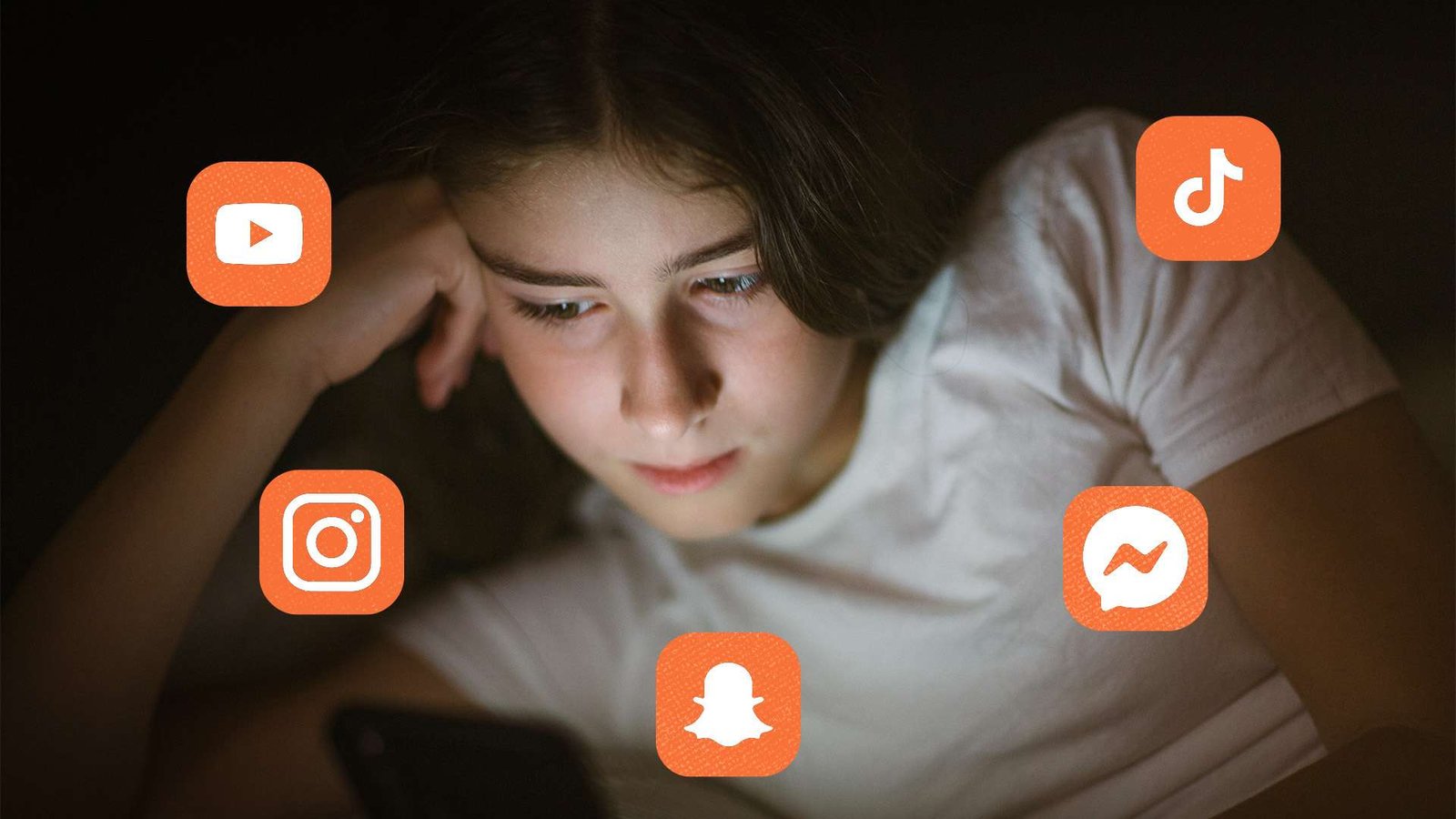
“Social media is a failed state,” proclaimed Spanish Prime Minister Pedro Sánchez last week, before announcing plans to ban social media entirely for kids 15 years old and younger. “Today, our children are exposed to a space where they were never meant to navigate alone: a space of addiction, abuse, pornography, manipulation, and violence,” Sánchez said at the World Government Summit in Dubai. “We will no longer accept that. We will protect them from the digital Wild West.”

The ban still needs parliamentary approval, which could be discussed this week. It’s unclear exactly what platforms would be covered by the ban, but in his speech, Sánchez was especially critical of X and TikTok. 

If approved, Spain would become the first European nation to ban social media for minors, but it is unlikely to be the last. Greece will soon unveil a ban similar to Spain’s, reports Reuters. The idea also has traction with a sizable coalition of the European Union, including France and Denmark, and at the end of last year, the European Parliament passed a nonlegislative report urging the proposal of “a harmonised EU digital minimum age of 16 for access to social media.”

Despite the current political consensus that social media harms children, there is no conclusive evidence that this is the case. An Oxford University study of nearly 12,000 children showed no correlation between screen time (including on social media) and mental well-being. Even where the participants had high rates of digital engagement, there was no evidence of impaired function in the brain development of children. Meanwhile, a study published in JAMA Pediatrics last month found that “moderate social media use” in fourth- through 12th-graders “was associated with the best well-being outcomes, while both no use and highest use were associated with poorer well-being.”

Not only are bans on social media unlikely to improve teen mental health, but they could put more children in harm’s way. In Australia, which implemented the world’s first social media ban for minors last year, teens have been able to circumvent the new heavy-handed social media laws. As 14-year-old Sarai Ades told The Guardian earlier this month, she knew “circumventing the ban was going to be possible, but it was so much easier than we could have expected”.    

After creating an account with a fake birthday, Ades has retained her social media access.

“Now that the platforms think I’m over 18 I have completely unfiltered access to all the content that might have been previously left out of my feed because of content restrictions,” she told the paper. “I definitely have more videos coming up on my feed around geopolitical instability and more violent coverage. It was really shocking at first and I wasn’t at all prepared. Sometimes I set my own restrictions to avoid sensitive content because it gets a bit much.”

The ban has also taken away a critical source of community for Australians in rural areas. 

For instance, 15-year-old Breanna Easton, who spends her summer holidays mustering cattle on the family’s station in the sparsely populated outback, told the BBC that social media is how she interacts with her friends who live several hours away. “Taking away our socials is just taking away how we talk to each other,” she said.

Beyond the negative impacts on teens’ mental health, overarching bans raise serious privacy issues. In Australia, the government has said platforms cannot rely on users declaring their own age, or on parents vouching for their children. The legal responsibility for verification means that social media companies are effectively forced to require everyone to prove their identity with government IDs or video selfies. Measures like these have been susceptible to leaks of sensitive information. Last year, Discord revealed that hackers had stolen “at least” 70,000 images of government IDs that the site had used for age verification. In September, Politico reported that “an age verification provider is potentially leaking information about people visiting pornographic websites.”

It’s not just Europe and Australia that are blaming the youth mental health crisis on social media and Big Tech. Several states in the Union have enacted bans or restrictions on social media sites. Last month, a landmark trial began in California to determine if Meta, Google, and ByteDance had deliberately designed their platforms to lead to addiction in children. 

Sánchez says he wants to protect kids “from the digital Wild West.” If that’s the case, a social media ban is a poor way to achieve this objective.

Read the full article here

Fact Checker

Verify the accuracy of this article using AI-powered analysis and real-time sources.

Get Your Fact Check Report

Enter your email to receive detailed fact-checking analysis

5 free reports remaining

Continue with Full Access

You've used your 5 free reports. Sign up for unlimited access!

Already have an account? Sign in here

#FreePress #IndependentMedia #InformationWar #MediaBias #NarrativeControl
Share. Facebook Twitter Pinterest LinkedIn Tumblr Email Telegram Copy Link
News Room
  • Website
  • Facebook
  • X (Twitter)
  • Instagram
  • LinkedIn

The FSNN News Room is the voice of our in-house journalists, editors, and researchers. We deliver timely, unbiased reporting at the crossroads of finance, cryptocurrency, and global politics, providing clear, fact-driven analysis free from agendas.

Related Articles

Cryptocurrency & Free Speech Finance

Bitcoin Slides as Fed Rate Cut Doubts Follow Strong Jobs Report

9 minutes ago
Media & Culture

The System Of Checks And Balances Doesn’t Work When One Branch Refuses To Play By The Rules

52 minutes ago
Media & Culture

A Grand Jury Rejects Trump’s Attempt To Prosecute 6 Legislators for Saying Something He Did Not Like

53 minutes ago
Cryptocurrency & Free Speech Finance

Coinbase Price Projections Slashed By Analysts Ahead of Earnings

1 hour ago
Media & Culture

An 18-Million-Subscriber YouTuber Just Explained Section 230 Better Than Every Politician In Washington

2 hours ago
Cryptocurrency & Free Speech Finance

Susquehanna-Backed Crypto Lender BlockFills Suspends Withdrawals as Bitcoin Sinks

2 hours ago
Add A Comment
Leave A Reply Cancel Reply

Editors Picks

Bitcoin Slips Below $66K As Absent Spot Demand Benefits Bears

6 minutes ago

Bitcoin Slides as Fed Rate Cut Doubts Follow Strong Jobs Report

9 minutes ago

Statement on grand jury’s refusal to indict lawmakers over video urging troops to ignore illegal orders

46 minutes ago

🗣 Homeland Security Wants Names | EFFector 38.3

47 minutes ago
Latest Posts

The System Of Checks And Balances Doesn’t Work When One Branch Refuses To Play By The Rules

52 minutes ago

A Grand Jury Rejects Trump’s Attempt To Prosecute 6 Legislators for Saying Something He Did Not Like

53 minutes ago

Hong Kong remains committed to digital assets but feels competition from an ‘aggressive’ UAE

1 hour ago

Subscribe to News

Get the latest news and updates directly to your inbox.

At FSNN – Free Speech News Network, we deliver unfiltered reporting and in-depth analysis on the stories that matter most. From breaking headlines to global perspectives, our mission is to keep you informed, empowered, and connected.

FSNN.net is owned and operated by GlobalBoost Media
, an independent media organization dedicated to advancing transparency, free expression, and factual journalism across the digital landscape.

Facebook X (Twitter) Discord Telegram
Latest News

BlackRock exec says even a 1% crypto allocation in Asia could unlock $2 trillion in new flows

2 minutes ago

Bitcoin Slips Below $66K As Absent Spot Demand Benefits Bears

6 minutes ago

Bitcoin Slides as Fed Rate Cut Doubts Follow Strong Jobs Report

9 minutes ago

Subscribe to Updates

Get the latest news and updates directly to your inbox.

© 2026 GlobalBoost Media. All Rights Reserved.
  • Privacy Policy
  • Terms of Service
  • Our Authors
  • Contact

Type above and press Enter to search. Press Esc to cancel.

🍪

Cookies

We and our selected partners wish to use cookies to collect information about you for functional purposes and statistical marketing. You may not give us your consent for certain purposes by selecting an option and you can withdraw your consent at any time via the cookie icon.

Cookie Preferences

Manage Cookies

Cookies are small text that can be used by websites to make the user experience more efficient. The law states that we may store cookies on your device if they are strictly necessary for the operation of this site. For all other types of cookies, we need your permission. This site uses various types of cookies. Some cookies are placed by third party services that appear on our pages.

Your permission applies to the following domains:

  • https://fsnn.net
Necessary
Necessary cookies help make a website usable by enabling basic functions like page navigation and access to secure areas of the website. The website cannot function properly without these cookies.
Statistic
Statistic cookies help website owners to understand how visitors interact with websites by collecting and reporting information anonymously.
Preferences
Preference cookies enable a website to remember information that changes the way the website behaves or looks, like your preferred language or the region that you are in.
Marketing
Marketing cookies are used to track visitors across websites. The intention is to display ads that are relevant and engaging for the individual user and thereby more valuable for publishers and third party advertisers.