

 Freedom Index
Listen to the article
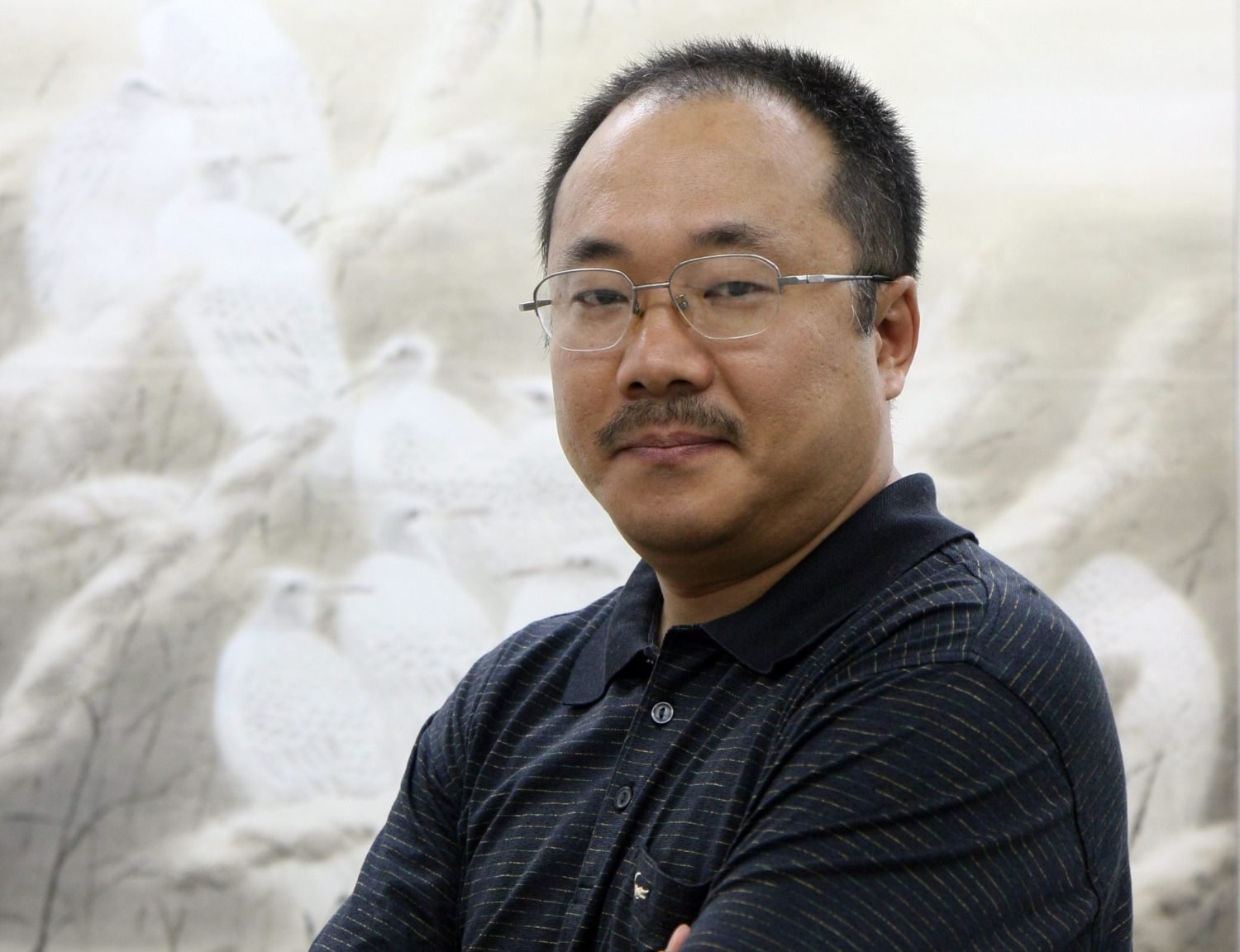
Punishment of hard labor, censorship, and threats of demotion over more than three decades did not stop Chinese journalist Dong Yuyu from doing his work. It was lunch with a diplomat that finally did.
Dong, 63, a long-time editor and columnist whose work is well known within China and abroad, was arrested in February 2022 while sharing a meal with a Japanese diplomat in the capital Beijing. He was convicted on espionage charges in November 2024.
Now serving a seven-year jail sentence, Dong’s imprisonment highlights China’s growing use of national security charges against journalists and its record of arbitrary detention. China is the world’s top jailer of journalists, with at least 52 behind bars.
In an interview with CPJ, Dong’s son Yifu said the case against his father was “purely political.”
“The international community needs to remind the Chinese government that releasing my father does more good to China than keeping him imprisoned,” he said.
Dong’s appeal is still pending at the Beijing High Court in what Yifu called an “unusual delay.” The court has repeatedly extended the deadline to rule on the appeal, which is now due for October 13, according to family.
China’s Foreign Ministry did not immediately respond to a CPJ’s emailed request for comment.
CPJ spoke with Yifu about his father’s imprisonment, how his jailing undermines China’s diplomatic goals, and about his journalism career that began in 1987. CPJ will honor Dong with a 2025 International Press Freedom Award in New York in November. The interview has been edited for clarity and length.
What outcome do you expect from the court appeal?
At this point it’s hard to speculate about the outcome of the appeal. We can wait and see if it gets delayed beyond October 13.
It is an unusual delay because most appeals in China are resolved in just a few months. Now this is almost a year with repeated delays by the government. All the delays are allowed under China’s criminal procedure law, but these delays signal two things.
First, there is no evidence or legal argument to support the verdict of espionage at trial, as the prosecutors were given an additional month to provide more evidence, but they failed to submit any new evidence. If the verdict had any legal merit, the appeals court would have handed out an appellate decision upholding the verdict months ago.
Second, because there is no legal merit, the case is now purely political, which means that the international community needs to remind the Chinese government that releasing my father does more good to China than keeping him imprisoned.
Your father was arrested two months before he was due for retirement, over lunch with a Japanese diplomat. Why was he targeted and why is this alarming for all journalists?
My father was targeted for two reasons. One is his friendly interactions with Japanese and American diplomats and journalists for over two decades, and his fellowships at American and Japanese universities, including a Nieman Fellowship at Harvard from 2006-07. The other is his prolific writing calling for democracy and political reforms within the Chinese system.
The repercussions of the case are also two-fold. One is to warn all Chinese journalists, scholars, and other professionals from speaking and interacting with their foreign counterparts. The other is to prevent journalists, scholars, and intellectuals from speaking out for democracy and even moderate political reforms.
China has ramped up the use of espionage and national security charges against journalists in recent years. Why is that?
Espionage, and national security in general, is a pretext by the Chinese government. It wants to label journalists as traitors. If the Chinese government [allows] journalists to speak the truth or call for democracy and reforms, most Chinese people will end up supporting the journalists. Labeling journalists as traitors and spies is a manipulation of public opinion. That’s why my father, who loves China deeply and wants China to change for the better, is now being portrayed as a traitor to his country.
Why should other countries pay attention to what is happening to your father?
My father was targeted for his interactions with foreign journalists and diplomats, and because a number of top Japanese diplomats were explicitly labeled as spies in his trial verdict — though none of the Japanese diplomats were expelled by China.
My father’s verdict, if it stands, will effectively signal to the world that China’s support of people-to-people diplomacy is empty talk.
My father’s case will mean that any foreign diplomat posted in China can now be labeled a spy by China’s Ministry of State Security for the purpose of prosecuting any Chinese citizen the diplomat interacts with — all without any evidence of wrongdoing.
The implications also cover foreign businesspeople and even casual travelers to China, as the Chinese government does not want Chinese citizens talking to foreigners. There are campaigns warning Chinese citizens that all foreigners in China could be spies.
My father’s case also means that any Chinese scholar or professional who has been to an exchange program abroad can now be accused of spying because the exchange program, scholarship, or fellowship is regarded as evidence of receiving benefits for spying.
That’s why all foreign governments should be extremely alarmed by my father’s case. This case signals that their diplomats and citizens in China cannot freely interact with Chinese citizens and that they can be detained, like the Japanese diplomat who was briefly detained along with my father. Foreign governments should remind the Chinese government that prosecuting him will severely damage China’s diplomacy and international image.
How will you describe your father as a journalist?
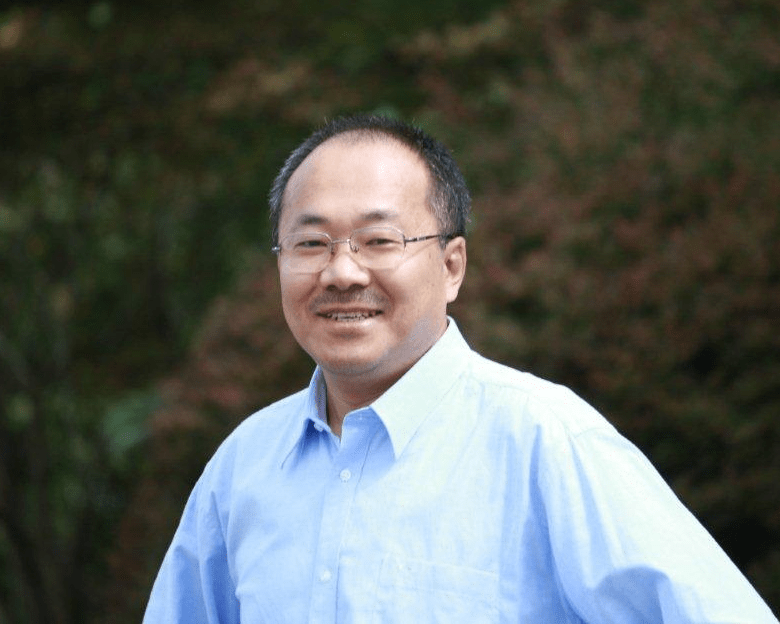
My father is an extremely hardworking, prolific, and dedicated journalist. He studied law for his undergraduate and graduate studies, but his first and only job, starting in 1987, was with the Guangming Daily, a state newspaper in China.
He was sent down to a factory for a year of hard labor as punishment for his participation in the 1989 democracy movement.
In 1998, he co-edited a book called “Political China” calling for political reforms. The first edition of the book sold out throughout China within weeks, but the Chinese government soon banned it.
At his newspaper, he wrote and edited editorials, wrote about economics in his column, and later wrote a daily online column commenting on news of the day. He was extremely prolific, writing on average more than a hundred articles a year, sometimes as many as over 300 articles a year, rarely resting on weekends and holidays. But nearly all the articles he wrote for his newspaper were under pen names.
His work always seeks to make positive changes happen within the Chinese system. The topics he touched on included environmental protection, official corruption, violation of rights for migrant workers and their children, police misconduct, and transgressions by China’s state-owned enterprises and big tech companies. His writings were often censored. Powerful stakeholders, from government agencies to big companies, often asked the newspaper’s website to delete his articles.
My father also contributed to outside publications, including The New York Times’ Chinese-language website and the liberal history magazine Yanhuang Chunqiu (China Through the Ages). Writing those articles under his name, he addressed sensitive issues such as China’s political system and historical atrocities by the Communist Party. For his 2013 article arguing that the Communist Party should be held responsible for the Cultural Revolution, the Chinese authorities labeled him ‘anti-socialist’ in 2017 and threatened him with a demotion.
Overall, my father is a very gifted writer who embodies the best of journalism. He always seeks to challenge the powerful and speak up for the disadvantaged. He can present both the trivial facts of local news and the intricate theories of economics or politics. And through his writing, he has always hoped to make China — and the world — a better place.
How is he doing in prison? When was the last time you saw him?
My mother and I have not been able to see my father since his detention on February 21, 2022. We were able to hire our own lawyers for him, and the lawyers now visit him once a month at the detention center. For every lawyer visit, my mother writes him a letter telling him how our family members are doing. The lawyers also talk to him about new from the outside world, which he is curious about.
My father is generally doing okay in detention, although we are worried about his health and nutrition, especially given his advanced age. He has already spent three and a half years in detention, so we hope he will be released soon.
Read the full article here
Fact Checker
Verify the accuracy of this article using AI-powered analysis and real-time sources.