Close Menu
FSNN | Free Speech News NetworkFSNN | Free Speech News Network
  • Home
  • News
    • Politics
    • Legal & Courts
    • Tech & Big Tech
    • Campus & Education
    • Media & Culture
    • Global Free Speech
  • Opinions
    • Debates
  • Video/Live
  • Community
  • Freedom Index
  • About
    • Mission
    • Contact
    • Support
Trending

Bitcoin holds $71,000 as Trump warns of Iran oil strikes

43 minutes ago

KuCoin Introduces Perpetual Futures Tied to Tesla and Strategy stocks

48 minutes ago

BlackRock Won’t Consider Exotic Crypto ETFs

2 hours ago
Facebook X (Twitter) Instagram
Facebook X (Twitter) Discord Telegram
FSNN | Free Speech News NetworkFSNN | Free Speech News Network
Market Data Newsletter
Saturday, March 14
  • Home
  • News
    • Politics
    • Legal & Courts
    • Tech & Big Tech
    • Campus & Education
    • Media & Culture
    • Global Free Speech
  • Opinions
    • Debates
  • Video/Live
  • Community
  • Freedom Index
  • About
    • Mission
    • Contact
    • Support
FSNN | Free Speech News NetworkFSNN | Free Speech News Network
Home»Opinions»Debates»Should Feminists Work with the Right?
Debates

Should Feminists Work with the Right?

News RoomBy News Room6 months agoNo Comments5 Mins Read1,113 Views
Share Facebook Twitter Pinterest Copy Link LinkedIn Tumblr Email VKontakte Telegram
Should Feminists Work with the Right?
Share
Facebook Twitter Pinterest Email Copy Link

Listen to the article

0:00
0:00

Key Takeaways

Playback Speed

Select a Voice


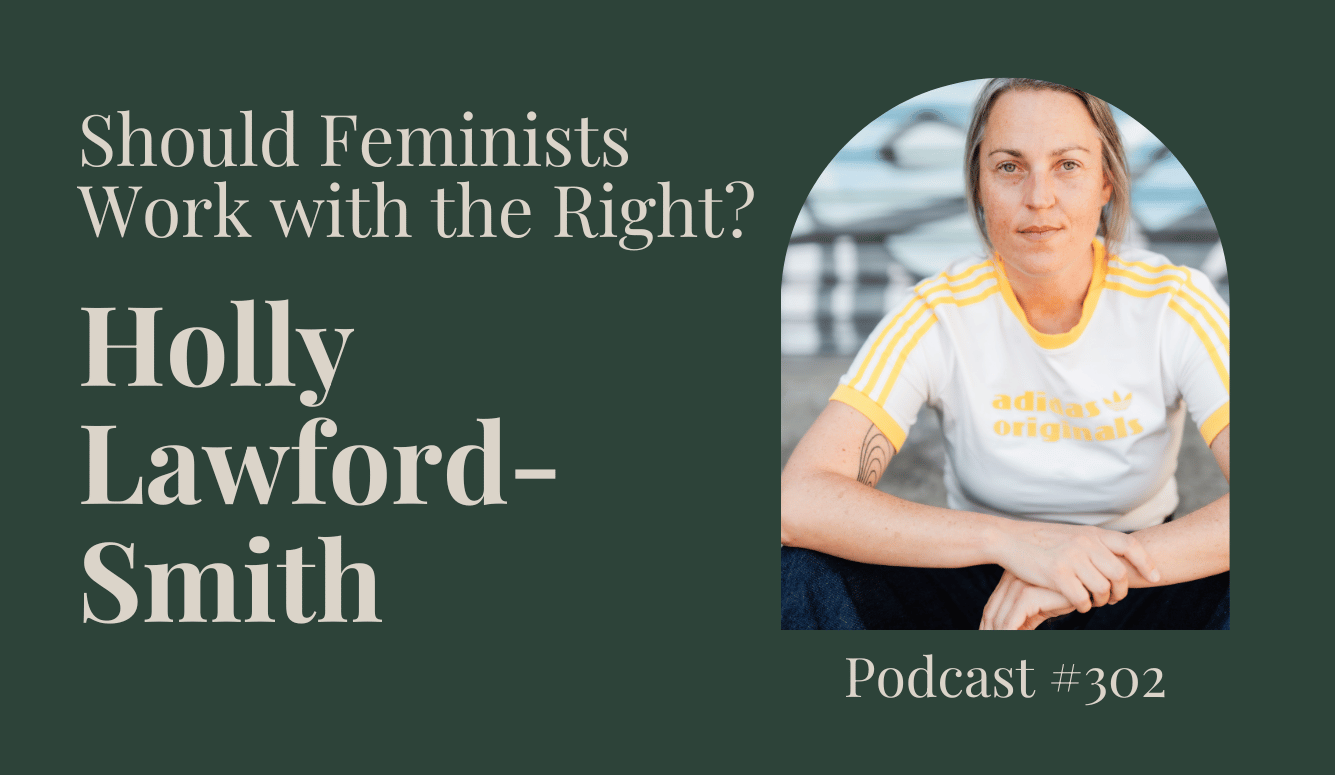
Introduction: I’m your host this week, Iona Italia. My guest today is the philosopher Holly Lawford-Smith. I talk to Holly about her new book Feminism Beyond Left and Right, in which she explores questions of what it means to form political allegiances and how to counter those who want to police feminism. I hope you enjoy my conversation with Holly Lawford-Smith.

Holly Lawford-Smith – Quillette

Holly Lawford-Smith is an Associate Professor in Political Philosophy at the University of Melbourne.


Transcript

Iona Italia: There was a quotation that really struck me that I wanted to start with. I’m going to see if I can actually find it now. I have quite a lot of notes.

Holly Lawford-Smith: I’m glad you found something quotable. That’s already flattering.

II: I find a lot of quotable things. Here it is. I have real problems working out which part of the book to start from, because all of the ideas here are interrelated, and that makes it difficult for me personally to find a starting point. But I think I’ll start here. You’re talking about the beginnings of identity politics and the idea of consciousness-raising groups in the women’s liberation movement. I think this is in the sixties, seventies. The idea was that if women think their situation is a personal problem, for example, a situation within their marriage or their partnership, their relationship with their boss or with their husband, the allocation of childcare in the family, etc. If they think their situation is a personal problem, then they will blame themselves for their failures. If they see that predicament as one that is imposed upon them as women, they will see that only collective political action can change their circumstances.

The point was and remains an important one: some things that have been thought of as personal problems are in fact political. Calling them personal was a way for those with other interests to refuse to take the political problem seriously. Sometimes it’s true, then, that “the personal is political.” But it is important to note that what this slogan means is that some things we thought were merely personal issues are in fact political issues. What I thought was a problem with my husband is really a problem with men, or the ways that men and women are permitted to relate to each other in our current social and cultural context. The slogan doesn’t mean everything we thought was personal is in fact political. Which would mean everything is political—that there is no personal/political distinction at all. Of course there is; your sister has no filter, and for this reason, you don’t like to attend family dinners. [How did you know?] That is not a political problem.

The collapse of the distinction between the personal and the political in at least some people’s minds has entailed the collapse of the distinction between the moral and the political too. Where we might once have said, “whether I attend the PETA demonstration against fur is political, but my own decision about what to eat for dinner is moral,” we now tend to roll the two together and see individual consumption decisions as political.

This collapse of a distinction between the political, the personal, and the political and the moral—how has this come about and what have the effects been for feminists specifically and for our political culture in general?

HLS: The how I’m actually less sure about. All I’m really sure about is that they have come about because they can be widely observed and then the implications of that and maybe partly what I’m arguing for in the book is this would be a helpful thing to reinstate. The problem that I observe, but I am in the university context, is the politicisation of everything and this excessive, I want to call it moralism, but that sounds like there is a moral political distinction. It’s politicisation and then making absolutely everything part of your political crusade. All of these relevant distinctions that I think could help us a lot have been lost. It’s interesting.

The bit that you just read, it’s picking a few different fights at once. One is the feminist, second-wave feminists really liked this slogan, the personal is political. I think in its time, it did a lot of really useful work and that can be a hard thing. You start to critique something because the pendulum maybe has swung too far. That’s what I’m trying to say. I think it really did do its important work at its inception. It was really important for women to realise that it’s not just their marriage or it’s not just their sex life or it’s not just their partner being violent. That is all really important. But now maybe we’re in a moment where it would be helpful to almost tell the opposite message. Like, mate, not everything is political. Not every single thing that seems wrong to you in the whole world or about your life is a matter of your intersectional oppression or whatever. Just dial it back a little bit. I think that’s what I’m trying to do in that part of the book is say, time for a little dialling back on this personal is political thought. By the end of the book, I’m trying to say let’s get a clearer grip on: some things really are just about me as an individual. Some things really are moral for me, but that means they’re personal matters of conviction. They’re not a crusade for everyone. Some things are still a case where we need collective action. We need to get those distinctions right.


Read the full article here

Fact Checker

Verify the accuracy of this article using AI-powered analysis and real-time sources.

Get Your Fact Check Report

Enter your email to receive detailed fact-checking analysis

5 free reports remaining

Continue with Full Access

You've used your 5 free reports. Sign up for unlimited access!

Already have an account? Sign in here

Share. Facebook Twitter Pinterest LinkedIn Tumblr Email Telegram Copy Link
News Room
  • Website
  • Facebook
  • X (Twitter)
  • Instagram
  • LinkedIn

The FSNN News Room is the voice of our in-house journalists, editors, and researchers. We deliver timely, unbiased reporting at the crossroads of finance, cryptocurrency, and global politics, providing clear, fact-driven analysis free from agendas.

Related Articles

Media & Culture

Review: A Period Drama About the Price of Progress in the American West

4 hours ago
Media & Culture

At The WBC: Mark DeRosa Screwed Up & Then MLB Streisanded The Story

4 hours ago
Media & Culture

Firing Government DEI Executive Didn’t Violate First Amendment

5 hours ago
Media & Culture

Who’s Being Pornographic Here? (And Were Pornography Allegations Related to School Library Book Reading Defamatory?)

6 hours ago
Media & Culture

Background Check’s Reporting Expunged Conviction Isn’t Defamation or Fair Credit Reporting Act Violation

7 hours ago
Media & Culture

Bye-Bye Build-To-Rent

8 hours ago
Add A Comment

Comments are closed.

Editors Picks

KuCoin Introduces Perpetual Futures Tied to Tesla and Strategy stocks

48 minutes ago

BlackRock Won’t Consider Exotic Crypto ETFs

2 hours ago

Ethereum Foundation Outlines Ethos and Responsibilities in New Mandate

3 hours ago

Review: A Period Drama About the Price of Progress in the American West

4 hours ago
Latest Posts

Bitcoin can survive 72% of the world’s submarine cables being cut, but a targeted attack on five hosting providers could cripple it

4 hours ago

Bloomberg Strategist Warns of 2008 Replay for Global Markets

4 hours ago

At The WBC: Mark DeRosa Screwed Up & Then MLB Streisanded The Story

4 hours ago

Subscribe to News

Get the latest news and updates directly to your inbox.

At FSNN – Free Speech News Network, we deliver unfiltered reporting and in-depth analysis on the stories that matter most. From breaking headlines to global perspectives, our mission is to keep you informed, empowered, and connected.

FSNN.net is owned and operated by GlobalBoost Media
, an independent media organization dedicated to advancing transparency, free expression, and factual journalism across the digital landscape.

Facebook X (Twitter) Discord Telegram
Latest News

Bitcoin holds $71,000 as Trump warns of Iran oil strikes

43 minutes ago

KuCoin Introduces Perpetual Futures Tied to Tesla and Strategy stocks

48 minutes ago

BlackRock Won’t Consider Exotic Crypto ETFs

2 hours ago

Subscribe to Updates

Get the latest news and updates directly to your inbox.

© 2026 GlobalBoost Media. All Rights Reserved.
  • Privacy Policy
  • Terms of Service
  • Our Authors
  • Contact

Type above and press Enter to search. Press Esc to cancel.

🍪

Cookies

We and our selected partners wish to use cookies to collect information about you for functional purposes and statistical marketing. You may not give us your consent for certain purposes by selecting an option and you can withdraw your consent at any time via the cookie icon.

Cookie Preferences

Manage Cookies

Cookies are small text that can be used by websites to make the user experience more efficient. The law states that we may store cookies on your device if they are strictly necessary for the operation of this site. For all other types of cookies, we need your permission. This site uses various types of cookies. Some cookies are placed by third party services that appear on our pages.

Your permission applies to the following domains:

  • https://fsnn.net
Necessary
Necessary cookies help make a website usable by enabling basic functions like page navigation and access to secure areas of the website. The website cannot function properly without these cookies.
Statistic
Statistic cookies help website owners to understand how visitors interact with websites by collecting and reporting information anonymously.
Preferences
Preference cookies enable a website to remember information that changes the way the website behaves or looks, like your preferred language or the region that you are in.
Marketing
Marketing cookies are used to track visitors across websites. The intention is to display ads that are relevant and engaging for the individual user and thereby more valuable for publishers and third party advertisers.