

 Freedom Index
Listen to the article
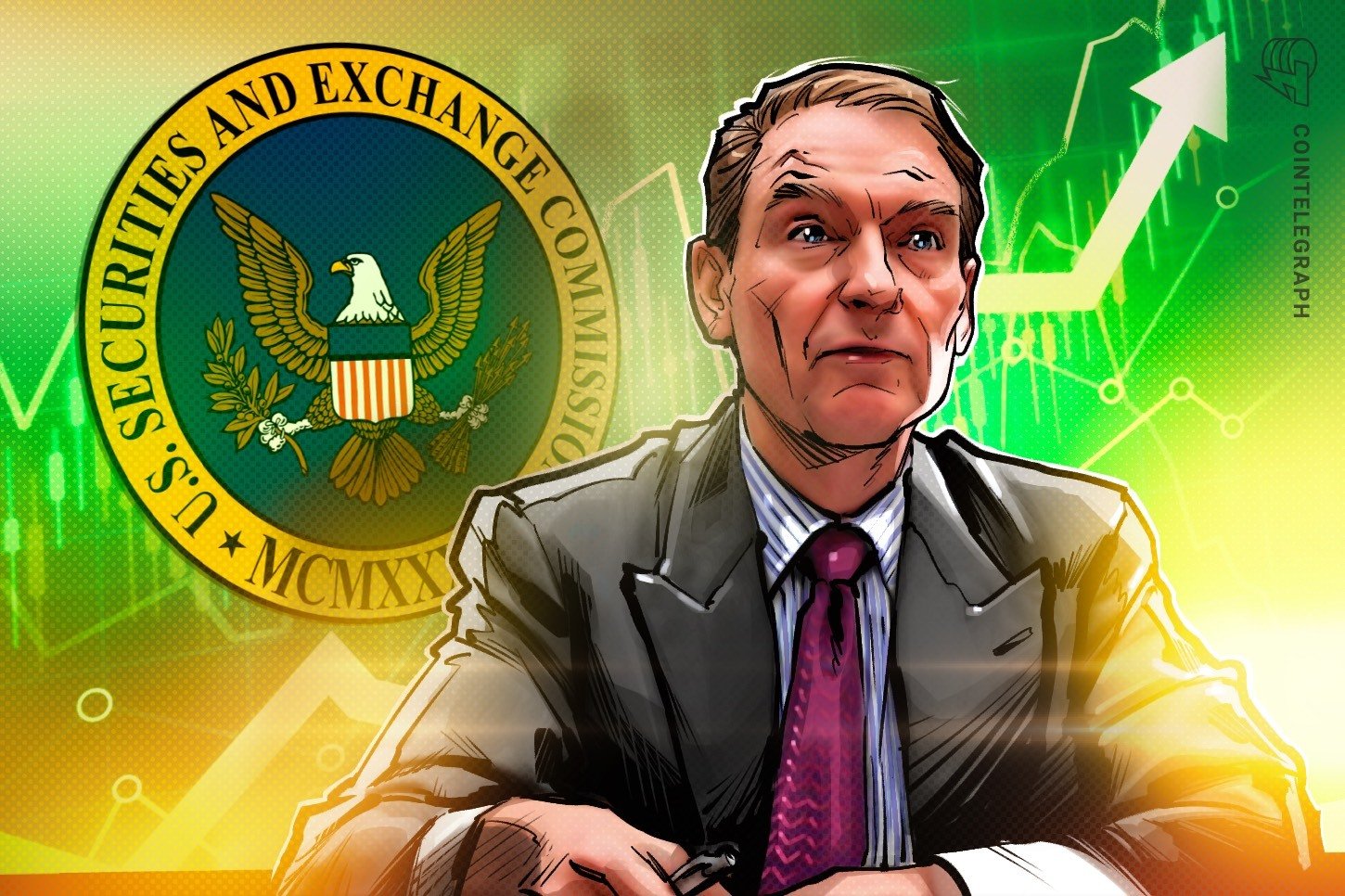
US Securities and Exchange Commission chair Paul Atkins says the agency should consider a “safe harbor proposal” to give crypto companies and some tokens a regulatory carveout.
Atkins said in remarks at a crypto lobby event in Washington, DC, on Tuesday that his safe harbor proposal was made up of a “startup exemption,” a “fundraising exemption,” and an “investment contract safe harbor.”
“It is past time for us to stop diagnosing the problem and start delivering the solution,” he said. “Such a safe harbor would provide crypto innovators bespoke pathways to raise capital in the US, while providing appropriate investor protections.”
The SEC, along with the Commodity Futures Trading Commission, on Tuesday also issued an interpretation that clarified what types of cryptocurrencies are securities and how “non-security crypto assets” could fall under securities laws.
Our interpretation on crypto assets—grounded in existing law and informed by extensive public input—acknowledges what the former administration refused to recognize…
Most crypto assets are not themselves securities.pic.twitter.com/fbHan0vmmb
— Paul Atkins (@SECPaulSAtkins) March 17, 2026
Atkins outlines idea for crypto exemptions
In his remarks, Atkins said the SEC should consider a “startup exemption” to allow crypto companies to raise a defined amount of money or operate for a few years with enough “regulatory runway” to make it to maturity.
He also floated a “fundraising exemption” to allow investment contracts involving crypto to raise up to a particular amount in any 12-month period while being exempted from registering under securities laws.
Atkins said his idea for an “investment contract safe harbor” would give crypto asset issuers and buyers certainty about when assets are subject to securities laws.
The safe harbor could apply once an issuer has “permanently ceased all essential managerial efforts” that it promised for the asset, Atkins said.
Related: DeFi lobby drops airdrop lawsuit against SEC, citing crypto shift
Atkins added that he expects the SEC to release proposed rules for the exemptions for public comment in the coming weeks.
He added, however, that “only Congress can ensure that regulation in this area is future-proofed through comprehensive market structure legislation.”
A bill to outline the SEC’s crypto remit is currently stalled in the Senate as negotiations over its provisions are ongoing.
Magazine: How crypto laws changed in 2025 — and how they’ll change in 2026
Read the full article here
Fact Checker
Verify the accuracy of this article using AI-powered analysis and real-time sources.