

 Freedom Index
Listen to the article
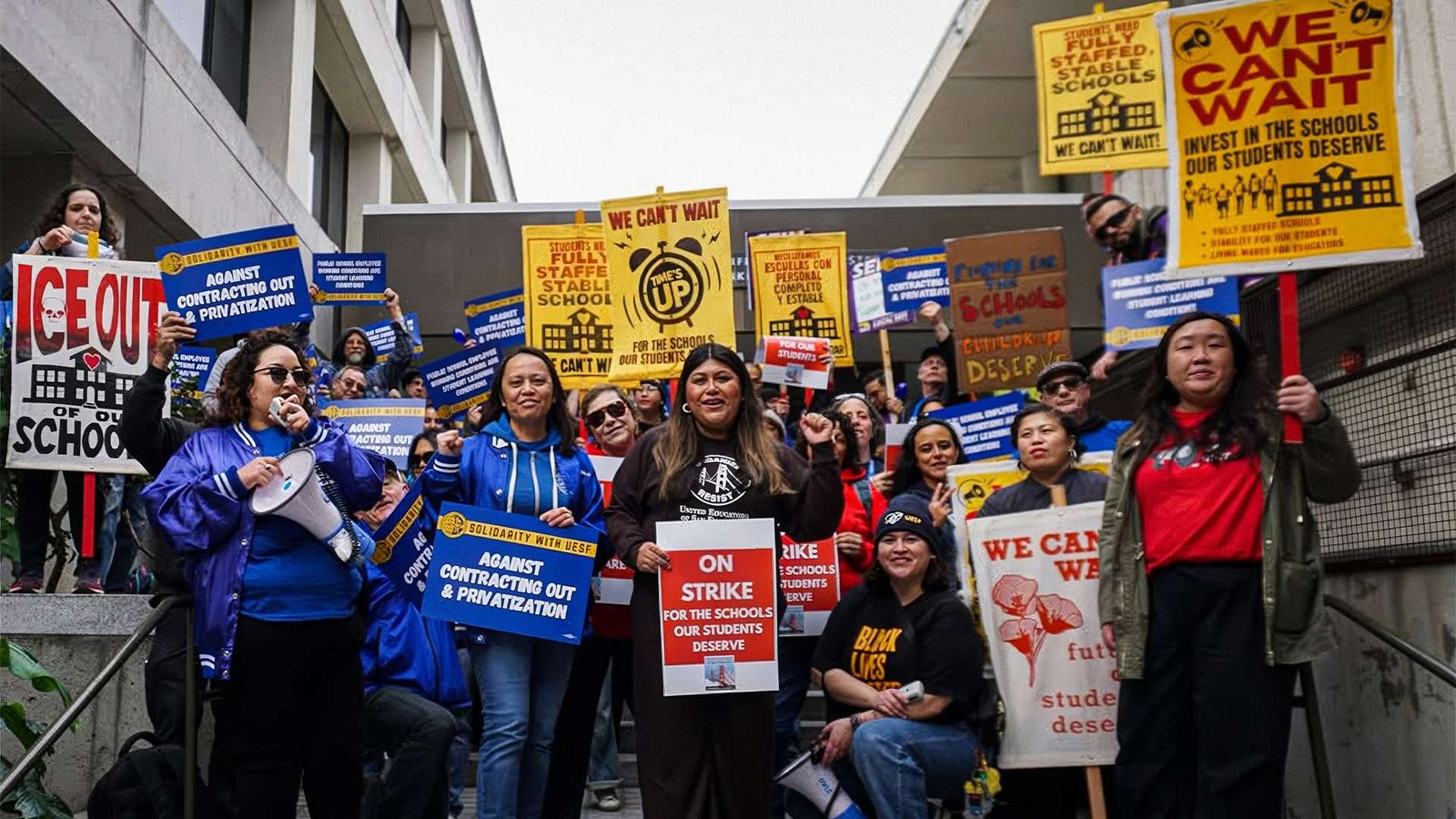
The United Educators of San Francisco (UESF) went on strike on Monday, shutting down the San Francisco Unified School District’s 120 schools and robbing 50,000 children of their regularly scheduled education.
The strike is the first one in 50 years, reports ABC10, and will continue “until we win the schools our students deserve and the contracts our members deserve,” said UESF President Cassondra Curiel at a Monday press conference. Curiel’s statement suggests that the district is taking advantage of union members, but the current contract is already quite generous.
Fully credentialed K–12 teachers (those with a bachelor’s degree) who are in their very first year of service had a base salary of $73,689 as of January 1, 2025, according to school district data. These teachers receive an additional $1,897 from the Quality Teacher and Education Act (2008), billed as rewarding schools for improving student achievement, and $3,882 from the Fair Wages for Educators Act (2020), which instituted a parcel tax to increase teachers’ salaries by 7 percent, amounting to a total effective salary of $79,468.
Earning nearly $80,000 as a starting yearly salary is a healthy sum by any reasonable standard: The average American made approximately $62,608 last year, per the Bureau of Labor Statistics. But, according to the official salary schedule, the unionized teacher works only 184 days a year. This means that they make nearly $432 per day. The median per capita income in San Francisco was $92,289 from 2020 to 2024, according to the U.S. Census Bureau. Assuming the median San Franciscan works 260 days a year, that would mean they make $355 per day—nearly 20 percent less than a new UESF K–12 teacher.
In addition to their salary, United Educators members’ fringe benefits included monthly contributions of up to $373.72 per month for family health insurance coverage under their preceding contract (July 2023–June 2025). Setting aside the fewer days worked by teachers as opposed to other civilian workers, this is substantially less than the average monthly employer contribution of $1,232.59 to family coverage, or $14,791.08 per year.
In light of this fact, the union succeeded in extracting the concession of “an annual allowance of $24,000 for teachers to choose their health care plan.” Additionally, the district offered the union a 6 percent wage increase to be phased in over the course of three years.
Neither of these concessions satisfied the union, which has sought a 9 percent raise over two years, which would cost the school district an additional $92 million per year, reports ABC10, even though the district is already running a $102 million deficit. The UESF is also seeking fully paid family coverage on a Kaiser Permanente health plan and protections against AI replacement.
Only 53.2 percent and 46 percent of students at noncharter schools met or exceeded English and math proficiency levels, respectively, in the 2024–2025 school year in the San Francisco Unified School District. A decrease of 3.32 percentage points and 4.58 percentage points from the 2018–2019 school year (the earliest period for which data are available). Instead of protesting for even higher salaries and cushy health care plans, San Francisco teachers should focus on doing a better job educating children.
Read the full article here
Fact Checker
Verify the accuracy of this article using AI-powered analysis and real-time sources.