

 Freedom Index
Listen to the article
Key Takeaways
Playback Speed
Select a Voice
In brief
- Samsung brands the Galaxy S26 as the first “agentic AI phone.”
- Samsung is layering Gemini, Perplexity, and a revamped Bixby into a multi-agent stack.
- There is also a toggleable hardware privacy display that blocks shoulder-surfers at the pixel level.
Samsung CEO TM Roh stepped onto a San Francisco stage Wednesday, introduced the Galaxy S26 line of phones, and said something no phone maker has said before.
“Imagine a phone that anticipates your needs before you even realize them,” he said. “A phone that learns your habits and adapts in real time. A phone that takes actions on your behalf. This is the agentic AI phone.”
That sounds interesting, but what does “agentic AI phone” actually mean—and why should anyone care?
Up until now, AI in phones has been reactive. You ask, it answers. Agentic AI is different. It takes actions on your behalf, across apps, without you doing the tapping or talking. Think of the difference between a search engine and a personal assistant who actually books the restaurant after you mention that you’re hungry.
That shift feels like the thing every tech company has been chasing since Siri launched on Apple’s iPhone 4S back in 2011—and yes, Siri was arguably the first real attempt at an agentic phone experience. You were supposed to just talk to your phone and have it do stuff. All these years later, we’re not quite there yet, but Samsung and Google are the ones trying to build it.
This is also what a wave of AI hardware startups spent the last two years trying—and failing—to do. The Humane AI Pin launched in late 2023 for $699 plus a $24 monthly subscription, got destroyed in reviews, sold barely 10,000 units, and ended up acquired by HP for $116 million—a fraction of its $1 billion valuation.
The Rabbit R1, a $199 pocket AI companion that Microsoft CEO Satya Nadella called the most impressive tech demo since Steve Jobs unveiled the iPhone, shipped to real users and underwhelmed almost everyone. Both devices shared the same core pitch: your phone can’t do agentic AI, so you need a dedicated device. Turns out, the phone just needed better software.
Samsung now says it’s delivering exactly what those gadgets promised—not with a new piece of hardware you have to carry alongside your phone, but through a software layer baked directly into a device you already own.
The engine behind the Galaxy S26’s agentic features is Google’s Gemini—specifically a new capability where the AI opens apps in a virtual background window and navigates them while you do something else entirely.
At the Unpacked event, Google’s Samir Samat showed a demo: The family group chat floods in with pizza requests, Gemini reads the thread, figures out everyone’s order, opens DoorDash, builds the cart, and waits for your manual tap before actually confirming. Your phone stays usable the whole time.
At launch, that works for DoorDash, GrubHub, Uber, Kroger, Walmart, and other selected apps in a very short list. It’s rolling out first as a limited preview in the U.S. and South Korea, with more apps to come.
Calling it a beta would be accurate—Google is explicitly collecting feedback from S26 users. The important guardrail: Gemini never hits “confirm” or “pay” without your final tap. You can also watch it work in real time if you don’t trust it to operate unsupervised, which, fair.
Alongside Gemini, Samsung is bringing in Perplexity as a second system-level agent. Perplexity, which bills itself as an “answer engine” rather than a chatbot, will be accessible via a wake phrase or a side-button shortcut on the S26.
Inside Samsung’s web browser, Perplexity’s Ask AI feature can sweep across all your open tabs and recent browsing history simultaneously to answer a research question without you jumping between sources. Samsung says nearly 80% of users already rely on more than two AI agents daily—which is the practical justification for offering both instead of picking one.
There’s also a new Bixby, the AI assistant that Samsung refuses to let die. It has been overhauled to go beyond simple command executions and operate based on context understanding. Bixby now understands natural language well enough that you can say “My eyes hurt after looking at the screen,” and it’ll open the brightness settings automatically. It also pulls live information directly into your conversation without kicking you out to another app. Whether people will actually use Bixby this time is a separate conversation.
Beyond the agentic stuff, the AI feature list for the S26 is long. “Now Brief” is a personalized daily digest—it proactively surfaces your restaurant reservations pulled from notification history, schedule conflicts, and energy levels, even for events you never manually added to a calendar. “Call Screening” identifies unknown callers and summarizes their intent before you pick up. A new “Nudge” feature detects context in a chat—if someone asks if you’re free this weekend, it brings your calendar to you inside the message thread instead of making you switch apps.
“Photo Assist” lets you describe something missing from a shot and Galaxy AI adds it in. The front camera also now uses an AI image signal processor for sharper detail on selfies, while night video gets cleaner grain reduction. The S26 Ultra shoots 8K video using the new APV codec, which supports near-lossless quality so footage survives multiple rounds of editing. The whole camera pipeline leans heavily on AI at the hardware level.
On competition: Apple has been promising a smarter Siri since at least 2024 and still hasn’t delivered the features it announced. Google’s own Pixel 10 will get the same Gemini agentic features—but Samsung ships first, in far larger volumes, to far more countries. No other phone maker is currently using the word “agentic” to describe its product. Samsung grabbed the label. Whether the tech giant earns it long-term depends on how fast the beta expands.
But the actual standout from Wednesday wasn’t the AI. It was a piece of display hardware that privacy-conscious people will appreciate: a built-in privacy display that lets you control whether onlookers can actually see what you’re doing on your phone.
It works like this: a “black matrix” layer physically narrows the path of light from each pixel so only the person holding the phone can see what’s on screen. Those watching at an angle get nothing but pitch black, as if the display is off. Someone next to you on the subway sees nothing.
Unlike the plastic privacy films that have existed for years and make your screen permanently darker and harder to share, this one toggles on and off. You can apply it only to specific apps—banking stays private, for example, but your games don’t—or just to the notification bar, so a person next to you can see most of your screen but not your incoming messages.
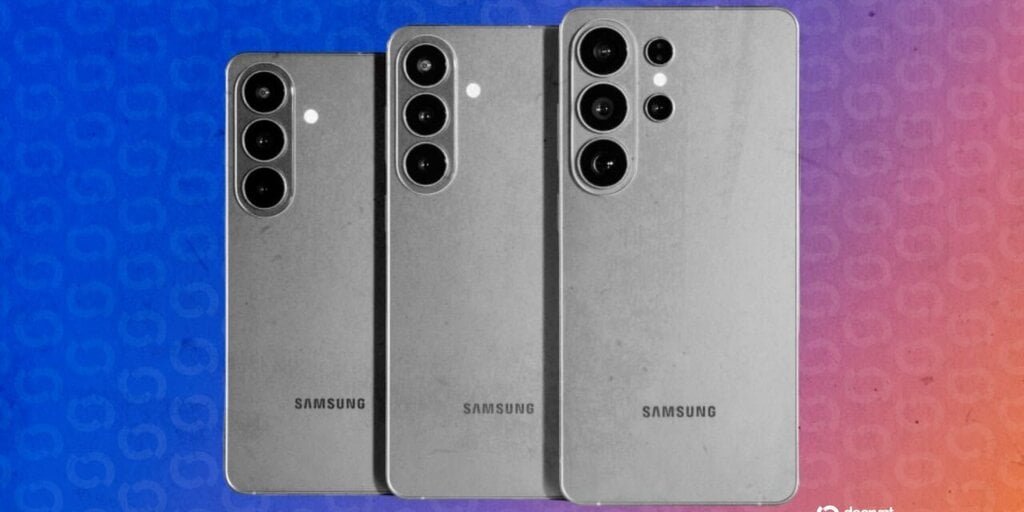
The Samsung Galaxy S26 Ultra, starting at $1,299, is the only phone in the world with this feature built into the display hardware. Pre-orders open today; shipping starts March 11. The standard Galaxy S26 starts at $899, while the larger Galaxy S26 Plus will sell for $1,099.
Daily Debrief Newsletter
Start every day with the top news stories right now, plus original features, a podcast, videos and more.
Read the full article here
Fact Checker
Verify the accuracy of this article using AI-powered analysis and real-time sources.
Get Your Fact Check Report
Enter your email to receive detailed fact-checking analysis
Continue with Full Access
You've used your 5 free reports. Sign up for unlimited access!
Already have an account? Sign in here