

 Freedom Index
Listen to the article
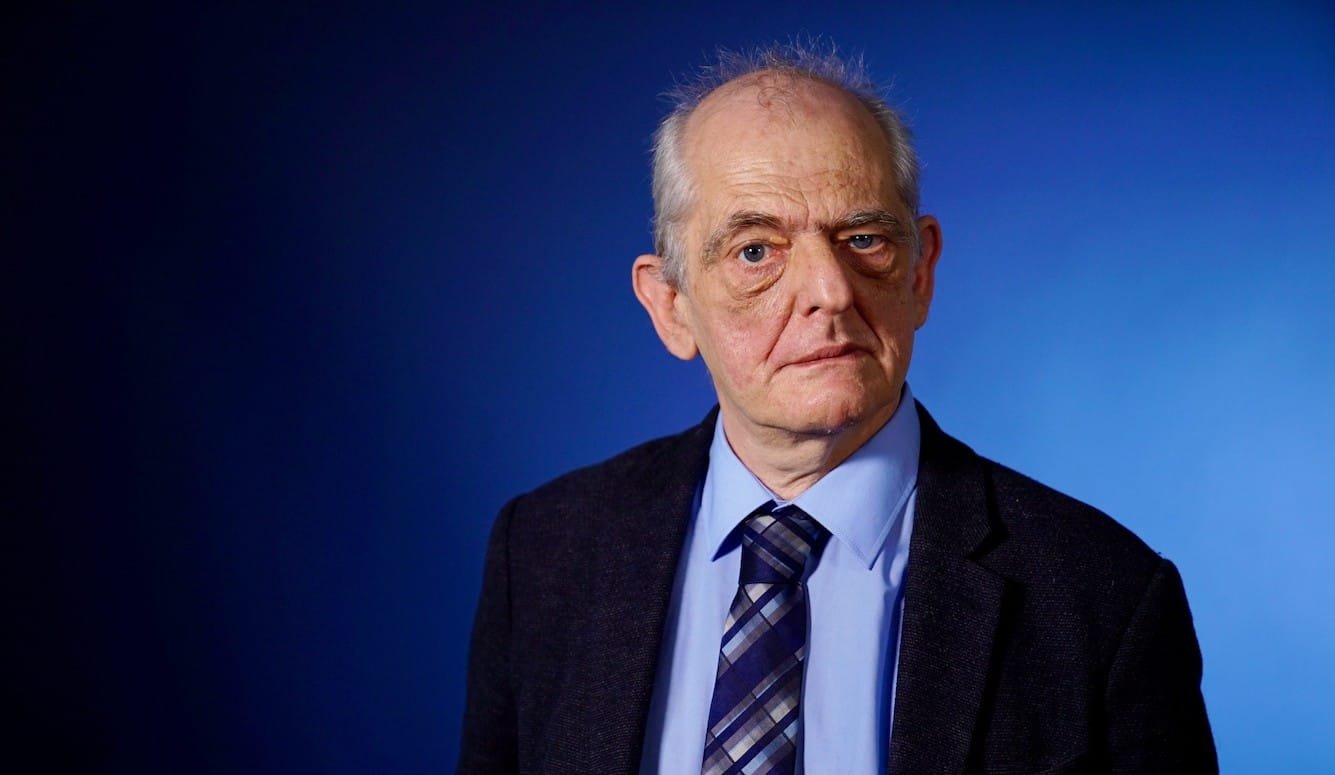
The death of my friend Richard Herzinger at the age of 69 is a terrible loss for his friends and family, as well as for Germany’s political discourse. In a country renowned for the depth and sophistication of its intellectual life, Herzinger was among its most important representatives. He was a brilliant political writer and an extremely erudite man—like Raymond Aron in France, his writing about current events drew insight from modern social and political theory, the “realist” tradition of international power-politics, and the liberal tradition of Europe, Great Britain, and the United States. The Atlantic alliance made his work possible, but the analyses and the rhymes and rhythms of his German prose were, of course, his own.
For the past twenty years, Herzinger has been best-known for his warnings about the Putin dictatorship, its roots in Russian society and politics, and the threat it poses to Ukraine and Europe. When the German government signed deals for Russian gas in the hope that economic interests would persuade Putin to choose peace rather than war, Herzinger was a passionate and persistent Cassandra. He denounced the mixture of illusions, naivety, and crass short-term financial interests of the Gerhard Schröder government and then the (only slightly more cautious) Angela Merkel administration. Today, in light of Putin’s war of aggression in Ukraine, those Herzinger essays look prescient.
Herzinger believed that Putin’s aggression was part of a global threat. Since Lenin, the global Left has understood the world using a “central dichotomy” of “imperialism” and “anti-imperialism.” From 1917 to the present, it has navigated international relations by asking to which side of this dichotomy a country or movement belongs. Since the Soviet Union’s “anti-cosmopolitan campaign” in the Eastern Bloc in the early 1950s, the radical Left has placed the state of Israel on the wrong side of this global struggle. First, the Arab states in the 1950s, then the Palestine Liberation Organisation and the Eastern Bloc denounced Israel as the “spearhead” of US imperialism, allegedly supported by Western (including West German) “imperialism.”
Herzinger—like Aron and Albert Camus in France or Karl Bracher in Germany—divided the world using a different moral and political distinction: between political freedom and liberal democracy on one hand, and dictatorship, terror, and totalitarianism on the other. He held that Israel stood firmly on the side of liberal democracy, while its enemies belonged to the camp of dictatorship, totalitarianism, and terror. On 20 October 2023, in one of his first essays after the 7 October massacre in Israel, he wrote:
Hamas’s war of terror against the Jewish people, directed by Tehran, is not a regionally isolated phenomenon, but part of a global belligerent offensive against the entire democratic civilisation, which is being pursued and orchestrated by Russia, Iran, and China. The fact that all public attention is now focused on the Middle East threatens to benefit, above all, the Kremlin, which is speculating that the West will weaken its support for Ukraine.
In Herzinger’s view, the Hamas attack on Israel and the Russian attack on Ukraine were part of the same global assault on free societies. He saw Ukraine’s struggle for survival as a common struggle to defend civilisation against barbarism. This is the same struggle that Israel has been waging in its defensive war against the Islamic Republic of Iran and its Islamist proxies. With reference to my book, Israel’s Moment, he argued that even if international affairs were a dichotomy between imperialism and anti-imperialism, “Israel was anything but a fabrication of Western ‘imperialists’—it was, on the contrary, an anti-colonial founding.”
Israel’s Perilous Moment, Then and Now
Herf tells the complicated and often surprising story of the internal political struggles in Western capitals, as well as in the halls of the United Nations, that erupted at the end of the Second World War.
As early as 28 October 2023, a year before the 7 October Hamas attack, Herzinger wrote this:
With the start of Russia’s campaign of annihilation against Ukraine, Putin’s Russia and the Islamic Republic of Iran have merged into a symbiotic alliance, and the Iranian theocracy has become increasingly more similar. Both despotisms are learning from each other in the application of the cruelest methods of warfare abroad and of violent social conformity at home.
Unfortunately, in an era of “global confrontation between the forces of democracy and authoritarianism,” the movements resisting “autocratic tyranny” have all too often been “largely isolated from each other.”
In 2006, Judith Butler—a professor of literature at the University of California and winner of the 2012 Adorno Prize of the City of Frankfurt am Main—received a lot of attention when she made the following remark during a panel discussion at UC Berkeley: “Yes, understanding Hamas, Hezbollah as social movements that are progressive, that are on the Left, that are part of a global Left, is extremely important.” On 20 November 2023, Herzinger wrote an essay titled “Deeply Anchored,” in which he argued that Butler’s enthusiasm for these terrorist organisations could only surprise those who knew nothing of the role that antisemitism had played in the history of radical politics. He recalled the anti-Judaism and antisemitism in the writings of Voltaire, Pierre-Joseph Proudhon, Karl Marx, and the Soviet associations of Israel with US imperialism. “The SED regime,” he pointed out, “distinguished itself with particular zeal in fighting Israel.”
In the weeks following the 7 October attack, UN Secretary General Antonio Guterres combined his condemnation of the Hamas attack with a mitigating observation that it “did not occur in a vacuum,” since “the Palestinian people had, after all, been subjected to 56 years of oppressive occupation.” Of Guterres’s comment, Herzinger wrote:
[T]he UN Secretary General’s words express the inability prevalent in the Western world to recognise absolute evil and call it by its name. By linking Hamas’s will to destroy with a history that makes it, if not understandable, then at least comprehensible, Guterres obscures the true nature of acts of violence committed solely to murder as many defenceless people as possible and inflict maximum suffering on a group of people declared to be the enemy. Such atrocities constitute nothing less than a breach of civilisation.
These words were in the spirit of Camus’s anti-terror manifesto The Rebel and Hannah Arendt’s focus on ideological evil in The Origins of Totalitarianism. For Herzinger, the “contextualisation” proposed by commentators like Guterres was actually a relativisation designed to avoid confronting the reality of what Hamas had done:
In democratic societies, however, there is a widespread reluctance to acknowledge the reality of unconditional evil. … But confronted with utter inhumanity, a rational capacity for understanding, which always deduces events from causal connections, reaches its limits. It must admit that all attempts at explanation founder on the presence of a force hell-bent on destruction for the sake of destruction. This force is evil.
Herzinger considered it important to highlight the obvious, which was obscured by those who took refuge in arguments from context. He applied a language of anti-totalitarianism to Hamas, and he did so at a time when the global Left was repeating Islamist propaganda and directing accusations of genocide at Israel rather than Hamas.
Herzinger’s essays included plenty of sharp criticism of the New Right, particularly the AfD in Germany and Trumpism in the US. He was particularly critical of references to “imported antisemitism” brought to Germany by immigrants from Muslim countries. “Islamist antisemitism, as it confronts us today with increased aggression,” he pointed out, “is closely related to European and especially German history.” He drew on my work and that of Matthias Küntzel about the history of Nazi Germany’s efforts to spread antisemitism in the Middle East, the Nazis’ concomitant collaboration with Haj Amin al-Husseini, and the later influence of that collaboration on Yasser Arafat. Herzinger wrote:
The ideology of radical Islamism, infected by National Socialism, was thus able to continue its influence unbroken beyond the end of the Third Reich. The direct continuity between Nazi ideology and Islamism is demonstrated not least by the fact that Hamas, in its founding charter, invoked the “Protocols of the Elders of Zion,” that infamous antisemitic forgery, which describes a supposed secret Jewish plan to seize world domination.
When we speak today of the hatred of Jews that is being brought into Germany—primarily through Arab, Iranian, and Turkish propaganda networks—we should therefore speak of “reimported” rather than “imported” antisemitism. Even in its Islamist variant, antisemitism is a grim legacy of the German past that cannot simply be dismissed as something “foreign.” It can only be effectively combated if it is viewed as a problem of German society as a whole.
Herzinger’s determination to engage with the history of dictatorship in Germany was not limited to a critical look at the Nazi regime and its aftermath. He rejected the “trivialisation of the GDR’s past,” which he said contributes to “blurring the fundamental difference between a democratic constitutional state and dictatorship” and “plays into the hands of the Russian aggressor state, which seeks to undermine the resistance forces of Western democracies, by denouncing their values as mere fraudulent deception.”
Richard Herzinger was a believer in freedom who continued the tradition of the 20th century’s great anti-totalitarian writers. He titled his website “We hold these truths…” in reference to the United States’ Declaration of Independence. A collection of his essays would preserve an important contribution to European intellectual history, and I hope a publisher will take the opportunity presented by his passing to issue an anthology of his writing in German and English. In the meantime, over a hundred of his essays are available on the Perlentaucher website, and they can be enjoyed by English-speaking readers using their web browser’s translation tool.
Last summer, I urged Richard to publish a collection of his essays, and he wondered if there would be any interest in such a collection. I very much hope so. The arguments in defence of a free society must be made again and again, for every new generation. A country that honours Hannah Arendt should also honour Richard Herzinger. If he was not the most important critic of totalitarianism in Germany in recent decades, he was certainly one of them.
This essay was first published in the German political and literary journal Perlentaucher on 18 October 2025. Our thanks to its co-editor Thierry Chervel for giving us permission to republish a lightly edited version in translation here.
Read the full article here
Fact Checker
Verify the accuracy of this article using AI-powered analysis and real-time sources.