

 Freedom Index
Listen to the article
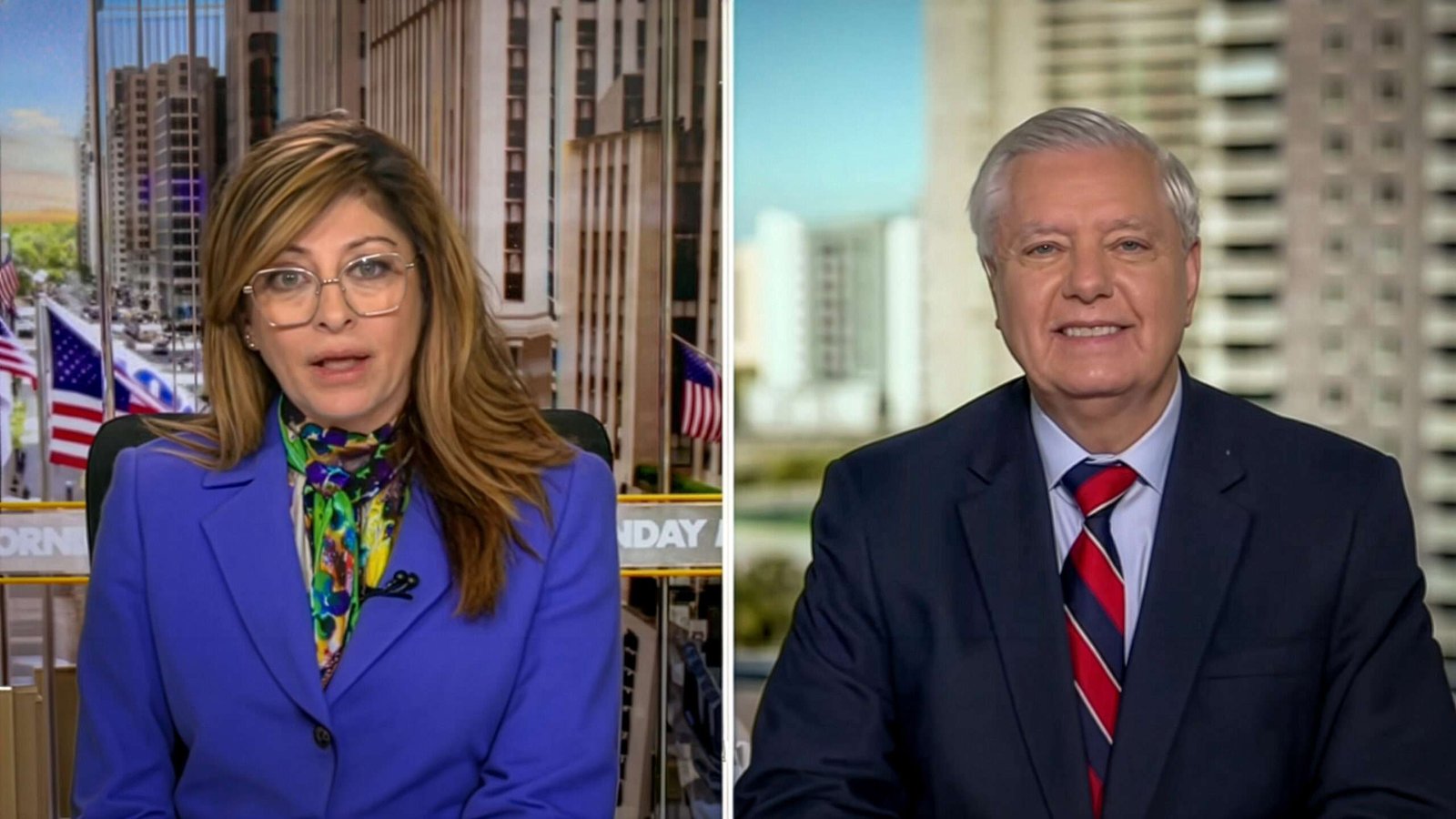
Near the end of a seven-minute Fox News interview on Sunday that focused mostly on Iran, Sen. Lindsey Graham (R–S.C.) held up a “Free Cuba” cap and teased, “Stay tuned. The liberation of Cuba is upon us. It’s just a matter of time now.”
“We’re marching through the world. We’re cleaning out the bad guys,” the chairman of the Senate Budget Committee enthused. “I’ve never seen anything like it! This is Ronald Reagan–plus. Donald Trump is resetting the world in a way nobody could have dreamed of a year ago. He is the greatest commander in chief of all time. Our military is the best of all time. Iran is going down, and Cuba is next!”
Lindsey Graham being gung-ho about American bombs over the Middle East—or obsequious toward a man he once described as a “race-baiting, xenophobic, religious bigot”—is by now a dog-bites-man story. It’s the regime-change in Cuba that adds a novel twist. Judging by recent remarks and actions coming out of the White House, that seven-decade Washington fever dream sounds like it may become an attempted reality sooner rather than later.
“Cuba’s going to fall, too,” Trump told Politico Thursday. “We cut off all oil, all money…everything coming in from Venezuela, which was the sole source. And they want to make a deal.”
That same day, at a White House event for Major League Soccer champion Inter Miami, the president said: “What’s happening with Cuba is amazing….We want to finish this one [Iran] first, but that will be just a question of time before you and a lot of unbelievable people are going to be going back to Cuba.”
In a Friday interview with CNN, Trump predicted that “Cuba is gonna fall pretty soon….They want to make a deal so badly….So I’m going to put Marco [Rubio] over there and we’ll see how that works out.”
Then, at the first-ever Shield of the Americas summit on Saturday, near Miami, the president told an audience of Latin American leaders, “Cuba’s at the end of the line. They’re very much at the end of the line. They have no money. They have no oil. They have a bad philosophy. They have a bad regime that’s been bad for a long time….Cuba’s in its last moments of life as it was. It’ll have a great new life, but it’s in its last moments of life the way it is….Four of you said actually, ‘Could you do us a favor? Take care of Cuba.’ I’ll take care of it, OK?”
Secretary of State Rubio, whose parents immigrated from the island to Florida in 1956 (three years before Fidel Castro took over), has been openly working on regime transition ever since the U.S. forcibly snatched and imprisoned Venezuelan dictator Nicolás Maduro in January, killing a reported 32 Cuban security personnel in the process. Axios reported last month that Rubio has been holding direct talks with the 41-year-old grandson of fading former dictator Raúl Castro, searching for a Delcy Rodriguez–style accommodation with an insider communist willing to deal pragmatically with a ravenous Washington.
The situation on the once-prosperous, now-miserable island is by all accounts dire after the removal of its Venezuelan benefactor (which had stepped into the energy-supplying role once filled by the Soviet Union). Gas, electricity, and water are all being rationed, and elderly residents are often seen picking through garbage for food. More than one-quarter of the population is estimated to have fled during the past half-decade alone, mostly to the United States.
To ratchet up the pressure still more, the White House has tasked a federal prosecutor in Florida with preparing a criminal indictment against leaders of Cuba’s Communist Party, threatened tariffs on third-country oil suppliers, and made sure Cubans haven’t forgotten the lesson of Maduro. That said, any use of U.S. arms seems unlikely at the moment.
USA Today reported Sunday, based on two administration sources, that the White House “is preparing an economic deal with Cuba that could be announced soon.” More:
The details of the prospective deal and exact timing are not known. But an agreement could include a relaxation on Americans’ ability to travel to Havana. Trump would not need Congress’ approval to loosen those types of restrictions.
Discussions have included an off-ramp for President Miguel Díaz-Canel, the Castro family remaining on the island and deals on ports, energy and tourism. The U.S. government has floated dropping some sanctions.
As with Venezuela and Iran, the contours of regime transition appear from the outside to be fluid, not predetermined. But even more than the other two dictatorships, Cuba’s revolutionary police state has been embedded and threaded throughout the country on a literally block-by-block level.
Replacing a communist antagonist with a communist partner, particularly if that partner comes from the same crime family that has immiserated the island in poverty for 67 agonizing years, does not solve the problem of communism. There is extraordinary pent-up desire, both in Cuba and among the diaspora 90 miles to the north, for freedom, familial reconciliation, and perhaps some score-settling. The same people going understandably bonkers today in Miami for regime change may sour on the project if yet another Castro lives high on corruption while the peasants try not to starve.
Trump, Rubio, Graham, and other interventionists are gambling that they can produce meaningful regime change on the cheap, resetting the world through a few limited military applications, then cutting preferential deals and otherwise sitting back while the dominoes fall in a hopefully beneficial direction.
“I’ve been watching it for 50 years, and it’s fallen right into my lap because of me,” Trump told CNN. “And we’re doing very well.”
Read the full article here
Fact Checker
Verify the accuracy of this article using AI-powered analysis and real-time sources.