Close Menu
FSNN | Free Speech News NetworkFSNN | Free Speech News Network
  • Home
  • News
    • Politics
    • Legal & Courts
    • Tech & Big Tech
    • Campus & Education
    • Media & Culture
    • Global Free Speech
  • Opinions
    • Debates
  • Video/Live
  • Community
  • Freedom Index
  • About
    • Mission
    • Contact
    • Support
Trending

Fed chair nominee Kevin Warsh not necessarily a hawk, says close colleague Stanley Druckenmiller

8 minutes ago

What Role Is Left for Decentralized GPU Networks in AI?

11 minutes ago

Morning Minute: Washington Just Gave Crypto the Green Light

22 minutes ago
Facebook X (Twitter) Instagram
Facebook X (Twitter) Discord Telegram
FSNN | Free Speech News NetworkFSNN | Free Speech News Network
Market Data Newsletter
Friday, January 30
  • Home
  • News
    • Politics
    • Legal & Courts
    • Tech & Big Tech
    • Campus & Education
    • Media & Culture
    • Global Free Speech
  • Opinions
    • Debates
  • Video/Live
  • Community
  • Freedom Index
  • About
    • Mission
    • Contact
    • Support
FSNN | Free Speech News NetworkFSNN | Free Speech News Network
Home»News»Legal & Courts»Recent Events Highlight Need for Objective Monetary Policy
Legal & Courts

Recent Events Highlight Need for Objective Monetary Policy

News RoomBy News Room4 months agoNo Comments5 Mins Read1,046 Views
Share Facebook Twitter Pinterest Copy Link LinkedIn Tumblr Email VKontakte Telegram
Recent Events Highlight Need for Objective Monetary Policy
Share
Facebook Twitter Pinterest Email Copy Link

Listen to the article

0:00
0:00

Key Takeaways

Playback Speed

Select a Voice

Jai Kedia

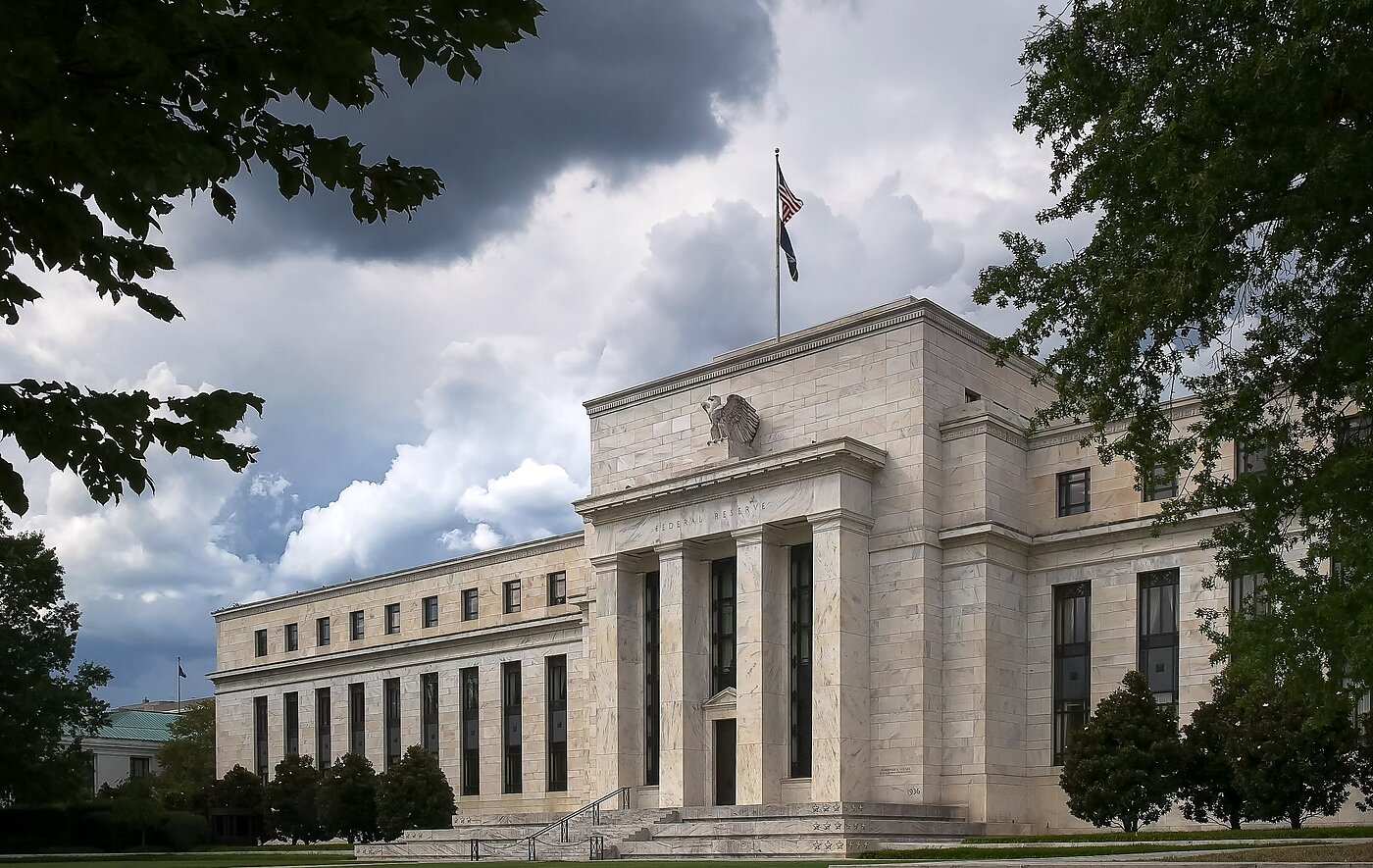
The Federal Open Market Committee (FOMC) met last week and decided to lower the target for the federal funds rate (FFR), the policy rate used to affect economy-wide changes, by 25 basis points, as was widely expected. Recent developments, especially Stephen Miran’s appointment and subsequent dissent at the FOMC meeting, have again triggered concerns over Fed independence and the degree to which rate decisions are influenced by the president. But the Fed (and Congress) must bear some responsibility for allowing monetary policy to become increasingly discretionary. Presently, the FOMC can set its policy rate target based on members’ subjective opinions, making it difficult to know precisely how this target is chosen. The Fed should follow, or be mandated to follow, an objective monetary policy rule to both improve rate decisions and shield its independence from the executive.

There are valid reasons to be concerned about the Fed’s independence and performance. For months now, the president has been hurling insults at the Fed and Chairman Powell to force significantly lower rates. The president also attempted to fire Fed Governor Lisa Cook over mortgage fraud allegations, a situation that is being adjudicated by the courts. There is also an ongoing dispute over the Fed’s construction costs. Finally, there is Stephen Miran’s appointment to the Fed board and the actions he has taken since.

We have recently written about Miran’s strange views on economics, particularly international trade and finance. He also remains employed by the current administration, on leave from the Council of Economic Advisors, while he serves as Fed governor—an unprecedented move. At his first FOMC meeting, mere hours after being appointed to the Fed board, Miran was the lone dissent against the 25 basis point cut, voting instead for a 50 basis point cut. Such a rate cut would have run counter to standard economic theory. 

As my recent article showed, macroeconomic data, mainly elevated inflation risks, called for leaving the target rate unchanged or even marginally increasing it. Strangely, Miran abstained from voting on the interest on reserve balances rate (IORB), the rate the Fed pays banks to hold reserves at the Fed, citing insufficient information. Under the modern floor system, however, the IORB is the key policy rate, and the FFR is set at the IORB.
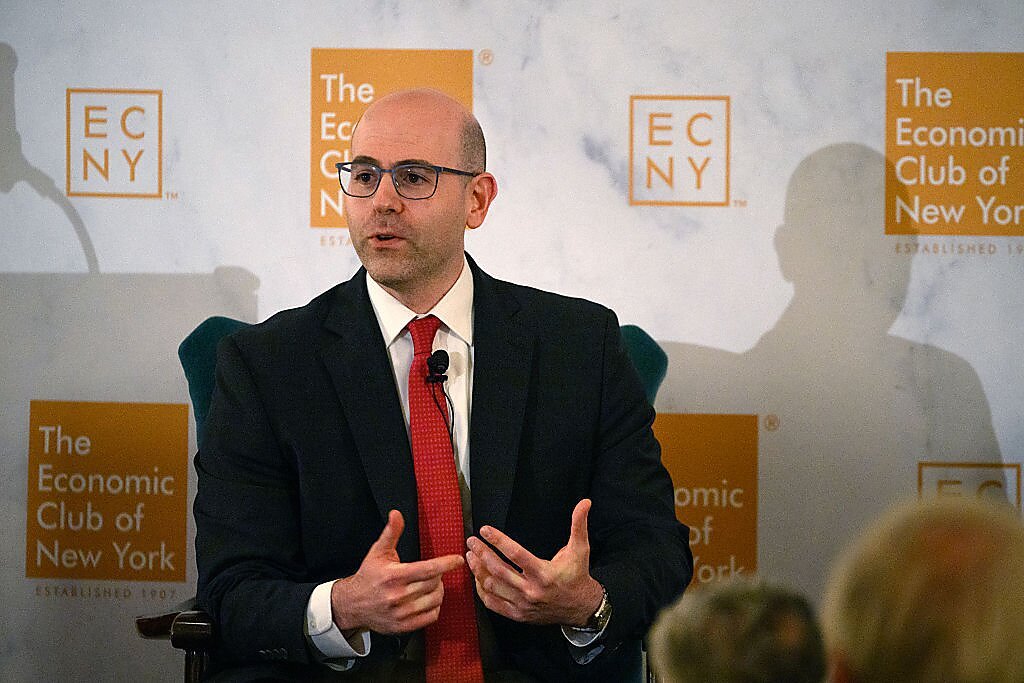
Federal Reserve Governor Stephen Miran


Federal Reserve Governor Stephen Miran.

Like his views on international finance, Miran’s views on monetary policy put too much stock in his own subjective assessment of economic conditions and too little in established economic theory and practice. The result is that he interprets data to fit his narrative (that the FFR is too high), rather than the other way around. For instance, in a recent CNBC interview, Miran denied that inflation was a major concern, stating that a high degree of net migration out of the US would be disinflationary. 

Of course, the underlying assumption is that immigrants consume so many goods and services that their absence will lower aggregate demand enough to also lower the US price level. That in itself is a bad thing for the US economy, but Miran completely ignores supply factors. Closing employment to people whom businesses have demonstrated they need—migrants or not—lowers productivity and adds inflationary pressure.

In his first public speech as a Fed governor, Miran expanded on his advocacy for sharper rate cuts. Miran claims that the neutral level of the FFR (academically notated as R*) is much lower than anyone else at the Fed thinks it is—so low, in fact, that it warrants a 100 to 200 basis point lowering of the FFR.[i] To justify his position, Miran opines, without serious analytical backing, that various factors such as negative migration and deregulation have drastically reduced R*. The problem is that R* is unobservable, so it is not possible to disprove such assessments of its true value. To be fair, Miran notes this problem with R* but defends its use since other monetary policy frameworks also use unobservable data like the output gap and the natural rate of unemployment. But there are several observable alternatives to R* that Miran does not consider. For instance, several monetary policy rules use observable data like output growth, and none of them would advocate for a 200 basis point cut to the FFR.

Of course, Miran’s views will likely have no effect on final policy outcomes—he is only one of twelve FOMC members after all. But this and other events from the past few months only serve to highlight that Fed independence and faith in monetary policy are not a given. It is easy to yell about independence and ask the executive to leave the Fed alone. But the current system relies too much on the goodwill of politicians. So long as the Fed is viewed as an easy target to blame when the economy takes a downturn, or lower rates are viewed as a salve to all economic ailments, politicians will have a vested interest in meddling with monetary policy. 

The solution is to limit political influence as much as possible and have the Fed follow a monetary policy rule when setting the interest rate target. Such a policy would insulate the Fed’s independence and prevent subjective, politically motivated rate cuts through more objective policymaking.


[i] In such models, the actual value of the FFR is directly proportional to R* so if R* falls, the FFR should correspondingly fall too.

Read the full article here

Fact Checker

Verify the accuracy of this article using AI-powered analysis and real-time sources.

Get Your Fact Check Report

Enter your email to receive detailed fact-checking analysis

5 free reports remaining

Continue with Full Access

You've used your 5 free reports. Sign up for unlimited access!

Already have an account? Sign in here

Share. Facebook Twitter Pinterest LinkedIn Tumblr Email Telegram Copy Link
News Room
  • Website
  • Facebook
  • X (Twitter)
  • Instagram
  • LinkedIn

The FSNN News Room is the voice of our in-house journalists, editors, and researchers. We deliver timely, unbiased reporting at the crossroads of finance, cryptocurrency, and global politics, providing clear, fact-driven analysis free from agendas.

Related Articles

Media & Culture

Trump Taps Kevin Warsh To Lead Fed

50 minutes ago
Media & Culture

Today in Supreme Court History: January 30, 1939

2 hours ago
Media & Culture

Free Nations Don’t Have To Care About the Whims of Elected Officials

3 hours ago
Media & Culture

Review: Charting the 3 Factions of the MAGA Movement

4 hours ago
Media & Culture

Brickbat: Won’t Make the Cut

6 hours ago
Media & Culture

The Moving Property Problem in Fourth Amendment Law

8 hours ago
Add A Comment

Comments are closed.

Editors Picks

What Role Is Left for Decentralized GPU Networks in AI?

11 minutes ago

Morning Minute: Washington Just Gave Crypto the Green Light

22 minutes ago

Trump Taps Kevin Warsh To Lead Fed

50 minutes ago

CoinDesk 20 performance update: index slides 1.9% as all assets trade lower

1 hour ago
Latest Posts

Bitcoin More ‘Undervalued’ Than During All Previous Bear Markets, Data Says

1 hour ago

Enshittification Ensures Streaming Prices Soar Faster Than Any Other Consumer Good

2 hours ago

Today in Supreme Court History: January 30, 1939

2 hours ago

Subscribe to News

Get the latest news and updates directly to your inbox.

At FSNN – Free Speech News Network, we deliver unfiltered reporting and in-depth analysis on the stories that matter most. From breaking headlines to global perspectives, our mission is to keep you informed, empowered, and connected.

FSNN.net is owned and operated by GlobalBoost Media
, an independent media organization dedicated to advancing transparency, free expression, and factual journalism across the digital landscape.

Facebook X (Twitter) Discord Telegram
Latest News

Fed chair nominee Kevin Warsh not necessarily a hawk, says close colleague Stanley Druckenmiller

8 minutes ago

What Role Is Left for Decentralized GPU Networks in AI?

11 minutes ago

Morning Minute: Washington Just Gave Crypto the Green Light

22 minutes ago

Subscribe to Updates

Get the latest news and updates directly to your inbox.

© 2026 GlobalBoost Media. All Rights Reserved.
  • Privacy Policy
  • Terms of Service
  • Our Authors
  • Contact

Type above and press Enter to search. Press Esc to cancel.

🍪

Cookies

We and our selected partners wish to use cookies to collect information about you for functional purposes and statistical marketing. You may not give us your consent for certain purposes by selecting an option and you can withdraw your consent at any time via the cookie icon.

Cookie Preferences

Manage Cookies

Cookies are small text that can be used by websites to make the user experience more efficient. The law states that we may store cookies on your device if they are strictly necessary for the operation of this site. For all other types of cookies, we need your permission. This site uses various types of cookies. Some cookies are placed by third party services that appear on our pages.

Your permission applies to the following domains:

  • https://fsnn.net
Necessary
Necessary cookies help make a website usable by enabling basic functions like page navigation and access to secure areas of the website. The website cannot function properly without these cookies.
Statistic
Statistic cookies help website owners to understand how visitors interact with websites by collecting and reporting information anonymously.
Preferences
Preference cookies enable a website to remember information that changes the way the website behaves or looks, like your preferred language or the region that you are in.
Marketing
Marketing cookies are used to track visitors across websites. The intention is to display ads that are relevant and engaging for the individual user and thereby more valuable for publishers and third party advertisers.