

 Freedom Index

Listen to the article
Perpetual decentralized exchanges (DEXs) are gaining traction as traders turn to blockchain-based platforms that promise lower costs and fewer intermediaries than traditional centralized venues.
Perp DEXs are blockchain-based venues for trading perpetual futures contracts, allowing traders to bet on the underlying asset’s price with leverage and without an expiry date.
Crypto research firm Delphi Digital said in its outlook for 2026 that perp DEXs are poised to continue taking market share from traditional finance products. It argued that decentralized infrastructure is structurally more efficient than legacy systems, which it described as fragmented and expensive to operate.
“Now Hyperliquid is building native lending. Perp DEXs could become brokerage, exchange, custodian, bank, and clearinghouse all at once,” wrote Delphi Digital in a Tuesday X post, adding that competitors such as Aster, Lighter and Paradex are “racing to catch up.”
Related: $675M Lighter airdrop ranks among crypto’s 10 largest: Bubblemaps
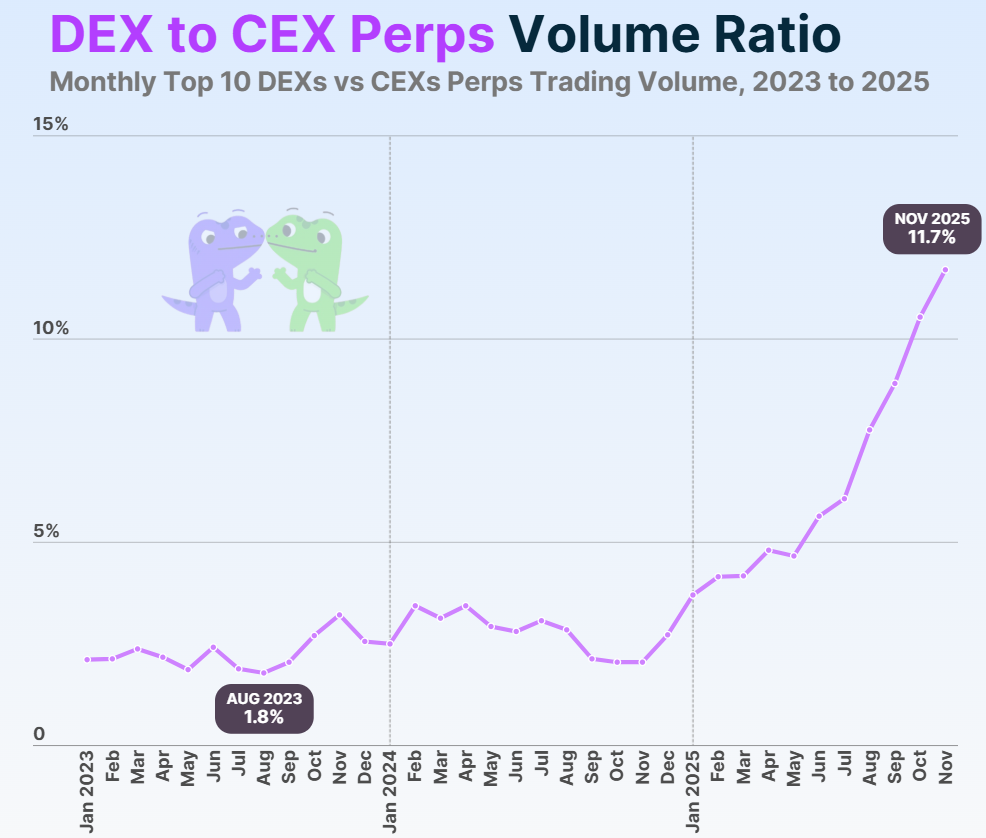
Perp DEXs have already taken a significant share of revenue from centralized exchanges, as their market share rose from 2.1% in January 2023 to a new all-time high of 11.7% in November 2025, according to a report by data aggregator CoinGecko.
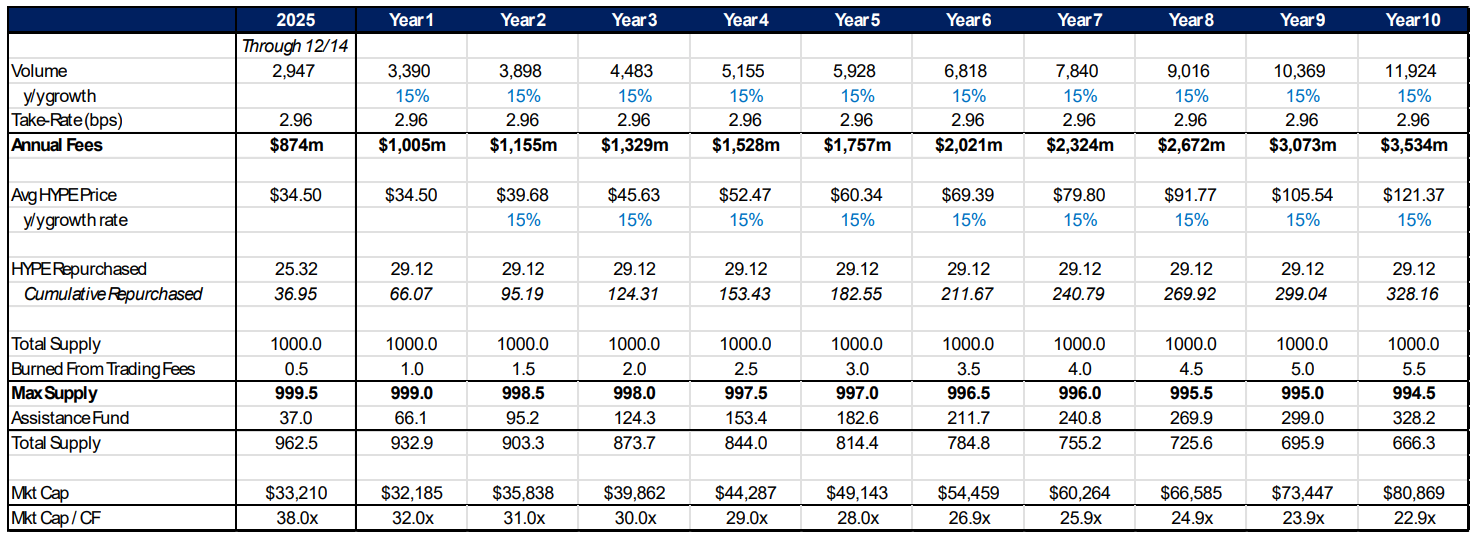
The growing adoption of decentralized trading platforms may bolster the leading DEX token, Hyperliquid (HYPE), to over $200 in the next 10 years, according to a December research note from Cantor Fitzgerald.
The company’s prediction assumed that the token’s price will grow at a 15% compound annual growth rate while the Assistance Fund will repurchase about 291 million HYPE tokens, reducing the total supply to 666 million tokens.
Related: Standard Chartered said to plan crypto brokerage, trims ETH forecast
Perp DEX volume triples in 2025 amid growing onchain derivatives demand
The cumulative trading volume of perp DEXs tripled during 2025, reaching $12.09 trillion, up from $4.1 trillion at the start of the year, Cointelegraph reported on Dec. 31.
About $7.9 trillion, or 65% of the total perp DEX volume, was generated in 2025, according to DefiLlama data, showing the significant adoption of these trading platforms during the past year.
However, this figure pales in comparison to the notional value of outstanding over-the-counter derivatives, which reached $846 trillion in June 2025, according to data from the Bank for International Settlements.
Magazine: Can Robinhood or Kraken’s tokenized stocks ever be truly decentralized?
Read the full article here
Fact Checker
Verify the accuracy of this article using AI-powered analysis and real-time sources.