

 Freedom Index
Listen to the article
In a letter written before the adoption of the U.S. Constitution, Thomas Jefferson wrote, “Were it left to me to decide whether we should have a government without newspapers or newspapers without a government, I should not hesitate a moment to prefer the latter.”
Really, I’d say there’s no reason to choose—just ditch government and keep the press. That should guide our thoughts as we consider the recent standoff between the Department of War Defense and almost all journalism operations, whose reporters turned in their Pentagon press badges rather than agree to a new policy that, among other things, bans the use of leaked information. Leaks are, as most news consumers should know, one of the better ways of getting insight into government officials’ ongoing shenanigans. The current spat may actually encourage leaks—and better reporting.
You are reading The Rattler from J.D. Tuccille and Reason. Get more of J.D.’s commentary on government overreach and threats to everyday liberty.
As The Hill‘s Ellen Mitchell put it, “Defense Secretary Pete Hegseth demanded that reporters agree by 5 p.m. Tuesday to a new policy, under which they would need to pledge to not obtain or use any unauthorized material, even if the information is unclassified — or hand over their press badges in the next 24 hours. Media outlets say this is a violation of their First Amendment rights, and nearly every news outlet has refused to sign.”
Quite rightly, most reporters headed for the exits rather than agree to restrictions on how they cover the vast military establishment of the United States. They’re all as capable of making calls and sending emails from outside the Pentagon as from inside. More importantly, they’re able to use face-to-face meeting and encrypted communications to gather and report information from whistleblowers or simply disgruntled employees that government officials don’t want them to use.
“Today, we join virtually every other news organization in declining to agree to the Pentagon’s new requirements, which would restrict journalists’ ability to keep the nation and the world informed of important national security issues,” all of the major broadcast and cable news operations said in a joint statement. “The policy is without precedent and threatens core journalistic protections. We will continue to cover the U.S. military as each of our organizations has done for many decades, upholding the principles of a free and independent press.”
Newsmax, a conservative cable news operation, also rejected the press policy. The media outlet, which usually supports the Trump administration, called the policy “a threat to press freedom and government transparency.”
Among the few signatories are a few foreign correspondents, some independent journalists, and the reliably pro-Trump One America News Network. The total remaining credentialed reporters in the Pentagon tally up to about 15 out of the hundreds that previously worked that beat.
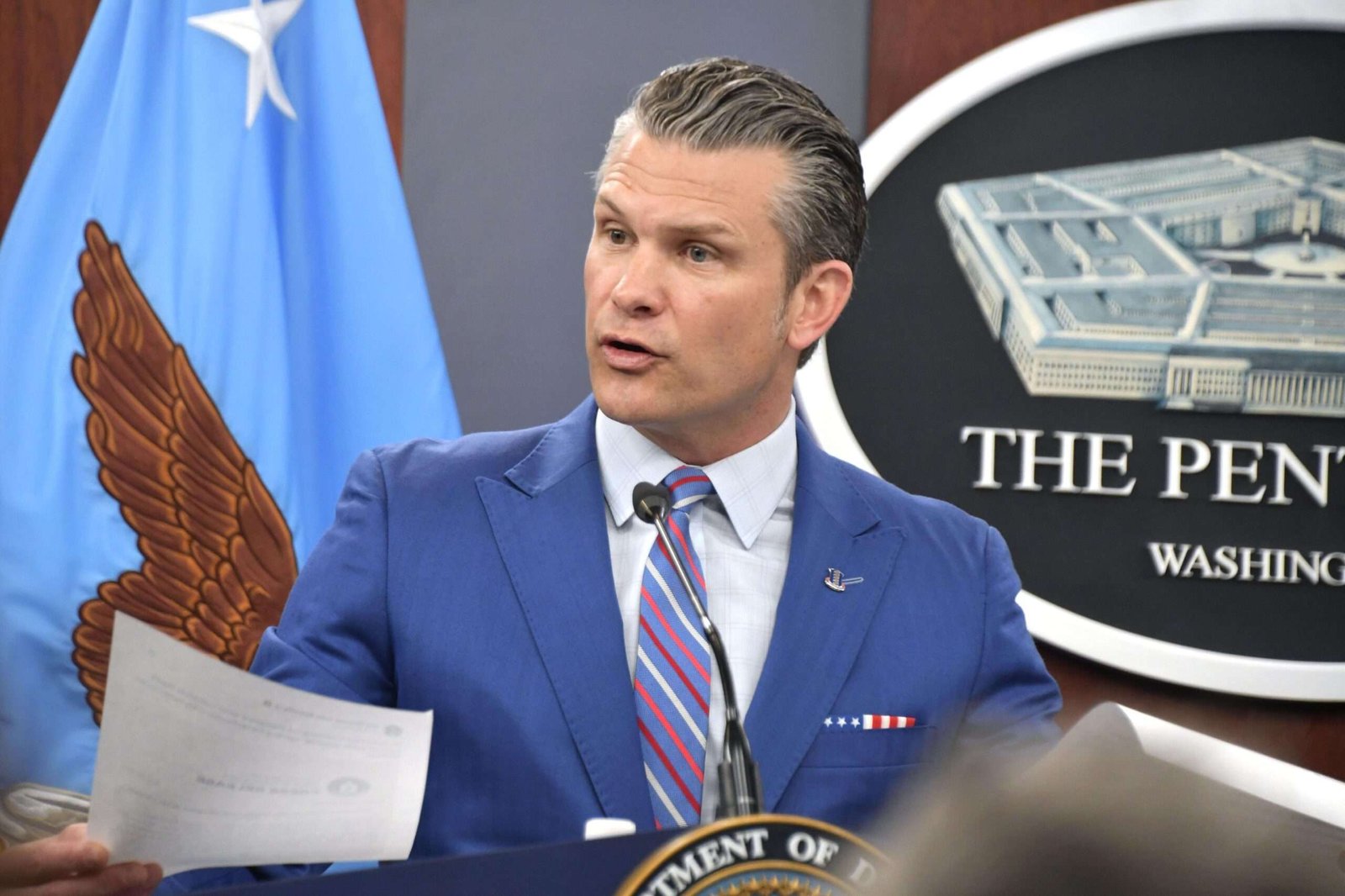
Defense Secretary Pete Hegseth, who claims the anti-leak provision of the new press policy means that “credentialed press [are] no longer permitted to solicit criminal acts” responded on X to the departures with a hand-wave emoji.
There are things about Hegseth that I like. I agreed with much of his address to top brass emphasizing fitness, lethality, and the end of woke policies. I also don’t believe the brass were the audience for that message; it was intended to bolster the morale of the rank and file (all the recent military vets I asked about it approved) and to send a “we’re back” message to foreign adversaries.
But the military establishment consists of government agencies and officials spending vast quantities of taxpayer money to—hopefully—defend the United States from foreign threats. The resources entrusted to the military can make America safer—or they can be squandered and misused, and even render the country less secure and damage its ability to respond to threats. The people of this country who pay for and live under the government are entitled to keep an eye on its operations. Traditionally, scrutiny has been maintained by journalists from various forms of media. And yes, they often publish revelations from people displeased by what’s going on inside the military and the security state that government officials would prefer to keep undisclosed. Consider Edward Snowden as a case in point; he let us know that our own government was using the taxes it squeezes from us to spy on Americans. The Pentagon’s new press policy seeks to punish disclosures of such information.
People engaged in journalism (it’s an activity, not a status) are supposed to seek out and distribute information that powerful people—especially those in government—don’t want to be widely known. Sometimes, government officials don’t want information made public because that might jeopardize security. Other times, however, they’re attempting to conceal abuse of power and other forms of wrongdoing. The Navy, for example, has quite a history of bribery and corruption as epitomized by the massive Fat Leonard scandal and the recent conviction of the former Navy second-in-command for exchanging a military contract for a plush post-retirement job. And the Trump administration’s attempt to control the press isn’t new; the Obama administration, in its time, was criticized for intense hostility to scrutiny and transparency. The Trump administration builds on unfortunate past precedents.
“The [Pentagon press] policy’s interpretation of solicitation or encouragement seems to invest a lot of discretion into the Department of War to decide whether the question was soliciting sensitive information,” the Foundation for Individual Rights and Expression’s Adam Goldstein points out. “And it also sets up reporters to be scapegoats for when federal employees release too much information. The fault there starts—and ends—with those employees, not journalists simply doing their job.”
Journalists will continue to report on America’s military establishment whether Hegseth and the rest of the Trump administration like it or not. In fact, increased separation between journalists and military officials is likely to reduce the administration’s influence over what information is solicited and published. After all, it’s easier to build relationships between people walking the same corridors than when they’re on the other end of phone calls or FOIA requests. Greater distance could mean a higher likelihood that stories officials don’t like will be published.
That might be all for the best. I’ve criticized elite journalists in the past for being too close to government officials and for adopting their values and attitudes. Reporting functions better when it’s not too entwined with its subjects. So, while we’re not (yet) getting Jefferson’s newspapers without government, Hegseth and company’s foolish hostility to the press might result in closer scrutiny of military mischief.
Read the full article here
Fact Checker
Verify the accuracy of this article using AI-powered analysis and real-time sources.