

 Freedom Index
Listen to the article
Last week, the U.S. Senate rejected two health care bills intended to resolve the impasse over COVID-19–era Affordable Care Act (ACA), a.k.a. Obamacare, subsidies and, to one extent or another, concerns over the cost of medical coverage. Both were blocked by the near impossibility of advancing anything in that body without 60 votes in support. The Democrat-sponsored legislation would have kicked the can down the road on Obamacare plans’ inherent flaws by extending “temporary” subsidies for another three years. The Republican bill was a more serious effort that would bring some reform to the system by expanding Americans’ access to Health Savings Accounts (HSAs). But neither is going anywhere right now.
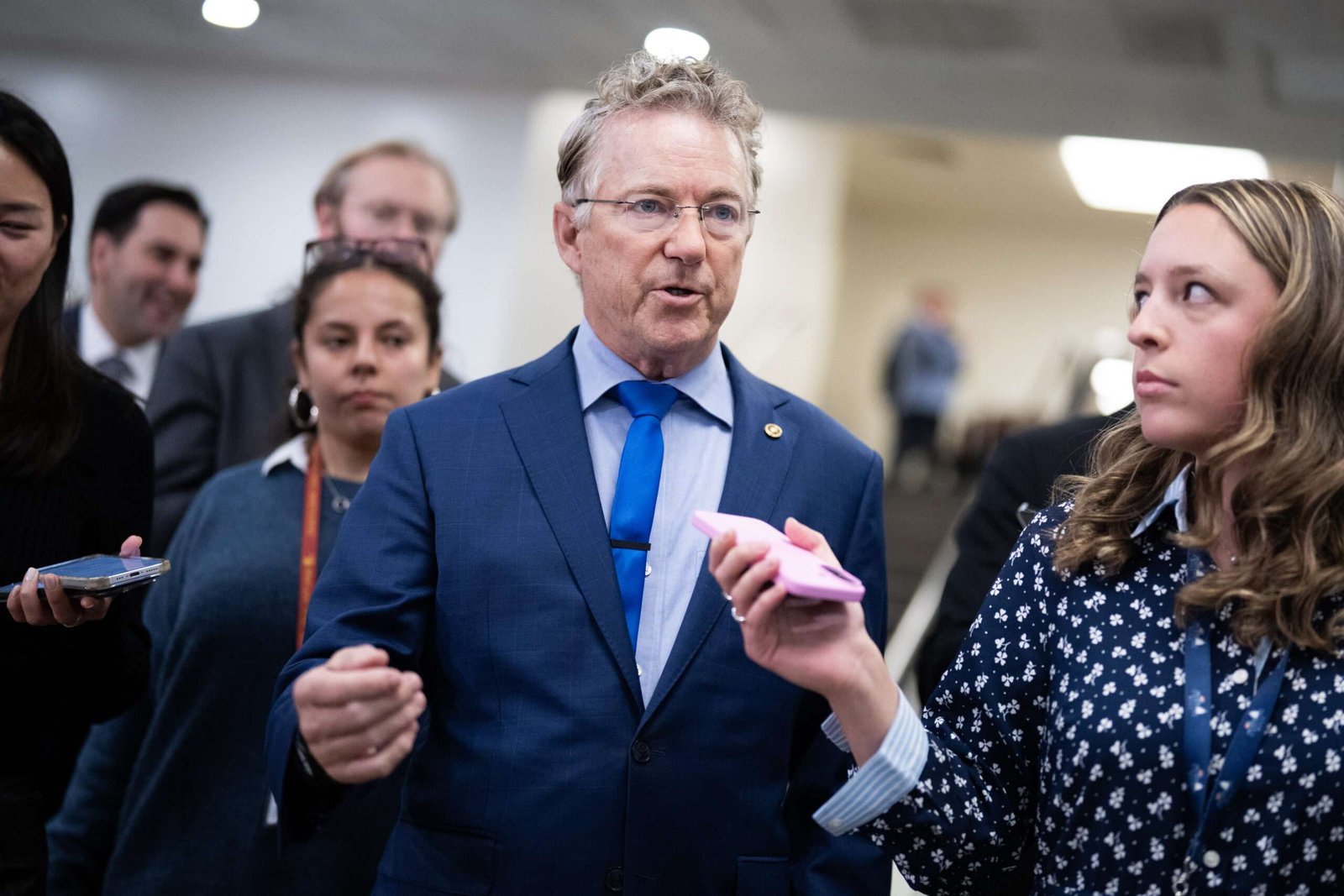
Maybe that’s for the best. Sen. Rand Paul (R–Ky.) proposes better legislation that expands Americans’ access to HSAs and to group health plans offered by all sorts of organizations across state lines.
You are reading The Rattler from J.D. Tuccille and Reason. Get more of J.D.’s commentary on government overreach and threats to everyday liberty.
Senate Minority Leader Chuck Schumer (D–N.Y.) admitted that the Democrats’ bill was a “clean three-year extension of ACA tax credits.” That’s unfortunate, because Obamacare is what the Cato Institute’s Michael F. Cannon describes as “junk insurance at outrageous premiums.”
From the beginning, Obamacare came with built in subsidies for low-income consumers to conceal the program’s expense, and those subsidies remain in place, unaffected by the current controversy. What’s at stake now are enhanced subsidies, many for higher-income Americans who couldn’t meet the price of the program’s rising premiums during the pandemic years—or now, as they continue to soar. The program may have been enacted into law as the Affordable Care Act, but the only thing keeping it affordable was a flood of taxpayer money to conceal its true expense. As costs rise, those subsidies have been extended to increasingly prosperous people.
Those subsidies have also become a target for scammers who, the Government Accountability Office found, enroll “consumers in insurance through the federal Marketplace by falsifying information on their applications,” resulting in rampant fraud.
A “clean three-year extension of ACA tax credits” would do nothing more than briefly hide the need to scrap Obamacare and replace it with a reformed healthcare system.
The Republican bill, sponsored by Sen. Mike Crapo (R–Idaho) and Sen. Bill Cassidy (R–La.) took the need for reform more seriously. It would expand access to Obamacare “bronze” plans which are the closest remaining plans to old-fashioned “catastrophic” or real insurance, which cover unexpected costs rather than prepaying for medical care. These would be linked to HSAs with which patients control spending.
As Crapo described it, “Americans could use the permanent, original premium tax credits to purchase qualified bronze plans with a Health Savings Account (HSA) attached, and they would then receive monthly contributions into that HSA, totaling $1,000 to $1,500 annually. Instead of lining the pockets of big insurance companies, like these subsidies, our HSA contributions would help patients pay expenses not covered by their insurance plan.”
Neither the Democrat subsidy extension nor the Republican HSA plan made it through the Senate. Hopefully, that leaves room for an even more comprehensive reform plan put forward by Paul.
“I, for one, continue to support the repeal of Obamacare and replacing it with true free market reforms, not just some rearranging of the current system,” the Kentucky senator commented before the vote. “Legalizing cross-state health care buying co-ops and letting everyone have an HSA is the only truly conservative option.”
Like Crapo and Cassidy’s bill, Paul’s legislation would increase access to HSAs by removing income caps. HSAs wouldn’t be contingent on specific types of insurance plans, as they now are. It would also raise HSA contribution limits from $4,400 for individuals and $8,750 for families as of 2026 to $24,500. That’s money put away without paying taxes on it—a significant advantage in terms of saving not just for medical expenses, but for retirement since HSA money can be used for non-medical expenses once you hit age 65. Even before then, Paul’s bill would expand what HSAs could cover.
Just as importantly, Paul’s legislation would expand Association Health Plans to allow as he puts it “any membership organization” to sponsor employer-style health coverage “creating new coverage options through groups such as rideshare services, online retailers, wholesale clubs, credit unions, churches, and other associations that bring people together.” You could get medical coverage from any group you cared to join and keep it even as you switched jobs. And such health plans could be purchased across state lines, freeing consumers from the limited options available in some states, as well as the constricting requirements imposed by many governments that drive up costs.
Those are precisely the kinds of reforms recommended over the years by health care experts. In 2019, Cato’s Cannon called for “large” HSAs to give Americans increased control over their healthcare expenses. “With these changes, the tax code would no longer force workers into health plans they don’t want. Workers would be free to remain in their employer’s plan; to buy ObamaCare plans; to buy ObamaCare-exempt plans that make coverage more secure for the sick; or just to save their money tax-free for future medical expenses,” he commented at the time.
And both Reason contributing editor Veronique de Rugy of the Mercatus Center and Curtis Dubay of the Heritage Foundation have called for extending the advantage in terms of tax benefits granted to employer-sponsored health plans to other plans and to allow coverage to be purchased across state lines. People could then take and leave jobs as they please without any impact on their medical coverage.
“Consumers should have the ability to choose how to meet their health insurance needs in a free market for insurance,” wrote Dubay in 2013. “Taxpayers should benefit from a more efficient and affordable system for helping those who need health care but cannot afford it. Above all, patients, with their doctors, should make their own health care decisions free from government interference.”
Continuing “temporary” Obamacare subsidies for another three years won’t improve Americans’ healthcare, and it will barely hide the rising costs and growing inefficiencies that government meddling has created in medicine. Paul’s bill would be a good step toward real reform that would expand both access to health care and Americans’ ability to make their own decisions.
Read the full article here
Fact Checker
Verify the accuracy of this article using AI-powered analysis and real-time sources.