

 Freedom Index
Listen to the article
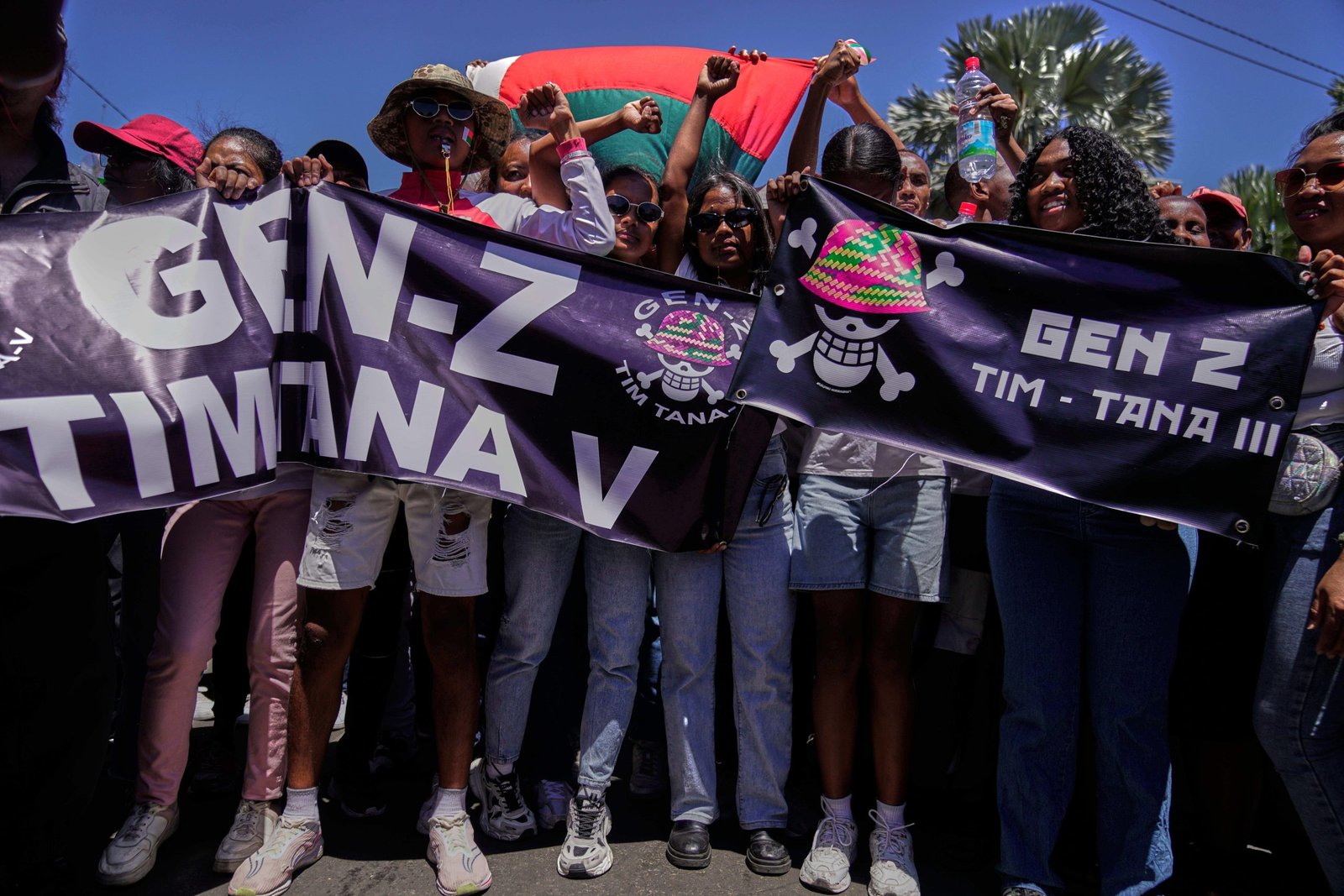
Gen Z protesters in Madagascar are worried that even though President Andry Rajoelina has now fled the country, a revolution started by the nation’s youth is at risk of being hijacked and that real change will remain elusive.
In an interview with Index, one of the protest leaders, 23-year-old econometrics and statistics student Milatsara Tonie Sedrique, admitted to concerns after the military seized power, despite their promising elections within two years.
“We remain vigilant. We know that every movement can be hijacked if discipline and unity are lost. Our goal is not chaos, but a peaceful and democratic transformation of the country, led by the people, for the people,” said Sedrique.
He said the fact that some soldiers expressed sympathy with protesters, points to the reality that Madagascar citizens were experiencing similar difficulties in a sign that the Gen Z cause transcends generations.
As a former student president of his faculty at university, Sedrique naturally became one of the leading figures of the Gen Z movement, because students trusted him to represent their voices.
Protests erupted in September over frequent power and water outages and started peacefully but at least 22 protesters have now died after government buildings and politicians’ homes were attacked.
Sedrique says he was driven to act from seeing the precarious living conditions on campuses: lack of water, electricity, and material support, amidst the absence of sincere dialogue between authorities and students.
There is widespread discontent in the country and the protests were an expression of despair of young people who feel abandoned, he says.
Sedrique believes Madagascar’s problems run deeper: corruption and poor governance are holding back the country’s development. He says young people want greater transparency and fairness in public decisions.
“Our goal is not confrontation, but concrete solutions. If dialogue fails, the mobilisation will continue peacefully and with determination. It is imperative to turn this crisis into an opportunity by taking swift and concrete measures,” he added.
Another leader of the Gen Z movement, speaking on condition of anonymity, said an army takeover had not been part of the equation when they demanded Rajoelina’s resignation as they wanted democratic governance.
“We will first hold meetings to propose new strategies. Even if Rajoelina doesn’t resign, we don’t need him and his troops,” said the Gen Z campaigner.
Much has changed since 2009 when Rajoelina was first inaugurated, becoming Africa’s youngest leader.
Rajoelina, then an opposition leader, city mayor and popular DJ, assumed power following a military-backed coup that overthrew then President Marc Ravalomanana’s government.
Four years later in 2013, under a plan formulated by the Southern African Development Community regional grouping, both Rajoelina and his predecessor agreed not to stand in that year’s presidential elections. Henry Martial Rakotoarimanana Rajaonarimampianina emerged the winner in those polls.
Yet Rajoelina’s political career was far from over. In 2018 he ran for office and won a second five-year term. He was again elected in 2023, following a controversial poll.
Dr Ketakandriana Rafitoson, a Malagasy political scientist and human rights activist who serves as the global vice-chair of Transparency International (TI) and an individual member of TI Madagascar, told Index that Madagascar is entering one of its most uncertain political moments since the 2009 coup.
She believes that restoring administrative function without addressing structural corruption or accountability, effectively postpones the crisis. A military takeover is the most dangerous scenario and risks extinguishing the country’s democratic aspirations and long-term instability, she said.
The solution? A negotiated transition led by civilian and religious mediators, particularly the council of Christian churches, toward institutional reform and new elections which could preserve national unity and democratic legitimacy.
“The youth movement, led by Gen Z and their allies has made it clear that its struggle is rooted in nonviolence and in the constitutional right to resist illegitimate authority. Their language echoes global youth-led mobilisations from Nepal to Morocco: demands for dignity, justice, and accountable governance rather than power for its own sake,” she added.
Rafitoson said for years, civic space had been shrinking, institutions hollowed out by political patronage, and public frustration was rising.
She noted that when Rajoelina confirmed in a televised address that he had left the country temporarily for “security reasons”, his message combined reassurances such as promises to fix the power grid with new generators with a narrative of personal victimhood, alleging assassination attempts and foreign plots.
” He has not offered to resign, nor acknowledged the legitimacy crisis that has eroded his authority. At the same time, his decision to grant full pardons to several high-profile detainees linked to the so-called ‘Apollo 21’ coup case appeared designed to win allies and buy time rather than to foster reconciliation,” she added.
Rafitoson told Index, “The task ahead for Madagascar’s civil society and international partners is to help channel this moment into a peaceful and constitutional resolution that honours the legitimate demands of the youth. What the country needs is not another rotation of elites but a genuine renewal of governance: one rooted in integrity, justice, and the participation of its citizens,” said Rafitoson.
But as Rajoelina continues to insist that he is still the president, questions remain over how he lost it all.
Dr Freddie Mahazoasy, a Madagascan economist, said the crisis has been cooking for a while as economic and social conditions worsened due to lack of economic vision and strategic planning on the part of the president since 2009.
Mahazoasy said the Malagasy government largely underestimated the seriousness of the economic situation which prevailed in the country after Covid-19, which should have focused all its attention.
“There was no real recovery plan implemented after the devastating pandemic. Freedom of speech was harshly restricted: journalists, Facebookers started to be imprisoned, while political rallies were forbidden and violently repressed,” he said.
He said Rajoelina also made promises that came back to haunt him as economic and social inequalities, perceived as an unacceptable social injustice, became more and more obvious to all.
He said more than 75% of the population are trapped in poverty, which is not sustainable.
Mahazoasy said, “The president made numerous ambitious promises like turning each capital city of the provinces to a place comparable to an American city like Miami, Washington or New York! In 2018, he promised to achieve in five years what has not been done in 60 years. These inflated promises created a tremendous expectation in 30 million minds which later violently blew the regime.”
The winter 2025 issue of Index on Censorship will look in depth at Gen Z protests across the world and explore young people’s concerns about freedom of expression.
Read the full article here
Fact Checker
Verify the accuracy of this article using AI-powered analysis and real-time sources.