Close Menu
FSNN | Free Speech News NetworkFSNN | Free Speech News Network
  • Home
  • News
    • Politics
    • Legal & Courts
    • Tech & Big Tech
    • Campus & Education
    • Media & Culture
    • Global Free Speech
  • Opinions
    • Debates
  • Video/Live
  • Community
  • Freedom Index
  • About
    • Mission
    • Contact
    • Support
Trending

Judge Rejects ‘Orwellian Notion’ That Anthropic Is a Supply Chain Risk for Disagreeing With the Government

40 seconds ago

Morgan Stanley enters bitcoin ETF race with market-leading low fee

19 minutes ago

Stablecoin Jitters, AI Micropayments Reshape Crypto

22 minutes ago
Facebook X (Twitter) Instagram
Facebook X (Twitter) Discord Telegram
FSNN | Free Speech News NetworkFSNN | Free Speech News Network
Market Data Newsletter
Friday, March 27
  • Home
  • News
    • Politics
    • Legal & Courts
    • Tech & Big Tech
    • Campus & Education
    • Media & Culture
    • Global Free Speech
  • Opinions
    • Debates
  • Video/Live
  • Community
  • Freedom Index
  • About
    • Mission
    • Contact
    • Support
FSNN | Free Speech News NetworkFSNN | Free Speech News Network
Home»News»Global Free Speech»Journalist Anna Kalyuzhna harassed over Facebook post on Ukraine assault regiments
Global Free Speech

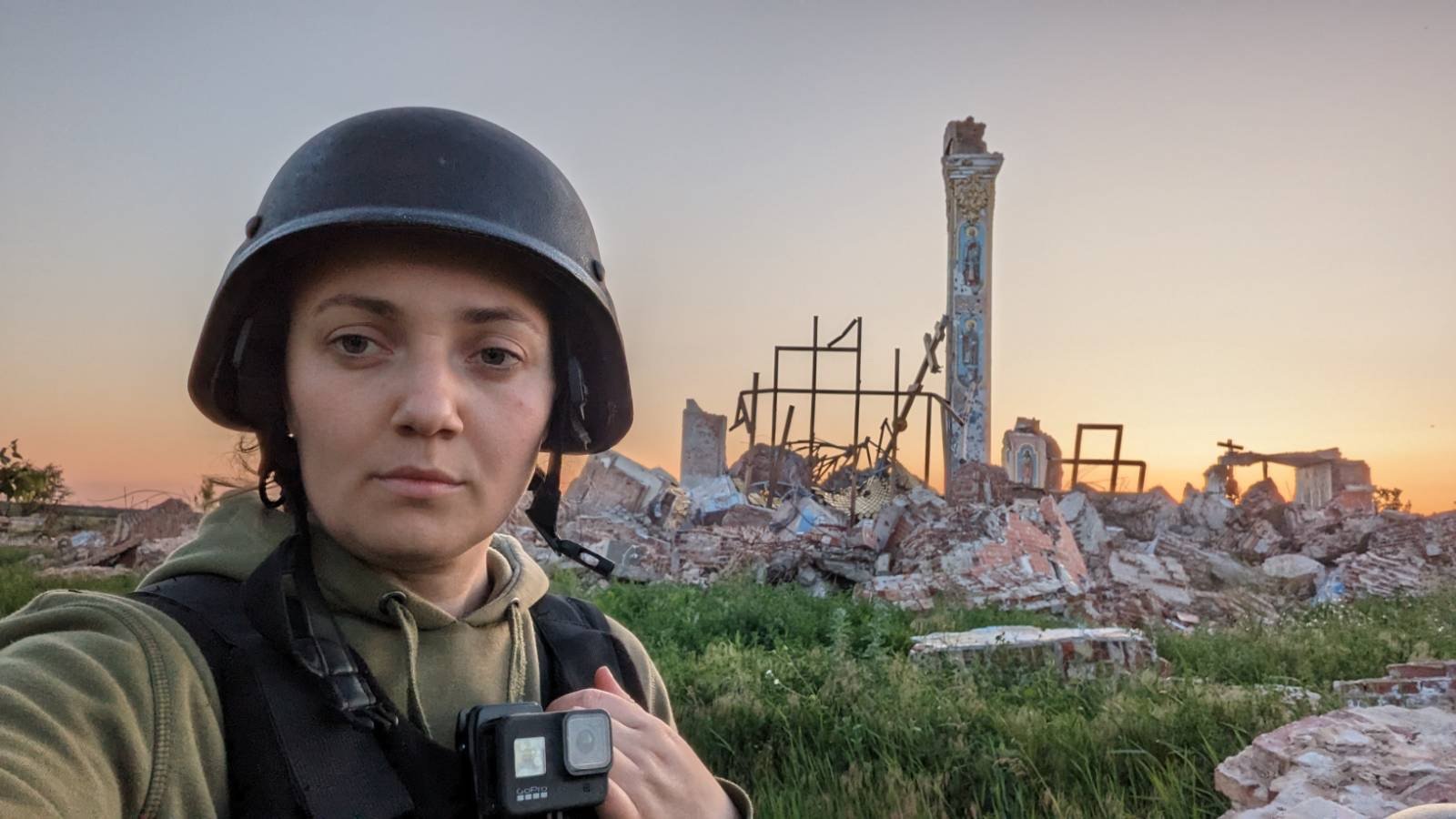
Journalist Anna Kalyuzhna harassed over Facebook post on Ukraine assault regiments

News RoomBy News Room2 hours agoNo Comments3 Mins Read845 Views
Share Facebook Twitter Pinterest Copy Link LinkedIn Tumblr Email VKontakte Telegram
Journalist Anna Kalyuzhna harassed over Facebook post on Ukraine assault regiments
Share
Facebook Twitter Pinterest Email Copy Link

Listen to the article

0:00
0:00

Key Takeaways

Playback Speed

Select a Voice

New York, March 27, 2026—Ukrainian authorities must conduct a swift and thorough investigation into recent online harassment against Ukrainian journalist Anna Kalyuzhna and ensure that journalists can work without fear of reprisal, the Committee to Protect Journalists said Friday. 

On March 6, Kalyuzhna, a journalist with Ukrainian investigative outlet Slidstvo.Info as well as Novynarnia, which has been covering the war in Ukraine since 2014, reported that she had received more than 150 messages on Facebook containing insults and misogynistic remarks within 24 hours of publishing a Facebook post criticizing the expansion and alleged abuses within Ukrainian Armed Forces’ assault regiments.

On March 17, as she was leaving a store an unnamed man told her “maybe you should just shut your mouth,” and mentioned that he had served time in prison. On the same day, she filed a report with the police, who opened an investigation under Article 129 of Ukraine’s criminal code pertaining to “death threats.” 

“Ukrainian authorities must promptly investigate the harassment of Ukrainian journalist Anna Kalyuzhna and ensure her protection,” said Gulnoza Said, CPJ’s Europe and Central Asia program coordinator. “CPJ is very concerned about online harassment against journalists and the seeming lack of political will to investigate these incidents and hold those responsible to account. Journalists provide an important service to the public by covering the war and need to be able to do so safely.” 

“I view these incidents as an attempt to obstruct journalistic activity … and a threat against me as a journalist,” Kalyuzhna wrote on Facebook. She told CPJ she is seeking to add a charge for “obstruction of journalistic activity” to the criminal case opened by police. 

CPJ emailed Ukraine’s national police for comment but did not immediately receive a reply. 

Similarly, Denys Bulavin, a journalist with independent news outlet Hromadske, faced online harassment after his March 16 report on attacks on employees with military enlistment offices. Also, journalist and blogger Olga Khudetska received social media threats, including ones of physical violence, after posting a March 6 thread on X about the alleged lack of public reporting on donations to a battalion of volunteer medics.

Khudetska does not plan on reporting the threats to police, she told the Ukrainian press freedom group Institute of Mass Information. “I don’t know of any successful cases of investigating online threats,” she said. 

Several Ukrainian and foreign investigative journalists have faced surveillance, threats, violence, and harassment over their work since Russia’s full-scale invasion of the country. 

In a December 2024 letter to Ukraine President Volodymyr Zelensky, CPJ pointed to a pattern of a lack of accountability in such cases. In February, news outlet NGL.media reported that the investigation for “obstructing journalistic activities” into the June 2025 smear campaign against Olena Mudra, an environmental investigative journalist in the Zakarpattia region, in western Ukraine, was stalling. 

Read the full article here

Fact Checker

Verify the accuracy of this article using AI-powered analysis and real-time sources.

Get Your Fact Check Report

Enter your email to receive detailed fact-checking analysis

5 free reports remaining

Continue with Full Access

You've used your 5 free reports. Sign up for unlimited access!

Already have an account? Sign in here

Share. Facebook Twitter Pinterest LinkedIn Tumblr Email Telegram Copy Link
News Room
  • Website
  • Facebook
  • X (Twitter)
  • Instagram
  • LinkedIn

The FSNN News Room is the voice of our in-house journalists, editors, and researchers. We deliver timely, unbiased reporting at the crossroads of finance, cryptocurrency, and global politics, providing clear, fact-driven analysis free from agendas.

Related Articles

Global Free Speech

Becoming by Michelle Obama was among the targeted titles. Photo: Patti McConville/Alamy When a school librarian from Greater Manchester came to Index with a shocking story about nearly 200 books being hauled from her shelves and losing her career to a “safeguarding” complaint, we promised to conceal her identity. At her request, we renamed her Emily and we did not name the school. She was terrified about the repercussions if her name was known, both from the school and from other people who might target her online. We kept our promise. Now, a local media outlet has uncovered and published the name of the school. Emily’s identity remains hidden. The school in question is the Lowry Academy in Salford, part of the United Learning Trust. There were extra details Index could not reveal when the name of the school was concealed. We can now address these issues, which are in the public interest. We can reveal how the local authority upheld the safeguarding complaint that destroyed a librarian’s career, the evidence that contradicts the school’s response and the bigger concerns for both Greater Manchester and the United Learning Trust. Initially, Emily told Index, she thought the situation “was a sick joke”. She first heard of the threat to her job when the Lowry Academy’s headteacher took umbrage at Laura Bates’ book Men Who Hate Women in the school library. The nonfiction title, where Bates goes undercover to expose vast misogynist networks and communities, had been ordered by Emily for the Life 101 section for older students, after training she had received about incel culture. The school launched an investigation into both the library and Emily. She was soon reported to the local authority as a safeguarding risk, simply for stocking books. Nearly 200 books were removed and AI was used to categorise the reasons for each book’s removal. You can read more about what happened to Emily in our investigation. While the name Lowry Academy is new, the public might be more familiar with it as the former Harrop Fold School, featured on the Channel 4 documentary Educating Greater Manchester. The school, whose leadership changed after it was fully academised in 2020, had a “good” Ofsted rating in 2024, but it was noted that pupils in key stage 4 had limited time devoted to personal, social and health education. The academy is now part of the United Learning Trust, which says on its website that its ethos “is our expression of our Christian roots, in schools which are fully inclusive and both welcome and respect students and staff of all faiths and none”. A former student from Lowry Academy got in contact with Index, after the name of the school was revealed. He studied at the school until 2024, and said he spent all of his break times in the library. He described the vast and inclusive set of books, spanning across genres. He said he found the library purge and the way Emily was treated “quite grotesque.” “It was disgusting how it was all handled,” he added. He was shocked by the list of targeted books, and said he’d read a few of the biographies. He also read a lot of George Orwell, while he has friends who read many of the manga books. He believes the loss of titles from the library will have a big impact on current students who, like him, find a safe space in the library. “They won’t have the freedom of reading what they want to read,” he said. While the Lowry Academy did not respond to Index for comment, the Manchester Mill reported that the school told them: “It is not the case that books have been ‘banned’ by the school. Following concerns that a number of books within the library were neither age nor content appropriate, an audit was conducted. Following this, books have been placed into age-appropriate categories and returned to the shelves. A very small number of books were deemed inappropriate even for older children due to their content and have been removed.” It may be true some books have now been returned, but they were undoubtedly removed in the first instance. Lowry Academy refused to engage with Index or other organisations to explain what had happened to the books. Index has documentary evidence to support the claim that the books were indeed initially removed from the library during an “audit”. In an email from the school to Emily during the investigation, she was told: “Attached is the list of books [the designated safeguarding lead] has removed from the library. Please note that the audit is still ongoing, and the DSL has confirmed that she is alleging these books are not suitable to remain in the library. The investigation will be based on the attached list.” Further to this, in the school’s investigation report, they concluded with the recommendation: “Continue the audit of all library resources until the Designated Safeguarding Lead (DSL) is satisfied that any material deemed inappropriate for a school setting has been removed.” In an email from the school to Emily during the investigation, she was told: “Attached is the list of books [the designated safeguarding lead] has removed from the library. Please note that the audit is still ongoing, and the DSL has confirmed that she is alleging these books are not suitable to remain in the library. The investigation will be based on the attached list.” Further to this, in the school’s investigation report, they concluded with the recommendation: “Continue the audit of all library resources until the Designated Safeguarding Lead (DSL) is satisfied that any material deemed inappropriate for a school setting has been removed.” Index has seen extensive documentary evidence proving Emily’s claims. These documents have also been seen by the Chartered Institute of Library and Information Professionals (CILIP) and their School Libraries Group (SLG), who have both been supporting Emily. During their investigation, evidenced in these documents, the school shared examples of the removed books with the trust’s safeguarding lead, who said: “The school should ensure that library materials reflect the values and ethos of the school”. The values described on the school website are “aspiration, respect, confidence, creativity and resilience”. The investigation report said that the trust’s safeguarding lead had stated: “Some of these books would be indefensible to parents and expressed concern that the material does not represent a balanced view aligned with the values the trust seeks to promote.” During the investigation, the school also showed concern for their reputation, writing in a report: “I believe there has been a failure to prevent students accessing inappropriate books, this constitutes a serious safeguarding breach under KCSIE 2025. Had parents been aware of this, the school’s reputation could have been brought into significant disrepute.” The Lowry Academy story is not simply a case of one overzealous headteacher. Not only have several senior members of staff been involved, but the trust and the local authority have also played key roles. Margaret Woodhouse, the chair of the school’s governing body, is also the independent chair of the Greater Manchester Learning Partnership, where school leaders across the region work together. Emily was reported to the local authority as a safeguarding risk on 9 December 2025 and her hearing was held on 5 January 2026, after she had resigned. When the committee, known as a LADO, made their decision in January 2026, they substantiated the allegation, stating that Emily had not caused direct harm but that she had failed to follow safeguarding procedures. Index has seen redacted minutes of the meeting. The meeting was held by Salford City Council, and there were four people in attendance. Two were from the school, one was the LADO chair and one was the LADO administration officer. The allegations against Emily were specifically around “introducing inappropriate material into the school library” and nothing else. No previous concerns about her had been raised. In the meeting, the school’s senior vice-principal explained that the referral was made “after discovering multiple books in the school library containing inappropriate content. These books had been loaned to children and did not align with the school’s curriculum”. They confirmed that the investigation was prompted by their discovery of Men Who Hate Women, saying: “the content was inappropriate for children and even challenging for adults to access”. At one point, the LADO chair asked why Emily “began ordering controversial titles and whether this was a recent development”. She later “confirmed several books were adult literature and therefore unsuitable for a school setting”. Some of the books removed include Michelle Obama’s Becoming, Dan Brown’s The Da Vinci Code and Andrew Flintoff’s autobiography Second Innings. As Caroline Roche, chair of the School Libraries Group (SLG) told Index, librarians all make different decisions about which books to stock based on their students and communities, and are ready to defend their collections. Indeed, many GCSE English set texts were not written for children, including Mary Shelley’s Frankenstein, William Shakespeare’s Macbeth and To Kill A Mockingbird by Harper Lee. They contain challenging topics, as do many others. In Salford City Council’s decision, there appears to have been a lack of understanding of the role of a school library – an increasing occurrence when it comes to school leadership, when there is an absence of statutory guidance for school libraries. The Lowry Academy boasts on its website that “reading is central to the development of our students”, and talks of how students can read all kinds of genres – horror, graphic novels and classics among them. Students will “be exposed to unfamiliar topics to broaden their understanding of the world around them,” the school writes. Many titles in these genres were indeed removed from the school library during the purge. The school’s investigation discussed the removal of a Nineteen-Eighty-Four graphic novel. And mere paragraphs later described how a senior staff member felt the library’s ‘Life 101’ section (where Emily kept books for school leavers) was inappropriate, “based on the association with the television program Room 101, where undesirable items are symbolically discarded”. They were seemingly oblivious to Room 101’s origins in Orwell’s Nineteen-Eighty-Four. The day Index published our investigation, the Lowry Academy posted a Facebook video promoting a The Traitors-style game, where staff would be “banished”. It was filmed in the school library.  “It has come to our attention that among our staff we have some traitors,” one staff member says on the video, without an ounce of irony. Not for the fact that one of their staff has already been “banished”, not for the fact that books have been banished and not for the fact that The Traitors is a programme about murder and deception, not made exclusively for young people. Although, of course, enjoyed by many. Index believes this story is of huge public interest. Not only because the freedom to read and intellectual freedom are under attack in a school setting, but also because important safeguarding procedures appear to have been misused by multiple people. We fear we will see more stories like this if changes are not made, and that school librarians will self-censor through fear. Index has approached the Lowry Academy, United Learning Trust and Salford City Council for comment. United Learning acknowledged the request but did not provide a comment before publication. The others have not replied. READ MORE

3 hours ago
Global Free Speech

Photo: Janine Wiedel Photolibrary/Alamy Disney’s 2025 release Elio was a flop. Some believe they self-censored and that contributed to its commercial failure. The central character was initially portrayed as queer-coded, reflecting original director Adrian Molina’s identity as an openly gay filmmaker. There was then a change of director, audience testing, feedback from leadership and any hint of gay was removed. Standard editing procedure? Perhaps. Changes to a film from test stage to release aren’t unusual and Index doesn’t cry censorship just because something gets cut. Pixar’s chief creative officer Pete Docter recently justified the removal of Elio’s LGBTQ+ plot elements, saying Pixar is “not [making] therapy” and that parents should be in the driving seat when it comes to these conversations. Again fine. We don’t need everything our kids watch to be learning opportunities or “therapy”. It’s OK for some stuff to simply be about entertainment, though I’d argue the two need not be in conflict. But context is everything. Disney’s 2026 offering, Hoppers, was accused of dialling down themes of environmentalism, while the director of a movie in early development apparently said there shouldn’t be divorce in it. Whatever was included or not in the film – and we will never know the reasons for certain edits – Hoppers was still not nearly conservative enough for MAGA influencer Alex Clark, who dubbed it “non-Biblical” and unsuitable for children under 10. Children aged 10 to 13 should only watch it if they could discuss it with their parents afterwards, she opined. Concerns that Hollywood is being asked to bow to an increasingly censorious conservative right, rather than embracing artistic freedom, are demonstrably not the idle musings of the ultra-paranoid conspiracy theorist – and that’s when we do pay attention. The topic of what’s appropriate for children to see and read is hot right now. Last week we reported on a Manchester school that had targeted close to 200 books from its library over “safeguarding” concerns. Where book banning occurs, it’s pretty much always justified by the same line – the titles aren’t age-appropriate – often with little to no explanation given beyond that. Why, for example, is it ok for children to study racist depictions in Othello, as they routinely do at secondary school, and yet not read Michelle Obama’s biography, the latter being on the Manchester cull list? The conversation around age-gating online has a similar flavour, albeit with more understandable origins; kids can now fairly easily access porn online that is more extreme than anything available in Soho’s seediest licensed sex shops back in the day and a trial that concluded yesterday in California found Meta and Google liable for mental harm caused to a young woman who became hooked on the platforms as a child (they look set to appeal the ruling). We should be able to discuss and address issues with the online world (as I do here) and acknowledge that not everything is fine to show to children and young people. Age classifications are there for a reason. But we should also be wary. The language of “safeguarding” and “age-appropriateness” can and is easily co-opted by those with an agenda that goes far beyond genuine concern for children and young people’s well-being. Taken to its extreme this agenda lands you in a place like Hungary, where children’s books with LGBTQ+ themes are routinely wrapped in plastic, lest a kid leaf through one in a bookshop. Or worse still Russia, which passed a law aimed at protecting children from “harmful information” back in 2012 and has since then been removing books with abandon, jailing queer people (who’ve been cast as the central propagators of harm) and creating an internet that more closely resembles Beijing’s. Protect our most vulnerable, yes, just avoid throwing free expression to the wolves in the process. READ MORE

5 hours ago
Global Free Speech

CPJ signs joint statement calling for release of Cambodian journalists Phon Sopheap and Pheap Phara

14 hours ago
Global Free Speech

American and Brazilian journalists threatened over Ukraine reporting

1 day ago
Global Free Speech

CPJ urges US Congress, Trump administration to prioritize release of Ukrainian journalists detained by Russia

1 day ago
Global Free Speech

Israeli strike kills freelance journalist in southern Lebanon

1 day ago
Add A Comment
Leave A Reply Cancel Reply

Editors Picks

Morgan Stanley enters bitcoin ETF race with market-leading low fee

19 minutes ago

Stablecoin Jitters, AI Micropayments Reshape Crypto

22 minutes ago

Gavin Newsom Bans California Public Officials From Prediction Market Insider Trading

24 minutes ago

Turns Out That Advertisers Not Wanting To Fund Neo-Nazi-Adjacent Content Isn’t An Antitrust Violation

56 minutes ago
Latest Posts

Maine Lobsterman Asks the Supreme Court To Strike Down a Rule Allowing the Government To Track His Boat 24/7

1 hour ago

BTC price falls below $67,000 as 10-year Treasury yield nears 1-year high of 4.5%

1 hour ago

Coinbase Users Push Back against Prediction Markets Notifications

1 hour ago

Subscribe to News

Get the latest news and updates directly to your inbox.

At FSNN – Free Speech News Network, we deliver unfiltered reporting and in-depth analysis on the stories that matter most. From breaking headlines to global perspectives, our mission is to keep you informed, empowered, and connected.

FSNN.net is owned and operated by GlobalBoost Media
, an independent media organization dedicated to advancing transparency, free expression, and factual journalism across the digital landscape.

Facebook X (Twitter) Discord Telegram
Latest News

Judge Rejects ‘Orwellian Notion’ That Anthropic Is a Supply Chain Risk for Disagreeing With the Government

40 seconds ago

Morgan Stanley enters bitcoin ETF race with market-leading low fee

19 minutes ago

Stablecoin Jitters, AI Micropayments Reshape Crypto

22 minutes ago

Subscribe to Updates

Get the latest news and updates directly to your inbox.

© 2026 GlobalBoost Media. All Rights Reserved.
  • Privacy Policy
  • Terms of Service
  • Our Authors
  • Contact

Type above and press Enter to search. Press Esc to cancel.

🍪

Cookies

We and our selected partners wish to use cookies to collect information about you for functional purposes and statistical marketing. You may not give us your consent for certain purposes by selecting an option and you can withdraw your consent at any time via the cookie icon.

Cookie Preferences

Manage Cookies

Cookies are small text that can be used by websites to make the user experience more efficient. The law states that we may store cookies on your device if they are strictly necessary for the operation of this site. For all other types of cookies, we need your permission. This site uses various types of cookies. Some cookies are placed by third party services that appear on our pages.

Your permission applies to the following domains:

  • https://fsnn.net
Necessary
Necessary cookies help make a website usable by enabling basic functions like page navigation and access to secure areas of the website. The website cannot function properly without these cookies.
Statistic
Statistic cookies help website owners to understand how visitors interact with websites by collecting and reporting information anonymously.
Preferences
Preference cookies enable a website to remember information that changes the way the website behaves or looks, like your preferred language or the region that you are in.
Marketing
Marketing cookies are used to track visitors across websites. The intention is to display ads that are relevant and engaging for the individual user and thereby more valuable for publishers and third party advertisers.