

 Freedom Index
Listen to the article
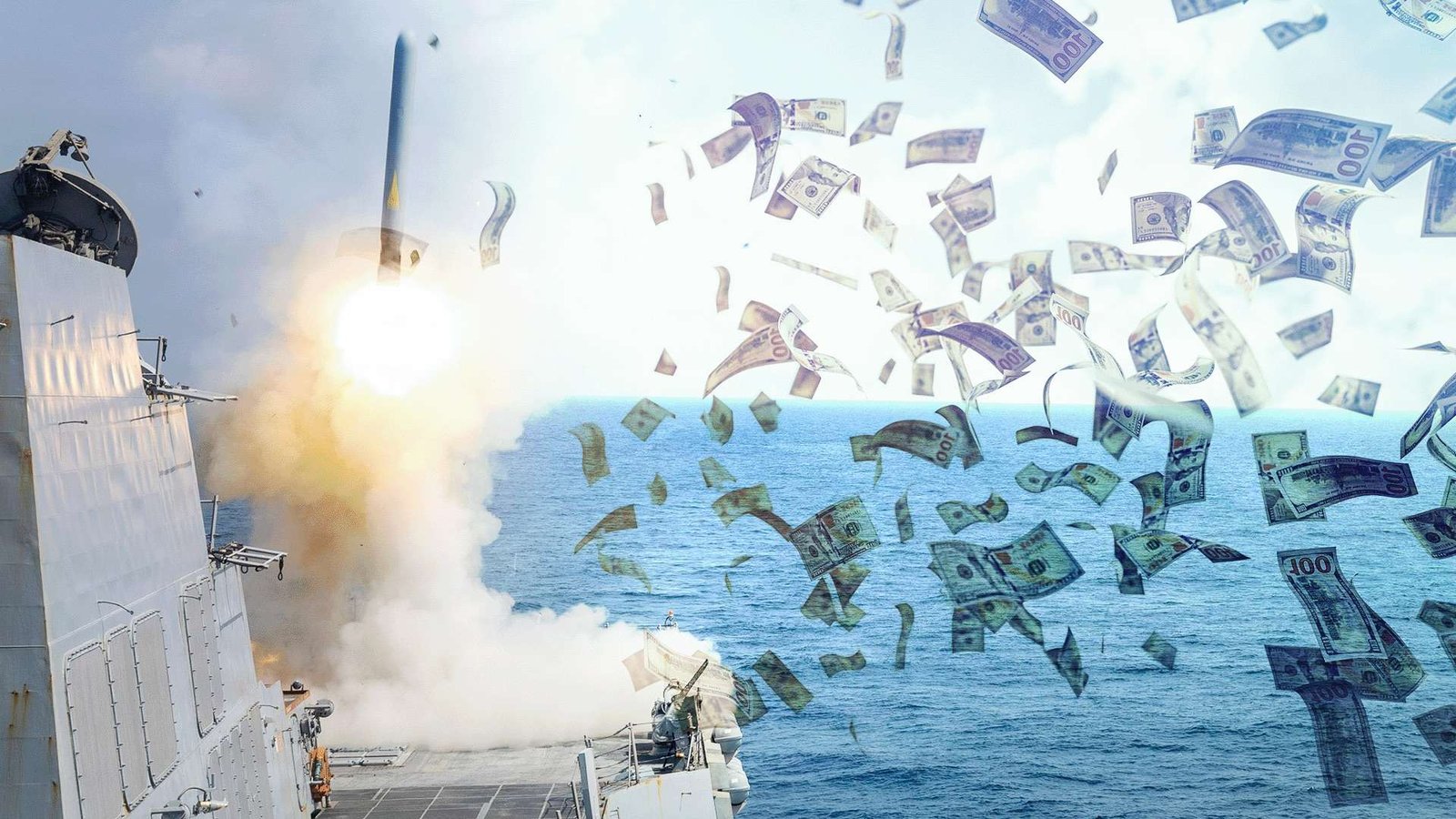
The February jobs report, released Friday, shows the economy faring worse than expected. The bad news comes as the government spends unfathomable amounts of money to wage war on Iran.
“Total nonfarm payroll employment edged down by 92,000 in February, and the unemployment rate changed little at 4.4 percent,” the Bureau of Labor Statistics (BLS) reported. Economists had instead expected an increase of 55,000 jobs.
There were other worrying signs below the top-line numbers. “Health care employment declined by 28,000 in February, following a large increase in January (+77,000),” the BLS noted. “Over the prior 12 months, health care had added an average of 36,000 jobs per month.”
In fact, health care had almost singlehandedly powered the job market since 2025. “The industry, and related professions in the social assistance category, added 693,000 positions last year,” Lydia DePillis reported Friday at The New York Times, ahead of the jobs report. “Without it, the economy would have lost 570,000 jobs, as business and professional services, retail, the federal government and manufacturing all contracted.”
There was also bad news for the seemingly rosier numbers from previous months. “The change in total nonfarm payroll employment for December was revised down by 65,000, from +48,000 to -17,000, and the change for January was revised down by 4,000, from +130,000 to +126,000,” the BLS added. “With these revisions, employment in December and January combined is 69,000 lower than previously reported.”
“Let me put this another way: The US economy has LOST jobs since April 2025,” Heather Long, chief economist at Navy Federal Credit Union, wrote on X. “Total job gains since from May 2025 to February 2026 are now -19,000. Companies are not hiring in the face of all of these headwinds and uncertainty.“
Hmm…is there anything that happened right before May 2025 that could have created a sudden glut of economic uncertainty?
In all seriousness, it should be clear by now that President Donald Trump’s tariffs, imposed by fiat and altered with whiplash-inducing frequency at the president’s whim, contributed to an environment in which businesses don’t know from one day to the next how the economic forecast will look.
This news would be bad enough without the added wrinkle of Trump’s deadly and increasingly expensive war against Iran.
“Republicans on Capitol Hill are preparing to confront a staggering price tag for the war in the Middle East after closed-door briefings this week detailed the rapid consumption of expensive munitions and the lack of any firm deadline for the end of the military campaign,” Politico‘s Meredith Lee Hill reported Friday. “Some GOP lawmakers [are] hearing estimates that the Pentagon is spending as much as $2 billion a day on the war.”
At the same time, that instability is driving oil and gasoline prices higher. Not that Trump seems to notice: “I asked [Trump] about rising gas prices,” CNN’s Dana Bash said Friday. “He said, ‘That’s all right. It’ll be short term, it’ll go way down very quickly.’ I said, ‘They’re pretty high now,’ and he said, ‘No they’re not. They’re up a little bit, not much, but it’ll drop to record lows.'” (As of this writing, according to GasBuddy, gas prices have risen 30 cents or more per gallon in 29 states over the past week.)
As Americans contend with anemic job numbers and rising energy costs, it’s worth remembering that each problem can be traced right back to the White House.
Read the full article here
Fact Checker
Verify the accuracy of this article using AI-powered analysis and real-time sources.