

 Freedom Index
Listen to the article
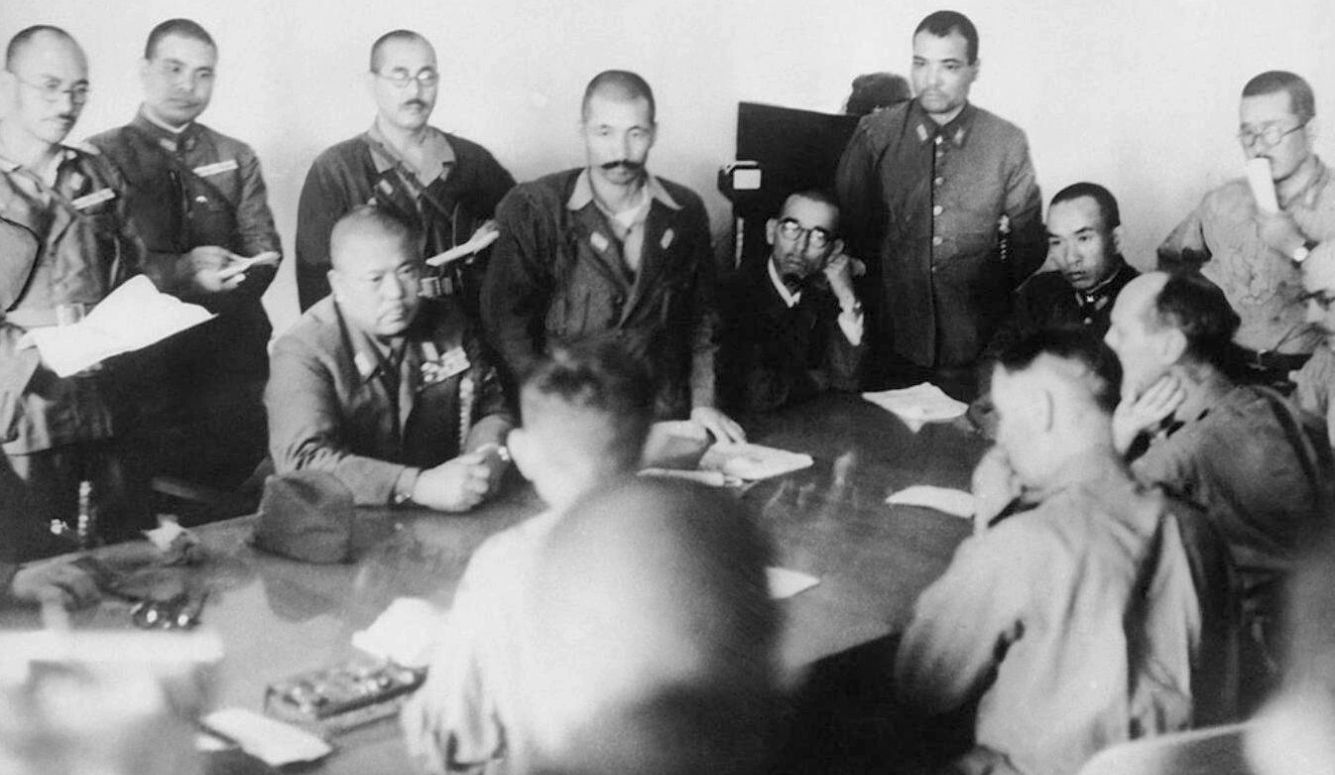
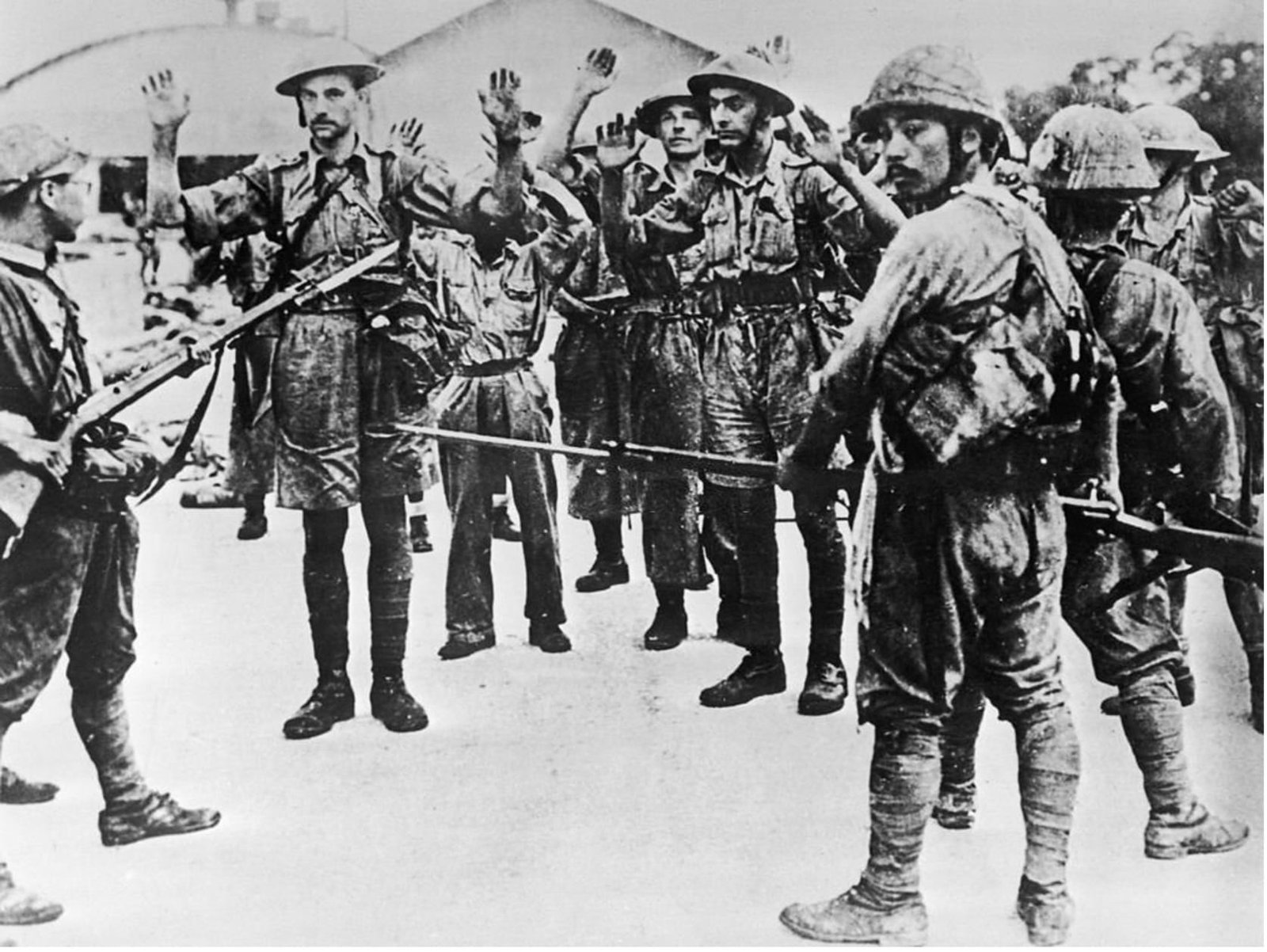
On 15 February 1942, the largest surrender in British military history took place in Singapore. After eight days of desperate fighting, the commander of the British Commonwealth forces, Lieutenant-General Arthur Percival, agreed to surrender his 85,000 strong army to a Japanese force of only 30,000, led by Lieutenant-General Tomoyuki Yamashita. A stunned Winston Churchill would famously describe it as “the worst disaster and largest capitulation in British history.”
In the days preceding the surrender, there had been chaos at Singapore’s docks, as both Europeans and Asians attempted to flee to safety on any vessel they could find, in a scene that can only be compared with the 1940 evacuation of Dunkirk—minus the heroism commonly associated with Dunkirk. Many of these ships were sunk by the Japanese as they attempted to make it to safety in the nearby Dutch East Indies. The city itself was subjected to near continuous daylight bombing raids, in which between 150 and 200 people were killed daily. Terrified Singaporean citizens took shelter from the bombings in the monsoon drains that lined the roads, while demoralised Allied soldiers broke into shops to look for liquor to drown their misery. The trauma of both the battle for Singapore and its subsequent capitulation have made this one of the darkest periods in the histories of both Singapore and of the British Empire.
Much has been written on the Fall of Singapore and the subsequent privations of the Allied POWs and civilians taken prisoner by the Japanese during the Second World War. Much less has been written about the impact of the Japanese conquest and occupation on Southeast Asia, the acquisition of which had driven the Japanese to enter into a war with the Allied powers in the first place, a war that famously began with a surprise attack on the US naval base at Pearl Harbour in Hawaii on 7 December 1941. From then until mid-1942, the Japanese launched unstoppable offensives across Southeast Asia from the Philippines to Singapore to Burma, capturing almost the entire region from the then-dominant Western colonial powers.
The Japanese invasion of Southeast Asia signalled a major turning point in the modern history of Southeast Asia. The sheer speed of the Japanese conquest exposed the vulnerabilities of Western colonialism in the eyes of many Southeast Asians, thus laying the foundations for the postwar decolonisation struggles. In this four-part essay series, I will be exploring Southeast Asia’s experience of the Second World War, and how it helped shape the modern states that make up the region today.
This is the first essay in a historical series on Southeast Asia in World War Two. It looks at how the Japanese invasions permanently shattered Western prestige and legitimacy in the region. The second and third essays will delve into the nature of the Japanese occupation of Southeast Asia, including the hardships endured by its peoples, how local nationalist movements were cautiously coopted by the Japanese, and how the Allies eventually regained the initiative within the region during the final stages of the war. The final essay in the series will examine Southeast Asia in the immediate postwar period, when local nationalists struggled for independence against the returning Western powers against the backdrop of the early Cold War.
The Sphere
The historical roots of Japan’s rampage through Southeast Asia in 1941–42 lay in the rise of aggressive militarism in Japan at the start of the twentieth century. In the thirties, hardline elements within the military had begun to sideline Japan’s civilian politicians to assert control of the state, all the while promoting an aggressive philosophy of empire-building. In particular, Japan saw itself as destined to liberate the peoples of Southeast Asia from white colonial rule, after which the newly freed peoples of Asia would join a new Asia-Pacific order with Japan as its nucleus.
In 1940, the Japanese government gave this proposed new order a name: the Greater East Asia Co-Prosperity Sphere. The Sphere was always a vague and contradictory concept, especially since the idealism it propounded tended to end up taking second place to Japan’s more pressing need to seize the abundant resources of Southeast Asia to feed its ever-hungry war machine.
A few years previously, a clash between Chinese and Japanese troops at the Marco Polo Bridge, located a dozen miles southwest of Beijing, had spiralled into the Second Sino-Japanese War. Japan soon seized all of China’s coastline, ports, and major cities, forcing Chiang Kai-shek’s nationalist government to retreat to the city of Chungking (now Chongqing). Japan’s invasion of China created tensions with the Western powers, who were alarmed at Japanese expansionism and horrified at Japanese brutalities—the most infamous of which was the 1937–38 Rape of Nanking, in the course of which a quarter of a million Chinese civilians were butchered. Despite numerous Japanese battlefield successes, this war in China dragged on for years, eventually overlapping with the Second World War and only terminating with Japan’s surrender in 1945.
The Foray Into Indochina
It was Japan’s pressing need to achieve total victory in China that encouraged Tokyo to begin its first foray into Southeast Asia, thereby precipitating the chain of events that led to the outbreak of war in the Pacific. With the exception of Thailand, Southeast Asia had been carved up by the European powers during the 18th and 19th centuries. The British controlled Burma, Malaya, northern Borneo, and the major trade entrepôt of Singapore, while the French had gained possession of what was known as Indochina (comprising the modern countries of Laos, Cambodia, and Vietnam). Meanwhile, the Dutch reigned over the vast archipelago of 17,000 islands known as the Dutch East Indies (modern Indonesia).
One outlier in this was the United States, which had wrested control of the Philippines from the Spanish after the Spanish–American War of 1898. Unlike the other colonial powers in the region, the Americans had already agreed to grant the Filipinos independence by 1946. This was in response to sharp domestic criticism of America’s acquisition of the colony. Many Americans regarded it as hypocritical for a country that had broken away from British rule to engage in colonialism itself.
With the outbreak of war in Europe in 1939, Japan sensed an opportunity. Following the Nazi conquest of France, the Japanese saw that the French colony of Indochina was vulnerable and sought to stem the flow of supplies into China by way of the Vietnamese port of Haiphong. The Japanese also identified Indochina as a useful staging ground for a possible invasion of Southeast Asia. Tokyo pressured the new Vichy authorities to allow Japanese troops and aircraft to be based in Indochina. The Vichy government dithered for a while before finally reaching a deal whereby Japan promised to respect nominal French rule over the colony.
The Japanese military chose to ignore this proviso: Japanese troops invaded Indochina from across the southern Chinese border and through the port of Haiphong, thereby securing northern Vietnam. In response to this aggression, the United States passed the Export Control Act of 2 July 1940, which limited the supply of war materials, especially oil, to the Japanese.
The Soldier and the Revolutionary
The contrasting lives and ambitions of two major figures in the fight for Indian Independence: Kodandera Subayya Thimayya (“Timmy”) and Subhas Chandra Bose.
Matters escalated in the summer of 1941, when the Japanese demanded access to southern Indochina as well and the French acquiesed. The Roosevelt administration was outraged, and on July 26, Roosevelt signed Executive Order 8832, which froze Japanese assets in the US and halted trade between the US and Japan. This effectively cut off Japan’s petroleum supply. Up to that point, a sizeable proportion of Japan’s petroleum imports had come from the United States. Now, the Japanese were forced to turn their gaze towards Southeast Asia. The Dutch East Indies was at the time the fourth largest oil exporter after the United States, Iran, and Romania. Capturing the oil fields of the Indies became essential to sustain Japan’s war in China.
The chain of events that followed the incorporation of Indochina into the Greater East Asia Co-Prosperity Sphere made Japan’s thrust southwards into Southeast Asia almost inevitable. It was fitting then that Indochina was the springboard from which the Japanese launched their attacks across the region, timed to coincide with a planned attack on Pearl Harbour. Saigon would also become the headquarters for the Southern Expeditionary Army Group, the umbrella organisation for all Southeast Asia operations.
The Fortress That Never Was
Due to the differences in local time zones caused by the International Date Line, the opening salvo of the Pacific War was not, in fact, the attack on Pearl Harbour, but the Japanese amphibious landings in southern Thailand and in Kota Bahru on the east coast of Malaya on 8 December 1941, local time. The ultimate target of both landings was the supposedly impregnable island fortress of Singapore, which the Japanese recognised as the keystone of British power in the Far East. The Japanese plan was to advance down both the east and west coasts of Malaya and attack Singapore from the landward side.
That neutral Thailand had to be invaded in the process was of no concern. Thailand’s then de facto dictator, Field Marshal Plaek Phibunsongkhram (usually shortened to Phibun), was already closely aligned with the Japanese. After brief skirmishes between Thai and Japanese troops shortly after the Japanese landings, Phibun agreed to a ceasefire, which was later followed by a formal alliance with Japan. In return, Thailand was granted sovereignty over the northern Malay states during the subsequent Japanese occupation of Malaya (said states had been under Siamese rule until 1909).
The Japanese drive down the Malayan Peninsula has frequently been compared to the German blitzkrieg campaigns in Europe, characterised above all by their speed. The British made the mistake of committing themselves to holding the well-developed roads that traversed the length of the peninsula and were outfoxed by the Japanese, who utilised the jungle and the rubber plantations found on both sides of Malaya’s roads to carry out outflanking movements. Yamashita also made frequent amphibious landings along the Malayan coast to get behind the British lines. Increasingly demoralised by near-constant retreats, the British were also hampered by their largely untrained troops, limited and outdated aircraft, and lack of tanks. The Japanese, on the other hand, possessed light tanks as well as superior fighter aircraft, including the more agile Ki-43 Hayabusa and the A6M “Zero.”
The key weapon of the Japanese, however, was the humble bicycle, which allowed Japanese troops to steal a march on the British, who travelled mostly on foot—some historians therefore talk about a “bicycle blitzkrieg.” Since Japanese bicycles had been a major export to Southeast Asia prior to the outbreak of the war, replacements and spare parts were readily available across the peninsula.
The Japanese also proved dominant at sea. Churchill’s attempts to deter Japan by sending two warships—the HMS Prince of Wales and the HMS Repulse—to the region proved disastrous. In the wee hours of 10 December 1941, both warships were intercepted off the east coast of Malaya by Japanese bombers and sunk. British naval dominance in the Far East was crippled.
In the space of only 54 days from the initial landings, the Japanese had advanced nearly 700 miles to reach the Johor Strait, which separates Malaya from Singapore, having fought 95 engagements along the way. The British retreated back into Singapore, which they had belatedly come to realise was not the island fortress of their imaginations. One eyewitness recalled seeing the Europeans fleeing through the southern Malayan city of Johor Bahru, which lies directly across the strait from Singapore, and over the causeway that linked Malaya and Singapore. “I saw military lorries streaming south through JB carrying personal effects such as carpets, rattan chairs, golf clubs, tennis rackets and even canaries in cages,” he testified. An order was eventually given to blow up the causeway. The resulting explosion on 31 January could be heard across the island. A young Lee Kuan Yew (future prime minister of Singapore) would later recall being asked by the principal of Raffles College what the sound was. Lee replied, “That is the end of the British Empire.”
The Japanese landings in Singapore on 8 February were preceded by shelling so
heavy that it reminded veterans of the first day of the Somme. By 10 February, the
Japanese had fought their way to the suburbs surrounding the city centre. Despite
calls by Churchill to fight to the bitter end—“There must be at this stage no thought of saving the troops or sparing the population”—on 15 February Percival agreed to
surrender. Yamashita was relieved to be spared any house-to-house fighting. As he
himself admitted, the invasion of Singapore had been a “bluff,” given that his army
was vastly outnumbered by the British Imperial army. It was not for nothing that
Western media dubbed Yamashita the “Tiger of Malaya.”
The Philippines and the Dutch East Indies
Two weeks after the Japanese landings in Thailand and Malaya, the Japanese 14th Army landed in the Lingayen Gulf on the main island of Luzon in the Philippines. Opposing them were the US Army Forces in the Far East (USAFFE), comprising both Filipino and American troops and led by General Douglas MacArthur. After driving down the central plains of Luzon, by 2 January the Japanese had captured Manila, which had already been declared an open city. MacArthur pulled his forces back to the rugged and defensible 500-square-mile Bataan Peninsula north of Manila Bay.
Read the full article here
Fact Checker
Verify the accuracy of this article using AI-powered analysis and real-time sources.