Close Menu
FSNN | Free Speech News NetworkFSNN | Free Speech News Network
  • Home
  • News
    • Politics
    • Legal & Courts
    • Tech & Big Tech
    • Campus & Education
    • Media & Culture
    • Global Free Speech
  • Opinions
    • Debates
  • Video/Live
  • Community
  • Freedom Index
  • About
    • Mission
    • Contact
    • Support
Trending

The Medical Scandal Behind Chronic Fatigue Syndrome

29 minutes ago

Bitcoin slides 5%, tumbling below $65,000 as whale selling grows and recent buyers lock in losses

33 minutes ago

Bitcoin Plunges 4% as Fear and Greed Index Hits Historic Low

35 minutes ago
Facebook X (Twitter) Instagram
Facebook X (Twitter) Discord Telegram
FSNN | Free Speech News NetworkFSNN | Free Speech News Network
Market Data Newsletter
Monday, February 23
  • Home
  • News
    • Politics
    • Legal & Courts
    • Tech & Big Tech
    • Campus & Education
    • Media & Culture
    • Global Free Speech
  • Opinions
    • Debates
  • Video/Live
  • Community
  • Freedom Index
  • About
    • Mission
    • Contact
    • Support
FSNN | Free Speech News NetworkFSNN | Free Speech News Network
Home»Opinions»Debates»Japan’s Brutal Occupation Forged Southeast Asian Independence
Debates

Japan’s Brutal Occupation Forged Southeast Asian Independence

News RoomBy News Room3 hours agoNo Comments3 Mins Read1,278 Views
Share Facebook Twitter Pinterest Copy Link LinkedIn Tumblr Email VKontakte Telegram
Japan’s Brutal Occupation Forged Southeast Asian Independence
Share
Facebook Twitter Pinterest Email Copy Link

Listen to the article

0:00
0:00

Key Takeaways

Playback Speed

Select a Voice

The Japanese rampage across Southeast Asia from 1941–42 was a remarkable military feat by any metric, comparable to the early German blitzkrieg campaigns across Western Europe. In four months from the surprise attack on Pearl Harbor on 7 December, the Japanese had occupied Malaya, Singapore, Borneo, and the Dutch East Indies. The Western colonial powers had been decisively defeated, the humiliation of surrender made all the worse by the ignoble way many of the colonists had fled the advancing Japanese, leaving their Asian subjects to face the invaders’ wrath.

The first essay in this four-part series discussed how the Japanese invasions permanently shattered Western prestige and legitimacy in Southeast Asia. This second essay takes a closer look at the nature of the Japanese occupation. The violence, terror, and hunger that characterised that occupation would leave an indelible mark on the social fabric of Southeast Asia. More importantly, it was under the aegis of the Greater East Asia Co-Prosperity Sphere that the kindling of the post-war decolonisation movement was first lit.  

Japan’s Conquest Shattered European Rule in Southeast Asia

Southeast Asia in World War II, Part One: Japanese Conquests and British Disgrace

The Old Order Upturned 

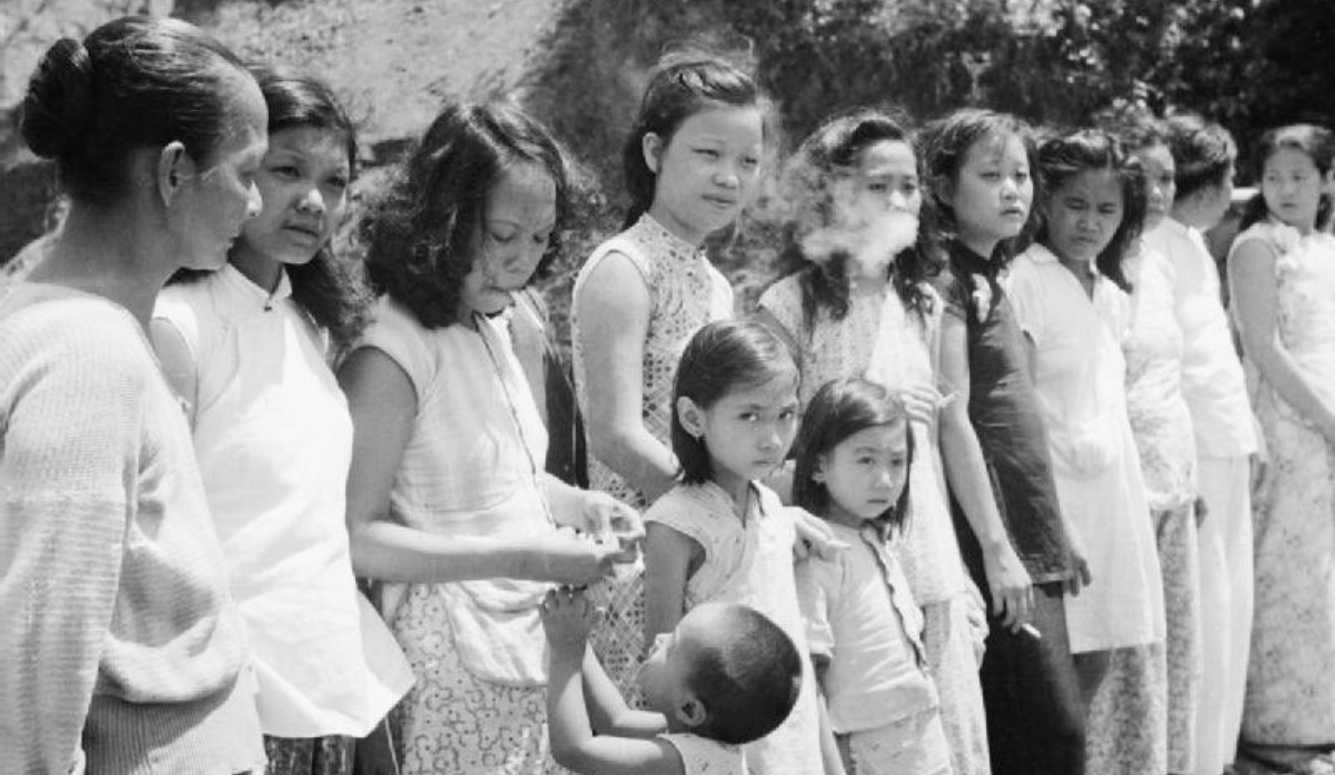
One of the most striking changes brought about by the Japanese occupation was the near-total purging of Western influence, starting with the physical removal of Westerners from public view. Besides the more than 100,000 American, British, Australian, and Indian POWs captured during the initial stages of the war, the Japanese also rounded up most European civilians, separating the men from the women and children. Much has been written about the plight of those interned in these camps and the appalling conditions they suffered. Thousands died from starvation, disease, and mistreatment. It is believed that 27 percent—35,756 out of 132,134—of the Western Allied prisoners lost their lives under the Japanese. Of the 130,000 Europeans interned in the Dutch East Indies—most of whom were civilians—30,000 are believed to have died.

In addition to interning Westerners en masse, the Japanese sought to eradicate Western cultural influence. Western languages like Dutch and English were prohibited in favour of Japanese, which became the new language of administration. The Western calendar was replaced by the Japanese one, which numbered years according to the reigns of Japanese emperors. Across the occupied territories, one single time zone was established, with clocks set to Tokyo time. British and American films and songs were proscribed; Japanese films and songs were promoted instead.

Under the new order, communities seen as having benefited from colonial rule or having been close to the colonisers, such as Eurasians and Christians, came under suspicion and were generally discriminated against by the Japanese. In Burma, communities like the Chinese, Anglo-Indians, Anglo-Burmese, and the Christian Karens were often the victims of Japanese persecution. In Indonesia, the Eurasian community (dubbed the Indos) had to prove their Indonesian bloodline in order to avoid being interned. Ironically, under Dutch rule, many Indos had attempted to prove their European identity in order to advance under the Dutch colonial order. 

One of the most consistently targeted groups, however, was the Chinese, loathed by the Japanese for their financial support of the anti-Japanese war effort back in mainland China. Many wealthier Chinese were soon forced to make financial “contributions” to the Japanese. Indeed, one of the less discussed impacts of the war in Southeast Asia is the exacerbation of ethnic tensions across the region—tensions that would continue to play out in the postwar period.


Read the full article here

Fact Checker

Verify the accuracy of this article using AI-powered analysis and real-time sources.

Get Your Fact Check Report

Enter your email to receive detailed fact-checking analysis

5 free reports remaining

Continue with Full Access

You've used your 5 free reports. Sign up for unlimited access!

Already have an account? Sign in here

Share. Facebook Twitter Pinterest LinkedIn Tumblr Email Telegram Copy Link
News Room
  • Website
  • Facebook
  • X (Twitter)
  • Instagram
  • LinkedIn

The FSNN News Room is the voice of our in-house journalists, editors, and researchers. We deliver timely, unbiased reporting at the crossroads of finance, cryptocurrency, and global politics, providing clear, fact-driven analysis free from agendas.

Related Articles

Debates

The Medical Scandal Behind Chronic Fatigue Syndrome

29 minutes ago
Debates

Free Speech Fight on Campus

1 hour ago
Media & Culture

Learning Resources for Learning Resources

2 hours ago
Media & Culture

Putting Trump’s Backlash Against The Tariff Ruling In Context

3 hours ago
Debates

Quillette’s Top Essays on Transgender Trends

5 hours ago
Media & Culture

A Conversation about the Endangerment Finding Rescission

8 hours ago
Add A Comment
Leave A Reply Cancel Reply

Editors Picks

Bitcoin slides 5%, tumbling below $65,000 as whale selling grows and recent buyers lock in losses

33 minutes ago

Bitcoin Plunges 4% as Fear and Greed Index Hits Historic Low

35 minutes ago

Free Speech Fight on Campus

1 hour ago

Vitalik Buterin Pitches Transaction Simulation Security Idea

2 hours ago
Latest Posts

Learning Resources for Learning Resources

2 hours ago

Japan’s Brutal Occupation Forged Southeast Asian Independence

3 hours ago

Putting Trump’s Backlash Against The Tariff Ruling In Context

3 hours ago

Subscribe to News

Get the latest news and updates directly to your inbox.

At FSNN – Free Speech News Network, we deliver unfiltered reporting and in-depth analysis on the stories that matter most. From breaking headlines to global perspectives, our mission is to keep you informed, empowered, and connected.

FSNN.net is owned and operated by GlobalBoost Media
, an independent media organization dedicated to advancing transparency, free expression, and factual journalism across the digital landscape.

Facebook X (Twitter) Discord Telegram
Latest News

The Medical Scandal Behind Chronic Fatigue Syndrome

29 minutes ago

Bitcoin slides 5%, tumbling below $65,000 as whale selling grows and recent buyers lock in losses

33 minutes ago

Bitcoin Plunges 4% as Fear and Greed Index Hits Historic Low

35 minutes ago

Subscribe to Updates

Get the latest news and updates directly to your inbox.

© 2026 GlobalBoost Media. All Rights Reserved.
  • Privacy Policy
  • Terms of Service
  • Our Authors
  • Contact

Type above and press Enter to search. Press Esc to cancel.

🍪

Cookies

We and our selected partners wish to use cookies to collect information about you for functional purposes and statistical marketing. You may not give us your consent for certain purposes by selecting an option and you can withdraw your consent at any time via the cookie icon.

Cookie Preferences

Manage Cookies

Cookies are small text that can be used by websites to make the user experience more efficient. The law states that we may store cookies on your device if they are strictly necessary for the operation of this site. For all other types of cookies, we need your permission. This site uses various types of cookies. Some cookies are placed by third party services that appear on our pages.

Your permission applies to the following domains:

  • https://fsnn.net
Necessary
Necessary cookies help make a website usable by enabling basic functions like page navigation and access to secure areas of the website. The website cannot function properly without these cookies.
Statistic
Statistic cookies help website owners to understand how visitors interact with websites by collecting and reporting information anonymously.
Preferences
Preference cookies enable a website to remember information that changes the way the website behaves or looks, like your preferred language or the region that you are in.
Marketing
Marketing cookies are used to track visitors across websites. The intention is to display ads that are relevant and engaging for the individual user and thereby more valuable for publishers and third party advertisers.