Close Menu
FSNN | Free Speech News NetworkFSNN | Free Speech News Network
  • Home
  • News
    • Politics
    • Legal & Courts
    • Tech & Big Tech
    • Campus & Education
    • Media & Culture
    • Global Free Speech
  • Opinions
    • Debates
  • Video/Live
  • Community
  • Freedom Index
  • About
    • Mission
    • Contact
    • Support
Trending

Today in Supreme Court History: February 26, 1869

7 minutes ago

Kenya court due to rule on cybercrimes law as another journalist faces jail

24 minutes ago

BTC’s price bounce fails to convince options traders: Crypto Daybook Americas

32 minutes ago
Facebook X (Twitter) Instagram
Facebook X (Twitter) Discord Telegram
FSNN | Free Speech News NetworkFSNN | Free Speech News Network
Market Data Newsletter
Thursday, February 26
  • Home
  • News
    • Politics
    • Legal & Courts
    • Tech & Big Tech
    • Campus & Education
    • Media & Culture
    • Global Free Speech
  • Opinions
    • Debates
  • Video/Live
  • Community
  • Freedom Index
  • About
    • Mission
    • Contact
    • Support
FSNN | Free Speech News NetworkFSNN | Free Speech News Network
Home»News»Global Free Speech»Iranian authorities arrest Japanese journalist Shinnosuke Kawashima
Global Free Speech

Iranian authorities arrest Japanese journalist Shinnosuke Kawashima

News RoomBy News Room1 hour agoNo Comments3 Mins Read718 Views
Share Facebook Twitter Pinterest Copy Link LinkedIn Tumblr Email VKontakte Telegram
Iranian authorities arrest Japanese journalist Shinnosuke Kawashima
Share
Facebook Twitter Pinterest Email Copy Link

Listen to the article

0:00
0:00

Key Takeaways

Playback Speed

Select a Voice

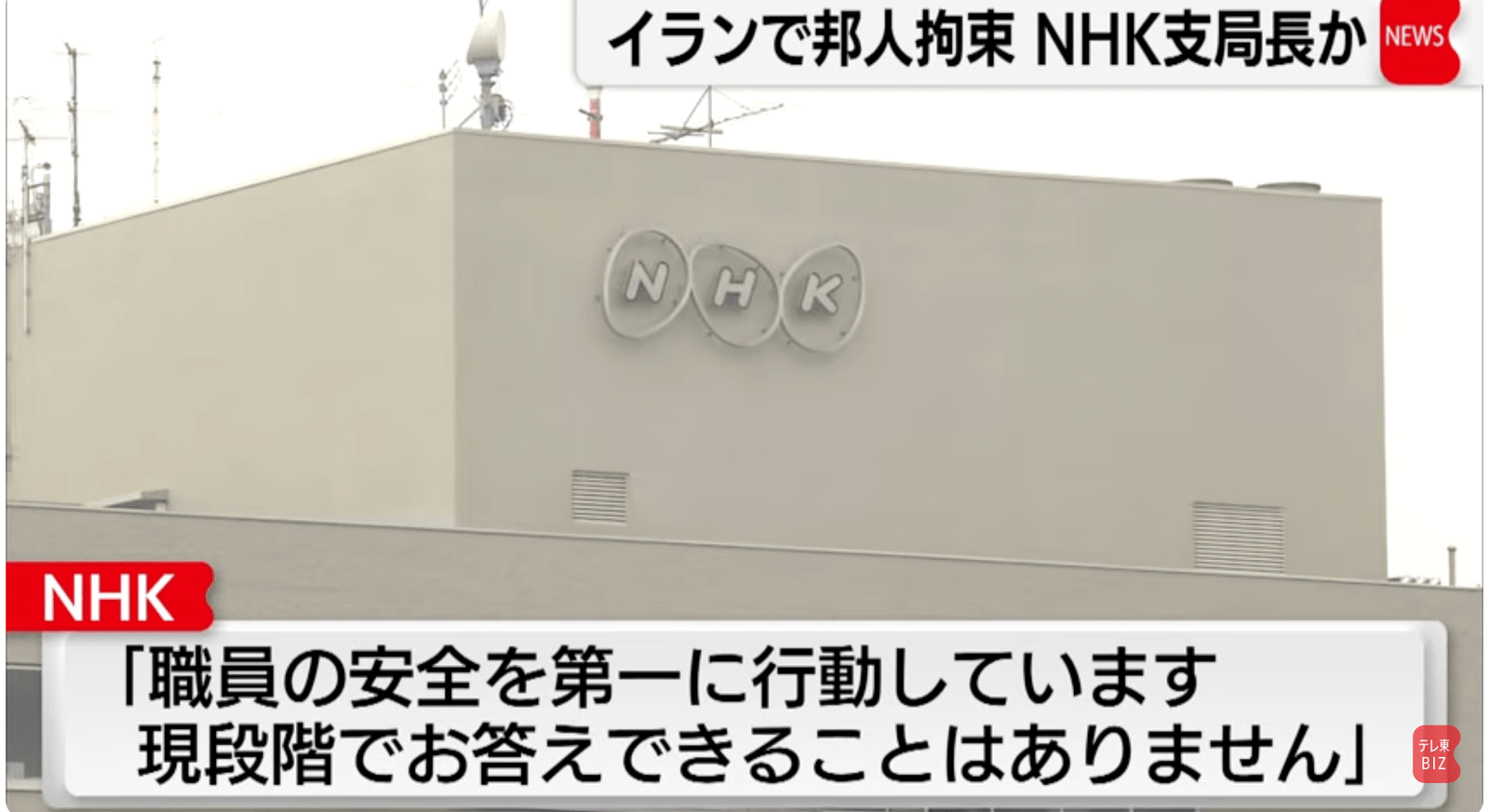
New York, February 26, 2026 — The Committee to Protect Journalists calls on Iranian authorities to immediately release Shinnosuke Kawashima, Tehran bureau chief of Japanese public broadcaster NHK, and all other journalists detained for their work, return all confiscated property, and end the harassment of NHK’s staff.

Shinnosuke was arrested on January 20 by the Islamic Revolutionary Guard Corps (IRGC) and held at a detention facility in northern Tehran, according to a source who spoke to CPJ on condition of anonymity for fear of retaliation, before he was transferred to Evin Prison on February 23.

The source claimed that NHK’s longtime videographer Mehdi Mohammedi’s passport was also confiscated, along with his personal devices, including his phone, laptop, and camera. His wife’s cell phone was also seized. CPJ was unable to independently verify the information. 

Another NHK staff member — whose identity CPJ is withholding for safety reasons — fled Iran in early February. “The journalist was summoned multiple times in the past few weeks following the arrest of their bureau chief,” the source said.

“The arrest of Shinnosuke Kawashima and the intimidation of his colleagues reflects a deliberate effort by Iranian authorities to silence independent reporting,” said CPJ Regional Director Sara Qudah. “Detaining a bureau chief, transferring him to Evin Prison, confiscating a videographer’s passport and equipment, and repeatedly summoning staff are not isolated acts – they are tactics designed to pressure journalists into silence and make them fear continuing their work. Such actions are meant to force self-censorship and drive independent media out of the country.”

On February 25, Japan’s Deputy Chief Cabinet Secretary Masanao Ozaki told reporters that local authorities had detained a Japanese national in Tehran on January 20, declining to identify him by name.

“Since learning of this detention, the government has strongly demanded that the Iranian side secure the early release of the Japanese national,” Ozaki said.

CPJ has documented the arrests of 12 journalists since the crackdown on protests that erupted in late December. Seven journalists — Navid Zarrehbin, Hassan Abbasi, Artin Ghazanfari, Mohammed Parsi, Mohammad Hadi Jafarpour, Kianoosh Darvishi, and Shinnosuke Kawashima — remain behind bars.

Iranian authorities enforced a near-total internet shutdown during the crackdown, while also raiding journalists’ homes, blocking bank accounts, deactivating SIM cards, and summoning numerous reporters for questioning. 

According to the latest report issued on February 23 by the U.S.-based Human Rights Activists News Agency (HRANA), at least 7,000 people have been confirmed killed in the January crackdown, with another 11,700 deaths under investigation. The group also reported that 25,800 civilians were injured and more than 53,000 people were arrested.

CPJ’s email to the Iranian mission to the United Nations in New York requesting comment did not receive a response.

Read the full article here

Fact Checker

Verify the accuracy of this article using AI-powered analysis and real-time sources.

Get Your Fact Check Report

Enter your email to receive detailed fact-checking analysis

5 free reports remaining

Continue with Full Access

You've used your 5 free reports. Sign up for unlimited access!

Already have an account? Sign in here

Share. Facebook Twitter Pinterest LinkedIn Tumblr Email Telegram Copy Link
News Room
  • Website
  • Facebook
  • X (Twitter)
  • Instagram
  • LinkedIn

The FSNN News Room is the voice of our in-house journalists, editors, and researchers. We deliver timely, unbiased reporting at the crossroads of finance, cryptocurrency, and global politics, providing clear, fact-driven analysis free from agendas.

Related Articles

Global Free Speech

Kenya court due to rule on cybercrimes law as another journalist faces jail

24 minutes ago
Global Free Speech

Record number of journalists killed in 2025; Israel responsible for two-thirds of deaths

1 day ago
Global Free Speech

CPJ, rights groups urge Pakistan PM to address worsening press freedom climate

1 day ago
Global Free Speech

Ethiopia revokes Addis Standard’s license amid escalating crackdown on independent media

2 days ago
Global Free Speech

Zimbabwe journalist in detention for a week for alleged defamatory report on corruption

2 days ago
Global Free Speech

Afghan women and children at a medical seminar in Ghazni province in 2013, getting advice on hygiene products and women’s health. Such a scene would be nearly impossible under the Taliban. Photo: PJF Military Collecton/Alamy Farah, 25, based in Parwan province, supported her family as a civil servant and for UN agencies before the Taliban took over. Then, like so many other women, she lost her job. She did not take that sitting down and instead became involved in a centre to directly help women. But it was soon shut. Today she has no job and an increasingly unwell mother. She writes poignantly here about her life and how she continues to foster hope for herself, her family and all Afghan women despite the many challenges. I am an Afghan woman, born in the spring of 2000 into a family where education was not merely a choice – it was the cornerstone of life itself. In our home, books were sacred, and the pen symbolised a future brighter than circumstance. My father was a doctor, a man who believed profoundly that knowledge could reshape not only an individual’s life but the destiny of an entire nation. My mother, patient, resilient, and steadfast, was a homemaker whose serene presence masked a boundless inner strength. We were eleven children, a large family with even larger dreams. My childhood was still imbued with innocence and play when tragedy struck. I lost my father to a heart attack. The warmth and security of our home evaporated overnight. The man who had been our protector, guide, and provider was suddenly gone. From that moment, my mother assumed every role – mother, father, guardian, and pillar of strength. She began sewing clothes by hand late into the night under dim light, her hands moving tirelessly so that we could study by day. Poverty never deterred her. She would say, “Your true wealth is your knowledge. No one can ever take that from you.” In the spring of 2019, a life-changing opportunity emerged. Dunya University, one of the most reputable institutions in central Afghanistan, announced 600 full scholarships. Its curriculum was entirely in English and aligned with international academic standards. Professors from its main branch in Switzerland taught both online and in person. For a girl from a large, resource-constrained family like mine, this was more than a chance – it was a beacon of hope. My mother saw the announcement on television. Despite financial hardships, she borrowed money from my aunt to cover the registration fee and brought me to the entrance exam the very next day. Candidates from all 34 provinces of Afghanistan competed. When I received the call informing me that I had been accepted into the Faculty of Economics, it was as if a light had pierced through years of uncertainty. For the first time, I saw pride and relief illuminate my mother’s eyes. University life was far from easy. In the first two years, I neither owned a smartphone nor had stable internet access. There were times when I walked long distances merely to find a spot with brief connectivity to submit my assignments. Simultaneously, I worked six hours a day at a private school as an administrative assistant. The salary was modest, yet it contributed to our household needs. Exhausted yet determined, I would return home each night to continue studying, convinced that education was the only path to secure both my future and my family’s well-being. In late December 2020, I took the competitive examination for a governmental post at the National Statistics and Information Authority (NSIA) and was appointed to the civil service position responsible for ID distribution. My proficiency in computer skills and English enabled me to receive promotions relatively quickly. The salary I earned provided me with my first true taste of financial independence, and I remember handing the first paycheck to my mother with tears of joy in my eyes. It was a moment of triumph—proof that perseverance and education could transform one’s life. Yet, following the political upheaval in Afghanistan, everything changed. Work conditions, regulations, and security were drastically altered. My office was relocated to the remote district of Estalf, two hours away from the city centre. New restrictions on women travelling without a male guardian rendered commuting nearly impossible. Hours were spent waiting for transportation that often refused to carry unaccompanied women. Many times, I walked long distances to reach my workplace. My feet would ache, yet the deepest pain was in my heart – knowing that I was penalised merely for being a woman. For two months, I persisted despite immense pressure. One day, when my mother was ill, I had to traverse the two-hour journey alone on foot. Upon reaching the office, I received a message requesting that I nominate a male family member to assume my responsibilities. At that moment, my identity, competence, and hard work were dismissed. My father had passed years ago, and my brothers were still children. Reluctantly, I had to relinquish my post. Refusing to succumb to despair, I dedicated myself to humanitarian projects. I became a community outreach officer in Parwan province, volunteering in remote villages where women had never had access to education. I encountered girls who had been forced into child marriages as early as thirteen or fourteen, and many had no basic knowledge of menstrual hygiene. I distributed sanitary pads to adolescent girls and women, often explaining proper usage, as some had never seen such resources. Witnessing their lack of awareness and vulnerability was profoundly heart-wrenching. These were lives that should have been nurtured with opportunities, not constrained by societal neglect. During a visit to the village of Ustama, women looked at us in disbelief. They confessed that they had long been told that women should not speak, should not study, and should remain silent. Seeing us, providing education and guidance, was nearly incomprehensible for them. That moment underscored the reality that deprivation in Afghanistan is not solely economic; it is the denial of knowledge, awareness, and self-agency – a far more insidious form of oppression. Later, I joined a project under UN Women as a Safe Space Officer. The centre became a sanctuary for women and girls. Hundreds attended daily, participating in digital literacy classes, life skills training, sewing, embroidery, painting, and small business workshops. We provided the necessary materials to enable participants to create products and link them to markets, thereby earning their own income. Witnessing the first earnings of these women – their proud smiles and newfound confidence – was profoundly inspiring. I documented their successes, recording the moments of triumph with my camera. Every snapshot was a testament to resilience and hope. The centre was not just a place of learning; it was a beacon of empowerment. However, in late August 2024, the centre was abruptly closed by government authorities. We were expelled under accusations of teaching a “foreign language” and allegedly encouraging women to oppose the government. The office was sealed and locked. Once again, I found myself unemployed, silenced, and stripped of the opportunity to teach. Days later, a young participant called me, eager to know when classes would resume. I had to convey the bitter truth: the programme had been terminated. I could hear her sobs through the phone. A few days later, her mother informed me that the girl had taken her own life. The news shattered me. I wrestled with guilt and depression for months, haunted by nightmares of those I could not protect. Although I understood that systemic oppression, not personal failure, was the cause, the grief was almost unbearable. Today, my mother lives with chronic heart disease and diabetes, with three stents in her heart. At times, being unable to procure her essential medication brings me to the brink of despair. Yet, despite all hardships, my hope persists. I share this story not to elicit pity, but because the voices of Afghan women deserve to be heard. My goal is to reclaim the right to education, to work with dignity, and to empower other women to realize their potential. Wherever I am, I strive to contribute to a future in which no girl must bury her dreams because opportunities were denied to her. Though doors may be closed today, hope remains alive. As long as hope endures, the struggle for dignity, justice, and equality will persist. Farah          READ MORE

2 days ago
Add A Comment
Leave A Reply Cancel Reply

Editors Picks

Kenya court due to rule on cybercrimes law as another journalist faces jail

24 minutes ago

BTC’s price bounce fails to convince options traders: Crypto Daybook Americas

32 minutes ago

Middle East Tensions Drive Flight to Gold as Investors Exit Equities, BTC

33 minutes ago

Katie Herzog on Alcohol, Sobriety, and Aging

1 hour ago
Latest Posts

Iranian authorities arrest Japanese journalist Shinnosuke Kawashima

1 hour ago

Three companies add MSTR’s STRC to treasury as shares return to par

2 hours ago

Indiana Crypto Rights Bill Heads for Governor’s Signature

2 hours ago

Subscribe to News

Get the latest news and updates directly to your inbox.

At FSNN – Free Speech News Network, we deliver unfiltered reporting and in-depth analysis on the stories that matter most. From breaking headlines to global perspectives, our mission is to keep you informed, empowered, and connected.

FSNN.net is owned and operated by GlobalBoost Media
, an independent media organization dedicated to advancing transparency, free expression, and factual journalism across the digital landscape.

Facebook X (Twitter) Discord Telegram
Latest News

Today in Supreme Court History: February 26, 1869

7 minutes ago

Kenya court due to rule on cybercrimes law as another journalist faces jail

24 minutes ago

BTC’s price bounce fails to convince options traders: Crypto Daybook Americas

32 minutes ago

Subscribe to Updates

Get the latest news and updates directly to your inbox.

© 2026 GlobalBoost Media. All Rights Reserved.
  • Privacy Policy
  • Terms of Service
  • Our Authors
  • Contact

Type above and press Enter to search. Press Esc to cancel.

🍪

Cookies

We and our selected partners wish to use cookies to collect information about you for functional purposes and statistical marketing. You may not give us your consent for certain purposes by selecting an option and you can withdraw your consent at any time via the cookie icon.

Cookie Preferences

Manage Cookies

Cookies are small text that can be used by websites to make the user experience more efficient. The law states that we may store cookies on your device if they are strictly necessary for the operation of this site. For all other types of cookies, we need your permission. This site uses various types of cookies. Some cookies are placed by third party services that appear on our pages.

Your permission applies to the following domains:

  • https://fsnn.net
Necessary
Necessary cookies help make a website usable by enabling basic functions like page navigation and access to secure areas of the website. The website cannot function properly without these cookies.
Statistic
Statistic cookies help website owners to understand how visitors interact with websites by collecting and reporting information anonymously.
Preferences
Preference cookies enable a website to remember information that changes the way the website behaves or looks, like your preferred language or the region that you are in.
Marketing
Marketing cookies are used to track visitors across websites. The intention is to display ads that are relevant and engaging for the individual user and thereby more valuable for publishers and third party advertisers.