

 Freedom Index
Listen to the article
Dr. Harsini is a biomedical and food system scientist, an animal rights activist, and founder of the nonprofit Allied Scholars for Animal Protection. He and his colleague Daraius Dubash are represented by FIRE in a lawsuit challenging the City of Houston and its private contractor’s refusal to allow Harsini and his colleagues to engage in protected expression, including showing footage of industrial animal practices in a downtown public park.
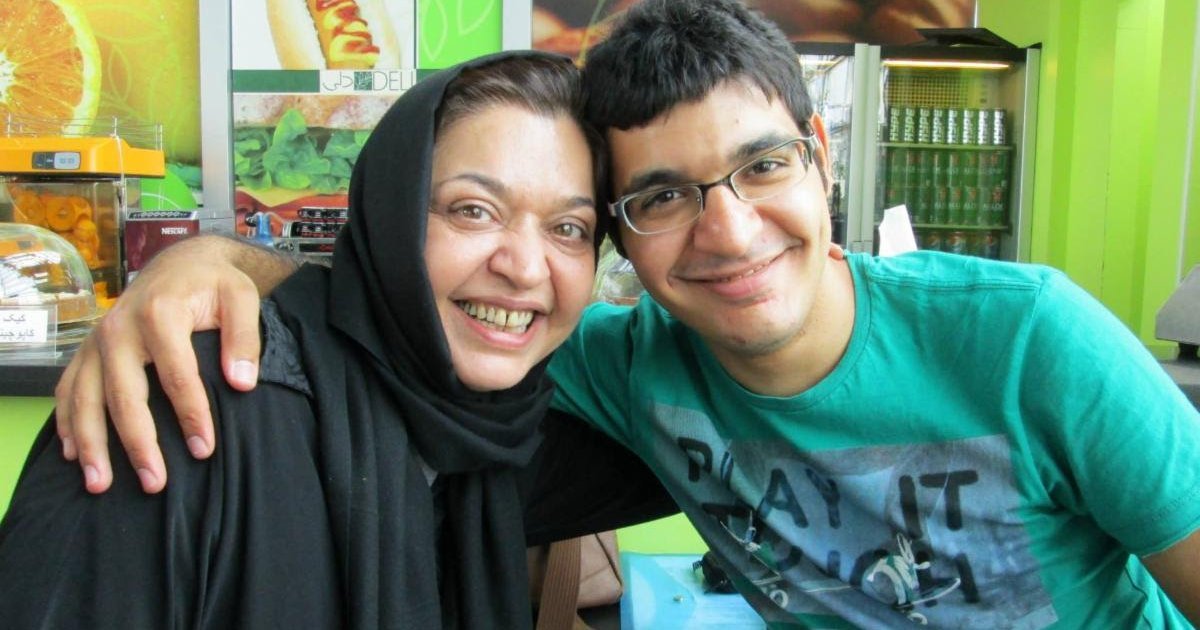
My mom used to call me every Sunday between 8:30 and 8:45 p.m. In 13 years, she has never missed a call. Like most moms, if I don’t respond, she immediately assumes I’m dead.
Two weeks ago, her calls stopped coming.
The Islamic Republic of Iran has cut all internal and external communications during the ongoing protests. They even jammed Starlink. It’s been radio silence. Not a word, in or out. And in that silence, they’ve been killing people. At least 16,000 in just a few days.
Mom used to sign off the same way every week. “I love you,” she’d say. “And I’m so glad you’re not here.”
I’m an only child. I’m also the only person my mom has in her life. Many families back home wouldn’t let their kids leave Iran because they didn’t want to be left alone. But my mom sold her jewelry, her prized Persian rug, even her house to make sure I went to a good school, got into a good university, and got out — to America.
So to Speak Transcript: Escaping Iran
Recent protests in Iran have drawn renewed attention to dissent under the country’s authoritarian government. Pouya Nikmand shares his journey from Iran to America.
Read More
What has the Islamic Republic done to this mother (and millions of other families) that she’d rather never see her son again than have him trapped with her?
Imagine what it takes to make synonyms out of I love you and I’m so glad you’re not here.
All the tiny deaths
I once asked my mom to apologize for having me. I looked out my window at the sky. Because of decades of corruption and severe mismanagement, the air in many Iranian cities is often toxic. On a bad day, the sky over Tehran is yellow. I remember thinking, “I deserve better.” No one should have to inhale carcinogens every day. Or live in such a stressful environment. Or under such a repressive regime that does not respect human dignity.
I still don’t know what my parents were thinking when they decided to bring a kid into a world like that. Not that I hold it against them. I know they did what billions of parents do. They tried to build a life in the only reality they understood. They probably didn’t think much about it. But I think about it all the time.
I think about that strange, distant world. I think about my mother. I think about the silence that has replaced her voice. And about the 16,000 people that Tehran killed in recent protests. But not just that. It’s all the tiny deaths too. All the stolen smiles and moments of joy. All the hope and laughter. All the things you cannot see. If you ask me, they are also killing all 97 million Iranians. Probably more, when you count the fact that they export death through terrorist funding. But they do it in far more subtle ways too. Maybe not all at once. Or with a bullet. But with a system that slowly crushes people’s souls. They have killed something inside the soul of every Iranian, but like Sting says in the song, something in our minds will always stay.
Blood will flow when flesh and steel are one
Drying in the color of the evening sunTomorrow’s rain will wash the stains away
But something in our minds will always stayPerhaps this final act was meant
To clinch a lifetime’s argumentThat nothing comes from violence and nothing ever could.
But the physical terror is always there too, just beneath the surface. Sooner or later, every Iranian gets a taste. I got my first on a sunny afternoon during a peaceful human-rights protest at the University of Tehran, where I was studying chemical engineering as an undergraduate. I was also the president of the music club at the university. Suddenly, paramilitary forces attacked a man and began beating him over the head with batons. Shocked and furious, students threw books and bags at the police — and the police hit us with tear gas.
We ran, but I inhaled so much gas my eyes and nose were on fire and I was drooling uncontrollably, gasping for air, running blind. I got separated from my friends and saw police vans parked all around the university. They had the gates covered. I had to find another way out or a place to hide. Then a group of men appeared on the path in front of me. Islamic Revolutionary Guards maybe. I couldn’t be sure. One of them raised a machete, cursed at me, and charged. I ran as fast as I could. He chased me with the machete in his hand.
Luckily, there was a university security building nearby. They let me in and saved my life. The next day, I learned a couple of my bandmates had been kidnapped. We didn’t see them for months. When they finally came back, they were changed. Their eyes were different. They had become different people because of whatever things they had experienced in the prisons. You heard terrible things about what went on in the prisons. Unspeakable things.
Online speech is powerful. That’s why Iran is silencing it.
Iran is killing protesters and cutting the internet to hide it. Censorship spreads globally—and democracies are flirting with dangerous tools.
Read More
Now, I have PTSD from motorcycles. Anyone who walks with me quickly learns that if I hear loud engines going by, I clench up. My face shows the pain. Because whenever I hear that sound, I remember all the times the Islamic Revolutionary Guards attacked me and my friends, or surrounded me and other people from both sides of a street, or blocked us in an alley, and beat the life out of anyone in front of them.
It’s hard for me to put these things into words. No matter how proficient I am in English, I can never express my feelings the way I could in my native Farsi. That’s another price I have to pay for being born in the wrong place. And I’m the lucky one. Think of the journalists in prison in Iran. The gays. The women who don’t want to be forced to wear headscarves. Anyone who says anything the regime doesn’t like. Most people never realize what a gift it is to be able to freely express yourself, in your native language — until it’s gone.
We have the honor to be able to fight with our words, and the blessing to have words be the response.
Imagine your country, one of the oldest civilizations in the world, whose values once rejected slavery and affirmed freedom and justice, now reduced in every movie to the ugly, bearded bad guy, played for laughs. Imagine feeling a touch of shame every time someone asks where you’re from, knowing that if you say Iran they’re more likely to think of terrorists, nukes, and Sharia rather than one positive thing. Growing up, you never think that one day the familiar streets of your youth will be nothing but memory and other people’s cartoonish impressions.
Radio silence
I’m ashamed to admit that since leaving Iran, I have not video-called my mom. Not once. The last time I saw her was at Tehran International Airport. Naturally, she was wearing her hijab, which many consider a cultural thing. But my mom is not religious. Yet she would lose her head if she loses her hijab. I hate to see her in it. Maybe part of me selfishly just wants that last image of her to remain unchanged in my mind. Maybe I don’t want to see how much older she looks under the stress of so much oppression. Maybe I can’t stand to see her in that hijab again.
I know how it feels to hide oneself in broad daylight. Before I accepted myself as gay, I lived for a decade in an environment where I was made to believe I was sick. That I was deviant. Criminal. Not that I want pity, but it reminds me of all the invisible suffering that cannot be measured or counted in the metrics of journalists who report on Iran. I read headlines that say there have been 16,000 deaths. 16,000? No, my friend. The cost has been so much more than that. So much more.
For all of you born in a country where you can speak freely, I hope you understand how fortunate you are. During World War II, people had to go to the front lines and risk their lives to protect their basic liberties. We have it so much easier. We don’t have to fight tanks or machine guns. We have the honor to be able to fight with our words, and the blessing to have words be the response.
This is what the people of Iran fight for, every day, at the highest cost. Even in the darkness. Even when the global media doesn’t give it the attention it deserves. Radio silence doesn’t.
The Islamic revolution in Iran happened in 1979 and it’s been 1984 every year since.
When I talk about the Islamic regime or lack of free speech, I’m not just talking about prisons and torture. I’m also talking about how it tries to control what people feel, what people sing, and what people are allowed to enjoy. Even music had to be approved. When I was the president of the music club at the University of Tehran, they wouldn’t let me play Persian or pop music. I once submitted a program for a concert in which I was going to play themes from “Hotel California,” but I wrote “Beethoven” down as the composer. It was approved. But the fact that I even had to ask, and fear of what might happen if I was caught. Even joy had to be monitored. That’s how these systems work. They don’t just want to control your body. They want to control your spirit. The Islamic revolution in Iran happened in 1979 and it’s been 1984 every year since.
I remember the first time I saw a lamb at the slaughter. It was so disturbing, it might have been one of the reasons I later became an animal rights activist. At the time, the adults around me said it was okay. Don’t worry, they said, lambs don’t feel pain. I remember the butcher cutting a hole in the sheep’s skin and blowing and blowing into the hole to fill the pocket with air like a giant balloon, helping separate the hide from the carcass so it would be easier to skin the animal. There was so much blood. But everyone acted like it was a perfectly normal thing to do. Not me, though. I kept thinking about a line from a poem by Saadi Shirazi that we all learn in school — every Iranian knows it by heart — it goes, “Never hurt an ant carrying a seed. They are alive, and their dear life is sweet.”
Facing mass protests, Iran relies on familiar tools of state violence and internet blackouts
From Iran’s internet blackouts to Australia’s expanding hate laws, governments worldwide are tightening control over speech and dissent.
Read More
Eventually, after seeing more lambs at slaughter, I grew numb to it just like everyone else. People can get used to pretty much anything, I have learned, given enough exposure. I think about this often, especially when I see so many Iranians who have accepted their fate, like so many lambs. This is why the new protests fill me with pride. If there is a lesson in all of this, perhaps it’s that freedom slips away one inch at a time, so slowly you become accustomed to its loss. New normals settle. Overton windows shift. People forget.
In my home country, under the Islamic Republic, you can get arrested not for something you did, but for something that you believed, or didn’t believe. You don’t get the right to remain silent.
If you live in a country where you still have the right to question, the right to protest, or even the right to remain silent, be grateful. If you have a voice, use it. It’s a tax we should willingly pay for being lucky enough to live in these societies. I use my voice on behalf of animals, who are among the most neglected and least protected victims of injustice, and whose pain and suffering is kept out of public view. I work to inspire the next generation to protect animals, defend liberty for all, and uphold free speech. And I try to remind people that speaking up matters because injustice anywhere is a threat to justice everywhere.
I know I would be executed in Iran for speaking my truth. Instead, I live with dignity in America. My mother gave me life twice, it turns out. Now every Sunday, between 8:30 and 8:45 p.m., I wait by the phone and listen to the silence.
Read the full article here
Fact Checker
Verify the accuracy of this article using AI-powered analysis and real-time sources.