In brief
- Intel’s new Core Ultra 3 debuts in 2025 with RibbonFET and PowerVia tech for better efficiency and density.
- The Company Foundry division losses hit $3.2 billion in Q2 as AMD captures 32% of desktop CPUs and nearly 40% of revenue.
- AMD’s OpenAI GPU deal, Apple Silicon, and Qualcomm’s PC chips tighten the noose.
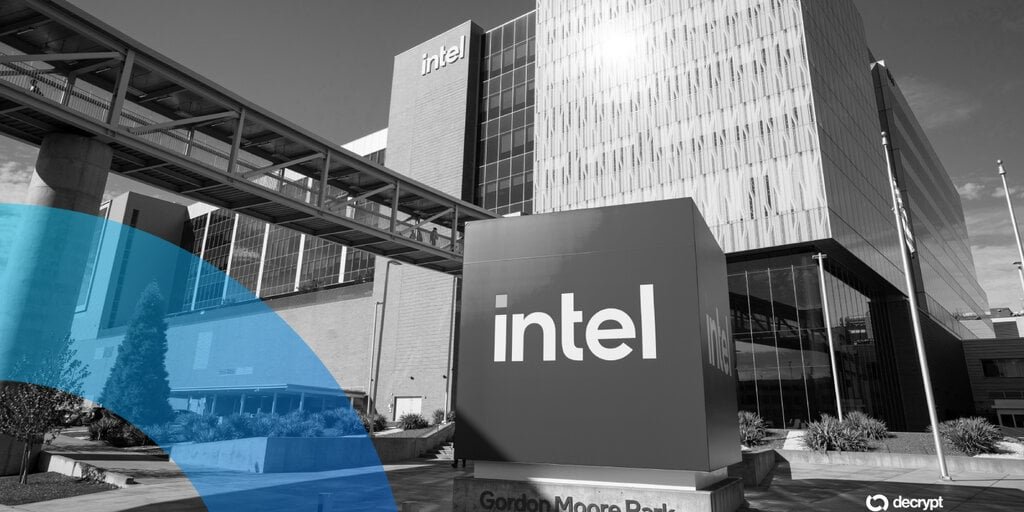
Intel unveiled its Panther Lake processor architecture Thursday at its Arizona campus, staking the company’s future on a chip that CEO Lip-Bu Tan calls critical to reclaiming lost ground in the AI-powered PC market.
The Core Ultra Series 3 processors, code-named Panther Lake, mark Intel’s first client products built on its 18A manufacturing process. Intel says the chips will begin shipping later in 2025 from Fab 52 in Chandler, Arizona, with broad availability in January 2026.
It’s a big geopolitical move Intel is attempting to play up.
“The United States has always been home to Intel’s most advanced R&D, product design, and manufacturing, and we are proud to build on this legacy as we expand our domestic operations and bring new innovations to the market,” Lip-Bu Tan said in a statement.
The announcement comes as Intel’s foundry division continues to bleed cash. For Q2 2025, Intel’s foundry business posted an operating loss of $3.2 billion on $4.4 billion of revenue, per summarized figures from the company’s earnings coverage.
Intel’s previous Q2 2025 results show the broader restructuring and cost controls related to the turnaround.
Last month, the White House announced a strategic agreement with Intel, in which the government acquired a 9.9% stake in the company by purchasing 433.3 million primary shares, investing a total of $11.1 billion to provide Intel with sufficient cash to invest in new technology and remain operational.
Competition is fierce. Apple’s latest Apple Silicon laptops routinely post strong multithreaded and single-core results versus prior-gen Intel i9s in public benchmarks.
Meanwhile, AMD is making serious inroads in desktop CPUs. As of Q2 2025, AMD captured 32.2% of desktop CPU unit share and 39.3% of revenue share, narrowing Intel’s dominance to roughly 2:1 from estimates of around 9:1 in prior years.
AMD is not just competing in PCs; it’s also forming large AI partnerships, including a confirmed multi-year 6 GW GPU supply deal with OpenAI this week.
Qualcomm’s PC push, meanwhile, centers on efficiency, with early reviews and databases highlighting strong performance-per-watt for Snapdragon X Elite.
On the technology front, Intel’s 18A process brings RibbonFET (gate-all-around) transistors and PowerVia backside power delivery.
Intel claims up to 15% better performance per watt and 30% higher chip density compared to its Intel 3 node, making the chips a sub-2 nm-class alternative for advanced client and data-center silicon.
In other words, these new chips use highly advanced technology and are designed to be efficient in AI tasks.
The company needs Panther Lake to land. With Lip-Bu Tan acknowledging there are” no quick fixes” for Intel’s situation and analysts openly debating structural options, Intel’s next-gen client platform is basically a bet that can either save or ruin the once dominant American chipmaker.
Generally Intelligent Newsletter
A weekly AI journey narrated by Gen, a generative AI model.


 Freedom Index