

 Freedom Index
Listen to the article
This year marks the 60th anniversary of the 1965 Moynihan report. It also marks the 60th year of arguments over whether the report was, on balance, a good thing. The report’s depiction of African American families caused an uproar after it was leaked to the press. Yet this line of criticism missed the forest for the trees back in 1965, and continues to do so today. While Moynihan’s critics bicker over his choice of words to describe black families, they’ve ceded political ground to policymakers who seek to blame family dysfunction entirely on failures of personal responsibility. The past sixty years of bloviation about “welfare dependence” and the “culture of poverty” helped shift the political rhetoric away from the economic policy that actually has the potential to improve the lives of America’s children. And this happened as single-parent families have continued to comprise a growing number of impoverished families across all racial and ethnic groups. These families aren’t going away, yet federal support for them seems to be. Making peace with the Moynihan report is important for getting family policy back on track.
The Moynihan report was an early salvo in the War on Poverty. The United States had experienced an unprecedented economic boom following the end of World War II, but by the early 1960s it was clear to the Kennedy and Johnson administrations that many Americans had been left behind. At the same time, African-Americans were seeing the fruits of their long battle for civil rights finally enshrined in law with the Civil Rights Act of 1964 and the Voting Rights Act of 1965. The question for Moynihan and many other policymakers was what should come next: How could civil rights and a booming economy be harnessed to create more equal economic outcomes for all Americans?
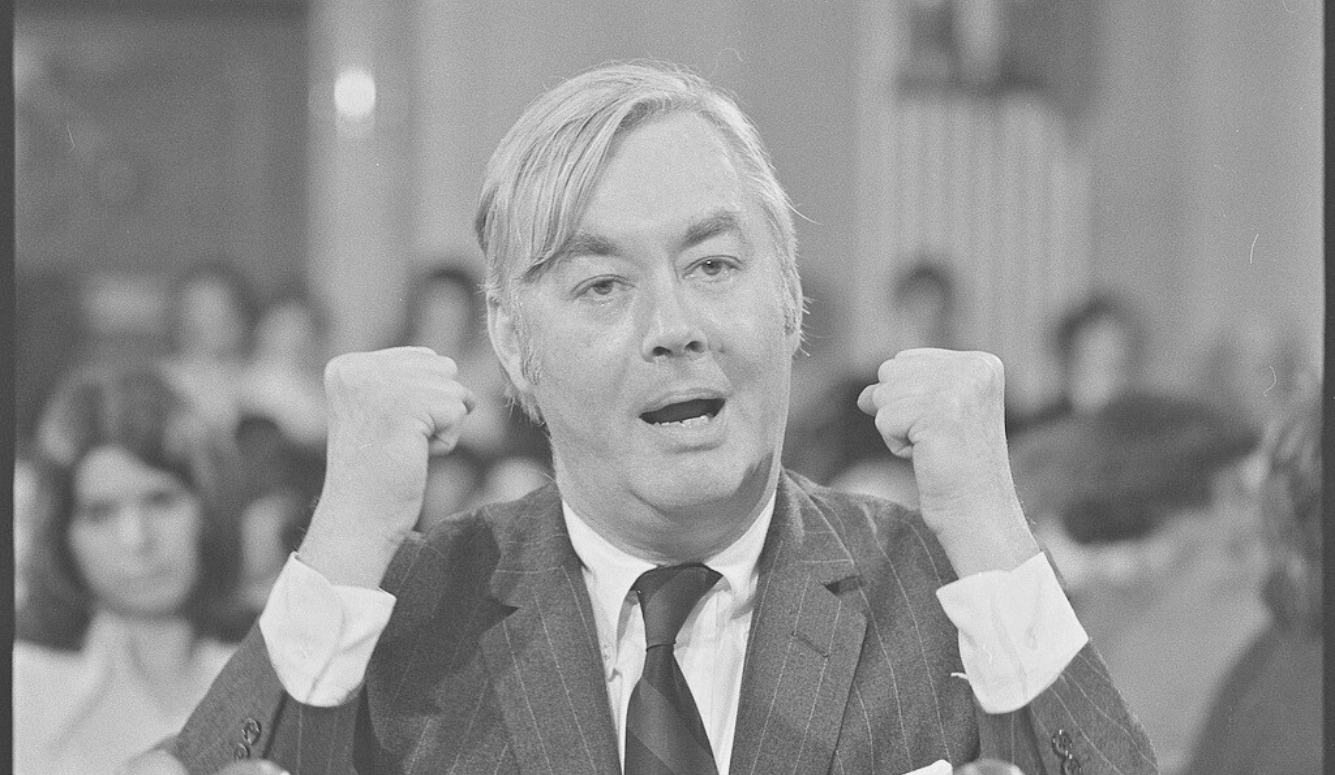
In 1965, Daniel Patrick Moynihan was Assistant Secretary of Labor in the Johnson administration, already more than a decade into a fifty-year career in politics that would culminate in four terms in the United States Senate. At the Department of Labor, his bailiwick was devising policy for the War on Poverty. With an interdisciplinary academic background in economics, political science, and international development, he was the right person to articulate new avenues for economic justice. He was also well versed in what several generations of black scholars, from W.E.B. Du Bois to E. Franklin Frazier to Kenneth Clark, had written about the challenges facing African-American families.
All this led to Moynihan’s 1965 report, The Negro Family: The Case for National Action. It basically makes three points:
- There’s a crisis in black America that has its roots in racism and discrimination, both past and present. It has resulted in endemic unemployment for African-Americans, especially black men in northeastern cities.
- This crisis manifests itself in the high number of single-parent families in the African-American urban community, a mounting trend in the post-war era.
- America must undertake a massive financial investment in African-American communities to become a fair and equitable nation. Civil rights were not, by themselves, enough to ensure equality.
The report was never intended for public release, and Moynihan’s name never appeared on it. It was a piece of serious social science, buttressed with pages of statistics and citations, although first and foremost it was a political document. Its prose was often baroque, and sometimes overheated. This is evident in its most famous passage:
At the center of the tangle of pathology is the weakness of the family structure. Once or twice removed, it will be found to be the principal source of most of the aberrant, inadequate, or antisocial behavior that did not establish but now serves to perpetuate the cycle of poverty and deprivation (emphasis added).
Why did Moynihan use language like this? The phrase “tangle of pathology” wasn’t even his (credit goes to the aforementioned Kenneth Clark). The answer, says the historian James Patterson, is that Moynihan was writing for an audience of one: President Lyndon Johnson. In this respect, the report seemed to have been a success. Soon after the report’s publication, Moynihan wrote its message into Lyndon Johnson’s soaring commencement address at Howard University. It articulated a vision of a vastly expanded civil rights movement that was to tragically founder on the shoals of the Watts riot and the Vietnam War.
Black American Culture and the Racial Wealth Gap
In the public debate on racial inequality, the wealth gap is among the sharpest arrows in the progressive quiver.
When you write things with the intention of gaining notice, it’s easy for people to pay attention to the style rather than the substance. This can explain why portions of the report were leaked later in 1965. Critics lit into the Moynihan report with splenetic vigour, often on the basis of fragmentary information. The civil rights leader James Farmer called the report “the most serious threat to the ultimate freedom of American Negroes to appear in print in recent memory.” Perhaps the most enduring criticism came from Harvard psychologist William Ryan, who coined the expression blaming the victim for the occasion. The mere suggestion that family structure—the “tangle of pathology”—had anything to do with the often dire conditions confronting African-Americans in the 1960s was cast as a racist attempt to shift the blame away from slavery and discrimination. This school of thought has endured in work with titles like Blaming the Poor: The Long Shadow of the Moynihan report on Cruel Images about Poverty (2015). Tragically, this misreading of the report has continued to set back family policy over the past sixty years.
A better way of thinking about the report came from the civil rights leader Bayard Rustin, who rivalled Daniel Moynihan when it came to prolific writing on policy to better the lives of those at the bottom of the economic ladder. Rustin, who knew better than to think Moynihan had written a racist tract, called the report “bold.” At the same time, he was critical. Rustin, long remembered as the civil rights leader most inclined to see the movement in economic terms, had himself called for large-scale federal investment in African-American communities. Consequently he criticised the report for its lack of specifics. Moynihan talked a big game about federal investment in black communities, but what exactly was he going to do about it?
Bayard Rustin was not alone among civil rights leaders who appreciated the broader aims of the report. In a 2018 documentary, Moynihan’s widow Elizabeth recalls a 1965 phone call from Martin Luther King Jr. Your report is right on the money, said Dr King, but you know I can’t say so in public. Why not? Because by then the report was seen as a toxic setback to the cause of equality due to the leaked (and often misrepresented) snippets. From the beginning, malicious misreadings of the report distracted from its message about the need for economic policy to benefit struggling families.
Flash forward to the less ideologically charged 1980s. William Julius Wilson, a leading sociologist of the past half century, challenged liberal taboos surrounding the Moynihan report in his 1987 book, The Truly Disadvantaged. Wilson, who is himself black, affirms the report’s arguments by linking economic disadvantage to African-American family structure. He would subsequently describe the report as a “prophetic document.” Scholars like Wilson had come to recognise that the report offers a structural explanation for poverty and inequality, focusing on the labour market determinants of both inequality and the intergenerational transmission of disadvantage. Barack Obama acknowledges the report’s perspicacity in his second book, The Audacity of Hope, challenging liberals to address the relationship between family structure and disadvantage.
But the bickering and sniping continue. Some academics still claim that any exploration of family structure is just reviving racist stereotypes first promulgated by Daniel Moynihan in 1965. In this line of argument, allegations of victim-blaming form a constant refrain. By fighting over the report’s language rather than its substance, these controversies have taught social scientists the wrong lesson: Don’t talk about the family, and how it might be related to poverty and prosperity. Any discussion of family structure might get you painted as out of touch.
Virtuous Lies and Black Despair
Many leftists claim that black Americans are crushed beneath a vast, racist social machinery. It is hard to imagine a more demoralizing message.

In retrospect, this all seems somewhat strange: Why the continued disparagement of a government report, now sixty years old, that despaired of African-American poverty and called for federal investment in black communities? Are these academics still triggered, sixty years later, by the “tangle of pathology,” despite a slew of studies that demonstrate the importance of families for understanding how children fare? Or perhaps the report is merely serving as a stand-in for Moynihan’s conservative admirers? This gives a pass to the policymakers who ignore the report’s call for large investments in historically disadvantaged communities.
Sixty years later, the concerns raised by the Moynihan report remain pressing. Inequality has only grown in the interim since the publication of the report. In our recent book Thanks for Nothing: The Economics of Single Motherhood since 1980, we show that family structure has a deep and abiding relationship to poverty in America. Not all single-parent families are poor, but over time single mothers’ incomes have become more unequal. Indeed, their income disparities have grown faster than for married mothers, or for Americans more generally. This isn’t because a new large class of über-rich single mothers has emerged, but because America has a new underclass of über-poor single moms.
Federal policy has much to do with this. In the wake of Bill Clinton’s 1996 welfare reform legislation, many women successfully transitioned from government aid into the booming job market of the late 1990s. Inequality became more pronounced as the bull economy staggered to an end with the recessions of the twenty-first century. Moynihan argued strenuously against the 1996 law, arguing that children would be “put to the sword” and relegated to “sleeping on grates.” The three decades since the 1965 report seemingly did little to temper Moynihan’s purple prose, but he was broadly correct about the implications of welfare reform. While some single mothers thrived in the labour force, others fell through the cracks.
The solution, just as Moynihan pointed out, has to be federal action. And on this count Bayard Rustin was correct: Moynihan’s 1965 report didn’t lay out exactly what the government should do—though Moynihan himself had a lot more to say on this subject later in his career. His Family Assistance Plan, essentially a basic income, came tantalisingly close to becoming law during his stint in the Nixon administration. Moynihan also understood the limits of government power. Long before George W. Bush squandered hundreds of millions of dollars on marriage promotion, Moynihan argued against the government deploying social workers to “improve” families, or to make sure they were deserving of help. He wanted to help families, not lecture them.
This is the conversation we should be having about Moynihan. Would a universal basic income be the best way to lift all American families out of poverty? Or are the wage subsidies proposed by conservative think tanker Oren Cass the better way to do? Or, perhaps, the refundable child tax credits proposed by Mitt Romney? Ronald Reagan was not wrong when he praised the effectiveness of the Earned Income Tax Credit as an anti-poverty tool, but it’s equally clear that the labour market as it’s now constituted has failed many single mothers and their children.
The British Prime Minister Benjamin Disraeli once wrote that “power has only one duty: to secure the social welfare of the People.” A century later, Daniel Patrick Moynihan told us precisely where the application of state power is needed. What comes next for those claiming to be stewards of the American people?
Read the full article here
Fact Checker
Verify the accuracy of this article using AI-powered analysis and real-time sources.