Close Menu
FSNN | Free Speech News NetworkFSNN | Free Speech News Network
  • Home
  • News
    • Politics
    • Legal & Courts
    • Tech & Big Tech
    • Campus & Education
    • Media & Culture
    • Global Free Speech
  • Opinions
    • Debates
  • Video/Live
  • Community
  • Freedom Index
  • About
    • Mission
    • Contact
    • Support
Trending

DHS Wants To Unmask Online Critics

6 minutes ago

David Bailey-led company acquiring related firms

26 minutes ago

Zora Launches Attention Markets on Solana, Not Base

28 minutes ago
Facebook X (Twitter) Instagram
Facebook X (Twitter) Discord Telegram
FSNN | Free Speech News NetworkFSNN | Free Speech News Network
Market Data Newsletter
Wednesday, February 18
  • Home
  • News
    • Politics
    • Legal & Courts
    • Tech & Big Tech
    • Campus & Education
    • Media & Culture
    • Global Free Speech
  • Opinions
    • Debates
  • Video/Live
  • Community
  • Freedom Index
  • About
    • Mission
    • Contact
    • Support
FSNN | Free Speech News NetworkFSNN | Free Speech News Network
Home»News»Global Free Speech»‘I literally felt naked’: Angolan journalist Teixeira Cândido targeted with Predator spyware
Global Free Speech

‘I literally felt naked’: Angolan journalist Teixeira Cândido targeted with Predator spyware

News RoomBy News Room2 hours agoNo Comments8 Mins Read892 Views
Share Facebook Twitter Pinterest Copy Link LinkedIn Tumblr Email VKontakte Telegram
‘I literally felt naked’: Angolan journalist Teixeira Cândido targeted with Predator spyware
Share
Facebook Twitter Pinterest Email Copy Link

Listen to the article

0:00
0:00

Key Takeaways

Playback Speed

Select a Voice

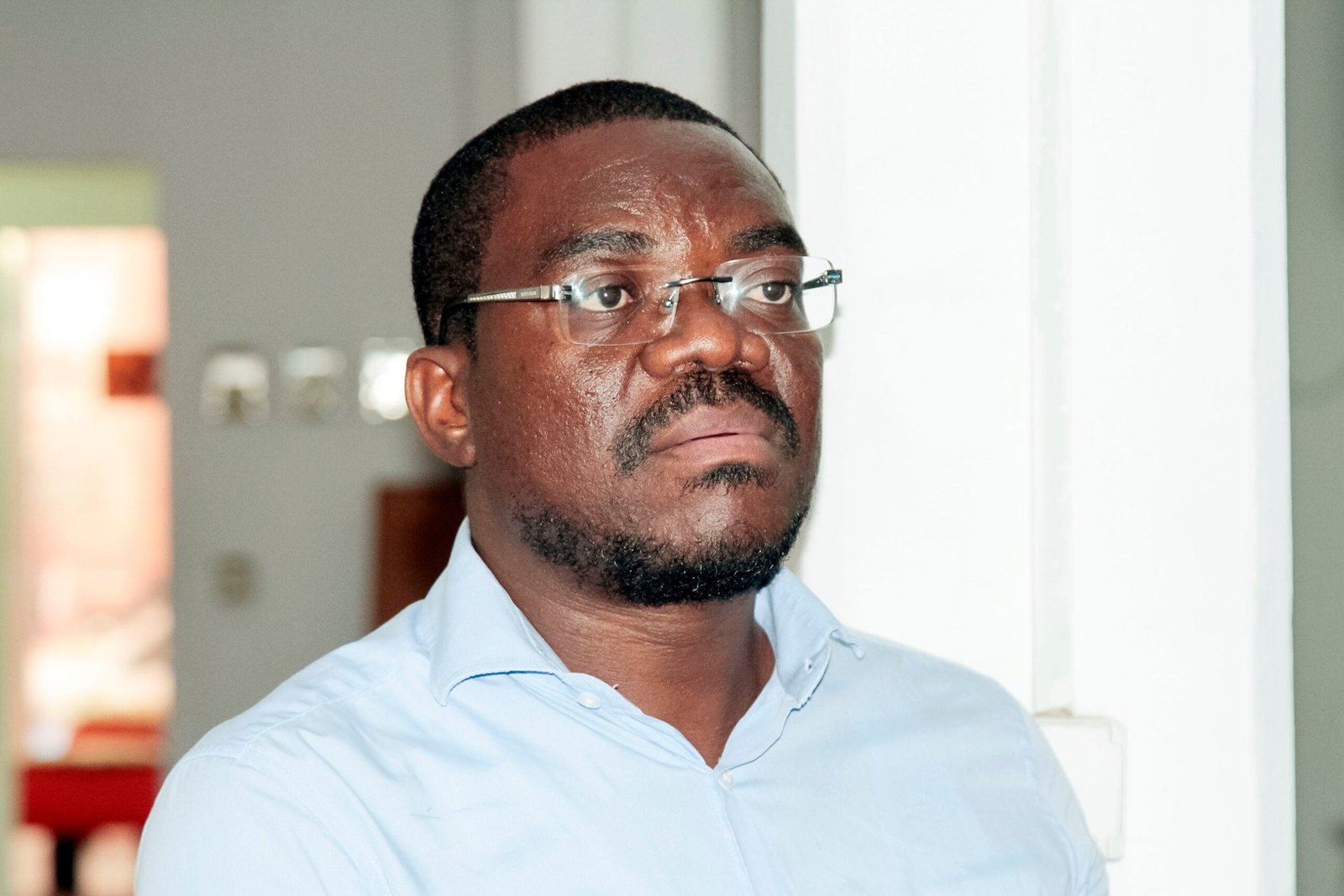
Angolan journalist and lawyer Teixeira Cândido wants to know who targeted him with spyware, and he wants justice.

“First and foremost, we must seek to find out who the entities are that have acquired these spyware tools,” Cândido told CPJ, as findings published by Amnesty International’s Security Lab show that a malicious link sent in a WhatsApp message infected his phone with Predator spyware.

The commercially available spyware can provide access to an infected device’s microphone, camera, and data, including contacts, messages, photos, and videos, without the user’s knowledge. 

Amnesty, the University of Toronto’s Citizen Lab, and U.S.-based cybersecurity firm Recorded Future have previously documented infrastructure for operating Predator in more than a dozen countries, including Angola. But this marks the first publicly known case of spyware targeting in the country, where restrictions on the press have tightened ahead of elections in August 2027.

The detection of Predator on Cândido’s phone reveals how powerful surveillance technology has been wielded against Angola’s press and civil society, alongside repressive laws and other forms of intimidation. 

“I literally felt naked! It’s as if someone I don’t know had stripped me naked in public. It’s like taking a shower with people watching. That’s how it feels,” Cândido told CPJ during an interview in Luanda, Angola’s capital. “I don’t know what kind of information they had access to. I don’t know to what extent they shared my intimate conversations.”

Russian editor Galina Timchenko similarly described feeling “naked in the street” after being targeted with Pegasus spyware sold by Israel-based NSO Group.

Malicious links

Spyware is easily installed on smartphones with just one click. (Photo: AP/Michael Sohn)

Forensic traces prove that Cândido received a link on May 3, 2024 — ironically, World Press Freedom Day — and likely clicked on it, resulting in Predator installing on his phone the next day. The infection lasted less than 24 hours and was removed when Cândido restarted his device. The attacker sent more malicious links over the following weeks but these appear not to have resulted in additional infections, likely because he did not click them, Amnesty reported. 

Identified in collaboration with human rights groups Friends of Angola and Front Line Defenders, Amnesty’s findings do not reveal who ordered the surveillance.

“This was a typical one-click attack,” said Carolina Rocha da Silva, Operations Manager at Amnesty International’s Security Lab, which has been tracking Predator for several years. “The sender was using an Angolan phone number, a traditional Angolan name, and had a story, a motive for reaching out.” 

The WhatsApp message came from someone purporting to represent Angolan students interested in talking to Cândido about socioeconomic development, Amnesty said.

Predator was developed by the Intellexa Consortium, an international network of companies selling surveillance services, founded by former Israeli military officer Tal Dilian.

The “Intellexa Leaks” reported in December 2025 suggest that staff of the company may have access to parts of their clients’ Predator systems, including the ability to view data gathered from spyware targets.

Dilian did not respond to CPJ’s request for comment via email. 

In a response to the December leaks investigation, Dilian’s lawyer said, “Companies seeking export licences [for active cyber-tools] must take responsibility before selling a system, while governments bear full responsibility for their use after purchase.”

Democracy under strain
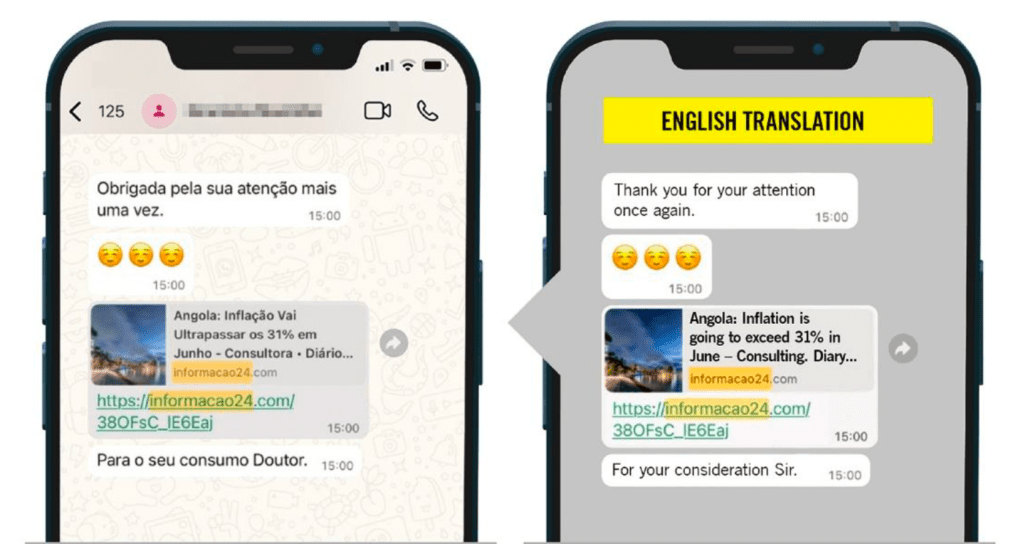
WhatsApp messages sent to Angolan journalist Teixeira Cândido contained malicious links, with the sender’s name blurred. On the left are the original messages in Portuguese, and the English translations are on the right. (Screenshot: Amnesty International’s Security Lab)

Spyware poses an existential threat to press freedom — menacing journalists’ physical, digital, and psychological safety, and undermining their crucial role in democracy.

“It’s really a matter of personal safety. You don’t know if you’re being watched, if you’re being followed,” Cândido said, describing how the attack affected him. “Despite all the security measures you can take, there’s always a feeling of insecurity that doesn’t go away.”

Cândido told CPJ he started to worry about digital surveillance around Angola’s 2022 national election, after repeated burglaries at the headquarters of the Syndicate of Angolan Journalists, which he headed until 2024. 

“They only stole computers and weren’t interested in anything else,” he said. “The fact that they took our computers made us aware of the interest in our documents and contacts, and it would be natural for them to also be interested in our phones.”

As a host with the privately owned Radio Essencial broadcaster, Cândido is a prominent Angolan media figure, often critical of authorities. But he suspects the spyware attack was prompted by his work as a union leader and fierce advocacy for press freedom.

‘Draconian laws’
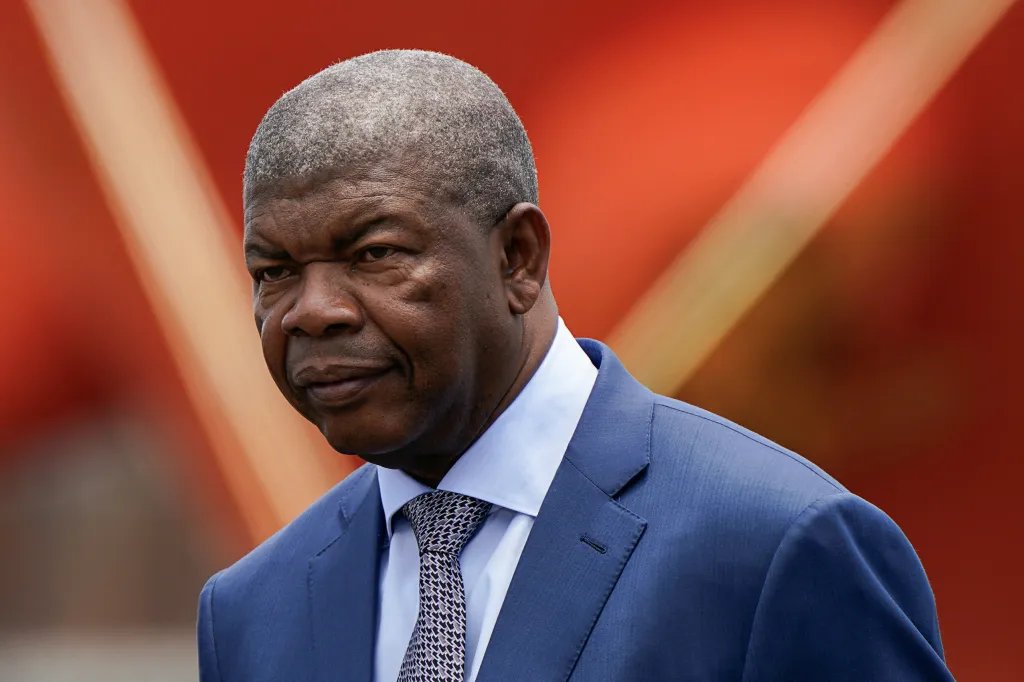
President João Lourenço in Angola in 2024.
President João Lourenço in Angola in 2024. (Photo: Reuters/Elizabeth Frantz)

Angola transitioned from communism to democracy in 1992, Florindo Chivucute, executive director of Friends of Angola, told CPJ. But a wave of “draconian laws” introduced during President João Lourenço’s second term, which began in 2022, have set the country back. 

“He managed to undo the steps that we have made in terms of creating institutions and guaranteeing certain freedoms,” Chivucute said. “Now it’s fair to say … Angola is an authoritarian regime.”

CPJ has for years documented Angolan authorities’ prosecution of journalists on criminal defamation and insult charges, as well as broadcast suspensions and other forms of harassment.

In 2024, Angola passed the National Security Law, giving security organs powers to disrupt telecom and internet systems under “exceptional circumstances.” The same year, a law on vandalism made it a crime to film, photograph, or publish information relating to the security of law enforcement and other public services, although much of the law has been declared unconstitutional.

Already in 2026, parliament has advanced two more draft laws: one would criminalize sharing “false information” and a second on cybersecurity would expand surveillance powers with limited oversight, which Cândido worries would promote fear among citizens. 

“Only judges can authorize [wiretaps] … and only when there is suspicion that the person has committed a crime,” Cândido said of the current law. “I am a journalist, I am a lawyer. I don’t know to what extent there could be an order of this kind.”

But the proposed cybersecurity legislation would create a National Cybersecurity Centre with “regulatory, supervisory, inspection, and sanctioning functions.” This would include the ability to demand information deemed “against state security” from communications operators, such as internet providers, without a court order.

Responding to CPJ’s request for comment about spyware targeting in Angola, Alvaro João, spokesperson of the General Prosecutor’s Office, said his office “always tries to act within the limits of the law and has no knowledge of such situations.” Luis Fernando, spokesperson for the presidency, similarly told CPJ that he had no knowledge of any proof of spyware use. In response to CPJ’s questions via messaging app, Ministry of Interior spokesperson Wilson dos Santos said he would be able to comment when details of the attack had been made public.

In pursuit of accountability
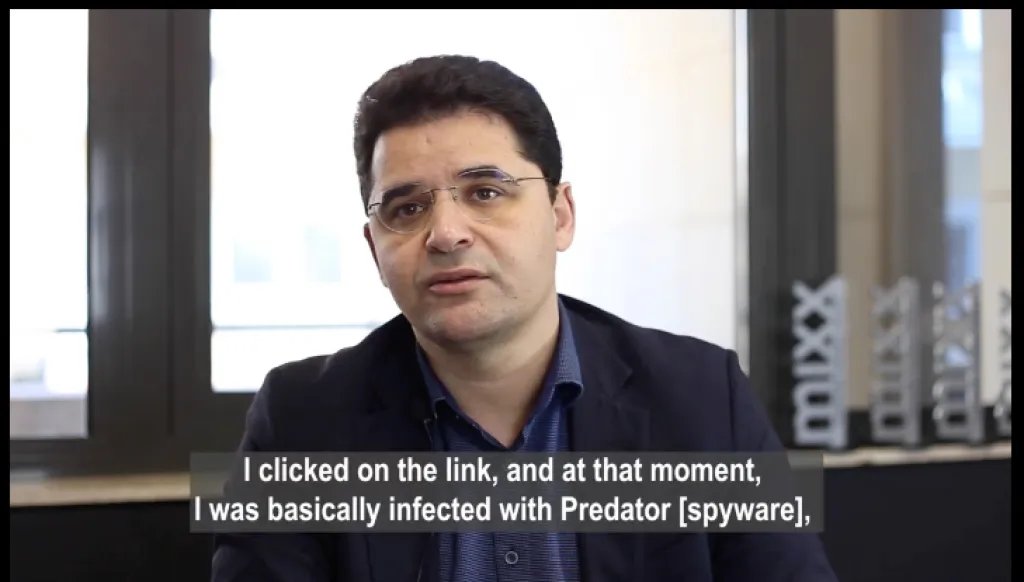
Greek journalist Thanasis Koukakis describes in an interview how his phone was infected with spyware.
Greek journalist Thanasis Koukakis describes in a 2023 interview how his phone was infected with spyware. (Screenshot: Birn Balkans/YouTube)

Litigation is one avenue for responding to spyware abuses.

In January, a U.K. high court ordered Saudi Arabia to pay over 3 million British pounds (US$4 million) in damages to London-based dissident Ghanem al-Masarir, whose phones were targeted with Pegasus. A California judge in 2025 also ordered NSO Group to stop targeting WhatsApp users with Pegasus and to pay damages, while a trial is ongoing in Greece over the targeting of journalist Thanasis Koukakis with Predator.

Cândido said he hoped for accountability within Angola, but called for international support to reveal those behind surveillance abuses. CPJ continues to call for governments to curb spyware attacks.

In 2023, the U.S. added Intellexa firms to an Entity List, which restricted their ability to do business with U.S. companies for “engaging in activities contrary to the national security or foreign policy interests.” Then, in 2024, the U.S. sanctioned Dilian and more Intellexa-linked individuals and firms.

But in December 2025, three of those individuals were removed from the sanctions list, triggering questions from human rights experts and lawmakers. On February 13, five U.S. Congress members wrote to the Treasury Department and the State Department expressing “deep concern” and requesting a briefing by February 27 “to ensure Congress understands the Administration’s justifications for these delistings.”

The U.S. Treasury Department, which announced the sanctions removals, did not immediately respond to CPJ’s emailed request for comment. 

“Surveillance ultimately threatens our professional activity. We must unite and create a large international network, even against states, if necessary, to raise awareness, because it must be possible to defend freedom,” Cândido told CPJ. 

“Otherwise, one day we will wake up and there will be no more journalism!”

Read the full article here

Fact Checker

Verify the accuracy of this article using AI-powered analysis and real-time sources.

Get Your Fact Check Report

Enter your email to receive detailed fact-checking analysis

5 free reports remaining

Continue with Full Access

You've used your 5 free reports. Sign up for unlimited access!

Already have an account? Sign in here

Share. Facebook Twitter Pinterest LinkedIn Tumblr Email Telegram Copy Link
News Room
  • Website
  • Facebook
  • X (Twitter)
  • Instagram
  • LinkedIn

The FSNN News Room is the voice of our in-house journalists, editors, and researchers. We deliver timely, unbiased reporting at the crossroads of finance, cryptocurrency, and global politics, providing clear, fact-driven analysis free from agendas.

Related Articles

Global Free Speech

CPJ to release report documenting Palestinian journalists’ claims of torture in Israeli prisons

12 hours ago
Global Free Speech

Ukraine’s youth abroad are censoring what they say to those still at home. Photo: Illia Horokhovsky/Unsplash This article first appeared in the Winter 2025 issue of Index on Censorship, Gen Z is revolting: Why the world’s youth will not be silenced, published on 18 December 2025. For Ukraine’s Gen Z, the war has created two kinds of silence: one under sirens and the other under guilt. Those who stayed live through air raid alerts and numb routine; those who left watch from abroad – scrolling through updates, unsure what to say to the people they love back home. Both carry their version of survival, and both are having to learn to speak to each other again. In Dnipro, Dasha Buldenko, 19, says she has grown used to fear. “You get used to the sirens, you get used to the explosions. You stop feeling anything,” she tells me. “We live in totally different worlds now.” For her, life has narrowed to a quiet persistence: staying, coping and enduring without expecting understanding from those who left Ukraine. “People who moved abroad forget where they came from,” she says, frustrated by what she calls the “pity” tone of returning friends. “They see a different world, different opportunities. We don’t have those because of war.” Mark Neshta, a 21-year-old student at the University of Essex in the UK, describes another kind of distance: the one between empathy and experience. “You just can’t truly understand how it feels,” he admits. “At the beginning, I was deeply depressed that my country was going through such horror while I was sitting safely 1,000km away.” He calls it “a strange cognitive dissonance” when “you’re physically abroad but all you care about, all you live by, is news from Ukraine. You consume it only through the internet or through conversations with loved ones who stayed”. Over time, that guilt has turned into a determination to define himself more clearly. Living abroad, he says, has made him think about what it means to represent Ukraine. “When people ask where I’m from, I want them to see more than war, to see culture, history, identity.” He even switched to speaking Ukrainian, though he grew up speaking Russian. “I don’t think living abroad is what caused that,” he says. “It was the war itself.” Both voices show the same wound from opposite sides. Those inside Ukraine hide their pain behind fatigue. Those outside hide their guilt behind activism or composure. When they talk, it is not politics that divides them but the need to censor emotion, to sound strong, to sound grateful, to avoid hurting each other with what the other cannot understand. What does that do to identity? For Dasha, being Ukrainian “just is”. She says: “We are all Ukrainians; we stand for our own, regardless of language barriers.” For her, it is a fact of staying and surviving. For Mark, it is something to articulate and explain. One holds on by living it, the other by translating it. In the end, both sides are searching for the same thing: to be understood. “People just need to actually listen to each other,” Dasha says. READ MORE

12 hours ago
Global Free Speech

Cambodian journalist Luot Sophal detained over military water shortage report

20 hours ago
Global Free Speech

Ethiopia revokes Reuters journalists’ accreditation following investigative report

1 day ago
Global Free Speech

Philippine journalist Frenchie Mae Cumpio denied bail, to remain in prison after 6 years

2 days ago
Global Free Speech

Group of teenage students using smartphones. Credit: Davidovich Mikhail/Alamy Banning social media for the under-16s appears to be contagious. Australia set the trend in December and now other countries are considering doing the same. There is growing momentum in Britain in favour of a ban (with the House of Lords having voted in favour of one last month). Spain is the first European country to propose legislation and Greece is said to be following suit. The Spanish prime minister, Pedro Sánchez, has spoken candidly about the abuse he has experienced online, saying it has “crossed many red lines” and nearly caused him to resign in 2024. He’s pushing through laws not only to ban access to major platforms for under-16s, but to hold social media executives criminally responsible if they do not take down illegal or hateful content. The country might even go one step further: Sira Rego, the youth minister, has suggested X should be prohibited altogether, because of the “flagrant violations of fundamental rights” taking place on the platform. She listed various issues, including the sexual deepfake images generated by Grok, and called the broader social media landscape “undemocratic” and controlled by “a few digital strongmen”. Elon Musk, of course, hit back, first posting on X: “Dirty Sánchez is a tyrant and a traitor to the people of Spain”, and an hour and a half later posting “Sánchez is the true fascist totalitarian.” I am not going cheerlead for Musk here. On X specifically, I find the culture now often unpleasant, somewhere I visit out of habit and seldom linger. And while X seems to be a microcosm of the worst trends of social media today, the other major platforms have flaws too. Do read this excellent piece we recently published from Brazilian writer Nina Auras on Meta banning left-wing political accounts in her country. But for those of us who work in defence of freedom of expression, the question is not whether platforms are flawed. The question is whether restricting access to them will strengthen our speech rights or weaken them. At Index, we’re not neuroscientists studying the cognitive effects of scrolling and the impact of social media on the young (as a sidenote a landmark trial has just started in Los Angeles on the mental health effects of Instagram and YouTube, the outcome of which will be very insightful). Rather we’re advocates for people whose speech is curtailed, be it journalists, activists or others. From that vantage point, social media remains incredibly important. For the isolated and the marginalised, it can be a lifeline: a source of learning, solidarity and visibility. The platforms continue to help expose state violence, mobilise protest movements and even unseat autocrats. Our recent magazine issue on Generation Z explored exactly that, and for those of us paying close attention to events in Iran, social media provided some of the best access to on-the-ground information. It is for these reasons that, until recently, the governments most eager to ban social media have typically been the least tolerant of dissent. Yes, the calls from Australia, Spain, Greece, the UK and other countries are rooted in different, more admirable reasons. It’s just bans will still have the same impact. None of the above excuses the abuse, the disinformation, the addictive design of algorithms and democratic interference. Those harms demand attention. But when solutions jump straight to prohibition without reckoning with what might be lost, they begin to resemble moral panics of the past – video games, rock ’n’ roll, the printing press, each once cast as existential threats to society that should be controlled no matter what the cost. READ MORE

4 days ago
Add A Comment
Leave A Reply Cancel Reply

Editors Picks

David Bailey-led company acquiring related firms

26 minutes ago

Zora Launches Attention Markets on Solana, Not Base

28 minutes ago

Abu Dhabi Funds Boosted BlackRock Bitcoin ETF Exposure to $1 Billion by End of 2025: Filings

29 minutes ago

EFF to Wisconsin Legislature: VPN Bans Are Still a Terrible Idea

1 hour ago
Latest Posts

Let’s Fix Our Federal Holiday Schedule

1 hour ago

The crypto tax reckoning is here

1 hour ago

HIVE Revenue Jumps 219% as AI Expansion Offsets Bitcoin Price Weakness

1 hour ago

Subscribe to News

Get the latest news and updates directly to your inbox.

At FSNN – Free Speech News Network, we deliver unfiltered reporting and in-depth analysis on the stories that matter most. From breaking headlines to global perspectives, our mission is to keep you informed, empowered, and connected.

FSNN.net is owned and operated by GlobalBoost Media
, an independent media organization dedicated to advancing transparency, free expression, and factual journalism across the digital landscape.

Facebook X (Twitter) Discord Telegram
Latest News

DHS Wants To Unmask Online Critics

6 minutes ago

David Bailey-led company acquiring related firms

26 minutes ago

Zora Launches Attention Markets on Solana, Not Base

28 minutes ago

Subscribe to Updates

Get the latest news and updates directly to your inbox.

© 2026 GlobalBoost Media. All Rights Reserved.
  • Privacy Policy
  • Terms of Service
  • Our Authors
  • Contact

Type above and press Enter to search. Press Esc to cancel.

🍪

Cookies

We and our selected partners wish to use cookies to collect information about you for functional purposes and statistical marketing. You may not give us your consent for certain purposes by selecting an option and you can withdraw your consent at any time via the cookie icon.

Cookie Preferences

Manage Cookies

Cookies are small text that can be used by websites to make the user experience more efficient. The law states that we may store cookies on your device if they are strictly necessary for the operation of this site. For all other types of cookies, we need your permission. This site uses various types of cookies. Some cookies are placed by third party services that appear on our pages.

Your permission applies to the following domains:

  • https://fsnn.net
Necessary
Necessary cookies help make a website usable by enabling basic functions like page navigation and access to secure areas of the website. The website cannot function properly without these cookies.
Statistic
Statistic cookies help website owners to understand how visitors interact with websites by collecting and reporting information anonymously.
Preferences
Preference cookies enable a website to remember information that changes the way the website behaves or looks, like your preferred language or the region that you are in.
Marketing
Marketing cookies are used to track visitors across websites. The intention is to display ads that are relevant and engaging for the individual user and thereby more valuable for publishers and third party advertisers.