Close Menu
FSNN | Free Speech News NetworkFSNN | Free Speech News Network
  • Home
  • News
    • Politics
    • Legal & Courts
    • Tech & Big Tech
    • Campus & Education
    • Media & Culture
    • Global Free Speech
  • Opinions
    • Debates
  • Video/Live
  • Community
  • Freedom Index
  • About
    • Mission
    • Contact
    • Support
Trending

Stragegy’s (MSTR) STRC shares rebound to par value faster than historical average to enable more BTC buying

12 minutes ago

Nasdaq Tokenization May Split Stock Trading Across Markets: TD Securities

16 minutes ago

David Sacks Leaves White House Crypto Role With Key Legislation Still Unresolved

20 minutes ago
Facebook X (Twitter) Instagram
Facebook X (Twitter) Discord Telegram
FSNN | Free Speech News NetworkFSNN | Free Speech News Network
Market Data Newsletter
Friday, March 27
  • Home
  • News
    • Politics
    • Legal & Courts
    • Tech & Big Tech
    • Campus & Education
    • Media & Culture
    • Global Free Speech
  • Opinions
    • Debates
  • Video/Live
  • Community
  • Freedom Index
  • About
    • Mission
    • Contact
    • Support
FSNN | Free Speech News NetworkFSNN | Free Speech News Network
Home»News»Media & Culture»How Will Congress Fund a $300 Billion War With Iran?
Media & Culture

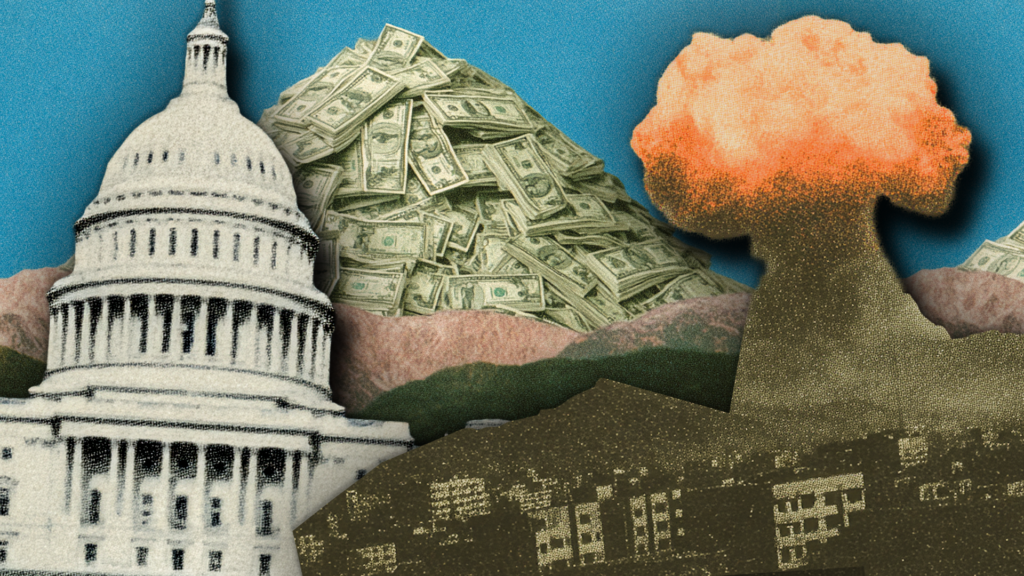
How Will Congress Fund a $300 Billion War With Iran?

News RoomBy News Room2 hours agoNo Comments4 Mins Read971 Views
Share Facebook Twitter Pinterest Copy Link LinkedIn Tumblr Email VKontakte Telegram
How Will Congress Fund a 0 Billion War With Iran?
Share
Facebook Twitter Pinterest Email Copy Link

Listen to the article

0:00
0:00

Key Takeaways

Playback Speed

Select a Voice

Whatever you think of the war in Iran, there’s a separate question—independent of the military merits—that Congress must answer: How will it be paid for?

The Pentagon has requested $200 billion to fund the campaign. While circumstances could change the price tag, interest payments on that much debt would add $87 billion over 10 years. So that’s roughly $300 billion.

Defense Secretary Pete Hegseth, asked about this number, offered a memorable contribution to the fiscal debate: “Obviously, it takes money to kill bad guys.” That’s true. It’s also true that the money must come from somewhere.

And with total U.S. government debt now at $39 trillion (up from $36.5 trillion in January 2025) and cumulative budget deficits totaling $25 trillion over 10 years, that somewhere can’t be Uncle Sam’s credit card. Congress must offset the spending with budget reductions elsewhere, regardless of which of two main funding options it chooses.

The first option is to include the war spending in a supplemental appropriations bill. That’s a standalone spending measure outside the normal annual budget process, traditionally used to fund urgent and unforeseen needs like wars and disasters. Supplemental bills require 60 Senate votes to overcome a filibuster, meaning they need bipartisan support.

The second option is a budget reconciliation bill—the same fast-track process used to pass last year’s One Big Beautiful Bill. Reconciliation allows legislation to pass the Senate with a simple majority, but it comes with strict rules: It can only be used for provisions that directly affect federal spending, revenues, or the debt limit, and the Senate Parliamentarian can strike provisions that don’t meet these tests.

Congress used to offset its emergency spending. It doesn’t anymore. Research by Dominik Lett at the Cato Institute shows that since 1991, Congress has passed $12.5 trillion in emergency spending for wars, disasters, pandemics, financial crises, and in some cases things that were emergencies in name only, like $450 million for space exploration. Almost none of it was offset. If you add $2.5 trillion in interest to the spending, the total amounts to one-third of today’s debt.

Democrats are quick to note that the same Republican majority that voted for cuts to the growth of Medicaid and food-assistance spending (on the grounds that the country simply can’t afford them) is now being asked to approve $200 billion in war spending with no offsetting savings in sight. I’m sure the Democrats think they have a real “gotcha” moment on their hands. They don’t. Providing for the national defense is an explicit constitutional obligation of the federal government in a way that Medicaid is not.

This distinction matters, but the argument has its limits. First, even constitutionally acceptable spending must be paid for. The fiscal argument for offsetting a war’s costs doesn’t rest on one’s view of Medicaid, but on the knowledge that we’re inching toward the point where investors could be reluctant to lend the government money at preferential rates because they have lost confidence in Washington’s ability to repay them without resorting to inflation. It is also the right thing to do for future generations who will face higher inflation or taxes.

Second, offsetting the war spending creates necessary discipline that pure borrowing does not. When Congress must find $300 billion in cuts, it’s forced to ask whether every one of those dollars is actually necessary (or is actual war spending). Such discipline, I hope, will strip out the farm bailouts, the special-interest provisions, and the other nonemergency items that always creep into these spending bills precisely because no one is checking everything that gets through when it’s labeled “emergency” or “national security.”

Offsetting $300 billion may sound daunting, but it’s worth some perspective. The government will spend at least $94 trillion over the next decade. The extra cost of the Iran campaign amounts to three-tenths of 1 percent of that total. Start by targeting the taxpayer cash being stolen outright through fraud, such as by autism-therapy providers in Indiana recently exposed for billing $340,000 per child per year. That’s imperative, but the bigger opportunity lies in reforming health programs that consume an ever-growing share of the budget while delivering their greatest benefits not to patients but to hospitals, insurers, and states.

In the end, the $300 billion question isn’t really about Iran. It’s about whether Congress will admit that nothing the federal government does is free, and that the bill always comes due. The only choice is who pays for it and when.

COPYRIGHT 2026 CREATORS.COM

Read the full article here

Fact Checker

Verify the accuracy of this article using AI-powered analysis and real-time sources.

Get Your Fact Check Report

Enter your email to receive detailed fact-checking analysis

5 free reports remaining

Continue with Full Access

You've used your 5 free reports. Sign up for unlimited access!

Already have an account? Sign in here

#Democracy #IndependentMedia #MediaEthics #PoliticalCoverage #PressFreedom
Share. Facebook Twitter Pinterest LinkedIn Tumblr Email Telegram Copy Link
News Room
  • Website
  • Facebook
  • X (Twitter)
  • Instagram
  • LinkedIn

The FSNN News Room is the voice of our in-house journalists, editors, and researchers. We deliver timely, unbiased reporting at the crossroads of finance, cryptocurrency, and global politics, providing clear, fact-driven analysis free from agendas.

Related Articles

Cryptocurrency & Free Speech Finance

David Sacks Leaves White House Crypto Role With Key Legislation Still Unresolved

20 minutes ago
Media & Culture

Ctrl-Alt-Speech: For Meta Or Worse

52 minutes ago
Media & Culture

Elon Musk Should Let Nikita Bier Fix Revenue Sharing on X

53 minutes ago
Debates

Trump’s Edifice Complex

1 hour ago
Cryptocurrency & Free Speech Finance

First Sora, Now Sexy Chat? OpenAI Cancels Erotic ChatGPT Mode

1 hour ago
Cryptocurrency & Free Speech Finance

Trump Policy Has Crypto Privacy Developers in a ‘Very Bad State’, Says Coin Center

2 hours ago
Add A Comment
Leave A Reply Cancel Reply

Editors Picks

Nasdaq Tokenization May Split Stock Trading Across Markets: TD Securities

16 minutes ago

David Sacks Leaves White House Crypto Role With Key Legislation Still Unresolved

20 minutes ago

Ctrl-Alt-Speech: For Meta Or Worse

52 minutes ago

Elon Musk Should Let Nikita Bier Fix Revenue Sharing on X

53 minutes ago
Latest Posts

Trump’s Edifice Complex

1 hour ago

Top Democrat on House committee questions Kraken’s Federal Reserve account

1 hour ago

SEC is no longer a 'cop on the beat‘ on crypto, says US lawmaker

1 hour ago

Subscribe to News

Get the latest news and updates directly to your inbox.

At FSNN – Free Speech News Network, we deliver unfiltered reporting and in-depth analysis on the stories that matter most. From breaking headlines to global perspectives, our mission is to keep you informed, empowered, and connected.

FSNN.net is owned and operated by GlobalBoost Media
, an independent media organization dedicated to advancing transparency, free expression, and factual journalism across the digital landscape.

Facebook X (Twitter) Discord Telegram
Latest News

Stragegy’s (MSTR) STRC shares rebound to par value faster than historical average to enable more BTC buying

12 minutes ago

Nasdaq Tokenization May Split Stock Trading Across Markets: TD Securities

16 minutes ago

David Sacks Leaves White House Crypto Role With Key Legislation Still Unresolved

20 minutes ago

Subscribe to Updates

Get the latest news and updates directly to your inbox.

© 2026 GlobalBoost Media. All Rights Reserved.
  • Privacy Policy
  • Terms of Service
  • Our Authors
  • Contact

Type above and press Enter to search. Press Esc to cancel.

🍪

Cookies

We and our selected partners wish to use cookies to collect information about you for functional purposes and statistical marketing. You may not give us your consent for certain purposes by selecting an option and you can withdraw your consent at any time via the cookie icon.

Cookie Preferences

Manage Cookies

Cookies are small text that can be used by websites to make the user experience more efficient. The law states that we may store cookies on your device if they are strictly necessary for the operation of this site. For all other types of cookies, we need your permission. This site uses various types of cookies. Some cookies are placed by third party services that appear on our pages.

Your permission applies to the following domains:

  • https://fsnn.net
Necessary
Necessary cookies help make a website usable by enabling basic functions like page navigation and access to secure areas of the website. The website cannot function properly without these cookies.
Statistic
Statistic cookies help website owners to understand how visitors interact with websites by collecting and reporting information anonymously.
Preferences
Preference cookies enable a website to remember information that changes the way the website behaves or looks, like your preferred language or the region that you are in.
Marketing
Marketing cookies are used to track visitors across websites. The intention is to display ads that are relevant and engaging for the individual user and thereby more valuable for publishers and third party advertisers.