

 Freedom Index
Listen to the article
The internet you experience daily—endless scrolling, algorithmic feeds serving content you didn’t ask for, AI-generated slop clogging search results—isn’t the only internet available. It’s just the one that’s easiest to stumble into.
You’re not stuck with the internet that has evolved alongside the rise of hegemonic platforms. We’re 20-plus years into the social internet, and the winners of the last round of audience capture have made clear they’re shifting to optimize for social broadcasting instead of networking, to maximize market share and market cap.
They are not optimizing your experience. Only you can do that.
Each individual act of internet self-determination aggregates into something larger—a distributed resistance to the corporate enclosure of digital space. Think of it like a ladder. Each rung represents a different level of engagement with how you consume, curate, and create your corner of the internet. You don’t have to climb every rung, but knowing they exist changes what’s possible. And every step you take moves you away from the grip of corporate algorithms and toward an internet experience you can put to use for your own interests and needs.
The algorithmic feed—that endless scroll of content chosen by platforms optimizing for engagement over everything else—is optional. You can opt out. Any of these steps will reclaim your attention as the finite resource it is, rather than letting it become a commodity that platforms extract through sophisticated design.
Awareness: The first thing you can do is know your baseline. Just like physical health can be understood through nutrition and fitness vitals, you can track your “internet vitals.” How many times a day do you pick up your phone? How much time do you spend on social media? The average American checks their phone 186 times daily and spends 2 hours and 16 minutes on social media. You can check your own numbers in Screen Time (iOS) or Digital Wellbeing (Android). If that kind of specific tracking feels too intimidating, you could start by just educating yourself. Cal Newport’s Digital Minimalism, Tristan Harris’ work on ethical design, or Renée DiResta’s Invisible Rulers are good places to start.
Escape the algorithm—get off Big Social: This is hard. Social platforms like Facebook, Instagram, Snapchat, and X are where you’ve spent years curating connections and actively following people.
Escape the algorithms within Big Social: These same platforms offer options that are less algorithmically driven. Some offer chronological viewing if you dig into settings. Or you can make a point to just engage with lists of pre-chosen accounts, like your friends’ Stories, and not engage with the Feed. You can set your Facebook app to open directly to specific Groups or Marketplace instead of the general news feed. Or sign up for broadcast channels in Instagram where you get direct messages from creators you like, though you will need to check which creators you already follow have these semi-private spaces.
The real key is avoiding the “reels-as-rabbit-hole dynamic” where you start viewing one vertical video and quickly swipe your way down a hole where innocent browsing becomes a long block of passive TV-like consumption.
Once you’ve established some control over what reaches you, the next step is actively building what you want to see. This means moving from defense (blocking what you don’t want) to offense (constructing information sources you trust). Doing so creates demand signals for the internet you want to exist. Every subscription, every intentional comment, every creator you support tells the market what’s valuable. You’re not just consuming differently—you’re funding and amplifying alternatives—both within the ‘algorithmic marketplace’ of the platform and, at a macro level, the larger marketplace of all digital products—or any product within the attention economy.
Newsletter subscriptions: Pretty much anything you find on the social internet, you can find through newsletters—from news curators like Tangle or Dave Pell’s NextDraft, to conveners like Hunter Harris around culture or Anne Helen Petersen around intentional living. There are aggregators of local news, professional news, sports news. When you subscribe, you’re voting with your attention (and sometimes your dollars) for sustainable creator economics. You are asking for a finite ending to your consumption, not infinite scrolling.
RSS feeds: For those less familiar, RSS lets you subscribe directly to websites, blogs, and news sources, receiving updates chronologically rather than algorithmically. Tools like Feedly or Inoreader aggregate these feeds into readable interfaces—much like an email inbox. You can build a feed of local news sources, niche blogs, and independent journalists—a personalized newspaper that updates throughout the day without anyone else’s thumb on the scale.
Comment intentionally: The “commenting for the algo” refrain you see from Gen Z creators isn’t cynical—it’s strategic. Genuine engagement (not just likes but comments that spark conversation) helps surface content to others who might value it—and back to you. Every action you take, from skipping to lingering over content, makes an impact. But nothing does more than commenting. You’re not just consuming; you’re actively participating in what gets amplified. If you’re trying out Threads and think it’s a ghost town, you have to start commenting to train your algorithm. If you think LinkedIn pushes overly vanilla, self-congratulatory professional news, try to lean into comments and threaded comments about professional questions you do want to see filling up your feed instead—even with looser connections.
The highest level involves participating in infrastructure explicitly designed to resist corporate enclosure. This doesn’t require technical expertise—just a willingness to try platforms organized around different principles that, frankly, take a little more time to set up or understand.
Engage in smaller networks: I happily check in on Swarm (formerly Foursquare) and keep up with the approximately 40 friends of mine who are still on there too. That fits my elder millennial social graph; there are others for other cohorts. Gen Z folks are still congregating on BeReal. Photo-minded folks seem to be really rallying to Retro. You don’t even need to join a “social network”—join Discord servers around specific interests. Follow niche subreddits. Participate in specialized forums or wikis. Through my kids, I’ve learned to navigate Pokémon and anime forums and wikis to keep up with their interests. For myself, I’m active in far-flung music forums and have preferred destinations for home improvement and men’s fashion. These spaces operate at human scale, where reputation and reciprocity matter. They’re also where you’ll find people doing the most interesting work in specific areas of expertise.
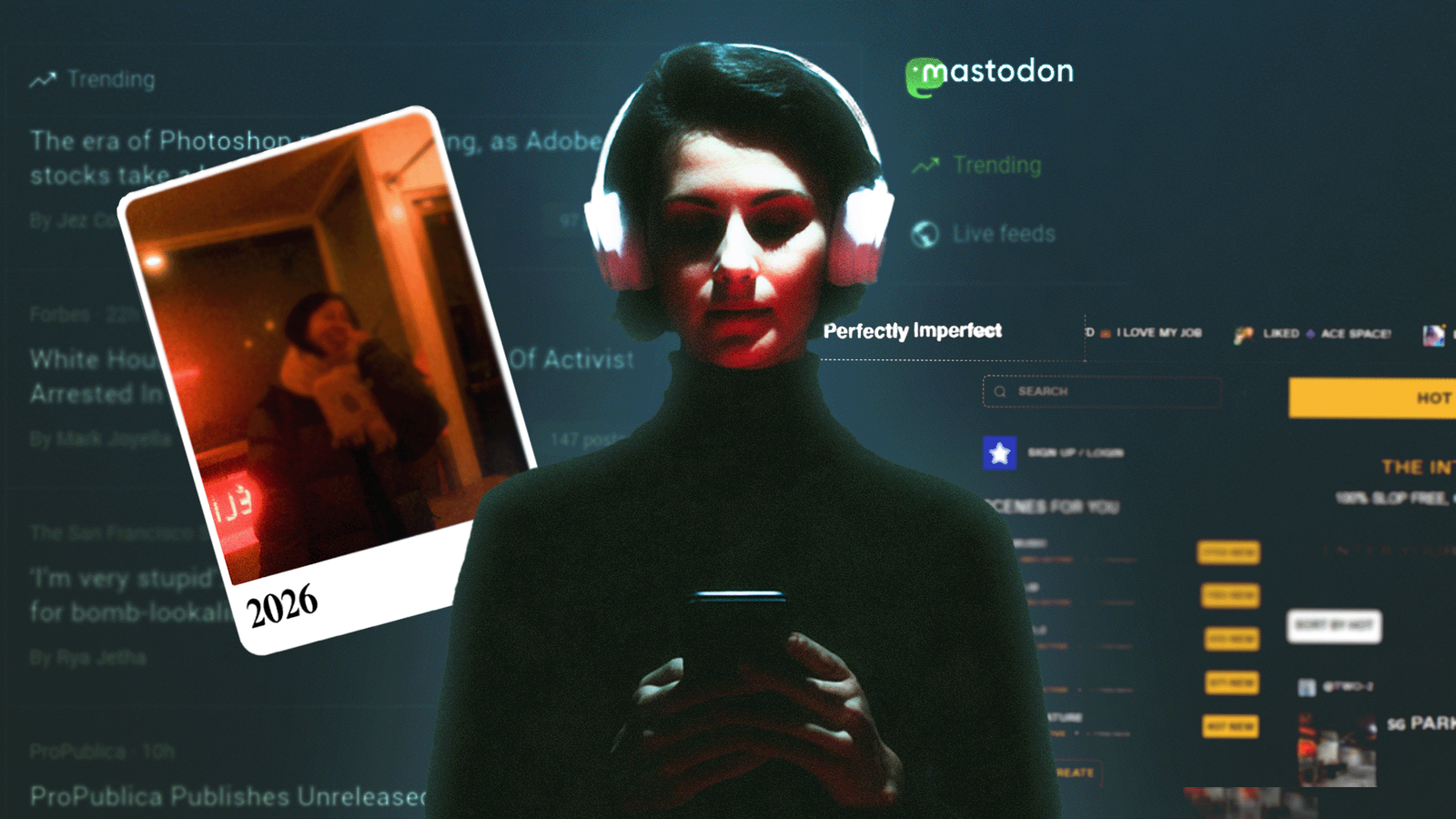
Join the Fediverse or ATmosphere: There are smaller, more customizable, interconnected social platform alternatives to X, Instagram, and TikTok. Mastodon, the most well-known federated social network, lets you join a server (or run your own) that connects to thousands of others through the ActivityPub protocol. Bluesky offers a similar model through its own AT Protocol, with growing momentum and easier onboarding for newcomers through features like “starter packs.” Apps like Pixelfed replicate Instagram; PeerTube replicates YouTube.
Join platform cooperatives: These spaces represent a burgeoning future that applies cooperative ownership models to digital platforms. The Drivers Cooperative in New York City is worker-owned, competing directly with Uber and Lyft. The U.K.’s Bristol Cable operates as a reader-owned journalism cooperative. MintStars offers a creator-owned alternative to OnlyFans using blockchain technology. Subvert.fm is doing the same for musicians to replace Bandcamp. These prove that platforms can be owned by the people who create value on them, not just distant shareholders.
None of these individual acts is revolutionary. Subscribing to a newsletter, joining a Discord server, tracking your screen time—these are small, personal decisions about how you spend your time online. But that’s how structural change happens on the internet. The marketplace is driven by the aggregate trends of your individual micro-actions.
The platforms that dominate your digital life today won through network effects. Each new user made the platform more valuable for everyone else, creating a feedback loop that eventually felt inescapable. The same mechanics work in reverse. Every person who opts for RSS over algorithmic feeds, every creator who builds an audience through owned channels rather than rented platforms, every community that forms around shared protocols instead of corporate silos—these choices compound. What starts as your personal internet gradually becomes a viable alternative internet that others see value in joining.
It’s already starting. Mastodon went from 300,000 monthly active users in October 2022 to over 2 million by December 2022, driven largely by individual decisions to leave Twitter/X. Substack hosts over 50,000 publications that make money from subscriptions.. The next wave of media companies are already building this way, with intention.
Perfectly Imperfect is a sceney downtown NYC newsletter that also operates a slow-feed social app with MySpace design vibes. Dave Jorgenson became known as The Washington Post TikTok guy, and five months into independence has a bigger footprint on YouTube than the Post, and he’s just as focused on the two-way conversation with his audience via newsletter.
The corporate enclosure of the internet happened gradually, platform by platform, as we traded convenience for control. The reconquest of digital space will happen the same way—individually, incrementally, but aggregating into something substantial. With each act of conscious consumption we each make, we fight enshittification and take steps to build a human-centered internet.
Read the full article here
Fact Checker
Verify the accuracy of this article using AI-powered analysis and real-time sources.