Close Menu
FSNN | Free Speech News NetworkFSNN | Free Speech News Network
  • Home
  • News
    • Politics
    • Legal & Courts
    • Tech & Big Tech
    • Campus & Education
    • Media & Culture
    • Global Free Speech
  • Opinions
    • Debates
  • Video/Live
  • Community
  • Freedom Index
  • About
    • Mission
    • Contact
    • Support
Trending

‘I’m displaced too’: Lebanese journalists cover war after fleeing home

8 minutes ago

BTC price fails to penetrate $75,000 even after SEC, CFTC crypto guidance

16 minutes ago

Meta Shuts Down Horizon Worlds on Quest Headsets

23 minutes ago
Facebook X (Twitter) Instagram
Facebook X (Twitter) Discord Telegram
FSNN | Free Speech News NetworkFSNN | Free Speech News Network
Market Data Newsletter
Wednesday, March 18
  • Home
  • News
    • Politics
    • Legal & Courts
    • Tech & Big Tech
    • Campus & Education
    • Media & Culture
    • Global Free Speech
  • Opinions
    • Debates
  • Video/Live
  • Community
  • Freedom Index
  • About
    • Mission
    • Contact
    • Support
FSNN | Free Speech News NetworkFSNN | Free Speech News Network
Home»News»Media & Culture»How the Military Exposed the Tools That Let Authorities Break Into Phones
Media & Culture

How the Military Exposed the Tools That Let Authorities Break Into Phones

News RoomBy News Room5 months agoNo Comments5 Mins Read585 Views
Share Facebook Twitter Pinterest Copy Link LinkedIn Tumblr Email VKontakte Telegram
How the Military Exposed the Tools That Let Authorities Break Into Phones
Share
Facebook Twitter Pinterest Email Copy Link

Listen to the article

0:00
0:00

Key Takeaways

Playback Speed

Select a Voice

Immigration and Customs Enforcement (ICE) really doesn’t want the public to know what it’s doing with Cellebrite devices, a company that helps law enforcement break into a locked phone. When it announced an $11 million contract with Cellebrite last month, ICE completely redacted the justification for the purchase.

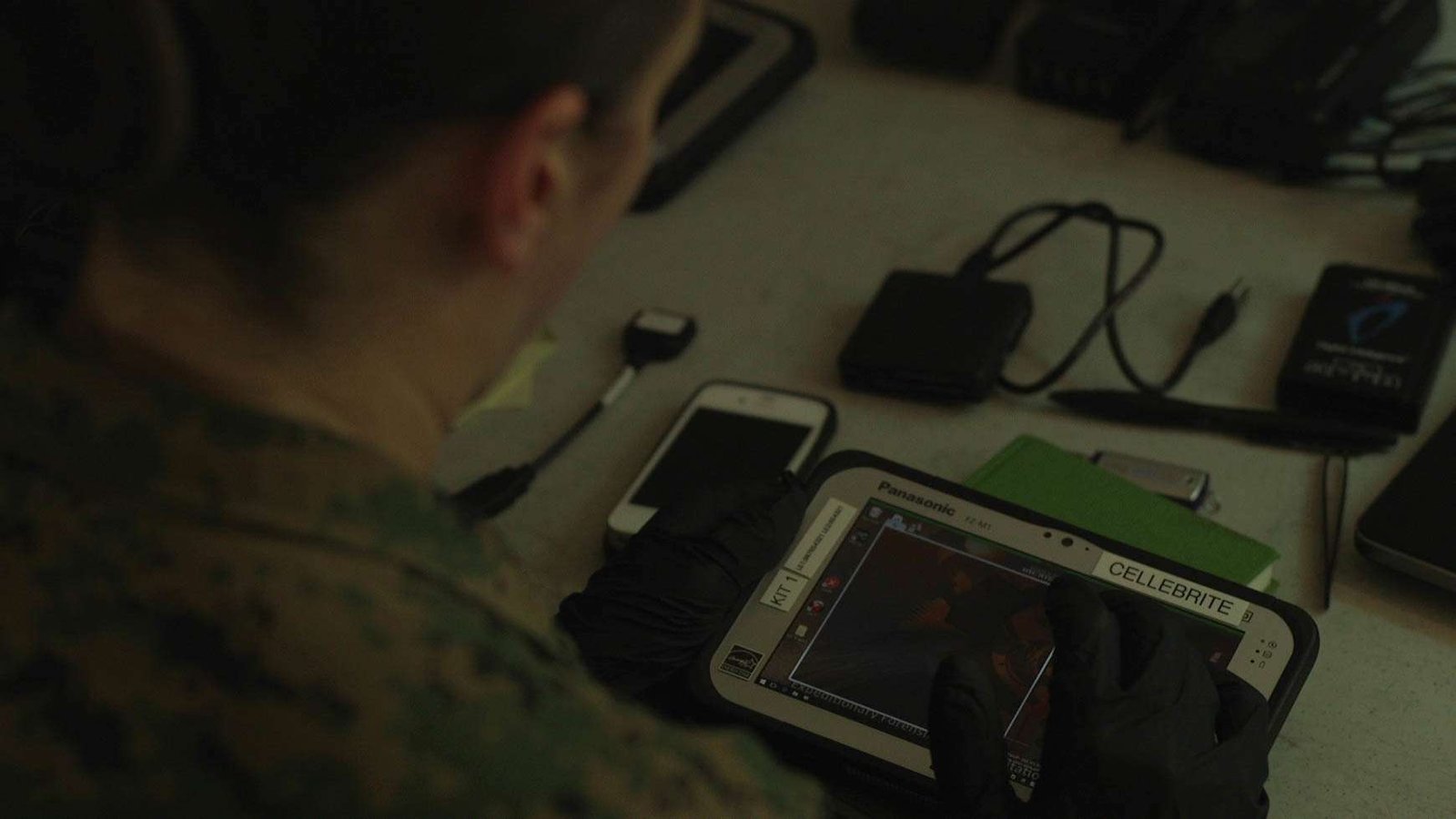
The U.S. Marine Corps has now done the opposite. It published a justification to a public contracting platform, apparently by mistake, for a no-bid contract to continue putting Cellebrite’s UFED/InsEYEts system in the hands of military police. The document is marked “controlled unclassified information” with clear instructions not to distribute it publicly. UFED/InsEYEts “includes capabilities exclusive to Cellebrite and not available from any other company or vendor,” the document claims, before going on to list specific capabilities for breaking into specific devices.

Reason is posting the document below, with phone numbers redacted.


These capabilities have not been publicly listed in full. “As part of our business practice, we refrain from divulging or publicizing the specific capabilities of our technology at any given time. This approach is rooted in our commitment to security; by not disclosing detailed information, we avoid providing potential criminals or malicious actors with any advantage,” Cellebrite spokesman Victor Cooper told Reason via email.

The Marine Corps declined to comment, citing the government shutdown.

The document seems to corroborate common advice from tech experts: Keeping devices updated and turning them off are both important protections against law enforcement snooping.

According to the document, Cellebrite is already used by the U.S. Marine Corps Criminal Investigation Division at several Marine bases as well as the Naval Criminal Investigative Service, and is part of the standard curriculum at the U.S. Army Military Police School. The system is used for breaking into phones already in police custody, rather than hacking into them remotely.

Although the Marine document is dated August 2025 on the signature line, the phrase “V1.6 (20 December 2023)” is printed on the footer of each page, suggesting that the list of capabilities is copied from an earlier document. Indeed, Cellebrite customer support materials leaked to 404 Media in 2024 show several capabilities that the Marine contracting documents do not.

Its age actually makes the Marine leak useful in understanding the government’s phone-hacking capabilities, according to William Budington, a senior staff technologist at the Electronic Frontier Foundation, a digital civil libertarian nonprofit. Comparing the Marine documents to the 404 Media leak shows just how fast the cat-and-mouse game between police and tech companies moves.

“This isn’t what they’re capable of now. It’s just a snapshot,” Budington says. “The window of opportunity for them to extract closes if you have a phone that’s been updated in the relatively recent past,” he adds.

For example, the Marine document advertises “full file system capability” for certain iPhones running iOS version 15.7.1. That put Cellebrite a least a year behind, since iOS version 15.7.2 had come out in December 2022. The 404 Media documents, dated April 2024, show that Cellebrite had closed the gap significantly by then; it was able to break into certain locked iPhones running iOS 17.3.1, released in February 2024.

Meanwhile, “the variety and type of Android exploits shows that really, it’s a bit of a Wild West out there for people who are trying to keep their Android devices secure,” says Albert Fox Cahn, executive director of the Surveillance Technology Oversight Project, a nonprofit focused on civil liberties and privacy in New York.

Although the Marine document lists a variety of vulnerable lower-end Android devices, it does not list Google’s flagship phone, the Pixel. The 404 Media documents show that Cellebrite can break into Pixels, but cannot decrypt the data on newer Pixels that are turned off.

Interestingly, the Marine document mentions that Cellebrite data has been challenged in court for “authenticity” by defense lawyers. “Cellebrite UFED/InsEYEts has been proven countless times to stand the legal review and thus allow for the physical extractions and evidence to be admitted into the court systems,” the document states.

The Marine document also advertises Cellebrite’s ability to extract a user token that allows police to log into a phone owner’s accounts on Facebook, WhatsApp, Google Drive, iCloud, and other apps. Cellebrite itself has mentioned this capability in some public-facing customer support materials.

Another prominent Cellebrite customer, U.S. Customs and Border Protection (CBP), claims that it only searches devices that are disconnected from the internet. But Cellebrite’s ability to extract tokens means that even an internet-disconnected device could provide CBP with the ability to log into a traveler’s cloud storage later on. CBP updated its Cellebrite contract around the same time as ICE and the Marines.

The agency did not respond to a request for comment.

“Law enforcement should apply for and get an authorized search warrant to get into these devices, which isn’t often the case,” says Maria Villegas Bravo, a lawyer at the Electronic Privacy Information Center, another digital civil libertarian nonprofit. “Usually, the way they get into it is with consent from the device owner, although a lot of the time the device owner isn’t given full understanding of what they’re giving law enforcement access to. They’re just like, ‘here is my phone.'”

Read the full article here

Fact Checker

Verify the accuracy of this article using AI-powered analysis and real-time sources.

Get Your Fact Check Report

Enter your email to receive detailed fact-checking analysis

5 free reports remaining

Continue with Full Access

You've used your 5 free reports. Sign up for unlimited access!

Already have an account? Sign in here

Share. Facebook Twitter Pinterest LinkedIn Tumblr Email Telegram Copy Link
News Room
  • Website
  • Facebook
  • X (Twitter)
  • Instagram
  • LinkedIn

The FSNN News Room is the voice of our in-house journalists, editors, and researchers. We deliver timely, unbiased reporting at the crossroads of finance, cryptocurrency, and global politics, providing clear, fact-driven analysis free from agendas.

Related Articles

Cryptocurrency & Free Speech Finance

AI, Privacy Coins Lead Altcoin Rally as Bitcoin Tops $75K

26 minutes ago
Media & Culture

Today in Supreme Court History: March 17, 1777

1 hour ago
Debates

Tucker Carlson and the Conservative Mind’s Unraveling

1 hour ago
Cryptocurrency & Free Speech Finance

Mastercard to Acquire Stablecoin Tech Firm BVNK for Up to $1.8 Billion

1 hour ago
Media & Culture

Brickbat: Other People’s Money

2 hours ago
Cryptocurrency & Free Speech Finance

Allium Brings 65TB of Data from Bitcoin, Ethereum, Sui and More to Walrus

2 hours ago
Add A Comment

Comments are closed.

Editors Picks

BTC price fails to penetrate $75,000 even after SEC, CFTC crypto guidance

16 minutes ago

Meta Shuts Down Horizon Worlds on Quest Headsets

23 minutes ago

AI, Privacy Coins Lead Altcoin Rally as Bitcoin Tops $75K

26 minutes ago

Today in Supreme Court History: March 17, 1777

1 hour ago
Latest Posts

Tucker Carlson and the Conservative Mind’s Unraveling

1 hour ago

XRP-associated Ripple seeking VASP license in Brazil

1 hour ago

Bitcoin ETFs on Track to Turn Positive YTD as XRP Rebounds

1 hour ago

Subscribe to News

Get the latest news and updates directly to your inbox.

At FSNN – Free Speech News Network, we deliver unfiltered reporting and in-depth analysis on the stories that matter most. From breaking headlines to global perspectives, our mission is to keep you informed, empowered, and connected.

FSNN.net is owned and operated by GlobalBoost Media
, an independent media organization dedicated to advancing transparency, free expression, and factual journalism across the digital landscape.

Facebook X (Twitter) Discord Telegram
Latest News

‘I’m displaced too’: Lebanese journalists cover war after fleeing home

8 minutes ago

BTC price fails to penetrate $75,000 even after SEC, CFTC crypto guidance

16 minutes ago

Meta Shuts Down Horizon Worlds on Quest Headsets

23 minutes ago

Subscribe to Updates

Get the latest news and updates directly to your inbox.

© 2026 GlobalBoost Media. All Rights Reserved.
  • Privacy Policy
  • Terms of Service
  • Our Authors
  • Contact

Type above and press Enter to search. Press Esc to cancel.

🍪

Cookies

We and our selected partners wish to use cookies to collect information about you for functional purposes and statistical marketing. You may not give us your consent for certain purposes by selecting an option and you can withdraw your consent at any time via the cookie icon.

Cookie Preferences

Manage Cookies

Cookies are small text that can be used by websites to make the user experience more efficient. The law states that we may store cookies on your device if they are strictly necessary for the operation of this site. For all other types of cookies, we need your permission. This site uses various types of cookies. Some cookies are placed by third party services that appear on our pages.

Your permission applies to the following domains:

  • https://fsnn.net
Necessary
Necessary cookies help make a website usable by enabling basic functions like page navigation and access to secure areas of the website. The website cannot function properly without these cookies.
Statistic
Statistic cookies help website owners to understand how visitors interact with websites by collecting and reporting information anonymously.
Preferences
Preference cookies enable a website to remember information that changes the way the website behaves or looks, like your preferred language or the region that you are in.
Marketing
Marketing cookies are used to track visitors across websites. The intention is to display ads that are relevant and engaging for the individual user and thereby more valuable for publishers and third party advertisers.