

 Freedom Index
Listen to the article
With inflation on the rise again, it seems like everyone is looking for someone to blame for higher prices—from grocery stores to the current occupant of the White House.
And while the president doesn’t have a big dial on his desk that raises and lowers the price of food or gas, there should be no doubt that government policy has a big influence on where your money goes. Take sugar, for example. Thanks to a series of tariffs and quotas that have been largely unchanged since the 1980s, sugar costs about twice as much in America as it does in most of the rest of the world—and that means anything made with sugar is more expensive as a result. It’s a little-known federal policy that costs consumers more than $2.5 billion every year.
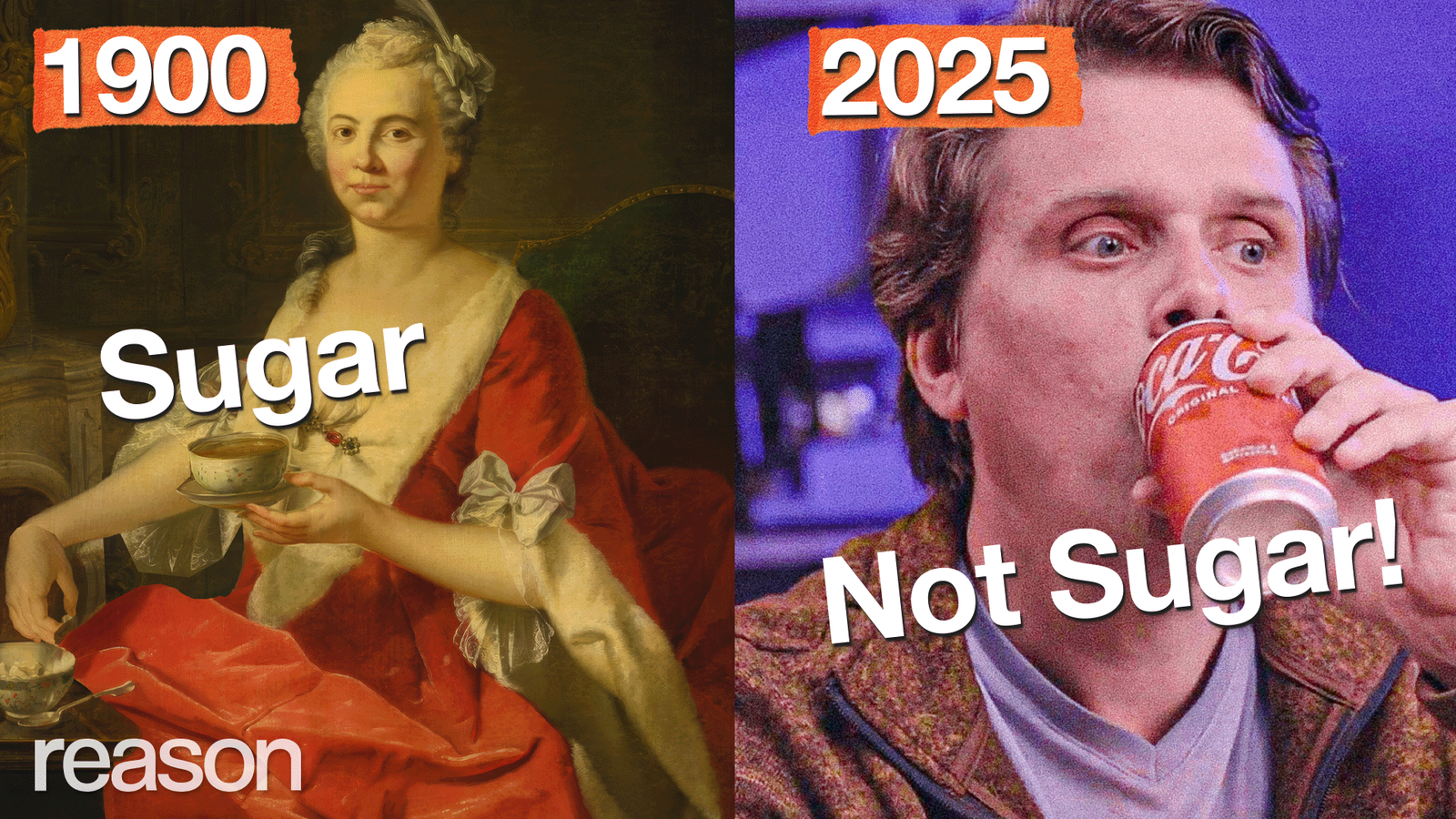
In fact, sugar is so expensive in America that it has largely been replaced by a totally different sweetener: high-fructose corn syrup.
That’s a swap that didn’t happen by accident. High-fructose corn syrup became a staple in Americans’ diets because lobbyists for the corn industry pushed the federal government to shove sugar to the side. In doing so, they were the latest special interest to play a centuries-old game that mixes sugar and politics in a hot, sticky, and not too sweet mess—one that has altered the basic ingredients of some of the most popular products in the country.
Sugar and politics have been stuck together since America’s beginnings. One of Congress’s very first actions was to approve a tariff on sugar imports in 1789, just a year after the ratification of the Constitution and two years before the ratification of the Bill of Rights. The government was literally squeezing dollars out of sugar before guaranteeing freedom of speech.
But the first big turning point for America’s relationship with sugar came in the 1890s, and it was largely thanks to a future president: William McKinley.
In 1890, McKinley was a congressman from Ohio, and he was a fierce protectionist. He pushed a huge tariff bill through Congress that raised the average tariff on American imports from about 38 percent to 50 percent. But it didn’t raise tariffs on everything. The Tariff Act of 1890, or the McKinley Tariff, eliminated tariffs on coffee, tea, and sugar.
If you stop taxing something, you’ll get more of it. Suddenly, America had no import taxes on sugar, and its next-door neighbor, Cuba, just so happened to be the world’s largest sugar-producing country. It’s no accident that the years after the McKinley tariff bill saw an explosion of new sugary products in the American market, invented by smart, enterprising people who were taking advantage of the newly cheaper imports.
In 1892, the Coca-Cola Company was founded. A year later, Caleb Bradham began selling “Brad’s Drink” in his North Carolina drug store—a product that would eventually be rebranded as Pepsi-Cola. The next year, Milton Hershey started a chocolate company that would come to dominate the American market for sweets.
And then, the days of tariff-free sugar came to an abrupt end. In 1894, Congress passed another major tariff bill: the Wilson-Gorman Tariff Act. It was a classic case of special interests getting what they wanted in Washington, and, among other things, it restored a high tariff on imported sugar.
But Americans were already addicted, and the higher prices from tariffs did little to stop demand for sugar. By the time the Great Depression hit, sugar was considered a “basic commodity” subject to the administration’s Agricultural Adjustment Act. As a result, the federal government gained even more control over sugar imports and domestic production. As the government got more involved in the sugar industry by regulating production and doling out subsidies, it gave agricultural lobbyists a big incentive to get more involved with the government.
And that’s how, eventually, you get to Dwayne O. Andreas, the man most singularly responsible for the fact that it is corn, not sugar, in most American sweets.
Andreas got his start at the Minnesota-based food processing company named Cargill.
In 1965, he bought 100,000 shares of Archer Daniels—later it became known as Archer Daniels Midland, or ADM—for the equivalent of $34 million today. He was more than just an activist investor; by 1971, he was running the company.
Andreas’s strategy was to use policy and political influence to make American farming, and in particular the agricultural segments Archer Daniels dominated, as profitable as possible. He said he was raised to respect politicians and give healthy “tithes” to his civic leaders. Over the next 30 years, Andreas donated to politicians on both sides of the aisle, including Hubert Humphrey, Richard Nixon, Jimmy Carter, George H. W. Bush, Jesse Jackson, Michael Dukakis, Bob Dole, and Bill Clinton.
No one throws around money like that without wanting something in return. So what did Andreas want? Probably a lot of things, but one of them was less sugar imported into the U.S.
Right around the same time that Andreas started running ADM, some scientists in Iowa figured out how to extract sugar from corn, and high-fructose corn syrup was born.
But there was a problem. The high-fructose corn syrup that American corn farmers were producing was more expensive than sugar. To get food and beverage companies to buy what Andreas was selling, Andreas needed to make his sweet stuff more attractive in the market.
And one way to do that is to make your competitors’ products more expensive.
That’s exactly what the federal government has been doing for decades. In 1976, President Gerald Ford tripled the import tax on sugar. If you tax something, you’ll get less of it. Or, well, you get a more expensive version of it. That’s exactly what happened with imported sugar.
By 1988, sugar came to sell at 22 cents a pound in the United States despite the world price being just 10.5 cents per pound, with each cent increase adding $250 to $300 million to Americans’ collective food bills.
Faced with the rising price of sugar in the mid-1980s, candy and soda companies did the thing that made economic sense: They stopped using sugar and switched to high fructose corn syrup.
Every time Congress revisited American sugar policies, Andreas was there to put his thumb on the scale; The Wall Street Journal called him “the prince of political influence” in 1995.
“There isn’t one grain of anything in the world that is sold in a free market,” he told Mother Jones in 1995. “Not one! The only place you see a free market is in the speeches of politicians. People who are not in the Midwest do not understand that this is a socialist country.”
The federal government’s control over imported sugar has been costly for consumers and has changed the way many products are made. But it’s been a great deal for America’s domestic sugar industry, which is protected from foreign competition, and for America’s corn industry, which benefits from artificially high prices for sugar—and sells lots of artificial sugar made from corn.
If Americans want lower prices, the first thing they should demand is smaller government.
Read the full article here
Fact Checker
Verify the accuracy of this article using AI-powered analysis and real-time sources.