

 Freedom Index
Listen to the article
Editor’s note: Few scientific fields test the boundaries of acceptable thought as persistently as evolutionary biology. By its nature, it confronts uncomfortable questions about sex, violence, hierarchy, cooperation, and human difference.
This is the second in a three-part series, Darwinian Heresies, examining the work of prominent evolutionary biologists who provoked not only criticism but sustained institutional hostility. This series was originally published in Le Point by Peggy Sastre and has been translated from the original French by Iona Italia.
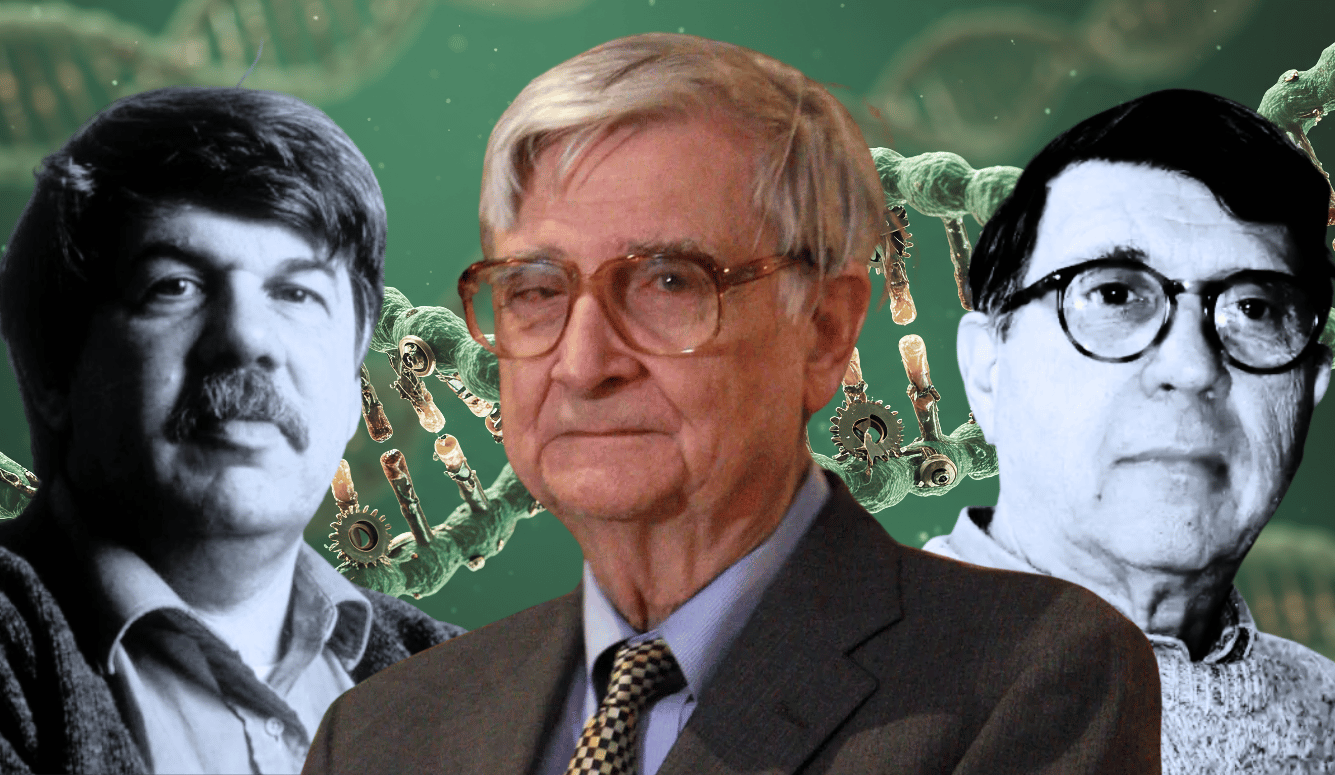
To mention genes and society in the same breath is to step on a landmine. You will immediately find yourself misrepresented and denounced. People will want to silence you. No one knew this better than Edward O. Wilson, who paid a high price for going against the political orthodoxy of his day. In the mid-1970s, he was the target of one of the most ferocious and dishonest academic campaigns in recent history. If our current cancel culture is an epidemic, Wilson was Patient Zero.
His “crime”? Founding the discipline of sociobiology: a discipline in which the social behaviour of everything from ants to Homo sapiens is studied with equal rigour, without exempting human beings from the kind of scrutiny afforded to other species. Sociobiology is a study of the natural history of our loves, our hierarchies, and our jealousies.
The response to Wilson was ferocious. He was caricatured and strawmanned. Ideas he had never held—let alone articulated—were attributed to him. Mobs thought themselves virtuous as they rallied to the cause, which they saw as a battle of Good against Evil. His detractors mounted a moral crusade in which even scientists—who should have known better—didn’t hesitate to take part. In the fear that sociobiology’s unimpeachable findings might discredit their own flimsy theories, they joined the activist campaign against him, repeated the same unscrupulous allegations, and behaved more like propagandists than scientists.
Sociobiology: A User’s Guide
It all started with a magnifying glass. Wilson was an entomologist and his observations of ants led him to formulate a theory that would combine population genetics, ethology, behavioural ecology, and molecular biology. He coined a term that would soon become the focus of the activists’ scorn: sociobiology, the systematic study of the biological foundations of social behaviour in all species, including our own. In 1975, he published his magnum opus Sociobiology: The New Synthesis, a magisterial work that provides a guide to what are now considered the key influences on animal behaviour: sexual selection, dominance hierarchies, kin altruism, and reciprocity. It also contains the theory that inspired Wilson’s favourite joke about ants and men: “Karl Marx was right, socialism works, it’s just that he had the wrong species.”
Wilson’s vision was a humanist one. He dreamed of what he called “consilience,” a theory that would bridge the gap between the natural sciences and the humanities by charting the coevolution of nature and culture. Wilson believed that everything from bacteria to men sprang from the same set of causes and was governed by the same underlying grammar of reality. This wasn’t about reducing humans to their genes; it was about restoring the continuity between humanity and the rest of the living world, in order to better understand how we adapt, how we endure.
But the book soon sparked a major controversy. Wilson’s book is more than 700 pages long and it’s not until the final 28 pages—in a section entitled “Man: From Sociobiology to Sociology”—that Wilson dares to apply his theory to our own species. He reminds readers that competition and altruism have evolutionary underpinnings, that hierarchy and aggression will not simply disappear no matter how much we may want them to, and that the spread of certain genes influences our behaviour far more than we would like to believe. Wilson had violated a serious taboo. He was saying that inequality, conflict—and even love—had a natural history. And that millennia of civilisation could not magically erase billions of years of evolution. The witch-hunters began to build a pyre.
That autumn, things took a serious turn. An article in the New York Review of Books signed by sixteen scientists described Wilson as part of a “long line of biological determinists” who had used their theories to excuse a litany of horrors—from anti-immigration laws to “sterilisation campaigns” and even gas chambers. Wilson was taken completely unawares. It wasn’t until he read about it in the press that he realised that many of the colleagues he bumped into every day in the corridors of Harvard had told the world he was a crypto-Nazi.
Wilson’s enemies weren’t subtle, but they were implacable. Their aim was to place sociobiology in a moral context that would prevent people from treating it as a scientific hypothesis like any other. Wilson’s research was depicted as a socially toxic political project, not a scientific one. According to the article in the New York Review of Books, sociobiology was a slippery slope: it would inexorably lead to a return to history’s darkest hours.
This was in 1975, just thirty years after the end of the Second World War, while the trauma inflicted by the Nazis was still raw—many of the survivors were still alive, there had been recent trials of some of the perpetrators, many people had direct, recent experience of eugenic policies. In that context, Wilson touched a nerve. If it had been published today, his book would probably not have had the same power to shock, would not have hit home with the same force. As in the story of the little boy who cried wolf, the modern pretence that there are fascists around every corner is wearing thin.
But at the time, the message Wilson’s critics wanted to send got through loud and clear. His adversaries were explicit about the fact that they objected to Wilson’s work on political—not scientific—grounds. The authors of the Review article focus on condemning the supposed “consequences” of Wilson’s ideas, rather than weighing up the evidence for them. They avoid any discussion of methods or mechanisms. They use history to condemn Wilson. They want to police his innovative work, to brand it with inflammatory terms, to discourage the slightest curiosity as to whether or not his claims were true.
A Conversation with E.O. Wilson (1929–2021)
In fact, at that meeting, InCAR—the International Committee Against Racism—held up signs condemning me and sociobiology and racism in general.
The Politico-Media Machine
As sociologist of science Ullica Segerstråle painstakingly documents in Defenders of the Truth: The Battle for Science in the Sociobiology Controversy and Beyond (Oxford University Press, 2000), the media circus meant that Wilson’s work was not examined by his peers using scientific methods, which are slow, meticulous, and unglamorous. Instead, a hasty verdict was pronounced in the public square. Wilson was condemned with no chance to defend himself and with no right of appeal. As Segerstråle describes them, the events that follow seem almost like a lynching.
First the New York Times denounced the “phenomenon” of E.O. Wilson’s sociobiology on its front page and in its books section. Then, the New York Review of Books launched its own attack on the biologist. The British biologist Conrad Waddington—one of Wilson’s few allies in the press—had died on 26 September 1975, just a few months after the book was published. He was the only person who could have written an effective response to the press attacks. The anti-Wilson faction had free rein to promulgate their moral interpretation of the entomologist’s work, to claim that, beneath the scientific veneer, he was covertly furthering some very ugly ideological aims.
Behind the scenes, the witch hunters were constructing their scaffold with the expertise of master craftsmen. Segerstråle recounts that “Marxist biologist” Richard Lewontin—these are the words he literally used to describe himself—and future ringleader of the anti-Wilson camp, palaeontologist and science populariser Stephen Jay Gould, had already contacted the New York Times science section in June, only to be told, allegedly, “there is no controversy yet.” Wilson was not yet newsworthy.
But in November, armed with the Review article, Gould picked up the phone to the Times again, insisting that now there was controversy and he was determined to comment on it. He drafted a long note for the Times journalists to base their article on. The resulting article frustrated Gould—he found it too sensationalist and he resented being cast as the leader of the opposition to Wilson, even though he undoubtedly was. But by this time, the die was cast. Wilson had become politically suspect and his attackers passed for mere “defenders of good science.” A smokescreen concealed their real motives.
Wilson’s detractors had achieved their primary goal: stifling any scientific criticism of their own ideas. From his office at the Museum of Comparative Zoology, Ernst Mayr was fuming at how the debate had been conducted. Mayr opposed Wilson on scientific grounds, not moral ones. “It would have been so easy,” Mayr allegedly said, to have raised substantive scientific objections to sociobiology. Instead, people mounted a politico-moral crusade, which stymied scientific debate and discouraged other biologists from discussing the topic. Worse still, several scholarly reviews of Wilson’s book had been retracted by their authors, for fear of providing ammunition to polemicists. No one was reading Wilson’s actual work: people were reading his adversaries’ interpretations of his work. Sociobiology was a forbiddingly long and expensive book and it seemed intellectually elitist, which went against the egalitarian zeitgeist of the 70s. In short, everything conspired to ensure that many people neglected to read the book, contenting themselves with accusatory summaries of it instead.
At the same time, the activist ecosystem was springing into action with industrial efficiency. The organisation Science for the People formed the vanguard of the attack, backed up by the Sociobiology Study Group. Lewontin was the spokesman for both organisations. Draped in academic garb, these scholar-activists set up roundtables and protest seminars, organised happenings, and distributed leaflets. The International Committee Against Racism (CAR/INCAR) handed out flyers emblazoned with a raised fist that accused sociobiology of “whitewashing racism, war and genocide.” Things had clearly reached the point of absurdity. A naturalist who spent his life counting ants was held up as some kind of demon. No one bothered to read his work: they preferred to disqualify it. They wanted to shout loudly enough to drown out the facts, to humiliate rather than discuss.
The Scientists Persecuted for Their Rape Research
For their research showing that rape is generally motivated by sexual desire, Randy Thornhill and Craig Palmer were subjected to death threats and hounded in their personal and professional lives. And yet, they were right.
From Words to Deeds
Things came to a head in February 1978. Around ten CAR militants burst into a sociobiology conference held by the American Association for the Advancement of Science (AAAS) in Washington. Wilson himself, then aged 49, was in attendance, handicapped by a broken leg which was encased in a plaster cast from ankle to hip. Once they reached the scientist, two of the protestors screamed in his face, “Wilson the racist, you can’t escape us, we’re charging you with genocide!,” before pouring ice-cold water over his head.
“No one asked them to leave nor called the police, and no action or sanction was taken against them later,” Wilson recalls in his autobiography, Naturalist, published in 1994. He remained dignified throughout, drying himself with paper towels before continuing with his planned lecture, which received a standing ovation. Stephen Jay Gould publicly condemned “this kind of activism.” But it was too late. The message had been sent: you can physically assault a scientist for his ideas and get away with it.
The harassment continued for years—there were demonstrations, conferences were disrupted, people booed and whistled at Wilson’s speeches and distributed leaflets calling on people to “make noise” against the “prophet of far-right patriarchy.” In his autobiography, Wilson reflects that Gould and Lewontin could have simply come to see him at Harvard—their offices were only one floor away from his—to express their grievances at his work. Why, he asks rhetorically, did they choose to publish their attacks instead, in a publication aimed at a general audience and which was, at the time, a shaper of public opinion? Why didn’t they go through the usual channels by publishing their critiques in scientific journals?
The answer is clear. Gould and Lewontin not only had a political project to advance. As Segerstråle details, contrary to all appearances, they also had a scientific claim to promote: the claim that the history of life cannot be “reduced” to adaptationist arguments or to the action of “selfish genes” and that evolution plays out across different levels of selection via often non-adaptive processes.
The trouble was that talk of “exaptations,” “punctuated equilibria,” and other favourite concepts of the two comrades, would not have excited the masses, nor allowed the scientists to spotlight their work. It was much more effective to harp on about the return of racial theories, eugenics, and death camps. Their arguments were examples of motivated reasoning: their own ends mattered more to them than the truth and they didn’t care what means they used to achieve them—even if it meant completely disregarding the facts.
“What miserable acts are born of the fervour for fame,” Charles Darwin wrote in a letter to Joseph Dalton Hooker on 10 May 1848, “love of truth alone will never drive a man to cruelly attack another.” This observation seems tailor-made for Stephen J. Gould—though he could behave fairly at times.
Segerstråle relates that in 1984, Gould declared at a conference: “We opened the debate [on sociobiology] from a position of strength. We took this definitive position in order to open the debate to scientific criticism. As long as contrary opinions have no legitimacy to express themselves, scientists will hold their tongues.” Segerstråle interprets this to mean that the scientific controversy surrounding adaptationism would not have emerged without the political controversy around sociobiology.
“Nothing Is to Be Feared. Everything Is to Be Understood.”
An interview with Peggy Sastre.

The Verdict of the Facts
The jury is now in: Sociobiology is no longer anathema. It is a legitimate research framework. In 2001, John Alcock even published a book entitled The Triumph of Sociobiology with Oxford University Press. Years after the initial controversy, the data have confirmed Wilson’s intuitions.
Wilson’s ideas have been normalised: the link between evolution and behaviour is now firmly established. Behavioural genetics and evolutionary psychology are well-established fields and even their adversaries know that they can’t simply be dismissed by moral fiat. Eternal optimist Steven Pinker notes that these fields certainly remain controversial, but their findings provoke far less indignation than they used to. The field of behavioural biology is antifragile: attacks strengthen it by prompting it to respond by finding cleaner methods, more sophisticated hypotheses, more solid results. Even the most inflammatory polemicists calmed down in the end, because this is how progress works: by diminishing the noise and keeping the signal.
In 2009, historian of science Alice Dreger, whose book Galileo’s Middle Finger is the gold standard work on academic whispering campaigns, asked Wilson if he regretted anything about the “sociobiology wars” and if he had any advice to give to a young researcher caught up in a scandal, as he had been.
“I think I would tell him to ignore it,” he told Dreger:
To stay alert, of course, and to react if anything truly slanderous is said. But as much as possible, ignore and continue your work. And you will end up winning. I know it’s not always easy when you’re battling. I always told myself, ‘Don’t get into a pissing contest with a skunk.’ But in retrospect, the older I get and the further all this recedes … I must say that what I regret most about that entire period is all the time I lost. I spent countless hours talking about this business to journalists. They would come to me to ask, ‘Well, Professor Lewontin said this and that, Professor Gould said such and such’ […]. And I couldn’t stay quiet and let them say what amounted to making me out to be a racist and proto-Nazi. I couldn’t answer ‘No comment.’ But I lost enormous amounts of energy and so much time, pure and simple time that I could have devoted to far more precious things. So, if I had advice, it would be: it will pass, like everything else. Ignore as much as possible. Conduct yourself with dignity and courtesy, and let it pass.
Perhaps this is the real cost of an academic witch hunt. The problem is not that you have to face opposition—in fact, that is generally salutary—but the time you end up losing fighting against organised dishonesty. So what can you do? Wait it out. As Max Planck said, “Over the course of time, it’s not that truth triumphs. It’s that its enemies end up dying.”
In any case, one cannot extinguish a fire with holy water—nor a hypothesis with a cup of ice-cold water. What the Wilson episode reveals is the old pack reflex: as soon as an idea challenges the moral certainties of a particular moment, it is portrayed as evil and the person advancing that idea is transformed in the eyes of the morally anxious from a scholar into an ideological danger. In Wilson’s case, two of his own colleagues—both of them charismatic men—led the charge. Almost no one had the courage to stand up to them and say: “Wait a minute. Let’s read Wilson before we condemn him.” Institutional cowardice is a social phenomenon, too.
The most repellent aspect of all this is not the injustice meted out to Wilson himself as a man; it is the way in which he was denied his natural right to judge facts on the basis of whether they are true or false—not whether they are good or evil. If we want to avoid a replay of this punitive tragicomedy, we need to start by training some basic liberal reflexes. And we must never abandon procedural safeguards just because our motivations are good. Science and democracy are both upheld by their respective systems of checks and balances—not by the purity of politicians’ or scientists’ motives. Each era has its noble cause; we always think we can bend the rules in the name of doing good. We think this makes us more morally efficient. It doesn’t. It just makes us more unjust.
We need to recognise our tribal impulses for what they are: heuristics that are useful in the savannah, but toxic in the city. Our reflexive tendency to divide the world into an in-group and an out-group renders us deaf and stupid. In science, it prompts us to stifle many hypotheses before they can even be formulated. The only defence against this is to make an effort to be rational, to train ourselves to value complexity and disagreement. Is this counterintuitive? Absolutely. But this is why science is so marvellous: it teaches us to do something else with our brains other than use them in service of the four Fs—feeding, fighting, fucking, fleeing—for which evolution shaped them.
The discipline we need can be summed up in three words: read, separate, prove. Read the texts and primary sources to distinguish disagreement from caricature. Separate what is from what ought to be—explaining something is not the same as endorsing it. And prove—because in science, there is only one master: data. When we allow politics to take the driving seat in evaluating research, it is always likely to send us veering right off the road.
This piece was first published in Le Point in French on 17 August 2025 and has been translated for Quillette by Iona Italia. You can find the original here.
Read the full article here
Fact Checker
Verify the accuracy of this article using AI-powered analysis and real-time sources.