

 Freedom Index
Listen to the article
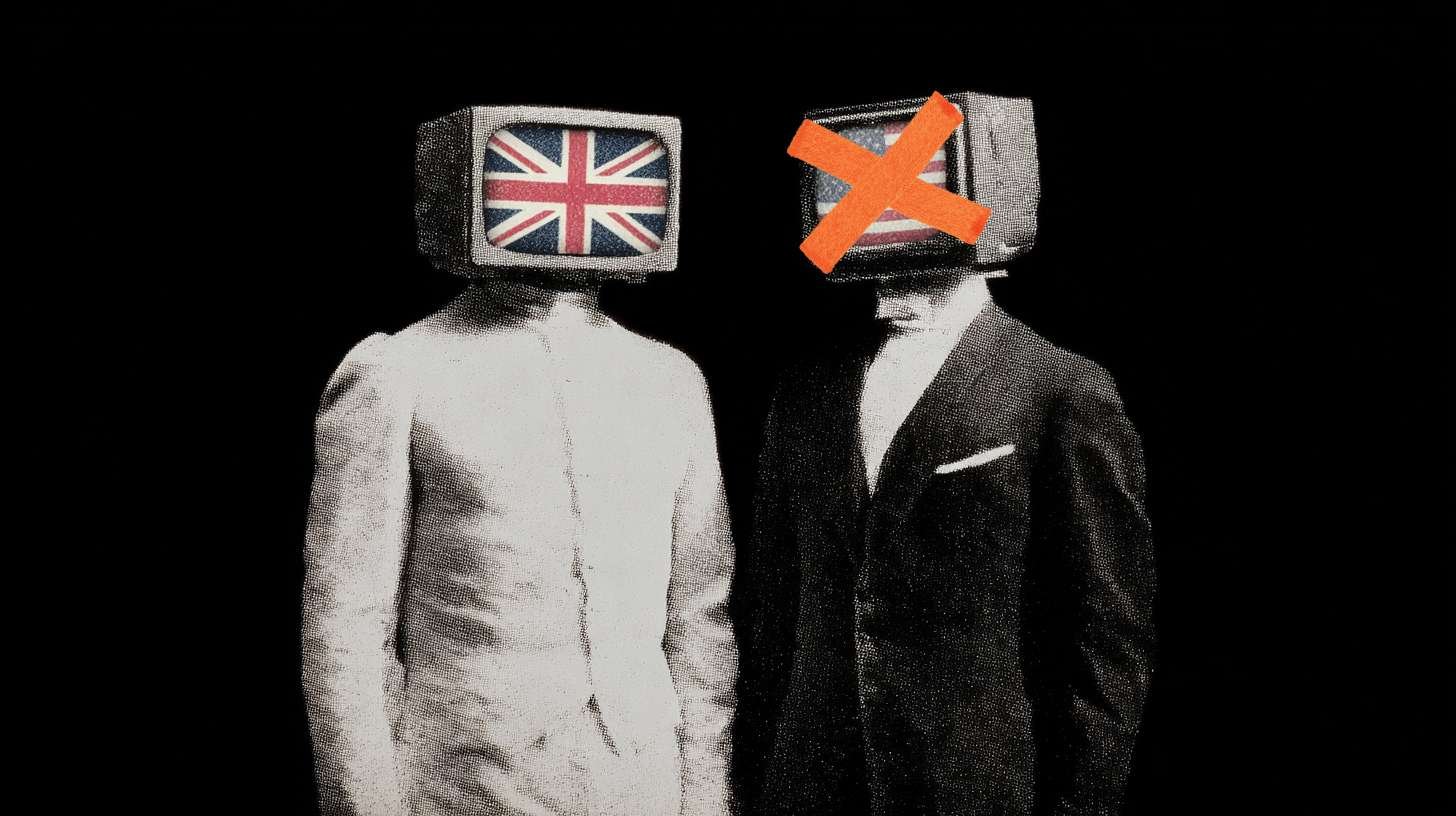
The Online Safety Act has crippled free speech in the United Kingdom. Most Americans may assume they’re safe from censorship on this side of the Atlantic, but the U.K. is now attempting to enforce the Online Safety Act on U.S. companies.
The Online Safety Act grants the U.K.’s online regulator, Ofcom, sweeping authority to restrict and censor online content under the guise of protecting children. The results have been disastrous. In compliance with these rules, social media companies in the U.K. have set age restrictions on a wide range of content: Reddit pages discussing Ukraine and Gaza, a parliamentary speech about the rape of a minor, and even an image of the famous Francisco Goya painting Saturn Devouring His Son.
American social media users have yet to encounter Ofcom’s censorship on their timelines, but U.K. regulators have quietly been pressuring U.S. companies to comply with their orders, sparking outrage among a small but tenacious coalition of American legislators and free speech lawyers.
Tech policy lawyer Preston Byrne has been exchanging volleys with the Brits for months. He represents four U.S. websites targeted by Ofcom: 4chan, Gab.com, Kiwi Farms, and Personal Autonomy LLC (the provider of the forum Sanctioned Suicide). When Ofcom imposed a fine of 20,000 British pounds (the equivalent of $27,427) on 4chan for failing to comply with an information request, Byrne refused to entertain their demands.
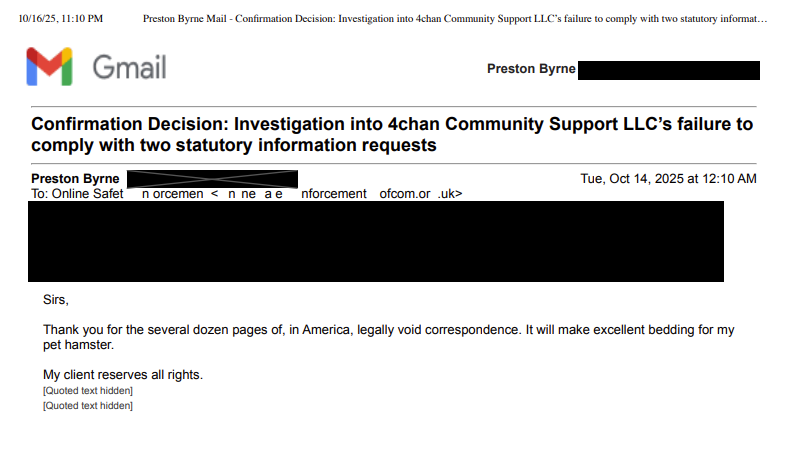
“I don’t think you understand quite how easy it’s been to parry them. We just write back to them and say, ‘no,'” Byrne tells Reason. In one email response to Ofcom, he told the U.K. regulators their demands on 4chan were “legally void” and would make “excellent bedding” for his “pet hamster.”
Byrne is confident in the First Amendment’s ability to block Ofcom’s unenforceable demands, but he’s not sure everyone is as committed to resisting global censorship. If Ofcom keeps pressuring people, he says, the risk is that “enough people will say, ‘OK, we just want the hassle to go away. So what we’re going to do is we’re going to comply because the letters are scary, and we’re not free speech activists and we don’t think that the U.K.’s rules are so bad.'”
The Guaranteeing Rights Against Novel International Tyranny & Extortion (GRANITE) Act, which was originally proposed on Byrne’s blog, would allow U.S. companies and individuals to sue foreign governments that attempt to censor Americans. If the U.S. successfully sued a foreign government in a U.S. court, the foreign country’s assets could be forfeited.
“Such a move would have teeth because these foreign countries’ economies would break down if they didn’t have access to the U.S. banking system,” Byrne wrote in his proposal. “The UK, for example, has 47 billion [pounds]”—that’s about $63 billion—”custodied in North American banks in order to support its currency.”
Byrne hoped the bill would debut in New Hampshire—the GRANITE Act for the Granite State—but Wyoming has become the first to formally introduce the legislation. The bill’s sponsor, Wyoming state Rep. Daniel Singh (R–Cheyenne), says he believes Wyoming has a “libertarian ethos” that’s “unique to the Mountain west,” making it a natural home for the legislation.
The bill would prohibit “the state from recognizing, enforcing or cooperating with certain foreign judgments.” The bill would impose a civil penalty on any state employee or official who enforces a foreign order that violates the First Amendment. The bill also confirms that foreign censorship orders are not enforceable in Wyoming courts.
State-level laws like these might provide some defense against global censorship, but Byrne thinks federal legislation would be more effective. Foreign governments can usually shield themselves from U.S. lawsuits under the Foreign Sovereign Immunities Act (FSIA), but a federal version of the GRANITE Act could amend the FSIA and allow Americans to bring lawsuits against foreign governments.
A federal version of the bill could soon be introduced. Late last year, U.S. Under Secretary of State for Public Diplomacy Sarah Rogers told GB News that the federal government was working on a version of the GRANITE Act.
Members of Congress are becoming increasingly vocal about global censorship. In July 2025, Rep. Jim Jordan (R-Ohio) accused U.K. regulators of threatening to censor the U.S.-based companies Reddit and Rumble, writing on X: “As long as foreign legislators, judges, and regulators continue their attempts to silence US citizens, we will not stop fighting back.” Then, in December, Sen. Eric Schmitt (R–Mo.) wrote on X that he was “working on legislation to protect American speech from foreign subversion.”
“I think there’s a really good chance that the United States is going to be able to mount a legislative response here,” Bryne says. And that, he hopes, “will make it financially impossible or very, very punitive for foreign countries to get away with this sort of stuff.” Maybe the U.S. can defeat British tyranny once again.
Read the full article here
Fact Checker
Verify the accuracy of this article using AI-powered analysis and real-time sources.