

 Freedom Index
Listen to the article
When a resource is underpriced, people tend to overuse it. In cities around the world, free or cheap parking leads to a familiar scene: drivers endlessly circling the block, waiting to happen upon someone leaving. Urban planners call it “cruising for parking.”
In congested areas, drivers looking for a spot account for nearly 30 percent of traffic. In Los Angeles’ Westwood Village, for example, drivers circled for the equivalent of 950,000 extra miles and burned through 47,000 gallons of gasoline in a year, just looking for a place to park.
Wasted time, wasted gas, clogged streets, air pollution—these are the hidden costs of underpricing the curb, as UCLA economist Donald Shoup argued in his 800-page, 2005 classic tome, The High Cost of Free Parking.
In theory, the fix is simple. As Shoup argues, cities should price curb space based on supply and demand and then reinvest the revenue in infrastructure improvements. The price of a spot should be targeted so that one or two spots remain open on every city block.
Instead, city planners often require that developers add parking spaces when erecting new buildings. Those mandates eat up space, increase construction costs, and make housing more expensive, without ever addressing the root problem.
Guatemala City doesn’t mandate new parking, nor does it price its streets. This tragedy of the commons, however, created an entrepreneurial opportunity.
Parking in Guatemala City is organized chaos. There are no meters, no apps, and no permits, and yet every day, cars line the curb, attendants whistle and wave, drivers hand over cash, and finding a place to put your vehicle is mostly hassle-free.
Parking attendants known as cuida carros (roughly translated as “those who take care of cars”) impose order on the streets by assigning prices to unclaimed public parking spots.
Cuida carros are everywhere in Guatemala City—lingering on street corners, waving rags to signal open spots, or counting cash. They blend into the urban fabric.
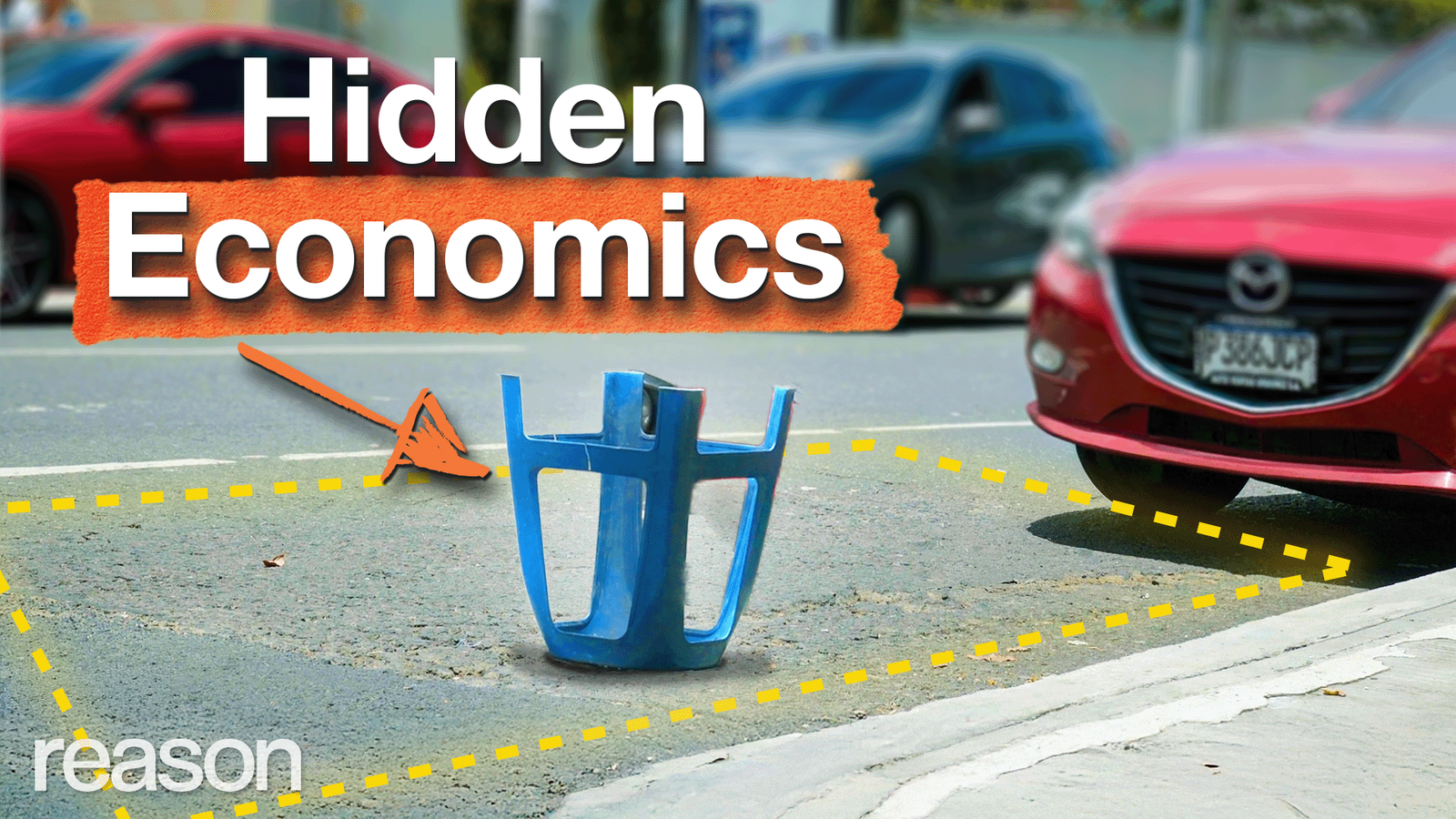
Their job is to unofficially “manage” parking by staking out spaces with buckets, cones, or bottles, and then charging drivers to park in them. Most cuida carros work long hours—eight to 12 hours a day, five to six days a week—and treat their turf as an asset. Some even run small-scale operations with shift rotations and a payroll.
Their property rights are informal. Some inherited a stretch of curb from a relative; others are invited by nearby shop owners who want someone to deter theft. A few simply arrived one day and homesteaded a spot.
A woman I met named María inherited her turf when her mother died. Another cuida carro named Miguel told me his parking business grew by accident. “It’s not like I set out to do this,” he said. “One day someone asked, ‘Can I park here?’ and I said, ‘Sure, why not?’ They asked, ‘How much?’ and I told them, ‘Whatever you want to pay.’ That’s how it all began.”
Miguel’s business took off. He hired a team of assistants to cover nearby blocks in shifts, and they hand over a share of their earnings.
The industry developed a structure. There are generally two main shifts: a daytime crew that serves workers and students from 5 a.m. to 6 p.m., and a nighttime crew with a clientele consisting mostly of restaurant and bar owners, which runs until around 1:30 a.m.
Prices vary depending on location and shift. It’s more expensive to park in a busy nightlife district than in a quiet residential one. Parking at night might cost double. During peak hours or special events, cuida carros adjust rates on the spot, a form of the “dynamic pricing” advocated by Shoup.
Cuida carros also collaborate. They respect each other’s boundaries, share information, and occasionally mediate disputes. “We all help each other,” said a cuida carro. “If someone’s sick, another takes the street for the day.”
Cuida carros earn about $6.50 a day, which is less than the median income in Guatemala City, but it’s enough to get by and stay off the streets.
When I interviewed Tony, he was constantly being greeted by neighborhood shop owners, clients, and delivery drivers. Everyone seemed to know him.
Familiarity builds trust. Some cuida carros often hold on to customers’ keys, moving their cars when a garage needs to open or a delivery truck needs space. Others keep a detailed list of regulars and reserve spots for a monthly fee.
Ask a cuida carro what they’re selling, and most will say safety.
Cars are often damaged or stolen, emblems and windows are smashed, and batteries go missing. Drivers are at risk of being robbed when walking to their vehicles. Cuida carros helps keep them safe. They’re best described as “eyes on the street,” a concept popularized by the urbanist Jane Jacobs in her 1961 classic, The Death and Life of Great American Cities, referring to the quiet safety that comes from ordinary people watching over their own neighborhoods.
“Even private parking lots say they’re not responsible for what happens to your car,” Miguel told me.
“Some people say, ‘Don’t worry, there are cameras.’ And I tell them, ‘A camera won’t stop someone from stealing your battery or breaking your window.’ Who keeps watch? I do,” said Tony.
Still, cuida carros operate in a legal limbo. Some city officials see them as a nuisance; others accept them as an inevitable feature of urban life. They’re neither outlawed nor legal.
Occasionally, the cops clear them out, but they return a few days later. In general, authorities turn a blind eye. In some neighborhoods, cuida carros cooperate with police, sharing information about thefts or suspicious activity.
Public opinion is equally divided. Many drivers feel safer knowing someone is watching their car; others see the practice as low-level extortion.
“But real extortion is when someone puts a gun to your head,” says Miguel. “Some people refuse to pay, saying the street is public,” Tony said. “I tell them, ‘Alright, no problem. But while I’m here, no one’s touching your car.'”
The cuida carros I spoke with don’t claim to own the street, but say they’re providing a service that people clearly value.
“It’s an urban problem solving itself. When the government doesn’t price scarce resources, entrepreneurial actors emerge to do it,” says Nolan Gray, research director at California YIMBY and author of Arbitrary Lines. (He’s also my husband.) “In the best of cases, they provide real value—charging what people are willing to pay, keeping watch, and solving a problem the state failed to address.”
The cuida carros are a symptom of the local government’s inability to govern its streets. But they also show that order doesn’t need to be imposed from above.
They’ve priced the unpriced, managed the unmanaged, and built a functional system. When public policy leaves a gap, people quietly fill it.
Read the full article here
Fact Checker
Verify the accuracy of this article using AI-powered analysis and real-time sources.