

 Freedom Index
Listen to the article
First arrests under Queensland’s new hate speech law
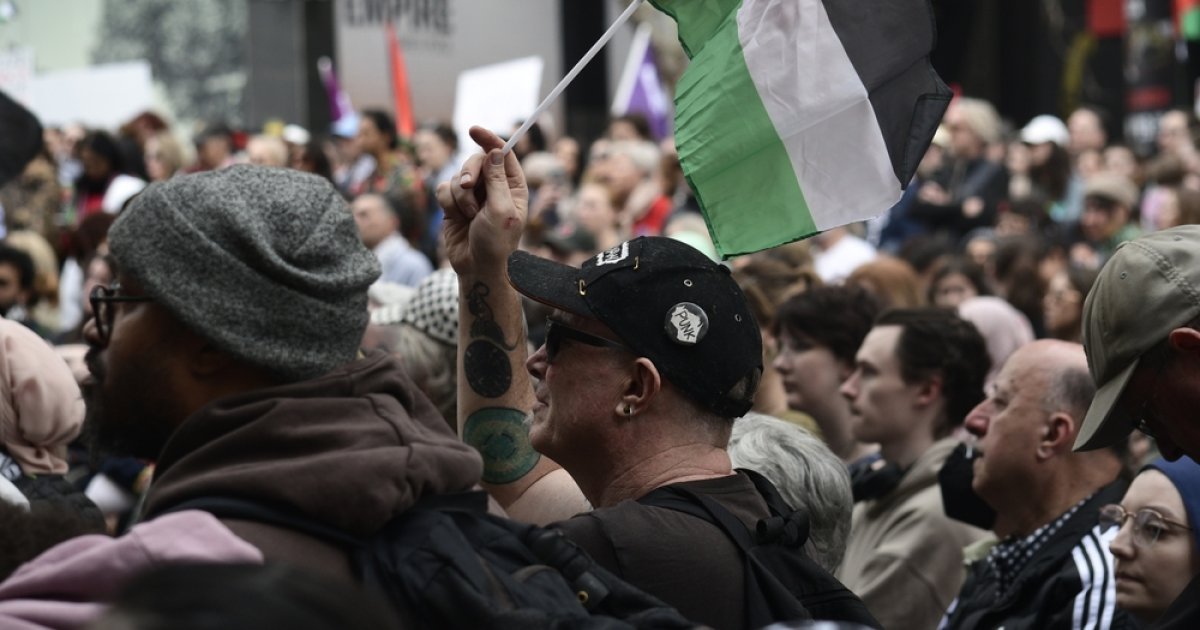
Two protesters were arrested on the first day of Queensland’s ban on the slogan “From the river to the sea.” Authorities enforced the restriction as part of new rules regulating protest speech related to the Israeli-Palestinian conflict, which also cover the chant “globalize the intifada.” Offenders could face up to two years in prison.
The first protester arrested was Liam Parry from Students for Palestine, who spoke at a march against the law outside the state parliament house. Parry reportedly gave a talk about the phrase, disputed the claim that it was antisemitic, and “discouraged others from chanting the slogan.” Another protester was arrested for wearing a shirt with the message “From the river to the sea.” Both were charged and will be expected to appear in court next month.
Rush for passage of Canadian hate speech law, despite serious free speech concerns
The Canadian House of Commons Standing Committee on Justice and Human Rights closed debate on the Combating Hate Act, with the next reading of the bill to take place late this month, despite long-held concerns from dozens of civil liberties and other advocacy groups about the text.
Among other things, the act would “create an offence of wilfully promoting hatred against any identifiable group by displaying certain symbols in a public place” and “of intimidating a person in order to impede them from accessing certain places that are primarily used for religious worship or by an identifiable group for certain purposes.”
The provision on hateful symbols also includes “a symbol that so nearly resembles” a proscribed image “that it is likely to be confused with that symbol.” And groups like the Canadian Bar Association have objected to the vagueness of the offense concerning intimidation at a house of worship, warning that it’s “not clear at what point a person, their words, or their actions would constitute an obstruction and interference on the face of the amendments.” Keep an eye out for more updates from FIRE on the bill if it passes.
UK launches new definition of ‘anti-Muslim’ hostility
After a monthslong process, the UK has finally unveiled its new working definition of “anti-Muslim hostility,” which is facing criticism both from those who think it does too little to protect Muslims and others who fear it poses another threat to free expression in the UK. The Free Speech Union, for example, is already launching a legal challenge against the definition, arguing that it “relies on vague and legally undefined concepts,” among other objections.
It is defined, in part, as “the prejudicial stereotyping of Muslims, or people perceived to be Muslim including because of their ethnic or racial backgrounds or their appearance, and treating them as a collective group defined by fixed and negative characteristics, with the intention of encouraging hatred against them, irrespective of their actual opinions, beliefs or actions as individuals.” The definition also notes that it’s “important to bear in mind the fundamental right of every person in the United Kingdom to exercise freedom of speech and expression within the law” and includes as protected speech “criticisms of a religion or belief, including Islam” and “ridiculing or insulting a religion or belief, including Islam.”
As FIRE has written before, it will be key to watch how this and any other definition of hatred is ultimately employed across government, and how it can chill or directly censor speech. Kenneth Stern, the primary author of the International Holocaust Remembrance Alliance’s Working Definition of Anti-Semitism, warned it “was intended for data collectors writing reports about anti-Semitism in Europe” and “was never supposed to curtail speech on campus.” The same concerns must apply here. Member of Parliament Iqbal Mohamed, for example, has already pushed for “sanctions” against other MPs under the definition.
More concerns about political censorship in Europe
- Senedd, the Welsh Parliament, just passed legislation giving Welsh Ministers new authority to criminalize false statements before or during a Senedd election. Granting government officials the power to determine truth or falsity, and hand out criminal sanctions in the process, is a can of worms Wales may regret opening. Read FIRE’s in-depth analysis here.
- German writer Rainer Zitelmann is facing investigation under Germany’s law on “anti-constitutional” symbols for reposting a photo that showed a swastika in it. That swastika was on an armband worn by Adolf Hitler — and the post was criticizing Russian President Vladimir Putin by suggesting parallels between the two. “In my case, Hitler serves as a negative warning example in drawing an analogy,” Zitelmann said. “I have the impression that Section 86a is being instrumentalised against critical journalists and scholars, and that was clearly not what it was intended for.”
- Authorities in Belarus have designated the literary organization PEN Belarus as an extremist group. Free speech advocates warn the decision further restricts cultural expression and civil society in the country.
- Spain is developing a system designed to track hate speech on social media platforms. Spanish Prime Minister Pedro Sánchez, who recently pushed for an under-16 social media ban and rules holding tech owners personally liable for hateful content on their platforms, is promoting the AI tool as a means to track and criticize companies’ allowance of “hate” on their platforms. Read FIRE’s full discussion about the program, and the risks it may pose to free expression.
New ethnic unity law poses yet another censorship threat in China
China is preparing to adopt a new “ethnic unity” law intended to strengthen national cohesion across ethnic groups. Rights groups warn the legislation could expand government control over speech related to minority identity and political dissent. Officials claim the measure is necessary to maintain “national unity and social stability” but it will instead serve as another tool authorities can use to censor ethnic minorities, particularly in Tibet and Xinjiang — where oppressive censorship already runs deep.
Meanwhile, Chinese company CHOKNOR Information Technology released a new Tibetan large language model and app, DeepZang, “for global users seeking to learn about Tibetan culture, history and politics, thereby preventing the dissemination of distorted ideologies and values.”
Albania’s highest court rejects TikTok ban
Albania’s Constitutional Court ruled that the government’s ban on TikTok violated constitutional protections for free expression. Judges concluded the restriction imposed disproportionate limits on online speech and access to information. The ruling is a notable development as internet bans and blocks, particularly of TikTok, continue to propagate on a global scale.
Russian officials censor artistic works at home — and abroad
The Netherlands has accused Russia of attempting to censor a photo exhibition in Sri Lanka documenting the war in Ukraine. Organizers say pressure was applied to remove images that portrayed Russia negatively. Dutch officials warned that efforts to interfere with exhibitions abroad represent attempts to “silence documentation of the war” and efforts from Russian officials to control not just what their citizens can see, but to censor the rest of the world, too.
Russia’s film industry is also facing increasing government censorship as authorities expand oversight of cultural production. Filmmakers say projects can be blocked, edited, or denied funding if they contain themes viewed as politically sensitive or critical of the government. Critics warn the growing system of approval and funding controls effectively determines which stories can reach audiences. Some filmmakers argue the process is increasingly used to ensure cinema reflects “state-approved narratives” about politics, history, and the war in Ukraine.
Political censorship, tech regulation, and campus protests in India
The Indian state of Telangana is considering legislation to regulate “misinformation” on social media, allowing authorities to intervene when content is deemed misleading or harmful. Officials claim the measure is necessary to prevent destabilizing false information, but critics rightly warn it could enable the government to police dissent under the label of “misinformation.”
Police in Khandwa registered cases against dozens of people after a mob attacked a police station following a controversial social media post accused of blasphemy. Authorities said at least 47 individuals were booked and a security “flag march” was conducted to restore order.
India’s film certification board has blocked the release of The Voice of Hind Rajab, an Oscar-nominated drama about a child killed in Gaza, reportedly warning it could “break up” India-Israel relations. The film’s distributor criticized the decision, saying authorities “want to censor it anyway” despite the film being shown in other countries with diplomatic ties to Israel.
Student protests at Jawaharlal Nehru University have also renewed debate about political expression and democratic participation on Indian campuses. Demonstrators argue that universities must remain spaces where dissent and debate are protected. Sociologist Anand Kumar warned that restrictions on campus activism threaten democratic culture, saying “campus democracy is essential to democratic society.” Supporters of the protests say limiting student speech undermines the role universities play in fostering critical political discussion.
Speech restrictions and media control in the Middle East
Iran continues to maintain strict control over political expression, public protest, and media reporting. Authorities frequently restrict speech through arrests, surveillance, and state regulation of news outlets. Human rights organizations warn that the government continues to target individuals who publicly challenge official narratives.
Journalists reporting from Israel during wartime must operate under a military censorship system that reviews sensitive reporting before publication. The system allows the military censor to block details related to security operations or infrastructure damage. News outlets say the process significantly shapes what information reaches the public during conflict.
Expanding national security and speech controls across Asia
Lawmakers in Macau have approved a new national security law allowing court proceedings to be held behind closed doors when authorities determine public hearings could threaten state interests. The law gives a government committee authority to decide whether cases involve national security, with decisions that are “not subject to appeal or judicial review.” Officials said the move reflects the principle of “patriots governing Macau,” while critics warn it could further restrict transparency and public scrutiny of politically sensitive cases.
Nepalese authorities have launched an investigation after copies of Chinese President Xi Jinping’s book were burned at a university, an incident school officials say occurred during the disposal of damaged materials. A government panel has been tasked with ensuring such incidents are “not repeated in future,” while university officials said the books were destroyed “inadvertently” and there was no intent to cause offense.
Senegal passes law criminalizing “promotion” of homosexuality
Senegal’s parliament has approved a law increasing penalties for same-sex relationships and criminalizing the “promotion” of homosexuality, a move officials say reflects that “the majority of Senegalese do not accept homosexuality.” Rights groups warned the law is “deeply worrying” and could increase fear, discrimination, and violence while restricting expression related to LGBT issues.
Government suppression of political speech and satire
Indian authorities blocked a viral Instagram reel featuring comedian Pulkit Mani impersonating Prime Minister Narendra Modi, with users seeing a notice that the post was unavailable “pursuant to a notice” under local laws. Critics called the move an “alarming escalation” of censorship, warning that satire and political criticism are being suppressed without transparency or due process.
A Russian blogger who publicly criticized President Vladimir Putin and the war in Ukraine was placed in a psychiatric facility shortly after his post went viral, according to local reporting. In the post, he wrote that “Vladimir Putin is not a legitimate president” and should be “brought to trial,” raising concerns about the use of psychiatric detention in response to political dissent.
Salvadoran lawyer Ruth López, known for criticizing government corruption, has been held in pretrial detention, with her husband saying authorities targeted her because “they didn’t like the free expression she exercised.”
Read the full article here
Fact Checker
Verify the accuracy of this article using AI-powered analysis and real-time sources.