Close Menu
FSNN | Free Speech News NetworkFSNN | Free Speech News Network
  • Home
  • News
    • Politics
    • Legal & Courts
    • Tech & Big Tech
    • Campus & Education
    • Media & Culture
    • Global Free Speech
  • Opinions
    • Debates
  • Video/Live
  • Community
  • Freedom Index
  • About
    • Mission
    • Contact
    • Support
Trending

CoinDCX Founders Questioned as Exchange Blames Impersonation Scam

24 minutes ago

Bitcoin drops below $69,200 as Trump gives 48-hour ultimatum on Iran power plants

1 hour ago

Hawk Tuah Girl Warns Others To Stay Clear of Crypto in Latest Interview

1 hour ago
Facebook X (Twitter) Instagram
Facebook X (Twitter) Discord Telegram
FSNN | Free Speech News NetworkFSNN | Free Speech News Network
Market Data Newsletter
Sunday, March 22
  • Home
  • News
    • Politics
    • Legal & Courts
    • Tech & Big Tech
    • Campus & Education
    • Media & Culture
    • Global Free Speech
  • Opinions
    • Debates
  • Video/Live
  • Community
  • Freedom Index
  • About
    • Mission
    • Contact
    • Support
FSNN | Free Speech News NetworkFSNN | Free Speech News Network
Home»News»Global Free Speech»From Nepal, a familiar warning
Global Free Speech

From Nepal, a familiar warning

News RoomBy News Room6 months agoNo Comments3 Mins Read419 Views
Share Facebook Twitter Pinterest Copy Link LinkedIn Tumblr Email VKontakte Telegram
From Nepal, a familiar warning
Share
Facebook Twitter Pinterest Email Copy Link

Listen to the article

0:00
0:00

Key Takeaways

Playback Speed

Select a Voice

It’s been a week of political violence and while many might still be glued to news about the murder of Charlie Kirk (my response here), I want to turn attention to another unfolding crisis – the growing war on digital freedoms. This week that war flared dramatically in Nepal.

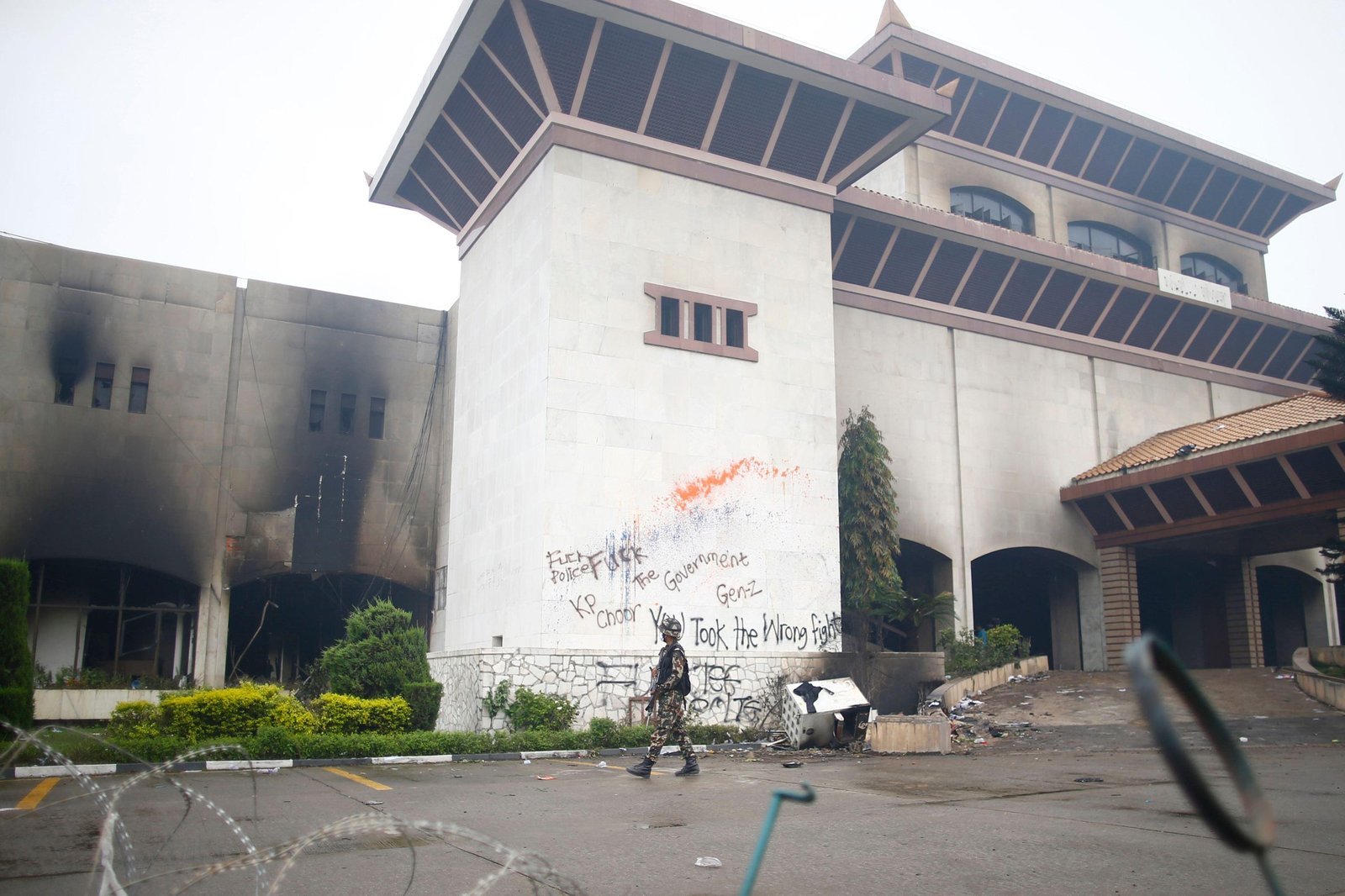
The story moved fast. Thousands of people, mostly young, took to the streets at the start of the week to protest the government’s decision to ban 26 social media platforms. Scores of unarmed protesters were killed and government buildings torched. The prime minister and other officials then resigned. The social media bans were lifted. Writing for Index from the country this week, Gary Wornell spoke of his horror and sadness at what unfolded. “The Nepal I had known as my second home for the last 13 years would never be,” he said. His piece is both a good explainer and a deeply emotional witness account.

The government tried to justify the bans as necessary to tackle fake news, hate speech and platform accountability. The youth saw it differently, and called it censorship, plain and simple. We agree, not least because we’ve heard this line before, many times. Across South Asia (and for that matter the world) governments use the pretext of “online safety” to roll back digital rights and, by extension, civil liberties.

In India, we’ve closely tracked how Narendra Modi’s government has tightened control over digital platforms through legislative and regulatory measures, often under the guise of combating fake news or protecting national unity and security. The ruling party has also benefitted from the mob veto, where right-wing groups and influencers have lodged a blizzard of police complaints about errant social media posts. These have resulted in prominent individuals, such as commentator Dr Medusa and journalist (and Index award winner) Mohammed Zubair, being charged with sedition. In Pakistan a bill was passed in January that gives the government sweeping controls on social media. Users can now be sent to prison for spreading disinformation. Sri Lanka’s Online Safety Act allows the government to take down content critical of it to apparently protect national security interests. Bangladesh has the Digital Security Act, which has been criticised for its breadth. I’ll park the UK’s Online Safety Act but we have concerns about that too, as we’ve frequently highlighted.

Not all legislation is cynical or censorious. Several voices from our South Asia network reminded us this week that digital spaces are indeed being used to incite hate and violence. The amplification of hateful content against the Rohingya in Myanmar on Facebook is a tragic example. But here’s a distinction: recognising and responding to harm is not the same as justifying an authoritarian response. Even those most concerned with digital hate in South Asia condemned Nepal’s actions.

The fury has died down in Nepal. Still, as the above pattern shows, it’s unlikely this woeful chapter will be the end of government attempts to shut down digital discourse.

Read the full article here

Fact Checker

Verify the accuracy of this article using AI-powered analysis and real-time sources.

Get Your Fact Check Report

Enter your email to receive detailed fact-checking analysis

5 free reports remaining

Continue with Full Access

You've used your 5 free reports. Sign up for unlimited access!

Already have an account? Sign in here

Share. Facebook Twitter Pinterest LinkedIn Tumblr Email Telegram Copy Link
News Room
  • Website
  • Facebook
  • X (Twitter)
  • Instagram
  • LinkedIn

The FSNN News Room is the voice of our in-house journalists, editors, and researchers. We deliver timely, unbiased reporting at the crossroads of finance, cryptocurrency, and global politics, providing clear, fact-driven analysis free from agendas.

Related Articles

Global Free Speech

CPJ welcomes ruling on Pentagon access in favor of the New York Times 

2 days ago
Global Free Speech

Ecuadorian journalist shot after receiving reported false news tip 

2 days ago
Global Free Speech

In unprecedented overreach, FCC allows merger consolidating local media ownership

2 days ago
Global Free Speech

CPJ welcomes Nashville reporter Estefany Rodríguez’s release from ICE custody 

2 days ago
Global Free Speech

South African journalist threatened, assaulted, robbed by municipal workers

2 days ago
Global Free Speech

CPJ, partners call for release of Kashmiri journalist Irfan Mehraj after 3 years in detention

2 days ago
Add A Comment

Comments are closed.

Editors Picks

Bitcoin drops below $69,200 as Trump gives 48-hour ultimatum on Iran power plants

1 hour ago

Hawk Tuah Girl Warns Others To Stay Clear of Crypto in Latest Interview

1 hour ago

Bitcoin miners are losing $19,000 on every BTC produced as difficulty drops 7.8%

2 hours ago

Ripple linked token falls 3% as bitcoin weakness caps recovery

3 hours ago
Latest Posts

Resolv Labs’ Stablecoin Depegs Amid Exploit

4 hours ago

Nevada Judge Blocks Kalshi From Operating in State

7 hours ago

CFTC Staff Share FAQ on Crypto Collateral

9 hours ago

Subscribe to News

Get the latest news and updates directly to your inbox.

At FSNN – Free Speech News Network, we deliver unfiltered reporting and in-depth analysis on the stories that matter most. From breaking headlines to global perspectives, our mission is to keep you informed, empowered, and connected.

FSNN.net is owned and operated by GlobalBoost Media
, an independent media organization dedicated to advancing transparency, free expression, and factual journalism across the digital landscape.

Facebook X (Twitter) Discord Telegram
Latest News

CoinDCX Founders Questioned as Exchange Blames Impersonation Scam

24 minutes ago

Bitcoin drops below $69,200 as Trump gives 48-hour ultimatum on Iran power plants

1 hour ago

Hawk Tuah Girl Warns Others To Stay Clear of Crypto in Latest Interview

1 hour ago

Subscribe to Updates

Get the latest news and updates directly to your inbox.

© 2026 GlobalBoost Media. All Rights Reserved.
  • Privacy Policy
  • Terms of Service
  • Our Authors
  • Contact

Type above and press Enter to search. Press Esc to cancel.

🍪

Cookies

We and our selected partners wish to use cookies to collect information about you for functional purposes and statistical marketing. You may not give us your consent for certain purposes by selecting an option and you can withdraw your consent at any time via the cookie icon.

Cookie Preferences

Manage Cookies

Cookies are small text that can be used by websites to make the user experience more efficient. The law states that we may store cookies on your device if they are strictly necessary for the operation of this site. For all other types of cookies, we need your permission. This site uses various types of cookies. Some cookies are placed by third party services that appear on our pages.

Your permission applies to the following domains:

  • https://fsnn.net
Necessary
Necessary cookies help make a website usable by enabling basic functions like page navigation and access to secure areas of the website. The website cannot function properly without these cookies.
Statistic
Statistic cookies help website owners to understand how visitors interact with websites by collecting and reporting information anonymously.
Preferences
Preference cookies enable a website to remember information that changes the way the website behaves or looks, like your preferred language or the region that you are in.
Marketing
Marketing cookies are used to track visitors across websites. The intention is to display ads that are relevant and engaging for the individual user and thereby more valuable for publishers and third party advertisers.