

 Freedom Index
Listen to the article
Amid a war in the Middle East that is, despite his assurances, still very much unresolved, President Donald Trump spent a substantial portion of the weekend posting on social media, including complaints about the news coverage that the war is getting.
“Yet again, an intentionally misleading headline by the Fake News Media,” Trump groused in a Truth Social post over the weekend. He singled out reports that U.S. refueling planes were hit at an air base in Saudi Arabia, which he called “the exact opposite of the actual facts” and said the reporters were “truly sick and demented people that have no idea the damage they cause the United States of America.”
But as Reason‘s Matthew Petti notes, “Trump acknowledged the report was true, and he took issue with something it didn’t actually say.” Indeed, The Wall Street Journal reported the planes “were struck and damaged,” and Trump’s post complained that “the planes were not ‘struck’ or ‘destroyed.'” (The Journal report uses the word destroyed in a later paragraph, referring to all refueling planes that have been damaged since the war began.)
But instead of this being just another of Trump’s many misinformed social media missives, we’ve become numb to over the years, a high-ranking member of Trump’s administration jumped in to back up Trump’s gripes with more explicit threats.
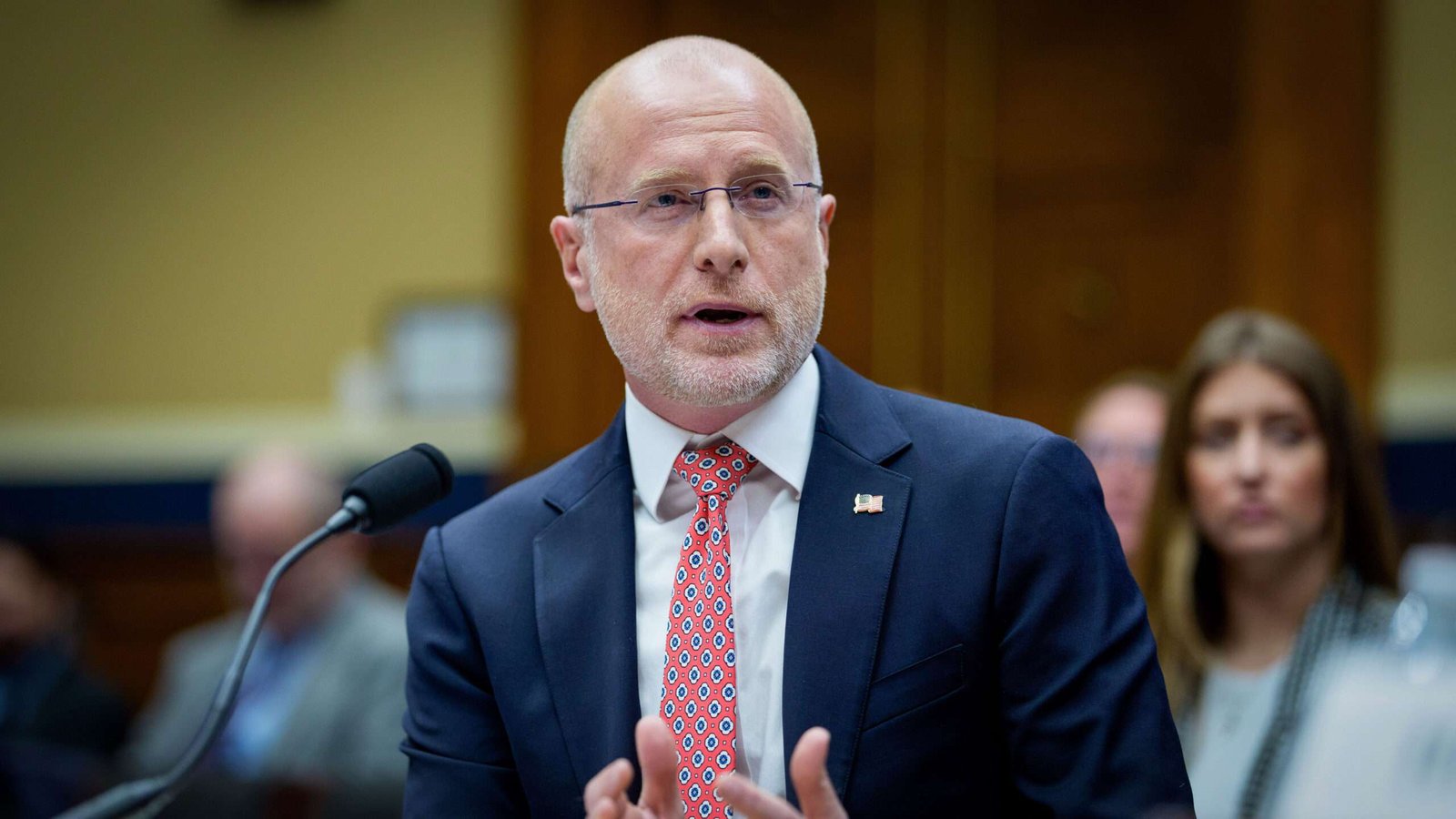
“Broadcasters that are running hoaxes and news distortions—also known as the fake news—have a chance now to correct course before their license renewals come up,” Federal Communications Commission (FCC) Chairman Brendan Carr posted on X, tied to Trump’s post, within hours. “The law is clear. Broadcasters must operate in the public interest, and they will lose their licenses if they do not. And frankly, changing course is in their own business interests since trust in legacy media has now fallen to an all time low of just 9% and are ratings disasters.”
Trump later posted that he was “so thrilled” Carr was “looking at the licenses of some of these Corrupt and Highly Unpatriotic ‘News’ Organizations.”
But neither Trump nor Carr makes the case that anyone intentionally got anything wrong—in fact, Trump conceded the reporting was correct, even while saying the opposite. Even if the Journal or any other outlet did make a mistake, that’s not illegal, and for good reason.
“It is difficult for anyone (soldiers, journalists, and Presidents) to determine the facts in any war. So if a journalist cannot safely publish unless he/she is certain that every significant fact is absolutely correct, there will be precious little war reporting,” writes Duke University School of Law professor Stuart Benjamin. “It would be an unprecedented extension of the news distortion policy and the broadcast hoax rule to apply either of them to mistaken war reporting.”
And none of what Carr said has any application to what the president complained about: Trump singled out The Wall Street Journal and The New York Times, but the FCC has no authority over newspapers. When Carr said “broadcasters” could “lose their licenses”—one of his go-to threats—it was a complete non sequitur. He didn’t say anything about newspapers, presumably because he knew there’s no way he could enforce it.
In a subsequent post, Carr cited the 1969 U.S. Supreme Court case Red Lion Broadcasting Co., Inc. v. FCC. Red Lion is perhaps best remembered as the case in which the Supreme Court upheld the fairness doctrine, writing that “because of the scarcity of radio frequencies, the Government is permitted to put restraints on licensees in favor of others whose views should be expressed on this unique medium.” Conservatives largely opposed the rule, and rightly so: At its core, it restrained private citizens’ First Amendment rights, and in time, technological advances made it increasingly obsolete anyway.
“In the 1969 Red Lion case, the Court upheld the Fairness Doctrine on the grounds that there was a natural ‘scarcity’ of outlets for diverse viewpoints,” John Fund wrote for Reason in 1988, the year after the FCC abolished the fairness doctrine. “At the time, such a view was plausible. There were only the three big [TV] networks. Now there are almost too many to count—even a simple cable-television system has 25 channels. To call the current environment one of ‘scarcity’ is a little like thinking there aren’t enough game shows on TV.”
That disparity has only grown in the decades since, with the advent of the internet, social media, and streaming video. But again, this had nothing to do with Trump’s original complaint, that newspapers were insufficiently obsequious to his government’s war narrative. In 1974’s Miami Herald Publishing Co. v. Tornillo, the Supreme Court unanimously overturned a Florida statute that imposed “right of reply” requirements on newspapers.
Of course, this is all part of the trend in which Carr, in his job, behaves first and foremost as Trump’s defender. Carr relishes his perceived role as “Trump’s media pit bull,” and he has even worn a gold lapel pin with Trump’s face on it to meetings with lawmakers. In his X post, Carr even echoed Trump’s braggadocio, writing, “When a political candidate is able to win a landslide election victory after in the face of hoaxes and distortions, there is something very wrong.”
Of course, there may be a reason why their posts had so much in common. “Carr was at the president’s Palm Beach resort on Saturday and was seen talking with Trump there,” CNN’s Brian Stelter reported Sunday. “So not only was Carr repeating Trump’s talking points, he was tweeting from Trump’s club. He visits Mar-a-Lago every month or so during the winter months.”
Whatever it is, Carr’s warning is both misplaced and inappropriate. News outlets have a responsibility to their audience, not to the government. Trump and his administration may expect the news to report their narrative uncritically, but any effort to force it would be a blatant First Amendment violation.
“Brendan Carr’s authoritarian warning—that networks risk their broadcasting licenses for Iran war reporting that the government doesn’t like—is outrageous,” Will Creeley, legal director at the Foundation for Individual Rights and Expression (FIRE) said in a statement. “When the government demands the press become a state mouthpiece under the threat of punishment, something has gone very wrong.”
“The president’s hand-picked misinformation czar is at it again, singling out ‘fake news’ that conflicts with his boss’s political agenda,” Aaron Terr, also of FIRE, wrote on X. “The First Amendment doesn’t allow the government to censor information about the war it’s waging.”
Read the full article here
Fact Checker
Verify the accuracy of this article using AI-powered analysis and real-time sources.