Close Menu
FSNN | Free Speech News NetworkFSNN | Free Speech News Network
  • Home
  • News
    • Politics
    • Legal & Courts
    • Tech & Big Tech
    • Campus & Education
    • Media & Culture
    • Global Free Speech
  • Opinions
    • Debates
  • Video/Live
  • Community
  • Freedom Index
  • About
    • Mission
    • Contact
    • Support
Trending

Prediction Markets Don’t Just Forecast Power

9 minutes ago

Bitmine Launches MAVAN Ethereum Staking Platform for Institutions

10 minutes ago

Circle Selloff ‘Looks Overdone’ Analysts Say as Shares Rise After Cathie Wood Buys the Dip

13 minutes ago
Facebook X (Twitter) Instagram
Facebook X (Twitter) Discord Telegram
FSNN | Free Speech News NetworkFSNN | Free Speech News Network
Market Data Newsletter
Wednesday, March 25
  • Home
  • News
    • Politics
    • Legal & Courts
    • Tech & Big Tech
    • Campus & Education
    • Media & Culture
    • Global Free Speech
  • Opinions
    • Debates
  • Video/Live
  • Community
  • Freedom Index
  • About
    • Mission
    • Contact
    • Support
FSNN | Free Speech News NetworkFSNN | Free Speech News Network
Home»News»Media & Culture»FCC Bans Nearly All Wireless Routers Sold in the U.S.
Media & Culture

FCC Bans Nearly All Wireless Routers Sold in the U.S.

News RoomBy News Room2 hours agoNo Comments4 Mins Read1,354 Views
Share Facebook Twitter Pinterest Copy Link LinkedIn Tumblr Email VKontakte Telegram
FCC Bans Nearly All Wireless Routers Sold in the U.S.
Share
Facebook Twitter Pinterest Email Copy Link

Listen to the article

0:00
0:00

Key Takeaways

Playback Speed

Select a Voice

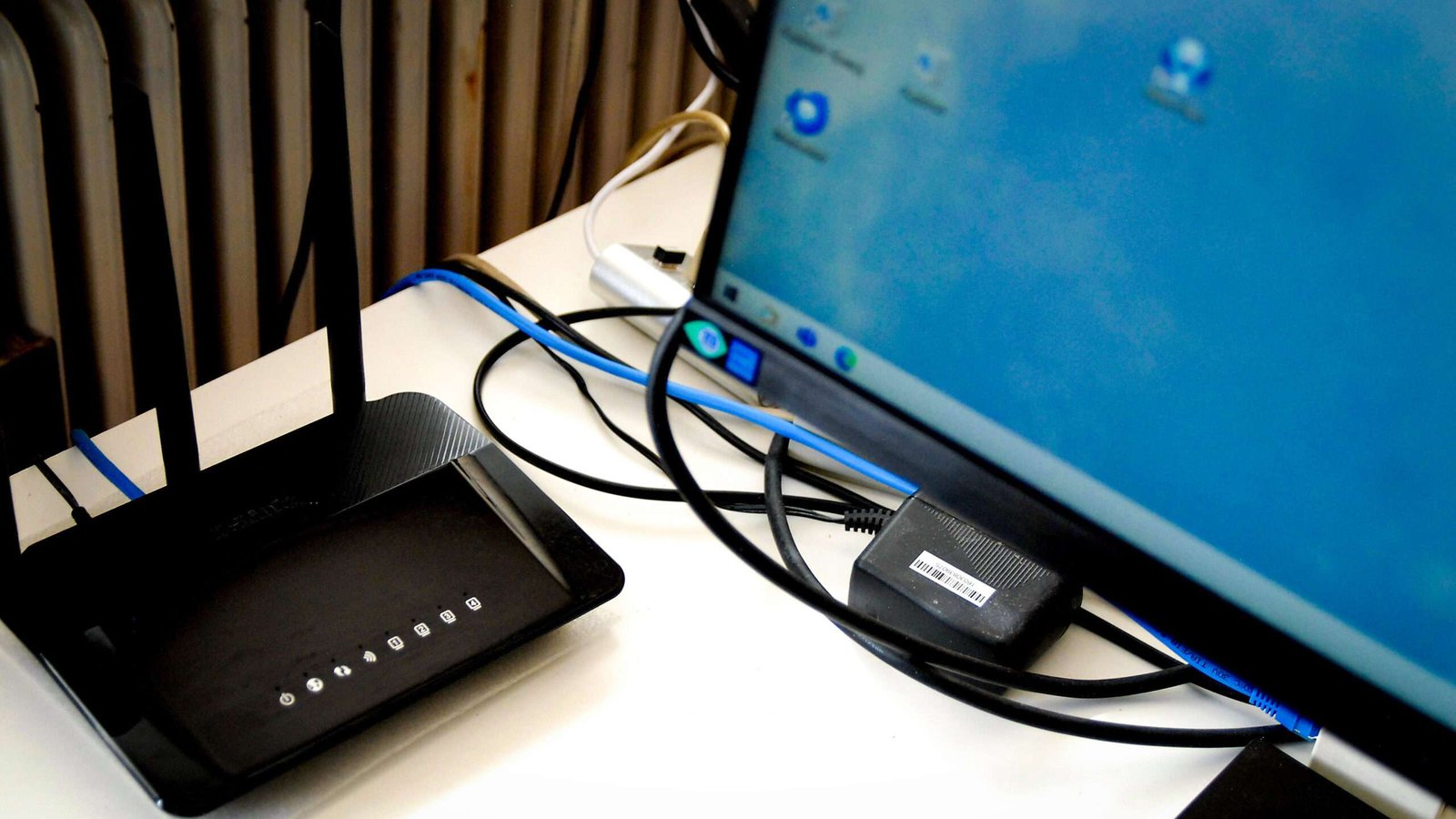
This week, the Federal Communications Commission (FCC) effectively banned the sale of nearly all wireless routers in the U.S., in yet another example of the government making Americans’ consumer decisions for them.

Ninety-six percent of American adults use the internet, and 80 percent of them use wireless routers—devices that transmit a signal throughout your home via radio waves and allow you to get online without plugging into the wall.

In a Monday announcement, the FCC deemed “all consumer-grade routers produced in foreign countries” potentially unsafe. This followed a national security determination last week, in which members of executive branch agencies concluded that “routers produced in a foreign country, regardless of the nationality of the producer, pose an unacceptable risk to the national security of the United States and to the safety and security of U.S. persons.”

The Secure and Trusted Communications Networks Act of 2019 empowered the government “to prevent communications equipment or services that pose a national security risk from entering U.S. networks.” The law directed the FCC to “publish and maintain a list of such equipment or services,” and according to that agency, inclusion on the list “will prevent the marketing, sale, or operation of any such new ‘covered’ equipment within the United States.”

Since wireless routers transmit over radio frequencies, they must be authorized by the FCC to be sold in the U.S.; adding all new foreign-made routers to the “Covered List” means the FCC will not authorize those devices’ transmitters, effectively banning their sale or use.

The announcement specifies that this only applies to new consumer-grade devices and “does not prohibit the import, sale, or use of any existing device models the FCC previously authorized.” It also notes that manufacturers who apply for exemptions on new models can be “granted ‘Conditional Approval’ after finding that such device or devices do not pose such unacceptable risks.”

Perhaps unsurprisingly, the ban will likely make it more difficult for Americans to get wireless routers.

The problem is that banning all foreign-made routers means banning practically all routers. Most manufacturers, including the three largest, make their products overseas.

“The only routers I know of that are manufactured in the US are some Starlink Wi-Fi routers, which are primarily made in Texas,” Simon Hill writes at Wired. “Starlink is part of Elon Musk’s SpaceX company, but many of the components in these routers come from East Asia.” (The FCC notes that “a router produced in the United States is not considered ‘covered’ equipment solely because it contains one or more foreign-made components,” unless that foreign-made part is a transmitter.)

Besides, routers made overseas aren’t automatically unsafe—and by the same token, just because a router is made domestically, that doesn’t mean it’s safe.

It’s true, as the national security determination notes, that “compromised routers” can be—and have been—used to carry out cyberattacks. “Recently, malicious state and non-state sponsored cyber attackers have increasingly leveraged the vulnerabilities in small and home office routers produced abroad to carry out direct attacks against American civilians in their homes,” the report found. “Additionally, routers produced abroad were directly implicated in the Volt, Flax, and Salt Typhoon cyberattacks which targeted critical American communications, energy, transportation, and water infrastructure.”

But this is not a reflection of where these products were made. “Almost without exception, the hardware and software that ships with most consumer-grade routers includes a number of default settings that need to be changed before the devices can be safely connected to the Internet,” cybersecurity journalist Brian Krebs wrote in November. It’s only within the past few years, he adds, that manufacturers began “forcing users to perform basic hygiene—such as changing the default password and updating the internal firmware—before the devices can be used as a router.”

Even if every affected company moves production onshore, there’s no indication that anything will change. “It is not clear how simply moving production of routers domestically would make them safer,” Sean Hollister writes at The Verge. “In the Volt Typhoon hack, Chinese state-sponsored hackers primarily targeted Cisco and Netgear routers, routers designed by US companies, according to the Department of Justice. They were vulnerable because those US companies had stopped providing security updates to the specific targeted routers, which had been discontinued by those companies.”

Of course, this isn’t a total ban: The government can grant exemptions to certain products if the FCC deems them safe. But this could just as easily be an opportunity for corruption. Last year, President Donald Trump imposed tariffs on nearly every other country in the world, fancifully citing trade deficits as a threat to national security. But lobbyists got to work, and within weeks, the administration granted exemptions to firms in the automotive, energy, pharmaceutical, and semiconductor manufacturing industries.

Read the full article here

Fact Checker

Verify the accuracy of this article using AI-powered analysis and real-time sources.

Get Your Fact Check Report

Enter your email to receive detailed fact-checking analysis

5 free reports remaining

Continue with Full Access

You've used your 5 free reports. Sign up for unlimited access!

Already have an account? Sign in here

#Journalism #MediaEthics #PoliticalCoverage #PressFreedom #PublicDiscourse
Share. Facebook Twitter Pinterest LinkedIn Tumblr Email Telegram Copy Link
News Room
  • Website
  • Facebook
  • X (Twitter)
  • Instagram
  • LinkedIn

The FSNN News Room is the voice of our in-house journalists, editors, and researchers. We deliver timely, unbiased reporting at the crossroads of finance, cryptocurrency, and global politics, providing clear, fact-driven analysis free from agendas.

Related Articles

Cryptocurrency & Free Speech Finance

Circle Selloff ‘Looks Overdone’ Analysts Say as Shares Rise After Cathie Wood Buys the Dip

13 minutes ago
Media & Culture

Gov’t Admits More Than 100 Asylum Seekers Were Deported In Violation Of A *Single* Court Order

46 minutes ago
Media & Culture

The Iran War Has Already Hurt Oil Production More Than the ’70s Energy Crisis Did

53 minutes ago
Cryptocurrency & Free Speech Finance

Franklin Templeton, Ondo Finance Bring 24/7 Tokenized ETF Trading to Crypto Users

1 hour ago
Cryptocurrency & Free Speech Finance

Visa Becomes First Major Payments Company to Join Canton Network as Super Validator

2 hours ago
Media & Culture

AI Might Be Our Best Shot At Taking Back The Open Web

3 hours ago
Add A Comment
Leave A Reply Cancel Reply

Editors Picks

Bitmine Launches MAVAN Ethereum Staking Platform for Institutions

10 minutes ago

Circle Selloff ‘Looks Overdone’ Analysts Say as Shares Rise After Cathie Wood Buys the Dip

13 minutes ago

Gov’t Admits More Than 100 Asylum Seekers Were Deported In Violation Of A *Single* Court Order

46 minutes ago

The Iran War Has Already Hurt Oil Production More Than the ’70s Energy Crisis Did

53 minutes ago
Latest Posts

U.S. lawmakers dig into tokenizing securities as Trump ties muddy waters

1 hour ago

Coinbase Co-founder and Tech Leaders to Join Trump‘s Advisory Council

1 hour ago

Franklin Templeton, Ondo Finance Bring 24/7 Tokenized ETF Trading to Crypto Users

1 hour ago

Subscribe to News

Get the latest news and updates directly to your inbox.

At FSNN – Free Speech News Network, we deliver unfiltered reporting and in-depth analysis on the stories that matter most. From breaking headlines to global perspectives, our mission is to keep you informed, empowered, and connected.

FSNN.net is owned and operated by GlobalBoost Media
, an independent media organization dedicated to advancing transparency, free expression, and factual journalism across the digital landscape.

Facebook X (Twitter) Discord Telegram
Latest News

Prediction Markets Don’t Just Forecast Power

9 minutes ago

Bitmine Launches MAVAN Ethereum Staking Platform for Institutions

10 minutes ago

Circle Selloff ‘Looks Overdone’ Analysts Say as Shares Rise After Cathie Wood Buys the Dip

13 minutes ago

Subscribe to Updates

Get the latest news and updates directly to your inbox.

© 2026 GlobalBoost Media. All Rights Reserved.
  • Privacy Policy
  • Terms of Service
  • Our Authors
  • Contact

Type above and press Enter to search. Press Esc to cancel.

🍪

Cookies

We and our selected partners wish to use cookies to collect information about you for functional purposes and statistical marketing. You may not give us your consent for certain purposes by selecting an option and you can withdraw your consent at any time via the cookie icon.

Cookie Preferences

Manage Cookies

Cookies are small text that can be used by websites to make the user experience more efficient. The law states that we may store cookies on your device if they are strictly necessary for the operation of this site. For all other types of cookies, we need your permission. This site uses various types of cookies. Some cookies are placed by third party services that appear on our pages.

Your permission applies to the following domains:

  • https://fsnn.net
Necessary
Necessary cookies help make a website usable by enabling basic functions like page navigation and access to secure areas of the website. The website cannot function properly without these cookies.
Statistic
Statistic cookies help website owners to understand how visitors interact with websites by collecting and reporting information anonymously.
Preferences
Preference cookies enable a website to remember information that changes the way the website behaves or looks, like your preferred language or the region that you are in.
Marketing
Marketing cookies are used to track visitors across websites. The intention is to display ads that are relevant and engaging for the individual user and thereby more valuable for publishers and third party advertisers.