Close Menu
FSNN | Free Speech News NetworkFSNN | Free Speech News Network
  • Home
  • News
    • Politics
    • Legal & Courts
    • Tech & Big Tech
    • Campus & Education
    • Media & Culture
    • Global Free Speech
  • Opinions
    • Debates
  • Video/Live
  • Community
  • Freedom Index
  • About
    • Mission
    • Contact
    • Support
Trending

Facebook Guilty

2 minutes ago

CPJ, partners call for release of Turkish journalist İsmail Arı

13 minutes ago

CoinDesk 20 performance update: Stellar (XLM) gains 6% as all constituents rise

21 minutes ago
Facebook X (Twitter) Instagram
Facebook X (Twitter) Discord Telegram
FSNN | Free Speech News NetworkFSNN | Free Speech News Network
Market Data Newsletter
Wednesday, March 25
  • Home
  • News
    • Politics
    • Legal & Courts
    • Tech & Big Tech
    • Campus & Education
    • Media & Culture
    • Global Free Speech
  • Opinions
    • Debates
  • Video/Live
  • Community
  • Freedom Index
  • About
    • Mission
    • Contact
    • Support
FSNN | Free Speech News NetworkFSNN | Free Speech News Network
Home»Cryptocurrency & Free Speech Finance»Family Offices Turn to Crypto Wealth Management as ‘Kids’ Lead the Digital Shift
Cryptocurrency & Free Speech Finance

Family Offices Turn to Crypto Wealth Management as ‘Kids’ Lead the Digital Shift

News RoomBy News Room4 months agoNo Comments6 Mins Read141 Views
Share Facebook Twitter Pinterest Copy Link LinkedIn Tumblr Email VKontakte Telegram
Family Offices Turn to Crypto Wealth Management as ‘Kids’ Lead the Digital Shift
Share
Facebook Twitter Pinterest Email Copy Link

Listen to the article

0:00
0:00

Key Takeaways

Playback Speed

Select a Voice

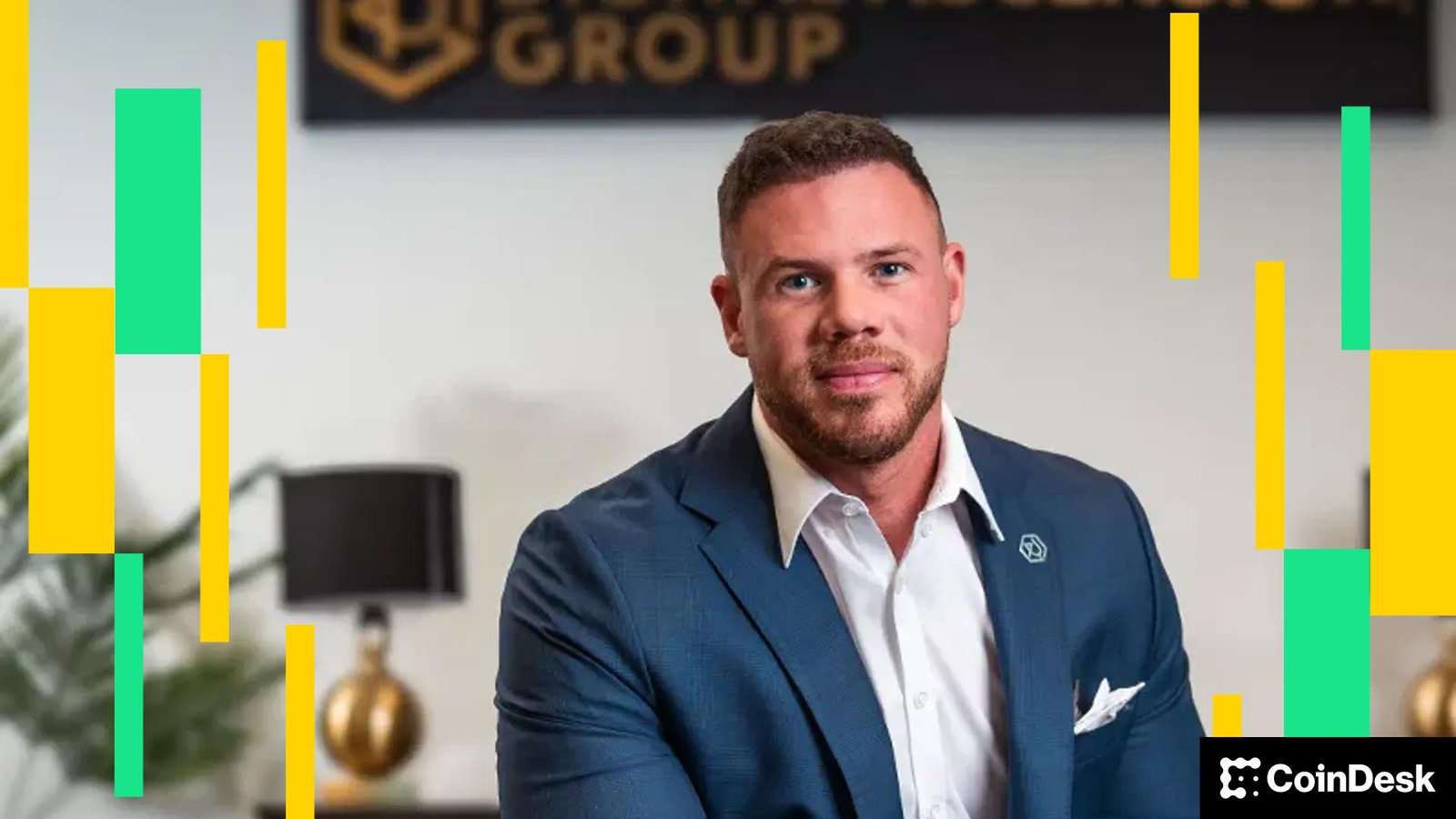
Jake Claver, CEO of Digital Ascension Group, a firm that helps wealthy individuals and their families navigate the world of cryptocurrency, recalls how one of his clients, “a gentleman from Dallas,” turned $11,000 into almost half a billion dollars, primarily from trading memecoins – culturally themed crypto tokens with no real utility whose valuations can fluctuate wildly.

The lucky investor, whom Claver got to know first as a friend, managed his own crypto. “He used a sniper bot [automated software that will buy and sell newly listed tokens in milliseconds according to certain parameters] that made him millions from memecoin trading,” Claver said.

Eventually, Claver persuaded his friend to attend one of the registered investment adviser’s (RIA) family office events, which led to a portion of the trader’s portfolio being rolled into XRP, the well-established native token of the Ripple network. “We saw a 6x on XRP so he did pretty well,” Claver said.

Several years before, Claver found himself searching for advice on managing his own crypto gains. Specifically, he wanted to explore how best to structure his crypto estate, handle his taxes, carry out succession planning and so on.

But none of the typical wealth advice you find in the traditional high net worth (HNW) space seemed to be available for holders of crypto. After a few useful introductions, Claver consulted with some family offices and saw a glaring advisory gap in the market. This led to the formation of Digital Ascension, and from a standing start, the firm now looks after about $1 billion in crypto assets for wealthy families.

“Asension started taking capital in October last year, and we partnered with Anchorage for institutional custody,” Claver said in an interview. “So, we’ve gone from zero to a billion in all crypto in about one year. We work with 10families, and we have about another 1,500 clients that have somewhere between half a million and 5 million in total portfolio value. And I can confidently say we are the largest RIA in the world for crypto.”

‘Very different kind’ of wealth management

Ascension takes any private client services that you can think of, and does that for crypto, explained Claver. That includes estate planning, taxes, accounting, bill-pay and everything a family office would provide. This sits alongside wealth management, which includes allocating to various cryptocurrencies, setting up lines of credit and earning returns on assets, but all done in a buttoned-up and regulated fashion – “Not through DeFi [decentralized finance],” Claver said.

“We do it with institutional custody and with insurance on your assets and things like tri-party agreements to mitigate risk of loss,” he said. “It’s very different from the kind of onchain stuff. You can get all the additional assurances you would get from an institution with the benefit of the additional services.”

A crucial component here is custody, courtesy of technology built by Anchorage, one of the first U.S.-regulated crypto safekeeping firms. It was recently selected by BlackRock to look after its crypto ETF assets.

“The institutional custody at Anchorage and sub accounts structure means the client is never a creditor,” Claver said. “These are always your assets. They sit in your account. Effectively, a Schwab account for your crypto is basically what it ends up being.”

This allows for a structure that’s a lot more intricate and nuanced than a few people having keys to some cold wallet (a means of holding crypto assets that stays remote from the harsh winds of the internet).

“You can have beneficiaries on the account such as your spouse,” Claver said. “If you have a trustee that has to sign off — say it’s an asset-protection trust or another type of structure — we can add multiple signers and governance on who gets access to the assets, when, and for what reasons.”

Trading crypto assets prone to periods of intense volatility may not be for the fainthearted, but the industry has amassed monumental wealth for investors in recent years and continues to create more wealthy individuals in each cycle. The global population of crypto millionaires increased by 40% from the previous year to 2025, according to a recent study.

That said, the lack of grown-up advice and basic crypto wealth management — which Ascension is servicing — was highlighted in a recent survey by Swiss software firm Avaloq that found the traditional wealth sector is under mounting pressure to deliver digital assets to wealthy clients. In the UAE, for instance, 63% of ultra-rich investors have switched managers or are considering doing so, according to that survey.

Family-Office Kids

What often happens is the children of ultra-high-net-worth families are the ones educating their elders about digital assets. A generation that grew up with crypto, family-office kids use laptops or phones to purchase large quantities of tokens on exchanges like Coinbase and Binance.

It’s mostly second- or third-generation family office members that Ascension initially speaks with, Claver said, guided via his firm’s social media presence. The next step is to schedule a call with the elders.

“It’s usually a conversation with the matriarch or patriarch and I kind of explain to them that this is the next iteration of the internet, and that there’s certain protocols and networks that will be used for public infrastructure, and also how this is kind of a hedge against other positions that they might have,” he said.

Oftentimes, the second or third gen person that’s brought the conversation will be given a couple of million dollars to invest in digital assets to see how it works out. Most of the time it’s somewhere less than 1%, Claver said.

“If they want to make a large allocation to certain cryptos — bitcoin, Ethereum, SOL, Matic, chainlink, XRP, XLM, HBAR, whatever it is — we help them make that allocation. Or, if they already have those allocations in a cold wallet, and they don’t have a continuity plan built around that, then they can put it in institutional custody. Then you get assurances and planning, versus having keys or words written down on a piece of paper that a few people might have and have to reconstitute a wallet every quarter to make adjustments.”

Claver admits things have evolved since the early days of Bitcoin libertarians. Apart from anything else, the demographic of these early holders has changed, with many entering the 40-plus age group. And anyone’s perspective starts to change when they suddenly have a lot of capital to protect, he added.

“If you’ve got a couple 100 grand, or even a couple million dollars, you may feel comfortable managing the risk associated with that, like cash in your mattress. I get that,” Claver said. “But when it becomes $20, $50, $100 million or even a billion dollars, it’s a very different animal.”


Read the full article here

Fact Checker

Verify the accuracy of this article using AI-powered analysis and real-time sources.

Get Your Fact Check Report

Enter your email to receive detailed fact-checking analysis

5 free reports remaining

Continue with Full Access

You've used your 5 free reports. Sign up for unlimited access!

Already have an account? Sign in here

Share. Facebook Twitter Pinterest LinkedIn Tumblr Email Telegram Copy Link
News Room
  • Website
  • Facebook
  • X (Twitter)
  • Instagram
  • LinkedIn

The FSNN News Room is the voice of our in-house journalists, editors, and researchers. We deliver timely, unbiased reporting at the crossroads of finance, cryptocurrency, and global politics, providing clear, fact-driven analysis free from agendas.

Related Articles

Cryptocurrency & Free Speech Finance

CoinDesk 20 performance update: Stellar (XLM) gains 6% as all constituents rise

21 minutes ago
Cryptocurrency & Free Speech Finance

Bitcoin Rallies After Iran Strikes but Safe Haven Role Unproven

23 minutes ago
Cryptocurrency & Free Speech Finance

Morning Minute: Circle Plunges 20% Over Clarity Act Yield Changes

26 minutes ago
Cryptocurrency & Free Speech Finance

CIFR shares rise on new Hyperscaler agreement

1 hour ago
Cryptocurrency & Free Speech Finance

Bitcoin retakes $71K as US sends Iran 15-point ceasefire plan

1 hour ago
Cryptocurrency & Free Speech Finance

Bitcoin ETFs Draw in $2.5B in a Month, Close to Erasing YTD Losses

1 hour ago
Add A Comment

Comments are closed.

Editors Picks

CPJ, partners call for release of Turkish journalist İsmail Arı

13 minutes ago

CoinDesk 20 performance update: Stellar (XLM) gains 6% as all constituents rise

21 minutes ago

Bitcoin Rallies After Iran Strikes but Safe Haven Role Unproven

23 minutes ago

Morning Minute: Circle Plunges 20% Over Clarity Act Yield Changes

26 minutes ago
Latest Posts

Utah Court of Appeals Upholds Dismissal of Child Sexual Abuse Accusations

1 hour ago

Malak Mattar is a Gazan artist based in London This article first appeared in the Winter 2025 issue of Index on Censorship, Gen Z is revolting: Why the world’s youth will not be silenced, published on 18 December 2025. The tortuous process that led to the signing of the 1993 Oslo Accords only came about after sustained Palestinian resistance to Israel’s occupation of the West Bank and Gaza, beginning with the First Intifada of 1987-91. This pushed the international community into action, the subsequent negotiations including several Arab countries alongside Israel and representatives of the Palestinian nation. But the Oslo Accords did not live up to their promise, and did not end the conflict between Israel and Palestine. Thirty-two years on, and two years into Israel’s genocidal war in Gaza, President Trump’s 20-point peace plan similarly seeks to bring about a new Middle East. The cessation of hostilities presents an opportunity for comparing the two plans, and to ask a crucial question: Will this new initiative fare any better in bringing peace, justice and security to the region? Two groups were opposed to the Oslo Accords from the start: Israel’s right wing, and the Islamic resistance group Hamas. Today, the two groups are in control of their respective territories. Hamas holds sway in Gaza, and the ultra-nationalist religious parties have held the Israeli government hostage since the last parliamentary elections in 2022. In 1991, as the International Peace Conference that ultimately led to the Oslo Accords convened in Madrid, I was visiting Geneva, attending a meeting of the Palestinian Welfare Association. In different ways, many of us living in the Occupied Territories had struggled to bring an end to Israel’s occupation of our land. I took the path of human rights, exposing Israel’s repeated violations of international law. The Intifada of 1987-91 was Palestine’s war of liberation; collectively, we were proud of our success in bringing Israel to negotiate with the Palestinians. After my meetings in Geneva, I travelled to the town of Brunnen, to begin a three-day walk around Lake Lucerne. I needed to be by myself and to have some time to reflect. I was expecting that we were at the cusp of a period of peace and an end to our long-lasting struggle. I wanted to think about where this would leave us. Passing through the attractive city of Lausanne, I recalled visiting there with my parents in 1971, when I was 20. My father had often mentioned visiting the city in 1949, when he took part in the conference of the UN Palestine Conciliation Commission. Of the conference itself I knew very little, and I didn’t think to ask him more. As we entered the city, I could tell that my father was wistful, yet I still did not try to inquire what was going on in his mind. How I regret this, especially as the struggle for the right of return of Palestinian refugees forced out of their homes between 1948 and 1949 is still continuing. I was more interested in visiting the prison dungeon in the Château de Chillon, near Montreux on Lake Geneva. It was more than half a century before I learned fully about my father’s role while writing my book, We Could Have Been Friends, My Father and I. I left on the nine o’clock boat from Brunnen to Treib, and then started my hike. The Swiss, I had heard, would be doing their traditional annual walk around the lake, this year commemorating the 700th anniversary of their federation. I expected to find many walkers along the path but soon realised that those who had wanted to walk the route had already done so and gone. I was the only one hiking, and so I had the path to myself. Forty-two years after my father’s participation in the conference at Lausanne, another conference was taking place, this time in Madrid. Perhaps because the earlier conference in Lausanne had failed, the organisers of this new initiative wanted it to take place somewhere else. Spain, with its famous history of Arabs and Jews producing a rich civilisation together, was certainly a more auspicious venue. I did not know what one could reasonably expect from Madrid. James Baker, US Secretary of State, had consumed public attention with his lengthy deliberations about the procedure to be followed. At the time, it was claimed that Baker did not show the list of Palestinian participants to Israel in advance of the conference. A small gesture, but enough for Faisal Husseini, a recognised local leader, to claim a meaningful victory. We, he said, had the final say about our representatives, not Israel. But these were hollow words. Israel had, after all, excluded the Palestine Liberation Organization (PLO) and Palestinians from Jerusalem. But somehow, it was deemed good for morale if the Palestinians believed that Israel had not chosen their delegation for them. I hoped that this was not indicative of what was to come. On the eve of the Madrid conference, Israeli Prime Minister Yitzhak Shamir addressed the European Parliament. Highlights from his speech were broadcast on Israeli television’s evening news programme. It was not Palestinian self-determination that was an obstacle to peace, he told the parliamentarians, but rather the refusal of the Arab states to recognise Israel. Benjamin Netanyahu, more recently, has repeated similar claims. The broadcast then cut to Yigal Karmon, an adviser to Shamir on counter-terrorism affairs. No one – no one – would get to Madrid without Israel’s approval, he declared. “It is man by man,” he added, in his bad English. Karmon’s depressing words notwithstanding, the conference did take place. The floodgates of hope were ready to burst, and Israeli intransigence could not stop this. After Saddam Hussein’s defeat in the First Gulf War, a massive defence mechanism against the very notion of hope had emerged. And yet. The Palestinian Land Registration Department was packed with people buying land. Palestinians who were living in Kuwait were in Amman, waiting for the return. Before the selection of delegates, we had felt a long way from the march of events. Everything seemed to be happening above our heads. It is much the same today, the disillusion that has emerged from negotiations over Trump’s plan seeming very much like it did in 1991. But then, every peace conference must seem like a letdown. What war has ever brought satisfaction to everyone? Peace conferences, at best, are compromise agreements. Thereafter, everything depends on what the parties are able to make of them. Even so, there were objective indicators in the Oslo Accords pointing to disaster. First, the illegal Jewish settlements on our land were to remain in place, with no agreement on freezing their expansion. And then, there were no guarantees concerning the creation of an independent Palestinian state at the end of the process. Trump’s plan echoes these uncertainties. The withdrawal of the Israeli Defence Force (IDF) from Gaza is to be “based on standards, milestones, and timeframes linked to demilitarisation”, to be agreed upon by the IDF and the International Stabilisation Force created for Gaza. What does this mean in fact? That “Israel will retain security responsibility, including a security perimeter for the foreseeable future”. It also means that as of now, there is no end envisaged to the siege of Gaza. This means, amongst other things, that Gaza will not be able to import machinery required for reconstruction. The other problematic area in the plan relates to Palestinian statehood. The plan states that “while Gaza re-development advances and when the PA reform program is faithfully carried out, the conditions may finally be in place for a credible pathway to Palestinian self-determination and statehood”. Translation: even if the Palestinian Authority carried out the prescribed reforms, there is no guarantee that these will be followed by a Palestinian state. Palestinian interests, once again, were being determined without the input of Palestinians themselves. Back to 1991 and Lake Lucerne. Having reached the top of the first ascent, I began the descent. The lake was framed by steep cliffs, and the walk was not as easy as I had anticipated. But at least I had no worries about finding the path, as this was well marked. A refreshing wind blew as I walked and breathed in the crisp clean air. How different it was, I thought, to walk in this Swiss terrain rather than the familiar hills of Ramallah. Around Lake Lucerne, nature is washed and rejuvenated regularly. The rains collect in streams and waterfalls, or remain on the peaks in the form of snow or glaciers. I remembered, on my first visit to the region with my parents, being impressed with the rushing water. I was nervous, but also emboldened, by the powerful thrust of the water, gushing down forcefully. In Ramallah, where the rains are far less frequent, everything remains in place for years. A thin layer of lichen grows on rocks, giving them a leaden and ancient presence. But the most striking difference between Lake Lucerne and Ramallah is that their mountains are majestic: imposing, remote, safe from human domination. Ours are mere hills, easily reached, vulnerable to the greed of jealous suitors. As I continued my descent, the words of Haidar Abdul Shafi, head of the Palestinian delegation to Madrid, came back to me. In his speech he was addressing, “the Israeli people with whom we have had a prolonged exchange of pain.” What a brilliant way to put it. The tragedy, as I felt it, was that even if peace should be reached it would be impossible to undo the pain that had been inflicted and suffered up to this point. Before the whole world, Haider had pronounced: “We, the people of Palestine, stand before you in the fullness of our pain.” He was offering our adversary hope, by declaring that the Palestinian nation was willing to live side by side with them in peace, sharing the land as equals. Now that my wife Penny and I are older, I no longer think that everything is possible. Time has become a pivotal factor in my life. Sometimes one succeeds, and sometimes not. I have had my share of both. Either way, I have had to learn how to accept failure as failure, rather than as a temporary setback that I may still get a second chance to rectify. Will the wheels finally turn, I wondered? Abdul Shafi had indeed said what the Israelis claimed that they were hoping to hear. I wanted to believe that peace, in some form, was on its way. I was already beginning to think about what would come next.But while Abdul Shafi was speaking, Yitzhak Shamir had looked on with cold eyes. Most of what Abdul Shafi had said was forward-looking. The deeply-felt pain of the Palestinians had been given ample expression, but he had also paid recognition to the solidarity of those Israelis who had shared our pain with us. There was a reaching-out for the Israelis, and for the world, to accept our aspirations for self-determination, to correct the injustices caused to generations of Palestinians. But all the while Shamir looked on with a deadpan face, unimpressed and unmoved. But while Abdul Shafi was speaking, Yitzhak Shamir had looked on with cold eyes. Most of what Abdul Shafi had said was forward-looking. The deeply-felt pain of the Palestinians had been given ample expression, but he had also paid recognition to the solidarity of those Israelis who had shared our pain with us. There was a reaching-out for the Israelis, and for the world, to accept our aspirations for self-determination, to correct the injustices caused to generations of Palestinians. But all the while Shamir looked on with a deadpan face, unimpressed and unmoved. When it was his turn to speak, the Israeli prime minister began by decrying the attempts of others to re-write history. But then, he went on to do exactly that. He repeated the famous Zionist claim, that “hundreds of thousands of Arabs who lived in Mandatory Palestine were encouraged by their own leaders to flee from their homes.” He did not even deign to call us Palestinians. And then to what he deemed to be the “root cause of the conflict”: “Arab refusal to recognise the legitimacy of the State of Israel”. Shamir denied the Occupation, refused to acknowledge either the fundamental rights of the Palestinian nation or their suffering. The West Bank, for Shamir, was Judea and Samaria; he belittled our aspirations for a nation, declaring that while “the Arab nations” controlled a landmass of 14 million square kilometres, Israel (in his estimation including the Occupied Territories) controlled a mere 28,000 square kilometres. “The issue is not territory but our existence,” Shamir concluded There was nothing new in Shamir’s speech. If anything, it merely served as proof of Israel’s intransigence, the only difference being that it was now being proclaimed from the podium at the opening of the historic peace conference. This did not bode well for the future. Today, this same Israeli intransigence persists, Shamir’s rhetoric replaced with Netanyahu’s bluster.After my return from Switzerland that winter of 1991, a third snow of the year fell on Ramallah. I decided to take a walk on a street behind the Evangelical Home, on a path that ran parallel to Tireh Road. The hill ahead seemed colossal, as though the houses on it were perched atop a huge edifice. It was engulfed in fog, permitting only a blurred view of the limestone houses and the dark rock of the gardens behind. Towards the east, the sun (which I could see blurred like a shiny chalk ball in the west) was reflected in the clearing sky. Beneath that clear cap, the clouds and the fog below were still thick. The features of the familiar landscape were altered, the horizon redefined as a line slicing the eastern sky into thick stratus clouds and the clear sky. Beneath, one could spot here and there the hills behind, covered by a shimmering sheath of fog, milky white clouds shrouding the familiar hills in mystery. On my way back, I could not resist walking down towards the wadi. Every level I reached opened up the view, the fog receding. But the mystery ahead remained, elusive and out of reach. What, I wondered, would be the future of these hills if Israel were to get its way? What would happen if negotiations could not stop the Israeli intentions that even then I knew so well? Twenty-five years on, I now know this future. The hills where I had once enjoyed walking have now been militarised, with Israeli settlements perched atop. Armed settlers in balaclavas brandish machine guns, attacking farmers and peaceful villagers in their homes. There is nothing in Trump’s plan that is likely to alter any of this depressing reality. Apartheid has only been given a boost, and the new initiative will not bring peace to the Middle East. The Trump plan has been described as “sugar-coated neocolonialism” – not only a moral atrocity but a policy one, too. Like the earlier experiment of the Oslo Accords, the 20-point Trump peace plan is likely to only mark another dismal failure. And so, we will continue to suffer war after war, without hope of reprieve. All illustrations by Malak Mattar, a Gazan artist based in London READ MORE

1 hour ago

CIFR shares rise on new Hyperscaler agreement

1 hour ago

Subscribe to News

Get the latest news and updates directly to your inbox.

At FSNN – Free Speech News Network, we deliver unfiltered reporting and in-depth analysis on the stories that matter most. From breaking headlines to global perspectives, our mission is to keep you informed, empowered, and connected.

FSNN.net is owned and operated by GlobalBoost Media
, an independent media organization dedicated to advancing transparency, free expression, and factual journalism across the digital landscape.

Facebook X (Twitter) Discord Telegram
Latest News

Facebook Guilty

2 minutes ago

CPJ, partners call for release of Turkish journalist İsmail Arı

13 minutes ago

CoinDesk 20 performance update: Stellar (XLM) gains 6% as all constituents rise

21 minutes ago

Subscribe to Updates

Get the latest news and updates directly to your inbox.

© 2026 GlobalBoost Media. All Rights Reserved.
  • Privacy Policy
  • Terms of Service
  • Our Authors
  • Contact

Type above and press Enter to search. Press Esc to cancel.

🍪

Cookies

We and our selected partners wish to use cookies to collect information about you for functional purposes and statistical marketing. You may not give us your consent for certain purposes by selecting an option and you can withdraw your consent at any time via the cookie icon.

Cookie Preferences

Manage Cookies

Cookies are small text that can be used by websites to make the user experience more efficient. The law states that we may store cookies on your device if they are strictly necessary for the operation of this site. For all other types of cookies, we need your permission. This site uses various types of cookies. Some cookies are placed by third party services that appear on our pages.

Your permission applies to the following domains:

  • https://fsnn.net
Necessary
Necessary cookies help make a website usable by enabling basic functions like page navigation and access to secure areas of the website. The website cannot function properly without these cookies.
Statistic
Statistic cookies help website owners to understand how visitors interact with websites by collecting and reporting information anonymously.
Preferences
Preference cookies enable a website to remember information that changes the way the website behaves or looks, like your preferred language or the region that you are in.
Marketing
Marketing cookies are used to track visitors across websites. The intention is to display ads that are relevant and engaging for the individual user and thereby more valuable for publishers and third party advertisers.