

 Freedom Index
Listen to the article
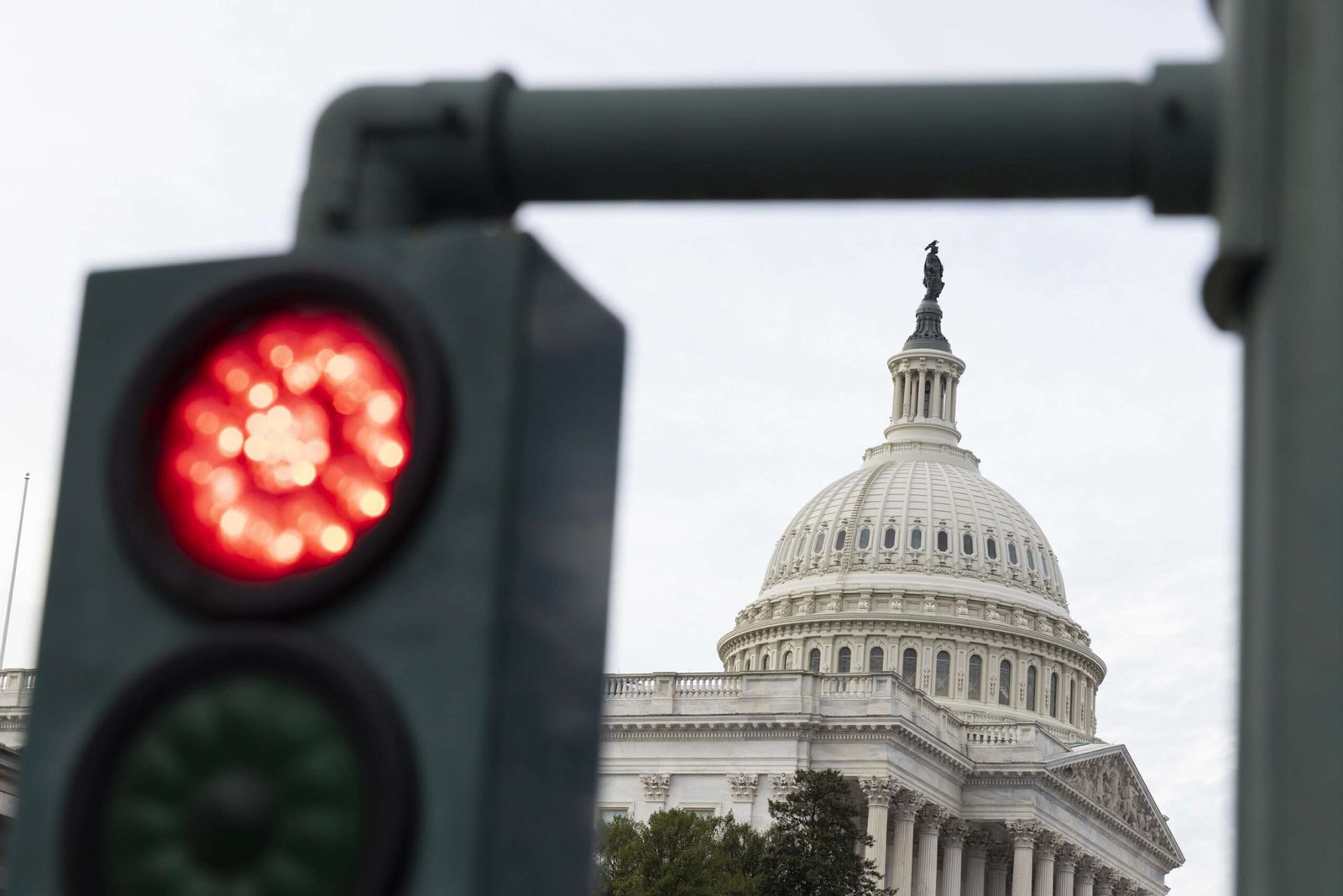
The federal government’s not-really-a-shutdown lingers on, largely driven by Democrats’ insistence on extending pandemic-era subsidies that conceal the real cost of health coverage under the Affordable Care Act (ACA)—better known as Obamacare. It’s not enough that the spending bill under consideration is already bloated with unaffordable goodies that Republicans and Democrats alike support. Democrats have to show themselves battling the Trump administration and see advantage in doing so while fighting to preserve the main legislative accomplishment (bad policy though the ACA is) on which they’ve staked their reputations for over a decade. This is no way to handle spending, let alone to improve health care.
You are reading The Rattler from J.D. Tuccille and Reason. Get more of J.D.’s commentary on government overreach and threats to everyday liberty.
“Families across America are opening up letters and researching the new rates online and are seeing how their premiums will skyrocket if Republicans refuse to act on the health care crisis they created by refusing to extend the vital ACA tax credits,” Sen. Chuck Schumer (D–N.Y.) huffed last week.
The “vital” tax credits to which Schumer refers are subsidies that reduce the cost of health coverage policies under Obamacare. These subsidies are necessary for political reasons because, as the Cato Institute’s Michael F. Cannon puts it, “Obamacare offers junk insurance at outrageous premiums.” There’s no easy way to hide the low quality of the coverage, but subsidies can take the sting out of the price.
Obamacare came with subsidies for low-income consumers built in. During the COVID-19 pandemic, subsidies were temporarily broadened, made more generous, and then extended by the misleadingly named Inflation Reduction Act. “The enhanced subsidies increase the amount of financial help available to those already eligible and also newly expand subsidies to middle-income people, many of whom were previously priced out of coverage,” according to KFF, a health policy think tank.
That is, the current budget impasse is over further extending “temporary” pandemic-era subsidies for higher-income families who were never intended to enjoy price breaks under the original ACA legislation. By and large, those higher-income earners weren’t purchasing Obamacare plans at all until the enhanced subsidies kicked in. Artificially lowering premium prices to conceal the true cost brought them to the table. “Millions of enrollees have come to rely on the enhanced subsidies, with more people gaining Marketplace coverage since President Biden took office than had signed up for ACA Marketplace when the markets first launched in 2014,” KFF noted in 2024.
But if consumers aren’t paying the full cost of those subsidized Obamacare plans, somebody is, and that somebody is ultimately American taxpayers. The Congressional Budget Office (CBO) estimates that permanently extending the enhanced subsidies would increase the deficit by $350 billion from 2026 to 2035. But the CBO labors under certain mandatory and unrealistic assumptions about federal fiscal responsibility; the National Taxpayers Union foresees extending the subsidies “adding $410 billion over ten years to the deficit.”
Writing for the Tax Foundation, William McBride cautions that extended ACA premium tax credits “are but one of many federal subsidies and tax preferences for health care, making this sector by far the most heavily government-subsidized sector in the economy.” He adds that “healthcare spending has grown to almost one-third of the federal budget and, combined with tax preferences, now exceeds $2 trillion or 8 percent of GDP. These subsidies are forecasted to continue growing faster than the overall economy, making reforms that control costs imperative to achieve a sustainable fiscal trajectory.”
This is sort of a fancy way of saying that Obamacare is part of a range of very expensive federal programs intended to insulate Americans from all the things they don’t like about health care. None of the programs do anything that actually improves the quality of health care, nor do they help to lower its cost. Instead, at growing expense, they hide the burden and put off the day when reforms will have to be implemented. Calling Obamacare a scam isn’t an exaggeration. It not only delays real reform; it’s also easily gamed to line grifters’ pockets.
Last year, The Wall Street Journal‘s Joseph Walker reported that “hundreds of thousands of low-income Americans were unknowingly signed up for government-subsidized health insurance, often lured by social-media ads falsely promising cash for daily expenses.” Insurance agents got commissions for signing people up, and generous “temporary” enhanced subsidies meant the government footed the bill—not the people who often didn’t even know they had been signed up for Obamacare coverage.
Even worse, Cannon of the Cato Institute adds, Obamacare and other federal intrusions into health care are a big part of the problem why the costs politicians want to conceal are rising so fast. As an example, he points to regulations crafted to protect patients with preexisting conditions that drive insurance companies to engage in “backdoor discrimination” that makes it harder for some people to get care.
Adds Cannon, “If government regulations are making your health insurance too expensive or limiting your choice of treatments or providers, those regulations should be optional. You should have the right to choose better, more affordable health insurance” by opting out of regulated coverage. That was tried in 1996 with short-term plans and expanded during the first Trump administration with success. The Obama administration itself exempted U.S. territories from many rules to preserve insurance markets.
Along similar lines, Veronique de Rugy of the Mercatus Center also recommends “expanding access to more affordable alternatives such as association health plans and short-term renewable policies.” She suggests easing scope-of-practice rules so that providers including physicians’ assistants can offer services currently reserved to physicians.
Over a decade ago, Curtis Dubay of the Heritage Foundation proposed letting Americans purchase health insurance across state lines and carry it with them wherever they go. “Small businesses, individual membership associations, religious groups, and fraternal organizations should be able to sell health insurance policies through new group purchasing arrangements,” Dubay wrote.
“Rather than continuing to subsidize the ACA and other inefficient healthcare programs, lawmakers should use this opportunity to change course and institute reforms that might finally ‘bend the cost curve’ in health care downward,” concludes the Tax Foundation’s McBride.
All of this is to say that the worst way of concluding the federal government’s not-really-a-shutdown would be to give in and extend the enhanced Obamacare subsidies that make the situation worse.
Read the full article here
Fact Checker
Verify the accuracy of this article using AI-powered analysis and real-time sources.