Close Menu
FSNN | Free Speech News NetworkFSNN | Free Speech News Network
  • Home
  • News
    • Politics
    • Legal & Courts
    • Tech & Big Tech
    • Campus & Education
    • Media & Culture
    • Global Free Speech
  • Opinions
    • Debates
  • Video/Live
  • Community
  • Freedom Index
  • About
    • Mission
    • Contact
    • Support
Trending

James Cameron’s Avatar Obsession Derails His Own Franchise

7 minutes ago

Former Binance CEO CZ waves off accusations on Iran, terror ties

12 minutes ago

SEC Approves Nasdaq Tokenization Trading Trial

15 minutes ago
Facebook X (Twitter) Instagram
Facebook X (Twitter) Discord Telegram
FSNN | Free Speech News NetworkFSNN | Free Speech News Network
Market Data Newsletter
Thursday, March 19
  • Home
  • News
    • Politics
    • Legal & Courts
    • Tech & Big Tech
    • Campus & Education
    • Media & Culture
    • Global Free Speech
  • Opinions
    • Debates
  • Video/Live
  • Community
  • Freedom Index
  • About
    • Mission
    • Contact
    • Support
FSNN | Free Speech News NetworkFSNN | Free Speech News Network
Home»News»Media & Culture»Donald Trump and Oren Cass Promised Tariffs Would Bring Prosperity. Both Are Now Confronting Reality.
Media & Culture

Donald Trump and Oren Cass Promised Tariffs Would Bring Prosperity. Both Are Now Confronting Reality.

News RoomBy News Room5 months agoNo Comments5 Mins Read563 Views
Share Facebook Twitter Pinterest Copy Link LinkedIn Tumblr Email VKontakte Telegram
Donald Trump and Oren Cass Promised Tariffs Would Bring Prosperity. Both Are Now Confronting Reality.
Share
Facebook Twitter Pinterest Email Copy Link

Listen to the article

0:00
0:00

Key Takeaways

Playback Speed

Select a Voice

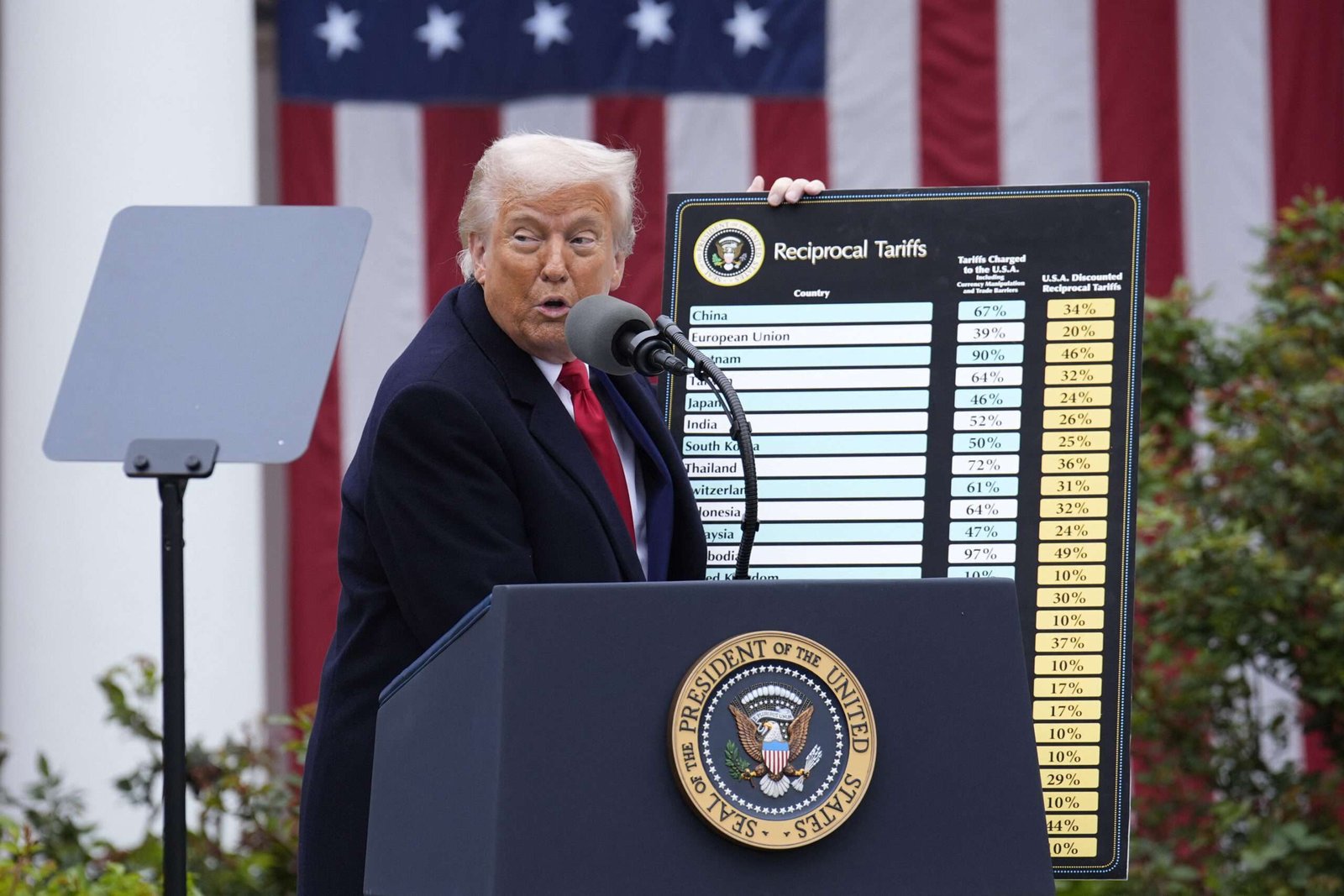
In April, as President Donald Trump announced his so-called “Liberation Day” tariffs that would target imports of nearly all goods sourced from friend and foe alike, one of the biggest cheerleaders for trade protectionism took a victory lap.

Those new tariffs “confirm the end of the disastrous [World Trade Organization] era and lay the groundwork for a new set of arrangements in the international economy that prioritize the national interest and the flourishing of the nation’s working families,” wrote Oren Cass, the former Mitt Romney advisor who now runs American Compass.

A week later, during an interview with two reporters from Vox, Cass was asked whether the Trump administration was making an error by imposing a global tariff on all imports (including “shirts and screws and picture frames and bicycles.”) instead of focusing on critical items like semiconductors.

“I think a global tariff is the right way to do things,” Cass said. “It’s a very simple, broad policy that conveys a value that we see in domestic production.”

That is, more or less, the view that the White House adopted during the first year of Trump’s second term: Making stuff in America matters, and the best way to encourage more production in America is to make it more expensive to import anything made somewhere.

Of course, there are two major flaws with that logic. First, there are things that can’t be made in America—or can’t be made here in sufficient quantities to satisfy Americans’ demand. Coffee, chocolate, bananas, and many other agricultural products, for example.

Second, making things in America often requires importing raw materials or intermediate goods. More than 50 percent of all American imports are unfinished goods that are used to make other things, from cars to houses to industrial pumping equipment and chocolate bars. If all those materials are suddenly more expensive, it becomes harder, not easier, to manufacture more things here.

Economists and other experts in business, manufacturing, and logistics were warning about those problems even before Trump’s April announcement. But the White House’s top economic advisors and protectionism fans like Cass dismissed those worries and promised that central planning would be better for everyone.

In October, Cass wrote in The Atlantic that Trump’s global tariffs “takes the right approach to addressing globalization’s failures.” He dismissed tariff critics as unpatriotic nerds who “don’t believe that manufacturing things domestically matters.” (For a deep and thorough rebuttal of those claims, check out this response, crafted by two trade experts at the Peterson Institute for International Economics.)

Yet the evidence is now becoming overwhelming: The economists knew what they were talking about.

The manufacturing sector has dipped into a recession this year, as executives have reported higher input prices, fewer new orders, and declining employment—all of which could be attributed to the sudden tariff hikes imposed earlier this year. Meanwhile, surveys of business owners have found very little support for tariffs, while most say Trump’s trade policies are increasing uncertainty and raising costs.

Consumers have been hit with one of the biggest tax increases in American history. Retail prices, which had been falling steadily since the pandemic, began increasing earlier this year as businesses passed along tariff costs, according to the Harvard Business School. Overall, businesses have faced $1.2 trillion in tariff costs this year, and consumers have paid most of that, according to one estimate from S&P Global.

So much for the “flourishing” of the nation’s working families.

Reality may finally be puncturing these tariff-induced delusions. The Wall Street Journal reported this weekend that the White House is “tiptoeing” away from hostility to foreign trade and looking at ways to ease tariffs on goods that aren’t produced in the United States. The administration recently issued a new set of temporary tariff exemptions for car parts that will provide automakers with some relief until 2030, and the White House has granted new authority to the Commerce Department and U.S. Trade Representative to exempt products from tariffs without a direct order from the president. As the Journal notes, all of that is a significant retreat from the “no exemptions, no exceptions” position that the White House had previously staked out.

And now Cass seems to be reconsidering some of his support for the administration’s universal tariffs too. In an essay published last week by Foreign Affairs, Cass wrote that Trump’s “trade agenda has appeared haphazard, and confronting all countries suddenly, simultaneously, and harshly has needlessly antagonized allies and heightened uncertainty.” He specifically singled out the administration’s tariffs on India as an example of how it has been “difficult to discern the logic” behind some of Trump’s tariff maneuvers.

That is a long way from a rejection of the White House’s agenda, of course, or an admission that the tariffs have failed to achieve their primary policy aims. Still, it represents a clear if subtle break—a tiptoeing away, to borrow the Journal’s phrase—from his support for global tariffs that, definitionally, require confronting all countries simultaneously.

These are welcome signals, no doubt, even though it would be shocking to see either Trump or Cass fully embrace the recognition that tariffs are more costly than beneficial. The global trade war that has defined much of Trump’s second-term agenda is not over yet, but the cracks in that policy are now becoming too obvious for even the most hardened tariff advocates to ignore.

Huh, maybe the economists knew what they were talking about after all.

Read the full article here

Fact Checker

Verify the accuracy of this article using AI-powered analysis and real-time sources.

Get Your Fact Check Report

Enter your email to receive detailed fact-checking analysis

5 free reports remaining

Continue with Full Access

You've used your 5 free reports. Sign up for unlimited access!

Already have an account? Sign in here

Share. Facebook Twitter Pinterest LinkedIn Tumblr Email Telegram Copy Link
News Room
  • Website
  • Facebook
  • X (Twitter)
  • Instagram
  • LinkedIn

The FSNN News Room is the voice of our in-house journalists, editors, and researchers. We deliver timely, unbiased reporting at the crossroads of finance, cryptocurrency, and global politics, providing clear, fact-driven analysis free from agendas.

Related Articles

Debates

James Cameron’s Avatar Obsession Derails His Own Franchise

7 minutes ago
Cryptocurrency & Free Speech Finance

‘Crypto Castle’: YouTube Comedy Takes You Back to When Bitcoin Was Just $250

18 minutes ago
Media & Culture

Your Steak Isn’t Killing the Planet

56 minutes ago
Cryptocurrency & Free Speech Finance

Stripe-Backed Tempo Network Launches With Focus on AI Agent Payments

1 hour ago
Media & Culture

Joe Kent Is the First Iran War Crack in the Trump Admin

2 hours ago
Cryptocurrency & Free Speech Finance

Pudgy Penguins Launched A New Game. Crypto Scammers Made A Fake Version

2 hours ago
Add A Comment

Comments are closed.

Editors Picks

Former Binance CEO CZ waves off accusations on Iran, terror ties

12 minutes ago

SEC Approves Nasdaq Tokenization Trading Trial

15 minutes ago

‘Crypto Castle’: YouTube Comedy Takes You Back to When Bitcoin Was Just $250

18 minutes ago

Your Steak Isn’t Killing the Planet

56 minutes ago
Latest Posts

Ethereum community debates foundation’s new mandate document

1 hour ago

‘We are so Close this Time‘ — Senator Lummis on Market Structure Bill

1 hour ago

Stripe-Backed Tempo Network Launches With Focus on AI Agent Payments

1 hour ago

Subscribe to News

Get the latest news and updates directly to your inbox.

At FSNN – Free Speech News Network, we deliver unfiltered reporting and in-depth analysis on the stories that matter most. From breaking headlines to global perspectives, our mission is to keep you informed, empowered, and connected.

FSNN.net is owned and operated by GlobalBoost Media
, an independent media organization dedicated to advancing transparency, free expression, and factual journalism across the digital landscape.

Facebook X (Twitter) Discord Telegram
Latest News

James Cameron’s Avatar Obsession Derails His Own Franchise

7 minutes ago

Former Binance CEO CZ waves off accusations on Iran, terror ties

12 minutes ago

SEC Approves Nasdaq Tokenization Trading Trial

15 minutes ago

Subscribe to Updates

Get the latest news and updates directly to your inbox.

© 2026 GlobalBoost Media. All Rights Reserved.
  • Privacy Policy
  • Terms of Service
  • Our Authors
  • Contact

Type above and press Enter to search. Press Esc to cancel.

🍪

Cookies

We and our selected partners wish to use cookies to collect information about you for functional purposes and statistical marketing. You may not give us your consent for certain purposes by selecting an option and you can withdraw your consent at any time via the cookie icon.

Cookie Preferences

Manage Cookies

Cookies are small text that can be used by websites to make the user experience more efficient. The law states that we may store cookies on your device if they are strictly necessary for the operation of this site. For all other types of cookies, we need your permission. This site uses various types of cookies. Some cookies are placed by third party services that appear on our pages.

Your permission applies to the following domains:

  • https://fsnn.net
Necessary
Necessary cookies help make a website usable by enabling basic functions like page navigation and access to secure areas of the website. The website cannot function properly without these cookies.
Statistic
Statistic cookies help website owners to understand how visitors interact with websites by collecting and reporting information anonymously.
Preferences
Preference cookies enable a website to remember information that changes the way the website behaves or looks, like your preferred language or the region that you are in.
Marketing
Marketing cookies are used to track visitors across websites. The intention is to display ads that are relevant and engaging for the individual user and thereby more valuable for publishers and third party advertisers.