

 Freedom Index
Listen to the article
Introduction
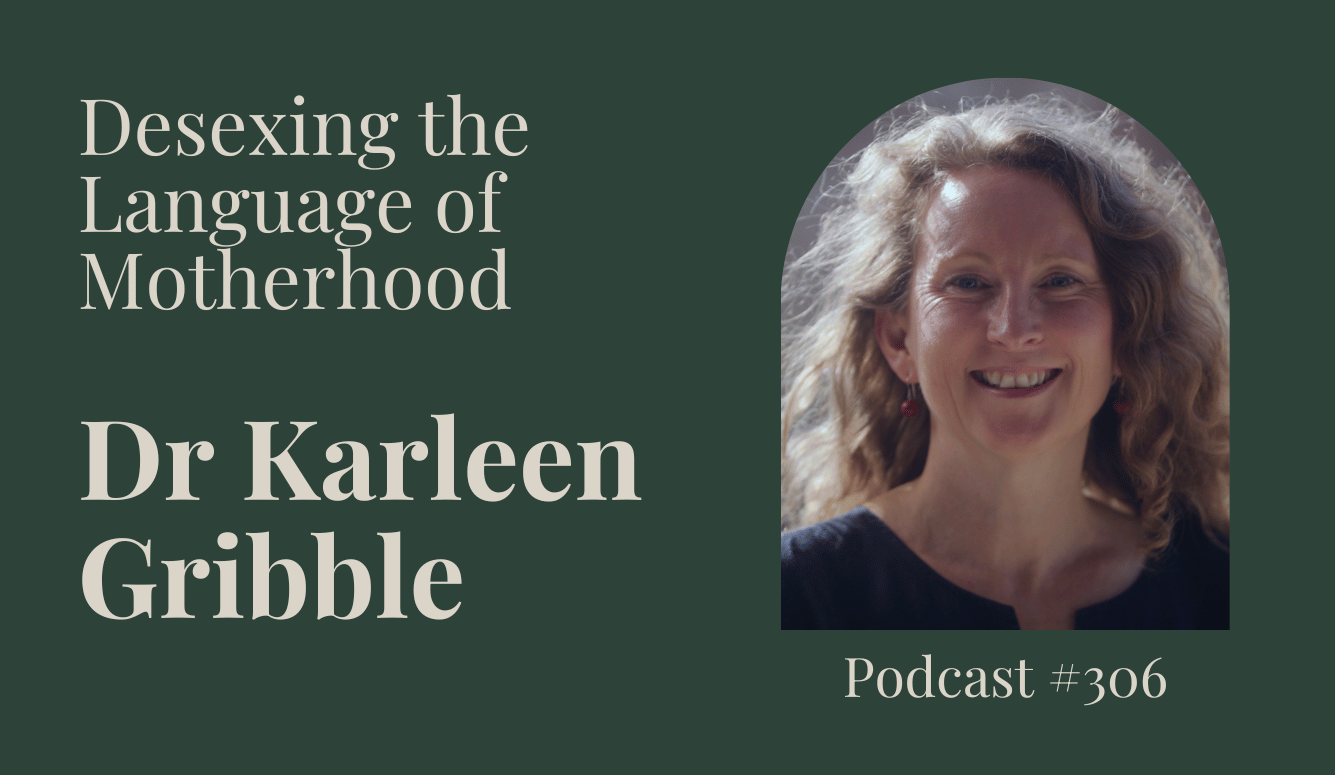
Welcome to the Quillette podcast. My guest this week is Karleen Gribble.
Dr Karleen Gribble is an adjunct professor in the School of Nursing and Midwifery at Western Sydney University. Her research focuses on breastfeeding, particularly in situations of adversity, and she is a strong champion of the importance of mothers to their newborn infants.
I’ll be talking to Karleen about her article, “The Desexing of Language in Women’s Health Research and Care: A Story of Marginalization of Science, Cultural Imperialism and Abuse of Power.” This essay is a contribution to the volume, The War on Science: Thirty-Nine Renowned Scientists and Scholars Speak out about Current Threats to Free Speech, Open Inquiry, and the Scientific Process, edited by Lawrence Krauss. I hope you enjoy my interview with Karleen Gribble.
Transcript
Iona Italia: I think here’s a good place to start, which is that you talk about—you give a list of alternative words that people have used in relation to female reproduction, in health literature and communication, instead of the word “woman.” This is taken from an author called Millie Hill, and her blog is called The Word is Woman—a really great title for a blog. And here are some of the replacement terms: “people, individuals, humans, patients, someone”—that’s very, very specific—“uterus-havers, people with uteri”—very posh—“cervix-havers, people with vaginas, bodies with vaginas, birthing bodies, female-assigned bodies, menstruating personnel.” I think that’s my favourite. It sounds like you’re the head of some corporation and you have some policy around your employees who are on their period: menstruating personnel reporting for duty. “Menstruators, bleeders, menstruating individuals, bodies that bleed”—surely that’s all bodies—“menstruating bodies, people who experience periods, people who period, people who menstruate, vulva owners, vulva people.” I quite like that one: the vulva people. “Someone with a vulva, birth people, non-males, non-men, non-prostate owners, individuals who have receptive vaginal sex”—that seems very presumptuous—“womb carriers, those assigned female at birth, reproductive-aged persons identified as female, person with reproductive potential, person of childbearing potential, people with reproductive organs, people with female-identified reproductive organs”—I love the idea that your organs could have a gender identity—“individuals who have reproductive capacity.” A lot of this language seems quite ludicrous and comic.
When did this language first start to come into use, and what was the initial impetus behind this? Can you trace that for us, first of all?
Karleen Gribble: Yeah. So these terms really started to come to the fore with health professionals and researchers working in areas to do with women’s reproductive health around 2015, 2016. And they were presented at the time as, this is something that we should use on an individual level when we’re caring for or working with the population of female people who have a transgender identification. Usually they were talking then about, this is a trans man. And so you would want to use language in one-to-one settings that would make this person feel more comfortable. You would want to avoid terms like “women” and “mothers” and instead use the language that that person preferred. And to be honest, nobody really had any difficulty with that, because that’s a very normal thing to do in healthcare provision—using the language that people prefer for themselves.
There are some exceptions to that, but it generally wasn’t something that people were very concerned about. It really wasn’t until 2020, in the middle of the pandemic, that things went a bit crazy. We had a lot of organisations that were starting to use this language not just in one-to-one care or saying to use it in one-to-one, but using it for health communication more broadly. And that’s where there is a big problem—for a whole variety of reasons, which I’m sure we’ll get into.
II: So how was this connected to the pandemic, do you think? Was it just that people had more time on their hands because they weren’t able to see as many patients one-on-one, and therefore they began going down some rabbit holes—the feeling of I must be doing something, maybe I can tinker with language? Or was there any particular event, publication, or other kind of moment which began this process? You have figures in your article, and what you show is an exponential rise in the amount of desexed language used in health communication over that period. It’s extraordinary. There’s almost like a Patient Zero happening around 2020, and then it just takes off. Is that just the usual snowballing effect of trends, or what do you see as the driving force behind that?
KG: In terms of language, it is the sort of thing that you might see when a new term comes into use. You might look at uses of words like “selfie,” for example. It was a new phenomenon—something new that didn’t exist before. All of a sudden, we’ve got new technology, and we’ve produced a new term, and it’s become very culturally relevant, and so lots of people are using it.
The difference with this is that it’s not new. The existence of women and girls is not a new thing. But it was a very new use of language. And it started to be noticed. You can see this by looking at how terms have been used in Google. You can look at the trends in use of language, see how frequently they’re being used, and you can also see where they’re being used. If you look at terms, for example, like “birthing people” or “chestfeeding”—those sorts of terms—you can see how it starts in the USA.
So all of this desexed language starts in the US. And you can see how the use has increased dramatically, like you say, but also spread around the world. It’s a very clear pattern. As to why during the pandemic—I think the pandemic was like pouring fuel on the fire of lots of different things, and this was one of them. It was also a time when there was a need for a lot of communications, particularly around maternal and child health.
And for the area that I work in—around breastfeeding—the pandemic was a really big deal, because normally, with an infectious disease, you separate people who are infected from those who aren’t. But what do you do if the infected person is a new mother and the uninfected person is her brand-new baby? And so there was lots of concern around that. And there was lots of health communication around.
Not only were we having some organisations—most notably the US Centers for Disease Control and Prevention—saying we should separate mothers from their babies, but also the language was changing. And instead of talking about mothers, communications were talking about parents. And it’s like—there’s a big difference for a newborn between their mother and their father. They’re not equally important. You need to distinguish between the two.
II: Yeah. You said that during COVID, at one point it was believed that COVID would be extremely dangerous to newborns and therefore newborn babies should be kept separate from their mothers if their mothers had tested positive for COVID, which was—
KG: That was never actually the case. It was evident from the end of February of 2020 that this infection really didn’t cause a problem for children—that it really was an infection that was most risky for older people. But we have, like I said, the US CDC. They put out recommendations in the middle of February of 2020 saying if a new mother has COVID, then separation from her new baby is appropriate. And that recommendation did spread around the world—including to countries that have quite high infant mortality rates. So there are probably many babies that died as a result of that recommendation to separate mothers and babies. So yeah, a confluence of both poor recommendation development—there was never any excuse for that recommendation to be made—but also just confusing language.
II: I want to just steelman for a moment—or not steelman, actually. I want to critique the reasons that are frequently given for the desexed language. One of the things that is often said is that if you don’t talk about “people who have cervixes,” young women who have transitioned—who are now trans men and identify as trans male—will not know that they have cervixes or internal female sexual organs and will not understand that they need the same kind of healthcare as other women in that regard.
That seems to me like a very weak argument, partly because I feel that if you are too young or have too poor an understanding of your physical body to know whether or not your transition has involved, for example, a hysterectomy—so you don’t know when you transitioned whether or not you still have a uterus, cervix, etc.—then there’s been a failure in a duty of care towards you, and you shouldn’t have been permitted to transition. There should be informed consent, and you should therefore have a very, very clear and good understanding of what precisely has happened to your body—or not happened—in the course of the transition. So I’m sceptical about the idea that trans men don’t realise that they have cervixes and that’s why you need this kind of language or you would miss them. Am I wrong to be sceptical about that?
KG: Well, I think it’s not a good reason to change broad health communications. I would say that generally speaking, a lot of women and girls have got very poor knowledge about their bodies. And I would suspect that young women who identify as transgender—so as non-binary or as a trans man—are likely to actually have poorer knowledge about their bodies than others. And that would partly be related to the issue that you raise. And I think that very often, health providers are not being frank and honest with them and not communicating very clearly with them, and so they’re not really understanding what the treatments that they have done mean.
There’s some really concerning information out there that suggests that this is the case. For example, a New Zealand government—I think it’s a government—website, and a Canadian one as well, that has a frequently asked question about phalloplasty. And the question is: “Will I be able to father a child after this surgery?” And it’s just like… is that a real…? Have people actually really asked that? And if they have, what does that say about their lack of understanding of the limits of medical treatment and what medical gender transition treatments are able to provide?
So I think there is a low level of knowledge. But there’s a low level of knowledge—a lot of women don’t know that they have a cervix. They don’t know what that word means. It’s a technical term for a part of the body that you can’t see, and that a lot of women just don’t even know. So that’s one of the reasons why having health promotion—say, for cervical cancer screening—that says, “If you have a cervix, you should have a cervical cancer screen” is not effective communication. Because a lot of women who are the targets for the communication will not understand that this applies to them.
The other issue, though, is that we know what to do in terms of health communication for groups that have particular needs. And that is—we provide them with targeted information and communications. And so for this group, there’s no reason to change the language that’s used in the broader communications. That should be left the same—plain language, communicate as clearly as possible, just keeping in mind that a lot of the population have got low reading skills, low language skills, they’ve got low health literacy. So use as few words as possible, and as plain a language as possible. And then you provide targeted communications for groups like this group, which would involve completely different language. And if you do that, then you meet the needs of the broader population, and you also meet the needs of the population who identifies as trans.
II: So what are some of the knock-on effects of that use of the desexed language? We’ve talked now a little bit about how that can lead to confusion, especially among the groups who are most in need of receiving this kind of health communication, like women who are less well informed about their bodies, who are maybe less well educated in general, perhaps lower in intellect, perhaps non–English-native speakers, perhaps women abroad in poorer countries also. It’s important to have a language that is just clear for everybody.
Read the full article here
Fact Checker
Verify the accuracy of this article using AI-powered analysis and real-time sources.