Close Menu
FSNN | Free Speech News NetworkFSNN | Free Speech News Network
  • Home
  • News
    • Politics
    • Legal & Courts
    • Tech & Big Tech
    • Campus & Education
    • Media & Culture
    • Global Free Speech
  • Opinions
    • Debates
  • Video/Live
  • Community
  • Freedom Index
  • About
    • Mission
    • Contact
    • Support
Trending

Announcing the New, Completely Redesigned Reason App

37 minutes ago

Gemini ousts COO, CFO and Chief Legal Officer after international exit and 25% staff cuts

56 minutes ago

Starknet Taps EY’s Nightfall for Institutional Privacy on Ethereum Rails

57 minutes ago
Facebook X (Twitter) Instagram
Facebook X (Twitter) Discord Telegram
FSNN | Free Speech News NetworkFSNN | Free Speech News Network
Market Data Newsletter
Tuesday, February 17
  • Home
  • News
    • Politics
    • Legal & Courts
    • Tech & Big Tech
    • Campus & Education
    • Media & Culture
    • Global Free Speech
  • Opinions
    • Debates
  • Video/Live
  • Community
  • Freedom Index
  • About
    • Mission
    • Contact
    • Support
FSNN | Free Speech News NetworkFSNN | Free Speech News Network
Home»News»Global Free Speech»CPJ to release report documenting Palestinian journalists’ claims of torture in Israeli prisons
Global Free Speech

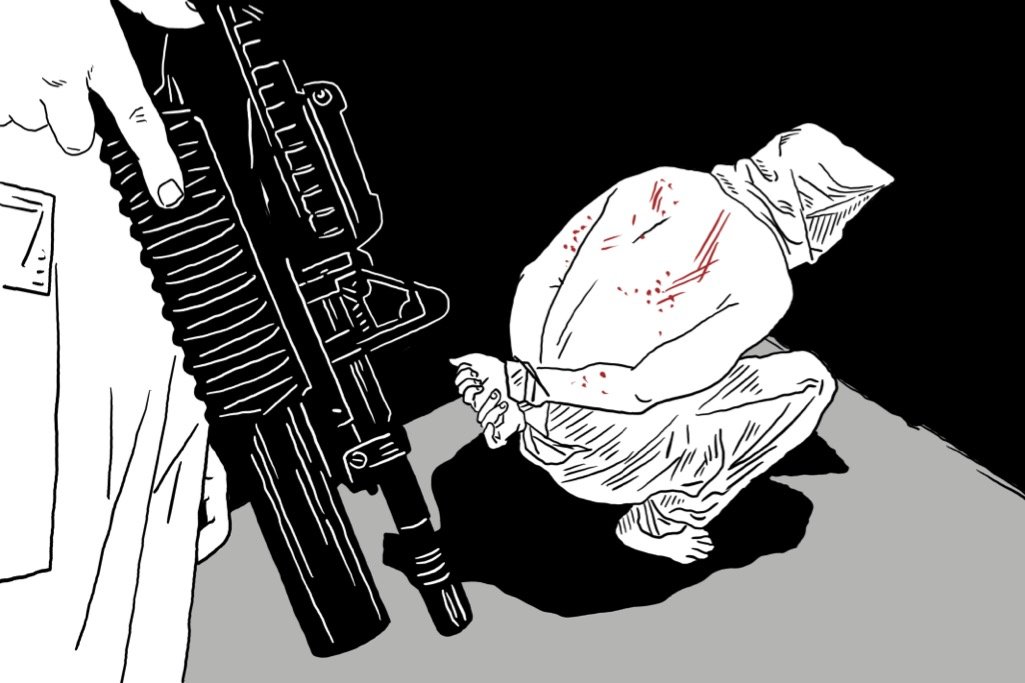
CPJ to release report documenting Palestinian journalists’ claims of torture in Israeli prisons

News RoomBy News Room2 hours agoNo Comments2 Mins Read205 Views
Share Facebook Twitter Pinterest Copy Link LinkedIn Tumblr Email VKontakte Telegram
CPJ to release report documenting Palestinian journalists’ claims of torture in Israeli prisons
Share
Facebook Twitter Pinterest Email Copy Link

Listen to the article

0:00
0:00

Key Takeaways

Playback Speed

Select a Voice

New York, February 17, 2026 — On Thursday, February 19, 2026, the Committee to Protect Journalists (CPJ) will release a special report documenting the conditions Palestinian journalists report experiencing while in Israeli detention since October 2023. 

The report draws on in-depth interviews from 59 Palestinian journalists released since October 7, 2023. Of those interviewed, 58 reported being subjected to what they described as torture, abuse, or other forms of violence while in Israeli custody. CPJ also reviewed, when possible, supporting evidence provided by the detainees, including photographs, medical reports, and legal documents.

In their testimonies, journalists recount beatings, some resulting in severe injuries, starvation, medical neglect, as well as sexual violence, including rape. Many also describe threats, stress positions causing prolonged pain, and being subjected to prolonged exposure to high-volume sound, including continuous music. 

WHAT: CPJ special report about the treatment and conditions of Palestinian journalists in Israeli prisons

WHEN: February 19, 2026, at 3:00 a.m. ET/9 a.m. CET

WHERE: www.cpj.org

WHO: CPJ experts are available to speak in multiple languages about the key findings and what the data portend for press freedom in the year ahead.

###

About the Committee to Protect Journalists

The Committee to Protect Journalists is an independent, nonprofit organization that promotes press freedom worldwide. We defend the right of journalists to report the news safely and without fear of reprisal.

To request an embargoed copy of the census or an interview, please reach out to [email protected].

Read the full article here

Fact Checker

Verify the accuracy of this article using AI-powered analysis and real-time sources.

Get Your Fact Check Report

Enter your email to receive detailed fact-checking analysis

5 free reports remaining

Continue with Full Access

You've used your 5 free reports. Sign up for unlimited access!

Already have an account? Sign in here

Share. Facebook Twitter Pinterest LinkedIn Tumblr Email Telegram Copy Link
News Room
  • Website
  • Facebook
  • X (Twitter)
  • Instagram
  • LinkedIn

The FSNN News Room is the voice of our in-house journalists, editors, and researchers. We deliver timely, unbiased reporting at the crossroads of finance, cryptocurrency, and global politics, providing clear, fact-driven analysis free from agendas.

Related Articles

Global Free Speech

Ukraine’s youth abroad are censoring what they say to those still at home. Photo: Illia Horokhovsky/Unsplash This article first appeared in the Winter 2025 issue of Index on Censorship, Gen Z is revolting: Why the world’s youth will not be silenced, published on 18 December 2025. For Ukraine’s Gen Z, the war has created two kinds of silence: one under sirens and the other under guilt. Those who stayed live through air raid alerts and numb routine; those who left watch from abroad – scrolling through updates, unsure what to say to the people they love back home. Both carry their version of survival, and both are having to learn to speak to each other again. In Dnipro, Dasha Buldenko, 19, says she has grown used to fear. “You get used to the sirens, you get used to the explosions. You stop feeling anything,” she tells me. “We live in totally different worlds now.” For her, life has narrowed to a quiet persistence: staying, coping and enduring without expecting understanding from those who left Ukraine. “People who moved abroad forget where they came from,” she says, frustrated by what she calls the “pity” tone of returning friends. “They see a different world, different opportunities. We don’t have those because of war.” Mark Neshta, a 21-year-old student at the University of Essex in the UK, describes another kind of distance: the one between empathy and experience. “You just can’t truly understand how it feels,” he admits. “At the beginning, I was deeply depressed that my country was going through such horror while I was sitting safely 1,000km away.” He calls it “a strange cognitive dissonance” when “you’re physically abroad but all you care about, all you live by, is news from Ukraine. You consume it only through the internet or through conversations with loved ones who stayed”. Over time, that guilt has turned into a determination to define himself more clearly. Living abroad, he says, has made him think about what it means to represent Ukraine. “When people ask where I’m from, I want them to see more than war, to see culture, history, identity.” He even switched to speaking Ukrainian, though he grew up speaking Russian. “I don’t think living abroad is what caused that,” he says. “It was the war itself.” Both voices show the same wound from opposite sides. Those inside Ukraine hide their pain behind fatigue. Those outside hide their guilt behind activism or composure. When they talk, it is not politics that divides them but the need to censor emotion, to sound strong, to sound grateful, to avoid hurting each other with what the other cannot understand. What does that do to identity? For Dasha, being Ukrainian “just is”. She says: “We are all Ukrainians; we stand for our own, regardless of language barriers.” For her, it is a fact of staying and surviving. For Mark, it is something to articulate and explain. One holds on by living it, the other by translating it. In the end, both sides are searching for the same thing: to be understood. “People just need to actually listen to each other,” Dasha says. READ MORE

2 hours ago
Global Free Speech

Cambodian journalist Luot Sophal detained over military water shortage report

9 hours ago
Global Free Speech

Ethiopia revokes Reuters journalists’ accreditation following investigative report

1 day ago
Global Free Speech

Philippine journalist Frenchie Mae Cumpio denied bail, to remain in prison after 6 years

1 day ago
Global Free Speech

Group of teenage students using smartphones. Credit: Davidovich Mikhail/Alamy Banning social media for the under-16s appears to be contagious. Australia set the trend in December and now other countries are considering doing the same. There is growing momentum in Britain in favour of a ban (with the House of Lords having voted in favour of one last month). Spain is the first European country to propose legislation and Greece is said to be following suit. The Spanish prime minister, Pedro Sánchez, has spoken candidly about the abuse he has experienced online, saying it has “crossed many red lines” and nearly caused him to resign in 2024. He’s pushing through laws not only to ban access to major platforms for under-16s, but to hold social media executives criminally responsible if they do not take down illegal or hateful content. The country might even go one step further: Sira Rego, the youth minister, has suggested X should be prohibited altogether, because of the “flagrant violations of fundamental rights” taking place on the platform. She listed various issues, including the sexual deepfake images generated by Grok, and called the broader social media landscape “undemocratic” and controlled by “a few digital strongmen”. Elon Musk, of course, hit back, first posting on X: “Dirty Sánchez is a tyrant and a traitor to the people of Spain”, and an hour and a half later posting “Sánchez is the true fascist totalitarian.” I am not going cheerlead for Musk here. On X specifically, I find the culture now often unpleasant, somewhere I visit out of habit and seldom linger. And while X seems to be a microcosm of the worst trends of social media today, the other major platforms have flaws too. Do read this excellent piece we recently published from Brazilian writer Nina Auras on Meta banning left-wing political accounts in her country. But for those of us who work in defence of freedom of expression, the question is not whether platforms are flawed. The question is whether restricting access to them will strengthen our speech rights or weaken them. At Index, we’re not neuroscientists studying the cognitive effects of scrolling and the impact of social media on the young (as a sidenote a landmark trial has just started in Los Angeles on the mental health effects of Instagram and YouTube, the outcome of which will be very insightful). Rather we’re advocates for people whose speech is curtailed, be it journalists, activists or others. From that vantage point, social media remains incredibly important. For the isolated and the marginalised, it can be a lifeline: a source of learning, solidarity and visibility. The platforms continue to help expose state violence, mobilise protest movements and even unseat autocrats. Our recent magazine issue on Generation Z explored exactly that, and for those of us paying close attention to events in Iran, social media provided some of the best access to on-the-ground information. It is for these reasons that, until recently, the governments most eager to ban social media have typically been the least tolerant of dissent. Yes, the calls from Australia, Spain, Greece, the UK and other countries are rooted in different, more admirable reasons. It’s just bans will still have the same impact. None of the above excuses the abuse, the disinformation, the addictive design of algorithms and democratic interference. Those harms demand attention. But when solutions jump straight to prohibition without reckoning with what might be lost, they begin to resemble moral panics of the past – video games, rock ’n’ roll, the printing press, each once cast as existential threats to society that should be controlled no matter what the cost. READ MORE

3 days ago
Global Free Speech

CPJ nominates Philippine journalist Frenchie Mae Cumpio for UNESCO’s Guillermo Cano Prize

4 days ago
Add A Comment
Leave A Reply Cancel Reply

Editors Picks

Gemini ousts COO, CFO and Chief Legal Officer after international exit and 25% staff cuts

56 minutes ago

Starknet Taps EY’s Nightfall for Institutional Privacy on Ethereum Rails

57 minutes ago

Hardware Wallet Owners Hit With Snail Mail Phishing Campaign

59 minutes ago

Trump FTC Threatens Apple With A Fake Investigation Into Its Nonexistent ‘Liberal News Bias’

2 hours ago
Latest Posts

No Pseudonymity for Man Suing Harvard Alleging Jews Aim “to Exterminate or Enslave All Non-Jews”

2 hours ago

CPJ to release report documenting Palestinian journalists’ claims of torture in Israeli prisons

2 hours ago

Ukraine’s youth abroad are censoring what they say to those still at home. Photo: Illia Horokhovsky/Unsplash This article first appeared in the Winter 2025 issue of Index on Censorship, Gen Z is revolting: Why the world’s youth will not be silenced, published on 18 December 2025. For Ukraine’s Gen Z, the war has created two kinds of silence: one under sirens and the other under guilt. Those who stayed live through air raid alerts and numb routine; those who left watch from abroad – scrolling through updates, unsure what to say to the people they love back home. Both carry their version of survival, and both are having to learn to speak to each other again. In Dnipro, Dasha Buldenko, 19, says she has grown used to fear. “You get used to the sirens, you get used to the explosions. You stop feeling anything,” she tells me. “We live in totally different worlds now.” For her, life has narrowed to a quiet persistence: staying, coping and enduring without expecting understanding from those who left Ukraine. “People who moved abroad forget where they came from,” she says, frustrated by what she calls the “pity” tone of returning friends. “They see a different world, different opportunities. We don’t have those because of war.” Mark Neshta, a 21-year-old student at the University of Essex in the UK, describes another kind of distance: the one between empathy and experience. “You just can’t truly understand how it feels,” he admits. “At the beginning, I was deeply depressed that my country was going through such horror while I was sitting safely 1,000km away.” He calls it “a strange cognitive dissonance” when “you’re physically abroad but all you care about, all you live by, is news from Ukraine. You consume it only through the internet or through conversations with loved ones who stayed”. Over time, that guilt has turned into a determination to define himself more clearly. Living abroad, he says, has made him think about what it means to represent Ukraine. “When people ask where I’m from, I want them to see more than war, to see culture, history, identity.” He even switched to speaking Ukrainian, though he grew up speaking Russian. “I don’t think living abroad is what caused that,” he says. “It was the war itself.” Both voices show the same wound from opposite sides. Those inside Ukraine hide their pain behind fatigue. Those outside hide their guilt behind activism or composure. When they talk, it is not politics that divides them but the need to censor emotion, to sound strong, to sound grateful, to avoid hurting each other with what the other cannot understand. What does that do to identity? For Dasha, being Ukrainian “just is”. She says: “We are all Ukrainians; we stand for our own, regardless of language barriers.” For her, it is a fact of staying and surviving. For Mark, it is something to articulate and explain. One holds on by living it, the other by translating it. In the end, both sides are searching for the same thing: to be understood. “People just need to actually listen to each other,” Dasha says. READ MORE

2 hours ago

Subscribe to News

Get the latest news and updates directly to your inbox.

At FSNN – Free Speech News Network, we deliver unfiltered reporting and in-depth analysis on the stories that matter most. From breaking headlines to global perspectives, our mission is to keep you informed, empowered, and connected.

FSNN.net is owned and operated by GlobalBoost Media
, an independent media organization dedicated to advancing transparency, free expression, and factual journalism across the digital landscape.

Facebook X (Twitter) Discord Telegram
Latest News

Announcing the New, Completely Redesigned Reason App

37 minutes ago

Gemini ousts COO, CFO and Chief Legal Officer after international exit and 25% staff cuts

56 minutes ago

Starknet Taps EY’s Nightfall for Institutional Privacy on Ethereum Rails

57 minutes ago

Subscribe to Updates

Get the latest news and updates directly to your inbox.

© 2026 GlobalBoost Media. All Rights Reserved.
  • Privacy Policy
  • Terms of Service
  • Our Authors
  • Contact

Type above and press Enter to search. Press Esc to cancel.

🍪

Cookies

We and our selected partners wish to use cookies to collect information about you for functional purposes and statistical marketing. You may not give us your consent for certain purposes by selecting an option and you can withdraw your consent at any time via the cookie icon.

Cookie Preferences

Manage Cookies

Cookies are small text that can be used by websites to make the user experience more efficient. The law states that we may store cookies on your device if they are strictly necessary for the operation of this site. For all other types of cookies, we need your permission. This site uses various types of cookies. Some cookies are placed by third party services that appear on our pages.

Your permission applies to the following domains:

  • https://fsnn.net
Necessary
Necessary cookies help make a website usable by enabling basic functions like page navigation and access to secure areas of the website. The website cannot function properly without these cookies.
Statistic
Statistic cookies help website owners to understand how visitors interact with websites by collecting and reporting information anonymously.
Preferences
Preference cookies enable a website to remember information that changes the way the website behaves or looks, like your preferred language or the region that you are in.
Marketing
Marketing cookies are used to track visitors across websites. The intention is to display ads that are relevant and engaging for the individual user and thereby more valuable for publishers and third party advertisers.