

 Freedom Index
Listen to the article
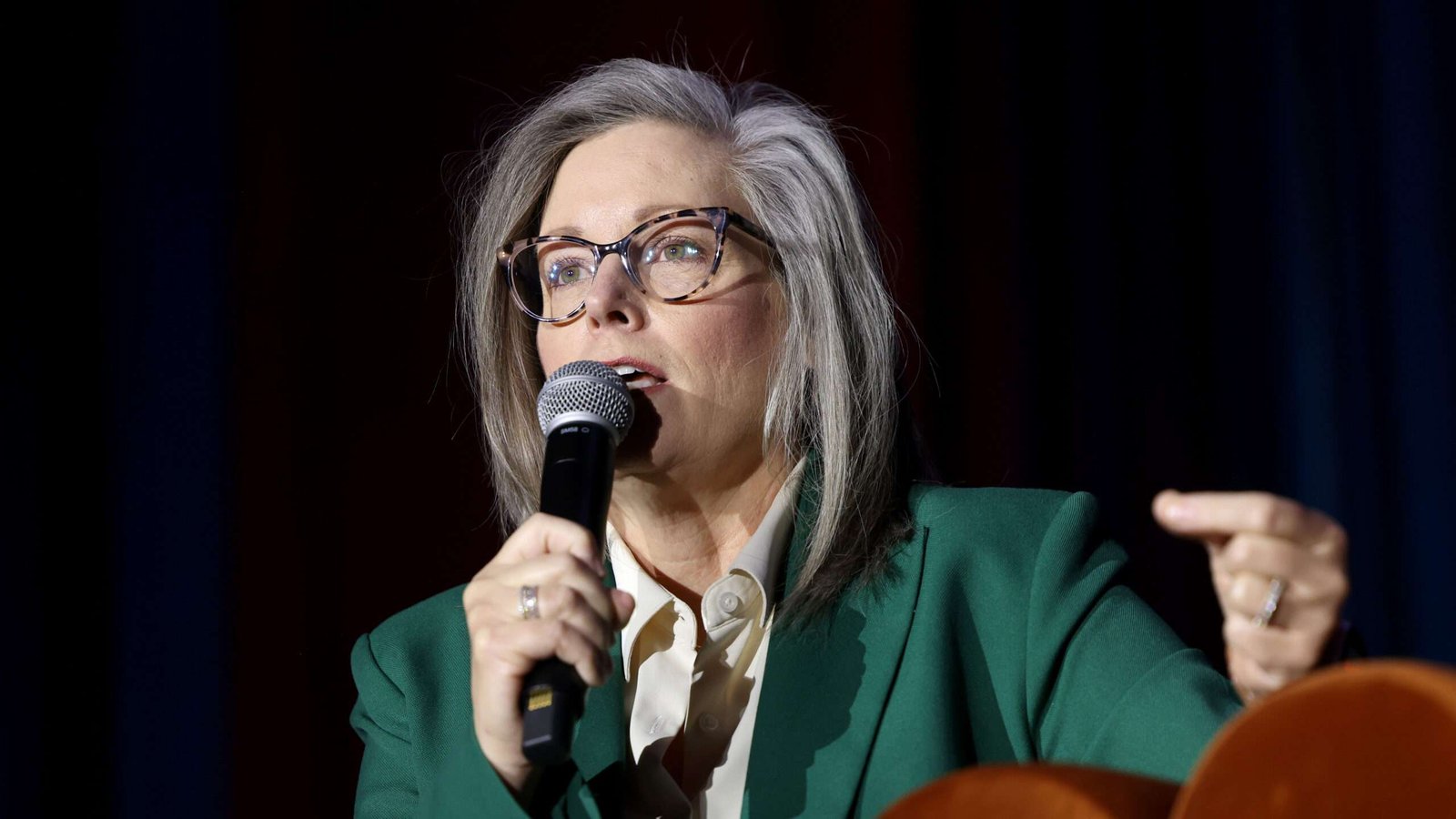
Arizona’s Democratic Gov. Katie Hobbs has long waged war against the state’s school choice programs, reserving particular venom for Empowerment Scholarship Accounts (ESA), which allow much per-pupil education funding to follow students to their preferred schooling. She’s been assisted in her crusade by some media outlets which have amplified inaccurate stories about ESAs. But the ESA program remains not just wildly popular but, according to researchers, also well-managed.
You are reading The Rattler from J.D. Tuccille and Reason. Get more of J.D.’s commentary on government overreach and threats to everyday liberty.
“About 2.0% of dollars spent by ESA account holders is for items that are unallowable under program rules,” the Arizona Department of Education announced earlier this month in response to allegations of widespread fraud. “In addition, actual fraud or egregious purchases are at 0.3%, according to the same study.”
There’s a story behind that announcement, as you might expect. It’s the tale of a fight over a very popular school choice program that’s despised by a few politicians and their supporters.
As of this week, 102,598 Arizona students use ESAs to pay private school tuition, for curriculum, home education, tutoring, and other education expenses. Instead of being locked to specific brick-and-mortar buildings, 90 percent of per-pupil funding is deposited in accounts to be used for permitted expenses by families that want something other than traditional public schooling. ESAs are powerful tools for freeing families from one-size-fits-some schooling, but that liberating power offends proponents of traditional institutions, among them the governor.
“While other government entitlements have strict requirements and oversight, the ESA program continues to operate unchecked, squandering taxpayer dollars with no accountability,” Gov. Hobbs charged in her State of the State address in January. “It seems like every day, we learn about new shopping sprees happening at the expense of taxpayers…diamond jewelry, high-end clothing and furniture…who knows what taxpayers will be footing the bill for tomorrow?”
Sure enough, on March 4, the Arizona Republic’s Alexandra Hardle claimed that “audit data shows over 20% of vendor purchases made with Empowerment Scholarship Account dollars could be barred under the program’s guidelines.” She added that “records released by the Arizona Attorney General’s Office show Arizonans have spent millions of dollars on expenses that appear to fall afoul of the program’s guidelines.”
Arizona Attorney General Kris Mayes, it should be noted, is another Democrat who has waged a continuous battle against ESAs and against Superintendent of Public Instruction Tom Horne, a Republican, who administers the school choice program. Two years ago, she tried to bury ESA families in requirements for documentation of even minor purchases. She and Hobbs insist all education spending not controlled by government bureaucrats is suspicious, and they’re determined to convince the public of that claim by any means necessary.
The Department of Education rebutted the fraud claims, referring to a recent study it commissioned.
Per the department, “the 20% figure represented program participants that ADE [Arizona Department of Education] had selected for risk-based auditing.” That is, of expenditures flagged as questionable and put aside for scrutiny, one in five were then found to be disallowed. Across the whole program, the real figure for disallowed expenses, ADE insisted, is the 2 percent mentioned above—and it’s mostly unintentional.
“Most are innocent mistakes, such as an error in a form that must be resubmitted, or educational items that are not on the allowable list but that the user could have in good faith believed were permitted. Some examples would be backpacks, lunch boxes and water bottles,” ADE added. Horne and company say the figure for intentional fraud is 0.3 percent.
EdChoice, an independent organization that supports education reform, sought to settle the dispute and asked for documentation of ESA participants’ educational expenses.
“We were granted access to data on all ESA transactions for the school year 2024-25 (the year prior to the one ADE studied),” according to EdChoice’s Susan Pendergrass and John Kristof. “After our review, the ADE’s numbers seem plausible. Not only that, but unallowable expenses seem to be almost entirely concentrated in one source, which should make improvements simpler.”
To the extent that there’s a problem, write Pendergass and Kristof, “essentially all the potentially controversial purchases are found in Amazon transactions” made as education expenses. “Even if every Amazon transaction was eyebrow-raising, we would only be questioning around 7% of the total spend on the program. And not every Amazon transaction was eyebrow-raising.” They put the total for questionable expenses at 1 to 2 percent—essentially the same as the ADE study.
“Based on our preliminary research and the Arizona Department of Education’s study, the ESA withstands more scrutiny than many public programs,” the EdChoice analysts conclude.
Now, that’s a lot of wading into the auditing weeds for a school choice—or any—program. But Arizona’s governor and attorney general can’t eliminate ESAs on their own. School choice supporters control the state legislature and aren’t about to abolish the program. ESAs currently enjoy 66 percent support among Arizona adults and 75 percent support among parents of school-age children, according to polls.
That means the only way for Hobbs, Mayes, and their friends to kill the ESA program and damage school choice overall in the state is to erode support for portable education funding. They have to convince Arizonans that the program is hopelessly corrupt—even though there’s little evidence to support that claim. Only by turning the public against ESAs can they corral some escaped students back into government schools. And their side is desperate as the tide of public opinion turns against them.
“To date, 18 states have programs on the books that make virtually all their students eligible for state funding to use on private school tuition or home-school expenses,” EducationWeek‘s Matthew Stone and Caitlynn Peetz Stephens noted in January. “And every one of those states made their programs universal within the past four years.”
Arizona and Florida have been pathfinders in the shift toward education freedom. Opponents of school choice, including Arizona’s governor and attorney general, hope that reversing course in a pioneering state can move the whole country back in their direction. Their efforts deserve to fail.
Read the full article here
Fact Checker
Verify the accuracy of this article using AI-powered analysis and real-time sources.