

 Freedom Index
Listen to the article
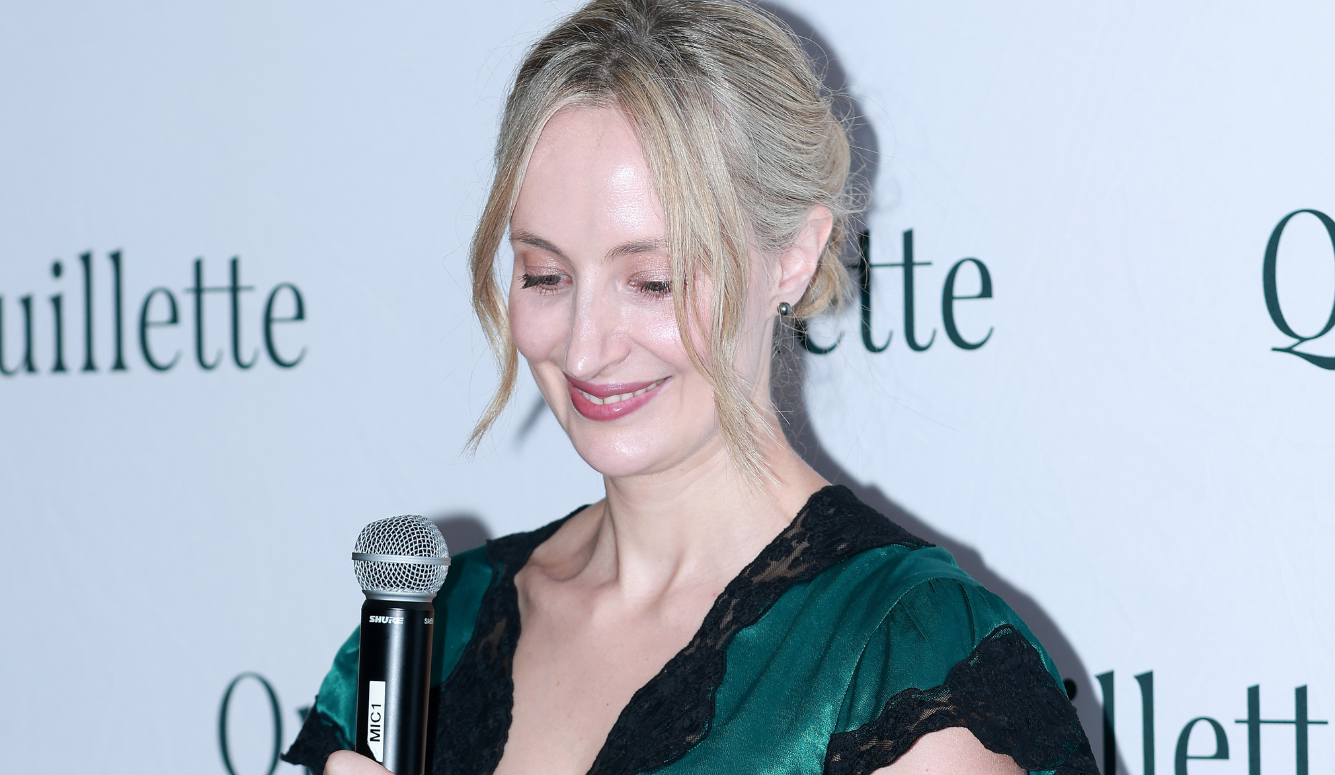
Editor’s Note: On 14 December 2025, Quillette marked its tenth anniversary with a celebration attended by friends and supporters at Watsons Bay Hotel on Sydney Harbour. What follows is the speech delivered by Quillette’s founder and editor-in-chief, Claire Lehmann.
Good evening, everyone.
About a decade ago, I noticed something changing in journalism. Leading broadsheet newspapers were beginning to publish work that was noticeably lower in quality than what they had traditionally produced.
At the time, it wasn’t immediately clear why this was happening. But I suspected the internet had something to do with it. A new kind of journalism was emerging—one driven less by accuracy or depth, and more by clicks, outrage, and self-expression.
This style of journalism was typified by online verticals like Fairfax’s Daily Life, and American platforms such as Gawker and Jezebel. Headlines became increasingly confessional and trivial.
I never intended to become a journalist. In 2015, I was training to become a forensic psychologist. But articles like these aggravated me so much that I started writing about them. I created a blog and began responding to what I was reading—debunking arguments that I thought were facile, poorly reasoned, or simply untrue.
But at some point along the way, I realised that I wasn’t actually arguing against a set of ideas. I was arguing against a business model.
What I realised was that many of the outlets producing this low-quality journalism were no longer really in the journalism business at all. They were in the advertising delivery business.
In an advertising model, it doesn’t matter whether a piece goes viral because it’s insightful, or because people hate it. The revenue accrues regardless. In fact, quality journalism—slow, careful, and expensive to produce—becomes a liability.
Around the mid-2010s, this problem was dramatically intensified by the big platforms. Google and Facebook didn’t just distribute journalism—they began to shape it. Their algorithms rewarded content that was highly emotional, anger-inducing, and demeaning of the out-group.
And because publishers needed traffic to survive, they adapted.
This wasn’t simply a matter of bad editors making bad choices. Editors were increasingly being overridden by algorithms. The metrics rewarded outrage. So outrage proliferated.
What struck me most was that this dynamic wasn’t partisan. Different political tribes produced different flavours of the same thing—panic, moralised storytelling, and simplified villains. The incentives were the same, even when the ideologies differed.
And once you see this clearly, something else becomes obvious: when journalism is optimised for engagement rather than understanding, the truth becomes optional.
And the problem I was reacting to hasn’t gone away. It’s intensified. It hasn’t just affected legacy media—it has spread to new media as well. Anywhere journalism is subordinated to clicks, growth, or personal brand, ethical standards are the first casualty.
Quillette was founded as a response to that environment. I wanted to create a space where we could publish long-form work that was analytical rather than emotional, sober rather than sensationalistic—and where the incentives aligned with seriousness rather than spectacle.
Journalism is not just a business. It carries ethical responsibilities. And the most important of those is a commitment to the truth.
That commitment to telling fuller, more honest stories is also why I’m so pleased that Tony Abbott is here tonight. In his new book, Australia, Tony has taken on the difficult task of engaging seriously with Australia’s past—acknowledging genuine wrongs, without collapsing our national story into a crude morality play.
Our history cannot be summarised into a TikTok about baddies and goodies. It is long, complex, and deserving of seriousness. And I want to congratulate Tony for contributing to that effort.
Tonight also marks something else worth acknowledging.
Quillette is ten years old.
That is an improbable achievement. Roughly two-thirds of businesses do not survive their first decade. An even smaller fraction of those that do survive remain founder-owned and profitable. So tonight, we are marking a milestone that is—statistically speaking—remarkably unlikely.
If Quillette has reached this point, it is not because of genius or inevitability. It is because of its people. I have been extraordinarily lucky—lucky in the colleagues I’ve worked with, lucky in my family, and lucky to be building this project in Australia, a country that still allows a great deal of intellectual freedom, even when debates are heated and disagreements sharp.
And that brings me to thank-yous.
Quillette has always been a team effort.
I want to thank Jamie Palmer, my very first employee, who is still with the company today. Jamie joined before the magazine had any real traction—before we were even making money—and the imprint of his diligence, professionalism, and editorial standards is visible in everything we do.
I also want to thank Jonathan Kay, whose investigative work and wonderfully unpredictable podcasts have been some of our most cherished contributions.
I especially want to thank Iona Italia for her erudition and diligence, and Zoe Booth for being one of the gutsiest people I know. And I want to acknowledge William and Roan, our newest team members—we’re very glad you’re part of this project.
Finally, I want to thank my husband, Harry, who has been there with me through all the highs and lows (and there have been many lows.) I’ve been hacked, hoaxed, scammed, threatened. But as the winds have raged around me, Harry has provided the steadiness of an oak tree.
I also want to thank my parents-in-law, Geoff and Gail, and my own parents, who are looking after my children tonight. Quillette is ten, and my children are twelve and nine. This project would not have been possible without the help of grandparents.
As Quillette enters its second decade, my pledge to you is simple.
We will continue to defend the values that protect open societies from regression.
We will remain a home for writers who prize evidence over hysteria, rigour over rumour, and truth over narratives that feel good but are ultimately false.
And we will continue to champion the idea that literacy and reason are not relics of the past—they are the tools that keep Enlightenment values living today.
Thank you for being with us on this journey. Thank you for reading us, debating us, supporting us, challenging us, and believing that ideas still matter.
Here’s to the next ten years of Quillette.
Thank you.
Read the full article here
Fact Checker
Verify the accuracy of this article using AI-powered analysis and real-time sources.