In brief
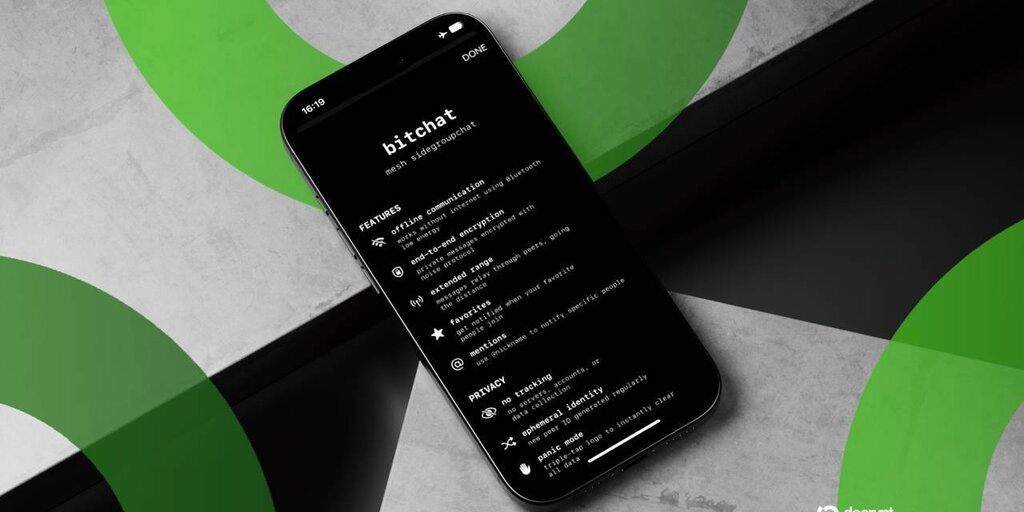
- Chinese regulators have ordered Apple to remove Bitchat, Jack Dorsey’s decentralized messaging app, from its China App Store.
- The app operates entirely over Bluetooth and mesh networks without internet connectivity, and has been used by protestors around the world.
- Regulators cited violations of rules governing services with public opinion or social mobilization capabilities.
Apple removed Bitchat, the decentralized messaging app created by Block CEO Jack Dorsey, from its China App Store at the request of Beijing’s internet regulator, according to a Sunday tweet by Dorsey.
The Cyberspace Administration of China argued the peer-to-peer messaging app violated regulations governing “Internet-based Information Services With Attribute of Public Opinions of Capable of Social Mobilization,” a provision under 2018 regulations that requires security assessments before launch.
Unlike traditional messaging apps, Bitchat operates entirely over Bluetooth and mesh networks without requiring internet connectivity—a design that poses unique challenges to China’s digital surveillance infrastructure.
The timing underscores Bitchat’s rising global profile, with the app reaching more than three million total downloads across platforms and over 83,000 downloads in the past week alone. Its Apple TestFlight version had reportedly reached its 10,000 user limit before the Chinese removal, while the Google Play Store version has registered more than one million downloads separately.
Bitchat and protests
Bitchat has become a tool of choice during recent protests in Madagascar, Uganda, Iran, Nepal and Indonesia, where authorities have attempted to restrict internet access. Its mesh networking technology allows messages to hop between devices without central servers or internet infrastructure, making it particularly valuable during government-imposed connectivity blackouts.
The removal reflects Beijing’s broader strategy of maintaining control over digital communications. China’s dominant messaging platform WeChat serves 1.34 billion monthly active users out of a national population of more than 1.4 billion, operating under strict government oversight and content moderation requirements that Bitchat’s architecture explicitly avoids.
This marks the second time Chinese authorities have targeted a Dorsey-backed decentralized application. In 2023, China banned Damus, a decentralized Twitter alternative built on the Nostr protocol that Dorsey has championed, citing similar concerns about unmonitored communication channels.
Daily Debrief Newsletter
Start every day with the top news stories right now, plus original features, a podcast, videos and more.


 Freedom Index