

 Freedom Index
Listen to the article
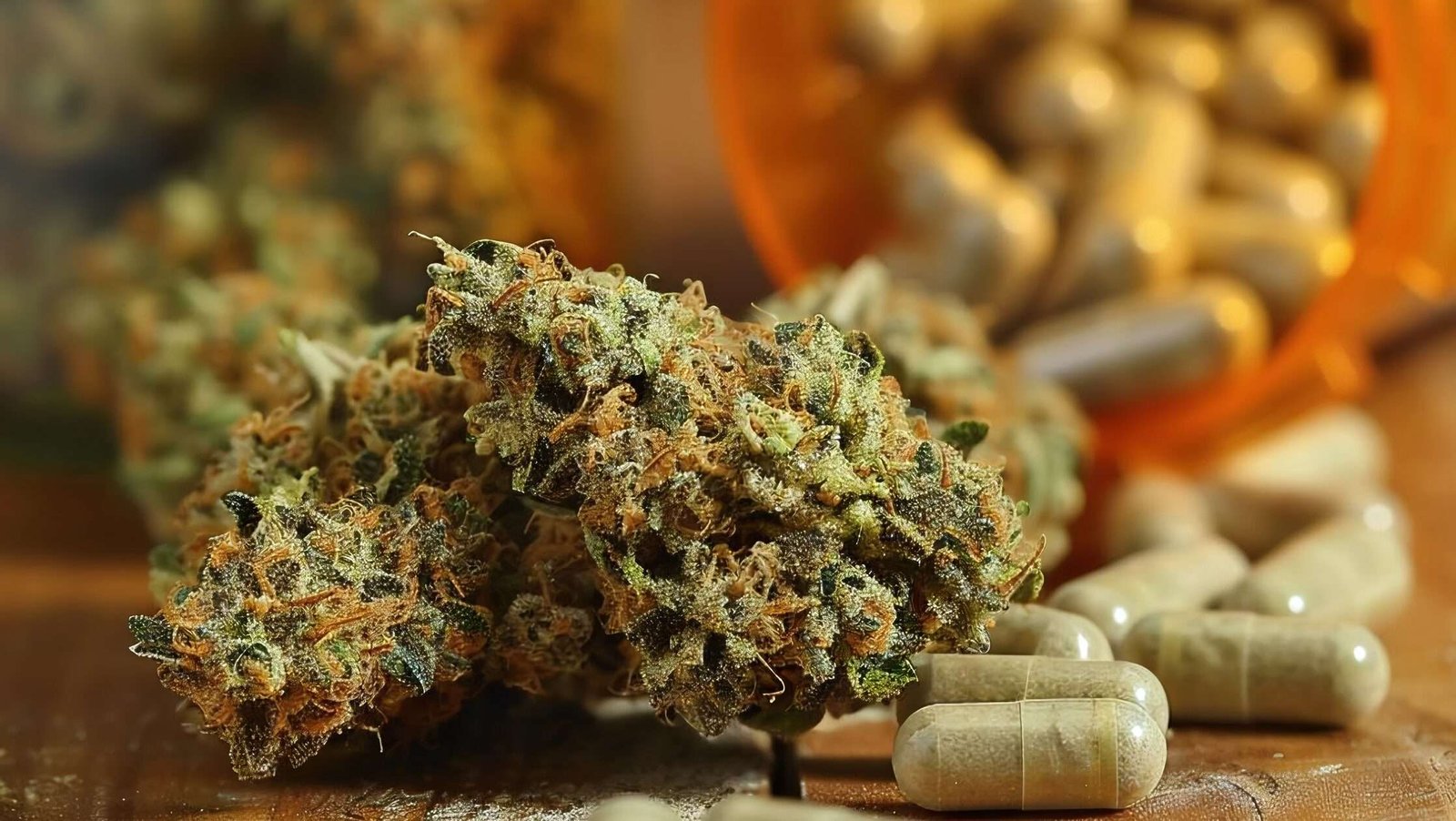
As policymakers aim to reduce opioid prescribing for the 14th year in a row, they are promoting a search for “non-addictive” pain treatment alternatives. Although medical marijuana is increasingly viewed as a leading candidate, its advocates tend to grossly exaggerate its potential to replace opioid analgesics. That hyperbole threatens the welfare of pain patients, contributes to the backlash against marijuana legalization, and could undermine other forms of drug liberalization.
A study published last July in the journal Pain epitomizes this tendency. University of Pittsburgh pain specialist Ajay D. Wasan and his colleagues present what seems to be compelling evidence of marijuana’s ability to broadly treat chronic pain. Unfortunately, the study has a methodological flaw that renders its main conclusion meaningless. (For a technical discussion of this flaw, please see the letter to the editor I wrote with Chad D. Kollas and the authors’ response.)
Wasan et al. used an innovative statistical technique to compare chronic pain patients who received marijuana recommendations with chronic pain patients who received standard pharmaceuticals, including opioids. They found that the marijuana patients reported significantly higher reductions in pain. But the two groups were much too different to justify any conclusions from that comparison.
Although the authors’ statistical technique can often make causal comparisons between largely different groups, the method still requires minimal similarities between the populations. In this study, 432 of the 440 subjects in the marijuana group (98.1 percent) had a diagnosis for neuropathic pain—one of the few conditions marijuana is known to alleviate. By contrast, 1,203 of the 8,114 subjects in the standard-treatment group (14.8 percent) suffered from neuropathic pain.
The upshot is that just eight patients in the marijuana group were statistically weighted to represent 6,911 individuals in the standard-care group—the ones with other forms of chronic pain. In other words, 1.8 percent of the marijuana group was used to model patients without neuropathic pain, who accounted for 85.1 percent of the standard-treatment group. That selection bias fatally compromises the study’s findings. Wassan et al. responded to this critique by highlighting that they used painDETECT categories to quantify neuropathic pain instead of International Classification of Diseases 10th Revision (ICD-10) codes, but as we explained in our letter with the study data, painDETECT poorly predicts neuropathic pain severity.
To illustrate our main point, consider two different groups of people with arm pain. One group is treated with hard casts, while the other gets nothing. If almost everyone in the group treated with casts had a broken arm, we’d expect that group to eventually report improved outcomes. But if the vast majority of the other group is suffering not from fractures but from burns or abrasions, we wouldn’t expect casting to reliably help that group. It would be reckless to conclude, based on a comparison of those two groups, that casts should be used to heal arms that aren’t broken.
Statistical malpractice is common within the medical marijuana literature. Academic advocates have long pushed marijuana to treat conditions such as anorexia, ADHD, autism, and even cancer. They used initial, low-quality research to promote state-level legalization of medical marijuana to treat these conditions across the United States. But more recent reviews reveal that marijuana’s medical applications are much narrower than the wide range of conditions that can justify a doctor’s recommendation under many state laws. When it comes to chronic pain, marijuana does have some promise in treating discomfort caused by neuropathy and fibromyalgia. But attempting to use it for conditions that require powerful narcotics is apt to harm patients.
The push for pain reliever substitutes comes amid continuing federal actions to artificially reduce the supply of prescription opioids through manufacturing quotas. Those restrictions have caused a shortage of opioid analgesics, leaving doctors unable to find appropriate pain medications for their patients.
Because over-the-counter medications like acetaminophen (Tylenol) and nonsteroidal anti-inflammatory drugs (NSAIDs) like aspirin and ibuprofen cause major organ damage when used for prolonged periods, the lack of an adequate opioid supply has made it difficult for doctors to find safe drugs for chronic pain. Contrary to popular belief, opioids have very few negative effects on the body when taken as directed. If a marijuana derivative could work as an all-purpose pain reliever, it might be the only reasonable opioid replacement for chronic pain. But the evidence seems to be stacked against marijuana’s effectiveness at treating pain, except in limited circumstances.
Prohibitionists have long argued that there is insufficient scientific evidence to justify legalizing marijuana for medical or recreational use. Studies with glaring methodological flaws, like Wasan et al.’s, provide them with ammunition to shoot down the entire body of cannabis research. This situation is especially frustrating because there is legitimate evidence supporting marijuana’s therapeutic benefits for some conditions. When advocates oversell weak studies, they risk undermining stronger evidence and sabotaging future liberalization efforts, especially for other drugs.
Prohibitionists argue that medical marijuana is a strategy aimed at achieving de facto recreational access, and they have a point. The evidence indicates that marijuana can’t treat most of the conditions that justify referrals under state laws, which are often written so broadly that basically anyone who wants marijuana can gain access.
Medical marijuana advocates should demand better research. As the war on opioid prescribing continues, they should not promote inadequate substitutes to treat pain. Although cannabis derivatives do have a place in medicine, promoting marijuana as a panacea hurts patients and undermines the credibility of drug policy reformers.
Read the full article here
Fact Checker
Verify the accuracy of this article using AI-powered analysis and real-time sources.