Close Menu
FSNN | Free Speech News NetworkFSNN | Free Speech News Network
  • Home
  • News
    • Politics
    • Legal & Courts
    • Tech & Big Tech
    • Campus & Education
    • Media & Culture
    • Global Free Speech
  • Opinions
    • Debates
  • Video/Live
  • Community
  • Freedom Index
  • About
    • Mission
    • Contact
    • Support
Trending

SEC’s advisory group backs tokenized securities push, outlines how to keep it safe

22 minutes ago

Hester Peirce Calls For Simpler Disclosure Rules, Tokenization Experiments

24 minutes ago

Bitcoin Quantum Threat Is Real But Not Imminent, Says Cathie Wood’s Ark Invest

26 minutes ago
Facebook X (Twitter) Instagram
Facebook X (Twitter) Discord Telegram
FSNN | Free Speech News NetworkFSNN | Free Speech News Network
Market Data Newsletter
Thursday, March 12
  • Home
  • News
    • Politics
    • Legal & Courts
    • Tech & Big Tech
    • Campus & Education
    • Media & Culture
    • Global Free Speech
  • Opinions
    • Debates
  • Video/Live
  • Community
  • Freedom Index
  • About
    • Mission
    • Contact
    • Support
FSNN | Free Speech News NetworkFSNN | Free Speech News Network
Home»News»Media & Culture»California Clears Path for Gig Unions
Media & Culture

California Clears Path for Gig Unions

News RoomBy News Room4 months agoNo Comments4 Mins Read1,456 Views
Share Facebook Twitter Pinterest Copy Link LinkedIn Tumblr Email VKontakte Telegram
California Clears Path for Gig Unions
Share
Facebook Twitter Pinterest Email Copy Link

Listen to the article

0:00
0:00

Key Takeaways

Playback Speed

Select a Voice

In October, California lawmakers passed a bill allowing rideshare drivers to unionize. Under the law, a unionization election can be triggered when just 10 percent of the state’s rideshare drivers submit forms expressing preference for a union—and a union can be certified with support from as little as 30 percent of active drivers.

This is a new tactic from union-friendly lawmakers, but the end result is likely to be the same: less flexibility for the very workers who say flexibility is what keeps them in these jobs.

This saga began in 2018, when the California Supreme Court adopted the so-called ABC test for delivery couriers, a far stricter standard for classifying workers as independent contractors. Lawmakers expanded the test to all sectors through the now-infamous Assembly Bill (A.B.) 5 law, making it dramatically harder for Californians to continue working as contractors.

The fallout to A.B. 5 was swift and overwhelming, and backlash followed. In 2020, California’s electorate overturned the law’s application to gig work by voting to approve Proposition 22. 

The defeat of A.B. 5 should have settled the question, but lawmakers have simply changed tactics.

Under the new law, any certified union would get a one-year challenge-free window within which all ridesharing companies in the state must bargain with it in good faith—effectively creating a form of sectoral bargaining, which is rare in U.S. labor law. Gig companies accepted this approach as less bad than reclassification, but the result will likely still be the same for companies and workers.

While theoretically better than forcible reclassification, unionizing gig workers would still reduce worker flexibility and autonomy and raise costs for the platforms. Sectoral bargaining by necessity requires uniform standards across an entire industry, which is most doable with traditional employment models, such as in the fast-food arena, where California has already introduced aspects of sectoral bargaining in recent years.

Sector-wide negotiations would force a one-size-fits-all approach, pushing platforms toward standardized schedules and undermining the log-in-anytime flexibility gig workers typically enjoy. 

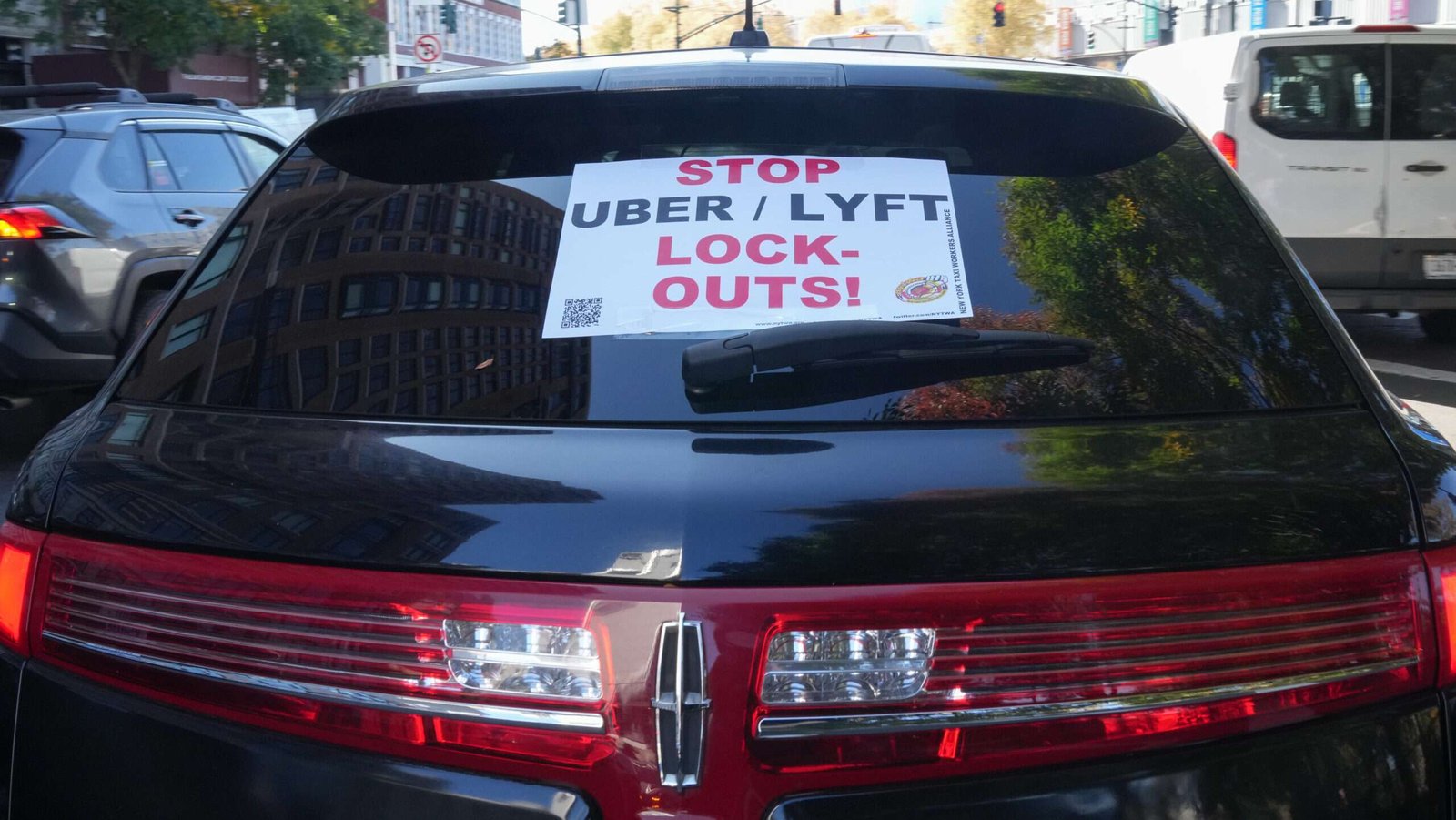
Elements of this shift are already visible in places that have enacted other one-size-fits-all rules for gig work, such as minimum wage mandates. After New York City passed a minimum-wage mandate for rideshare drivers in 2019, Uber and Lyft began locking drivers out of their accounts to manage the fallout. A 2023 law extending the minimum wage to app-based delivery workers produced similar results: driver deactivations and a waitlist, as platforms tried to manage sharply increased labor costs.

This impacts real people. Consider a single mom who wants to log a few rides on a weeknight when she unexpectedly gets a window of free time. If platforms adopt regimented schedules, she may be blocked from logging in when both she—and potential riders—could benefit.

A major concern following California’s adoption is that this model will almost certainly spread to other states. California has a track record of exporting its labor-policy experiments: After A.B. 5’s passage, several states pursued their own restrictive ABC tests.  

This could even become a bipartisan push. Given Republicans like Vice President J.D. Vance and Sen. Josh Hawley (R–Mo.) embracing organized labor, others on the right could be moved to support gig worker unionization.

It’s also clear that the political left will not be content to merely stop at unionization. Progressives like former California assemblymember (and sponsor of A.B. 5) Lorena Gonzalez (D–San Diego) have described unionization as “a step forward” but not “the limit of what’s possible.” Teamster President Sean O’Brien—whose GOP-convention speech highlighted Republicans’ shift toward unions—has dismissed a similar Massachusetts unionization effort for gig workers, saying it supports “greedy corporations that want to deny full employment rights to workers.”

Gig-worker unionization isn’t full reclassification—but it pushes the system toward the same endgame.

Read the full article here

Fact Checker

Verify the accuracy of this article using AI-powered analysis and real-time sources.

Get Your Fact Check Report

Enter your email to receive detailed fact-checking analysis

5 free reports remaining

Continue with Full Access

You've used your 5 free reports. Sign up for unlimited access!

Already have an account? Sign in here

Share. Facebook Twitter Pinterest LinkedIn Tumblr Email Telegram Copy Link
News Room
  • Website
  • Facebook
  • X (Twitter)
  • Instagram
  • LinkedIn

The FSNN News Room is the voice of our in-house journalists, editors, and researchers. We deliver timely, unbiased reporting at the crossroads of finance, cryptocurrency, and global politics, providing clear, fact-driven analysis free from agendas.

Related Articles

Cryptocurrency & Free Speech Finance

Bitcoin Quantum Threat Is Real But Not Imminent, Says Cathie Wood’s Ark Invest

26 minutes ago
Media & Culture

The Post–Charlie Kirk Right Is at War With Itself. Libertarians Are the Odd Target.

59 minutes ago
Cryptocurrency & Free Speech Finance

President Trump Is Hosting Another Exclusive Event for Meme Coin Holders

1 hour ago
Media & Culture

Tax the Rich All You Want. It Won’t Fix the Deficit.

2 hours ago
Legal & Courts

Journalist Marisa Kabas discusses her successful fight for bodycam videos of DOGE raid at US Institute of Peace

2 hours ago
Cryptocurrency & Free Speech Finance

Optimism Team Lays Off 20 Employees Amid Ethereum Scaling Shifts, Base Migration Plans

2 hours ago
Add A Comment

Comments are closed.

Editors Picks

Hester Peirce Calls For Simpler Disclosure Rules, Tokenization Experiments

24 minutes ago

Bitcoin Quantum Threat Is Real But Not Imminent, Says Cathie Wood’s Ark Invest

26 minutes ago

Texas censors get more censorial

56 minutes ago

Rep. Finke Was Right: Age-Gating Isn’t About Kids, It’s About Control

57 minutes ago
Latest Posts

The Post–Charlie Kirk Right Is at War With Itself. Libertarians Are the Odd Target.

59 minutes ago

Donald Trump to hold another Mar-a-Lago lunch for his token holders

1 hour ago

Senate Includes CBDC Ban Amendment in Housing Affordability Bill

1 hour ago

Subscribe to News

Get the latest news and updates directly to your inbox.

At FSNN – Free Speech News Network, we deliver unfiltered reporting and in-depth analysis on the stories that matter most. From breaking headlines to global perspectives, our mission is to keep you informed, empowered, and connected.

FSNN.net is owned and operated by GlobalBoost Media
, an independent media organization dedicated to advancing transparency, free expression, and factual journalism across the digital landscape.

Facebook X (Twitter) Discord Telegram
Latest News

SEC’s advisory group backs tokenized securities push, outlines how to keep it safe

22 minutes ago

Hester Peirce Calls For Simpler Disclosure Rules, Tokenization Experiments

24 minutes ago

Bitcoin Quantum Threat Is Real But Not Imminent, Says Cathie Wood’s Ark Invest

26 minutes ago

Subscribe to Updates

Get the latest news and updates directly to your inbox.

© 2026 GlobalBoost Media. All Rights Reserved.
  • Privacy Policy
  • Terms of Service
  • Our Authors
  • Contact

Type above and press Enter to search. Press Esc to cancel.

🍪

Cookies

We and our selected partners wish to use cookies to collect information about you for functional purposes and statistical marketing. You may not give us your consent for certain purposes by selecting an option and you can withdraw your consent at any time via the cookie icon.

Cookie Preferences

Manage Cookies

Cookies are small text that can be used by websites to make the user experience more efficient. The law states that we may store cookies on your device if they are strictly necessary for the operation of this site. For all other types of cookies, we need your permission. This site uses various types of cookies. Some cookies are placed by third party services that appear on our pages.

Your permission applies to the following domains:

  • https://fsnn.net
Necessary
Necessary cookies help make a website usable by enabling basic functions like page navigation and access to secure areas of the website. The website cannot function properly without these cookies.
Statistic
Statistic cookies help website owners to understand how visitors interact with websites by collecting and reporting information anonymously.
Preferences
Preference cookies enable a website to remember information that changes the way the website behaves or looks, like your preferred language or the region that you are in.
Marketing
Marketing cookies are used to track visitors across websites. The intention is to display ads that are relevant and engaging for the individual user and thereby more valuable for publishers and third party advertisers.