

 Freedom Index
Listen to the article
“Criminal trials without juries are a bad idea. You don’t fix the backlog with trials that are widely perceived as unfair,” tweeted David Lammy in 2020, in protest at the Tory government’s proposal to restrict the right to trial by jury.
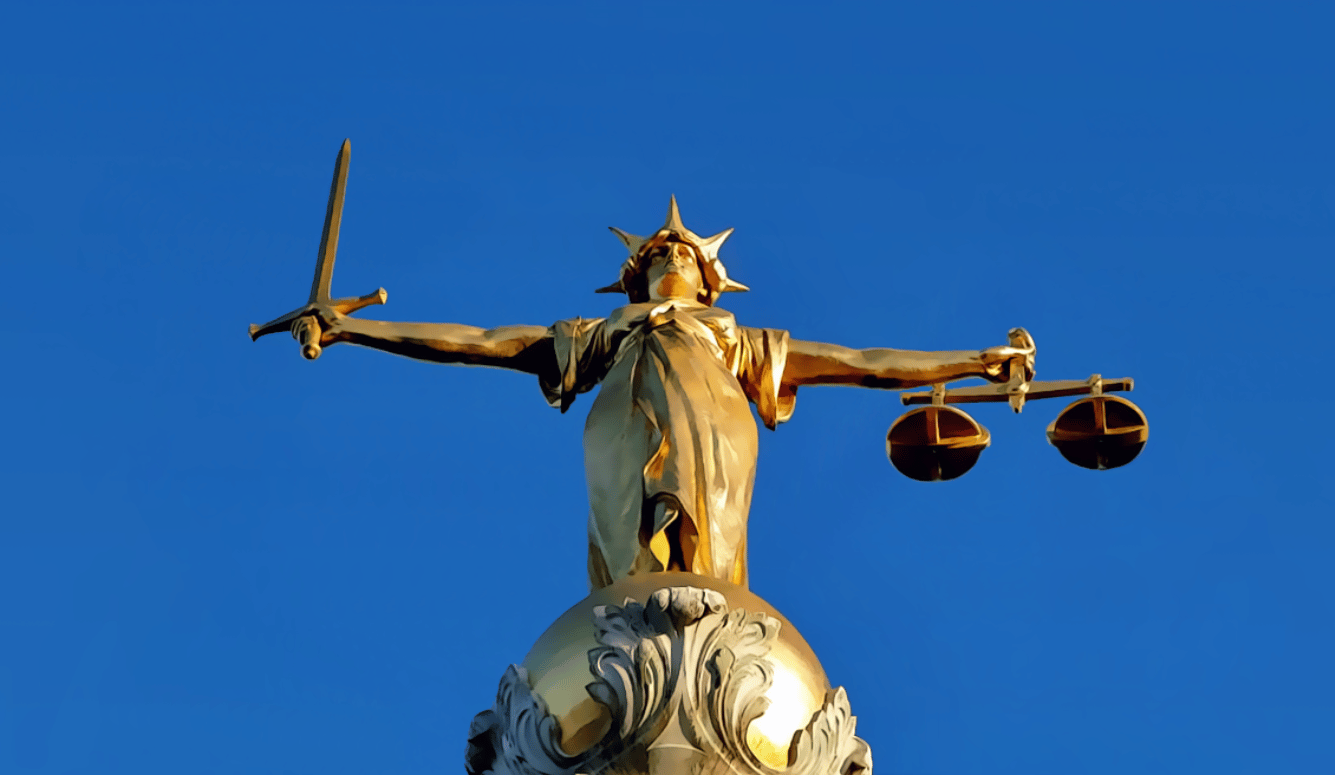
Five years later, Lammy, now at the helm as Justice Secretary, has done a volte-face. He will be overseeing the partial scrapping of trial by jury for criminal trials except for the most “serious crimes” (murder, rape, and manslaughter). This wasn’t in the Labour manifesto. The public did not vote for them with this in mind nor was parliament asked to debate or vote on it. Yet, the British government is openly vandalising the palladium of English liberty.
This has been coming for some time. In July, the government commissioned an Independent Review of the Criminal Courts. The review, chaired by Brian Leveson, made some recommendations as to how to deal with the ever-growing backlog of cases in the Crown Court. These proposals include reclassifying some “either way” offences as “summary only” offences, meaning they will be heard in a magistrates’ court with no jury present. For other either way offences, where defendants previously had the option of choosing trial by jury, all juries will be replaced by a judge and two magistrates. Serious and complex fraud cases will also be assigned to judges only.
There is a contradiction at the heart of the revised justice system that is about to come into being. If trial by jury remains our method of trying the most serious crimes, this implies that it is the best way of litigating criminal cases. If so, then we are accepting that “non-serious” cases are going to be tried using an inferior form of litigation. That will create a two-tier legal system.
The irony is that, over the past year, public discourse has been obsessed with what some are calling a crisis of national identity. Does “Englishness” exist? If so, is it good? What are its ethnic boundaries?. Yet, jury trial, something that is very important to English history, identity, and our understanding of ourselves—something that has been an ancient, even ancestral, English right, is facing a wrecking ball. People outside the Anglosphere may not understand why this is such a big deal. But you cannot understand the English psyche without understanding the symbolic value of this practice, which has deep roots in English history.
The origins of trial by jury go as far back as the reign of the Æthelred the Unready in England’s infancy as a unified kingdom. The Wantage Code, which he issued in 997 AD, stated that each local district was required to assemble a body of twelve thegns (minor nobles), who had to swear an oath that they would investigate crimes without bias. They differed from modern juries in a key respect—besides being socially exclusionary. They were self-informing; instead of getting information through a trial, they were expected to investigate crimes themselves.
Trial by jury first became formally encoded in law in the 12th century, during the reign of Henry II, as an alternative to trial by ordeal. The 1166 Assize of Clarendon established a national legal system for England, replacing local feudal courts controlled by barons, which were based on divergent customs, with an expanded royal court as the primary venue for resolving serious disputes. In eyre (on the judicial circuit), justices were sent across the country to hear cases in the King’s name and to ensure the same laws and procedures were used everywhere. Because these royal judges travelled and worked together, they began to record their decisions, later to be compared with each other and reused to guide future rulings. In practice, this meant the growth of a cohesive body of law that was common to all the subjects of the island realm. This is why Henry II is remembered as the Father of the Common Law.
Furthermore, Henry created the “jury presentment”—the ancestor of the grand jury, an institution that still exists in the United States—composed of twelve local men who were sworn to investigate crimes and present to the royal justices the names of those they believed were the perpetrators. He also created the petit jury, which heard the evidence at the trial and decided on the guilt or innocence of the accused.
The Magna Carta, which was forced on King John by the rebellious barons in 1215, did not establish—let alone guarantee—trial by jury as a civil right. But it planted the seed by establishing the principle that the law is sovereign. This laid the groundwork for future generations, who reinterpreted the Magna Carta as an ancient constitution affirming the liberties of freeborn Englishmen. Nothing sums up the political mythology of English liberty better than Article 39 of this famous charter:
No free man shall be captured, and or imprisoned, or disseised of his liberties… nor will we proceed against him by force or proceed against him by arms, but by the lawful judgment of his peers, and or by the law of the land.
Jury trial as we understand it today emerged in England during the revolutionary tumult of the mid-17th century, when it was seen as a guarantor of civil liberty. The Leveller John Lilburne, one of England’s greatest revolutionaries and patriots, was tried for high treason in 1649, after breaking with Oliver Cromwell. At the trial, Lilburne proclaimed that judges were only interpreters of the laws; it was the jury that held the ultimate power—a radical remark that infuriated the bench. His acquittal was greeted by riotous public celebrations. Public horror at the persecution Lilburne had endured at the hands of the state was to lead to the establishment of the rights to remain silent and to avoid self-incrimination. His case was a landmark in the development of English liberty: he was judged by a jury of his peers on the basis of their interpretation of the facts and the law—irrespective of the state’s wish to prosecute him.
Read the full article here
Fact Checker
Verify the accuracy of this article using AI-powered analysis and real-time sources.