

 Freedom Index

Listen to the article
Brazilian digital bank Banco Inter has completed a blockchain-based international trade finance pilot with Chainlink, the Central Bank of Brazil and the Hong Kong Monetary Authority (HKMA), showcasing how distributed ledger technology can simplify cross-border settlement.
The experiment took place under Phase 2 of Brazil’s Drex central bank digital currency (CBDC) project and simulated the settlement of export transactions between Brazil’s Drex network and Hong Kong’s Ensemble platform, a blockchain system developed under the HKMA’s Project Ensemble initiative.
Chainlink provided the interoperability infrastructure connecting the two networks, according to Banco Inter.
Banco Inter has previously worked with Chainlink, including in an earlier Phase 2 pilot of Brazil’s Drex digital currency project.
“By supporting tokenized payments and automating title transfers via smart contracts, the platform lowers costs, reduces risk, and opens international markets opportunities to small and medium-sized businesses,” Banco Inter said, according to a translated version of the announcement.
Trade finance, the system of credit and payment arrangements that enables importers and exporters to conduct international business, remains one of the more complex areas of global commerce. The pilot suggests such processes could be automated through blockchain technology to synchronize the movement of goods, payments and title transfers.
Financial institution Standard Chartered also took part in the pilot.
Related: $30 Trillion Trade System Still Uses Faxes – Can XDC Fix It?
Brazil’s digital real takes shape
Brazil’s central bank has accelerated its digital currency pilot over the past year as it works to develop a synthetic digital real that combines programmability, privacy and decentralization.
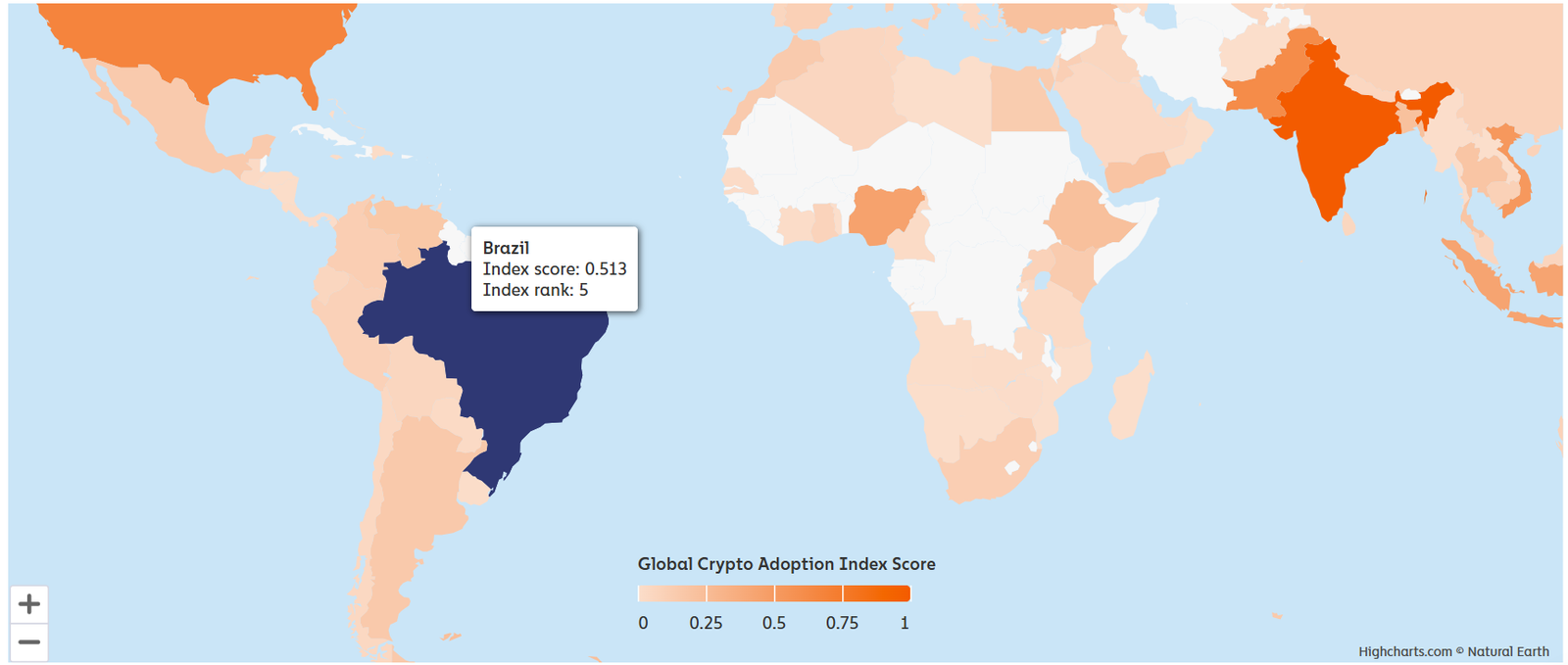
The initiative comes amid a rapid shift toward digital payments and growing adoption of stablecoin in Brazil. Central Bank of Brazil President Gabriel Galípolo said at a conference in February that roughly 90% of crypto transactions in the country involve stablecoins.
Although Drex is commonly referred to as a central bank digital currency, Galípolo described it instead as an infrastructure project designed to expand credit access and modernize Brazil’s financial system, according to Reuters.
Related: Brazilian stablecoin opens door to country’s double-digit yields
Read the full article here
Fact Checker
Verify the accuracy of this article using AI-powered analysis and real-time sources.