

 Freedom Index
Listen to the article
If we call a cocaine smuggler an “unlawful combatant” in an “armed struggle” against the United States, the Trump administration says, it is OK to kill him, even if he is unarmed and poses no immediate threat. And according to Adm. Frank M. Bradley, who commanded the newly controversial September 2 operation that inaugurated President Donald Trump’s deadly anti-drug campaign in the Caribbean and the eastern Pacific, it is still OK to kill that cocaine smuggler if he ends up in the water after a missile strike on his boat, clinging to the smoking wreckage, provided you determine that he is still “in the fight.”
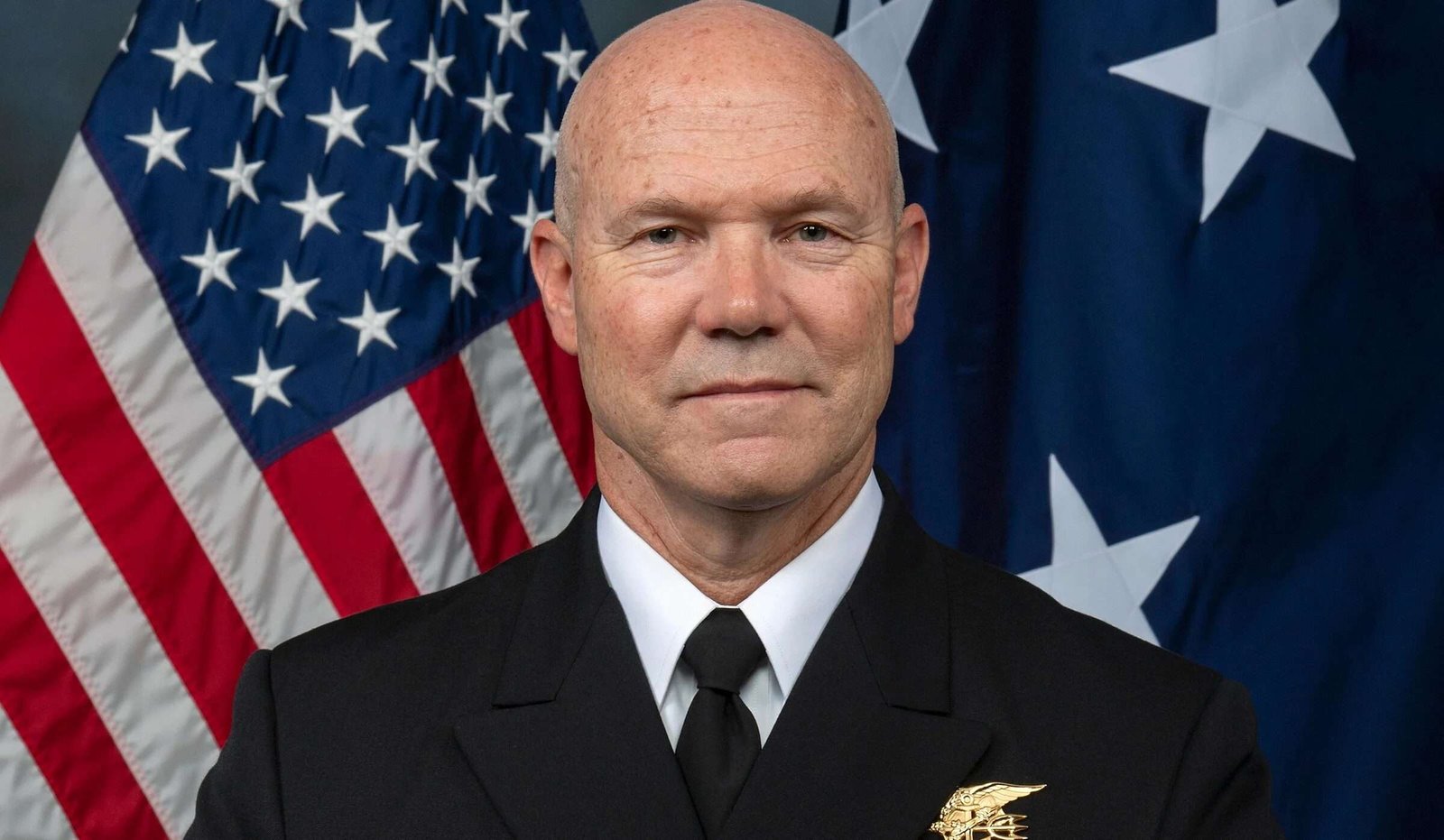
Bradley, who answered lawmakers’ questions about that attack during closed-door briefings on Thursday that also included Joint Chiefs of Staff Chairman Dan Caine, knew that the initial missile strike, which killed nine people, left two survivors. But because the survivors had radioed for help from their fellow drug traffickers, The New York Times reports, Bradley ordered a second missile strike, which blew apart both men. That second strike was deemed necessary, according to unnamed “U.S. officials” interviewed by the Times, to prevent recovery of any cocaine that might have remained after the first strike.
On its face, the second strike was a war crime. “I can’t imagine anyone, no matter what the circumstance, believing it is appropriate to kill people who are clinging to a boat in the water,” former Air Force lawyer Michael Schmitt, a professor emeritus at the U.S. Naval War College, told the Associated Press. “That is clearly unlawful….You can only use lethal force in circumstances where there is an imminent threat.”
According to the Defense Department’s law-of-war manual, “orders to fire upon the shipwrecked would be clearly illegal.” But according to the Times, Bradley argues that the men in the water were not truly “shipwrecked.”
The manual says individuals are deemed “shipwrecked” when they are “in distress at sea,” “helpless,” and “in need of care and assistance,” provided they “refrain from any hostile act.” Bradley apparently maintains that the men whose deaths he ordered did not meet that last criterion because they were still trying to smuggle cocaine, as evidenced by the radio call.
That defense illustrates the challenges of applying the law of war to an “armed conflict” that does not actually exist. Trump conflates drug smuggling with violent aggression, saying it amounts to “an armed attack against the United States” that justifies a lethal military response. But saying that does not make it so.
The reality is that Americans want cocaine, which criminal organizations are happy to supply. The government does not approve of that trade, which it has long sought to suppress via interdiction and arrests. Because that approach, which Trump accurately describes as “totally ineffective,” strikes him as too namby-pamby, he has unilaterally decided to simply kill suspected drug smugglers, a strategy he thinks will finally achieve the impossible goal of preventing Americans from consuming politically disfavored intoxicants.
Trump is wrong about that. But even if he were right, the goal of disrupting and deterring drug smuggling would not justify a policy of summarily executing criminal suspects without statutory authorization or any semblance of due process. That is why Trump is trying to justify his bloodthirsty anti-drug strategy by calling his targets “combatants” in a “non-international armed conflict”—a term he has stretched beyond recognition.
Congress has not recognized that purported “armed conflict,” and it is a counterintuitive label for the unilateral violence exemplified by the September 2 attack. The boat that Bradley destroyed, which reportedly “turned around before the attack started because the people onboard had apparently spotted a military aircraft stalking it,” was not engaged in any sort of attack on American targets and offered no resistance. The same was true of the vessels destroyed in subsequent attacks on suspected drug boats, which so far have killed another 72 people.
The violence in such attacks is so one-sided that the government’s lawyers claim blowing up drug boats does not constitute “hostilities” under the War Powers Resolution because U.S. personnel face no plausible risk of casualties. So we are talking about an “armed conflict” that does not involve “hostilities” yet somehow does involve enemy “combatants.”
Unless you accept that baffling premise, the attempt to justify Bradley’s second strike under the law of war is incomprehensible. “Two U.S. officials have said the military intercepted radio communications from the survivors to suspected cartel members, raising the possibility that any drugs on the boat that had not burned up in the first blast could have been retrieved,” The New York Times reports. “The military, they said, interpreted the purported distress call as meaning the survivors were still ‘in the fight’ and so were not shipwrecked.”
In reality, of course, those men were not “in the fight” to begin with, because there was no “fight.” A unilateral act of aggression by U.S. forces hardly amounts to a battle, and it is hard to see how a radio call for help qualifies as the sort of “hostile act” that the Defense Department’s manual says excludes someone from “shipwrecked” status. To illustrate that exception, the manual notes that “shipwrecked persons do not include combatant personnel engaged in amphibious, underwater, or airborne attacks who are proceeding ashore.”
According to Bradley, The Wall Street Journal reports, “he and his legal adviser concluded the two survivors were attempting to continue their drug run, making them and the already-damaged vessel legitimate targets for another attack.” In deciding to order the second strike, two unnamed Pentagon officials told the Journal, Bradley “considered that other ‘enemy’ vessels were nearby and that the survivors were believed to be communicating via radio with others in the drug-smuggling network.”
Rep. Jim Himes (D–Conn.), the ranking Democrat on the House Intelligence Committee, was not impressed by Bradley’s defense. “What I saw in that room was one of the most troubling things I’ve seen in my time in public service,” he told reporters after Bradley’s briefing, which included video of the first and second strikes. “You have two individuals in clear distress without any means of locomotion, with a destroyed vessel, [who] were killed by the United States….Any American who sees the video that I saw will see the United States military attacking shipwrecked sailors.”
The congressional investigation was prompted by The Washington Post‘s recent report that Bradley ordered the second strike based on his understanding that Defense Secretary Pete Hegseth wanted him to “kill everybody” on the boat. Hegseth has denied giving any such instruction, which arguably would have violated the law-of-war rule against “declar[ing] that no quarter will be given” or “conduct[ing] hostilities on the basis that there shall be no survivors.” Lawmakers said Bradley likewise told them Hegseth did not say anything that would run afoul of that injunction.
Hegseth says he did not initially know that the first strike left survivors and learned about the second strike after the fact. But he also says Bradley “made the correct decision to ultimately sink the boat and eliminate the threat.”
Trump, who on Sunday said he “wouldn’t have wanted” a “second strike,” has changed his tune. “I support the decision to knock out the boats and whoever is piloting those boats” because “they are guilty of trying to kill people in our country,” he told reporters on Wednesday. “You’re going to find that this is war.”
If so, it is an undeclared war against “combatants” who are not engaged in combat, whose “attack against the United States” entails supplying Americans with drugs the government says they should not be using. Instead of trying to parse the legality of this particular attack, Congress should be asking whether Trump’s reality-defying assertion of an “armed conflict” is enough to transform murder into self-defense.
Read the full article here
Fact Checker
Verify the accuracy of this article using AI-powered analysis and real-time sources.