

 Freedom Index
Listen to the article
The BNB Smart Chain’s Fermi hard fork has been scheduled for mainnet activation on Jan. 14, following about two months in the testnet phase.
Fermi will lower the block interval to 250 milliseconds from 750 milliseconds to support “time-sensitive” applications that require sub-second block times, according to the BNB community’s GitHub page.
The upgrade also introduces extended voting parameters to make up for the communication lag between nodes due to the shortened block times.
A new indexing mechanism is included for users who only need a portion of the ledger’s total data, instead of downloading the entire block history, a process that consumes ample computing resources.
The upgrade reflects the constant shift of blockchain networks to higher throughput and transaction speeds in a push to make distributed systems on par or better than their centralized counterparts in the traditional financial system.
Related: Can BNB price retake $1K in December?
BNB Chain’s push to become a high-throughput chain
The BNB Smart Chain is a layer-1 blockchain network launched by cryptocurrency exchange Binance in 2020, but has since become a decentralized ecosystem governed by a community of validators and users.
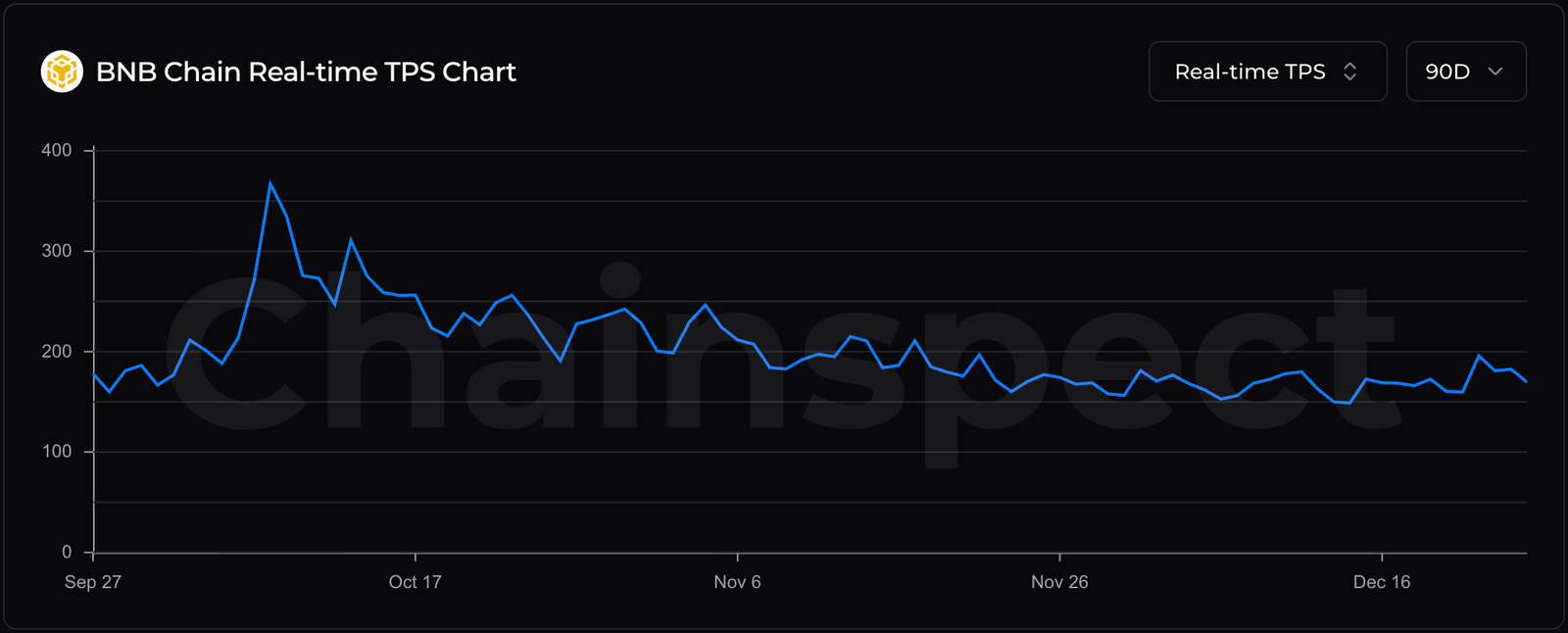
BNB chain is currently processing about 222 transactions per second (TPS), according to block explorer BSC Scan.
However, the protocol has a maximum theoretical TPS of 6,349, according to data from Chainspect.
Blockchain protocols are lagging behind traditional financial infrastructure in terms of throughput, limiting the usage of these networks for payments or high-frequency trading.
Visa, one of the leading payment providers and credit card companies, handles about 1,700 TPS, according to crypto exchange Phemex.
Because of this high throughput, payments to merchants are typically processed within seconds using legacy payment rails.
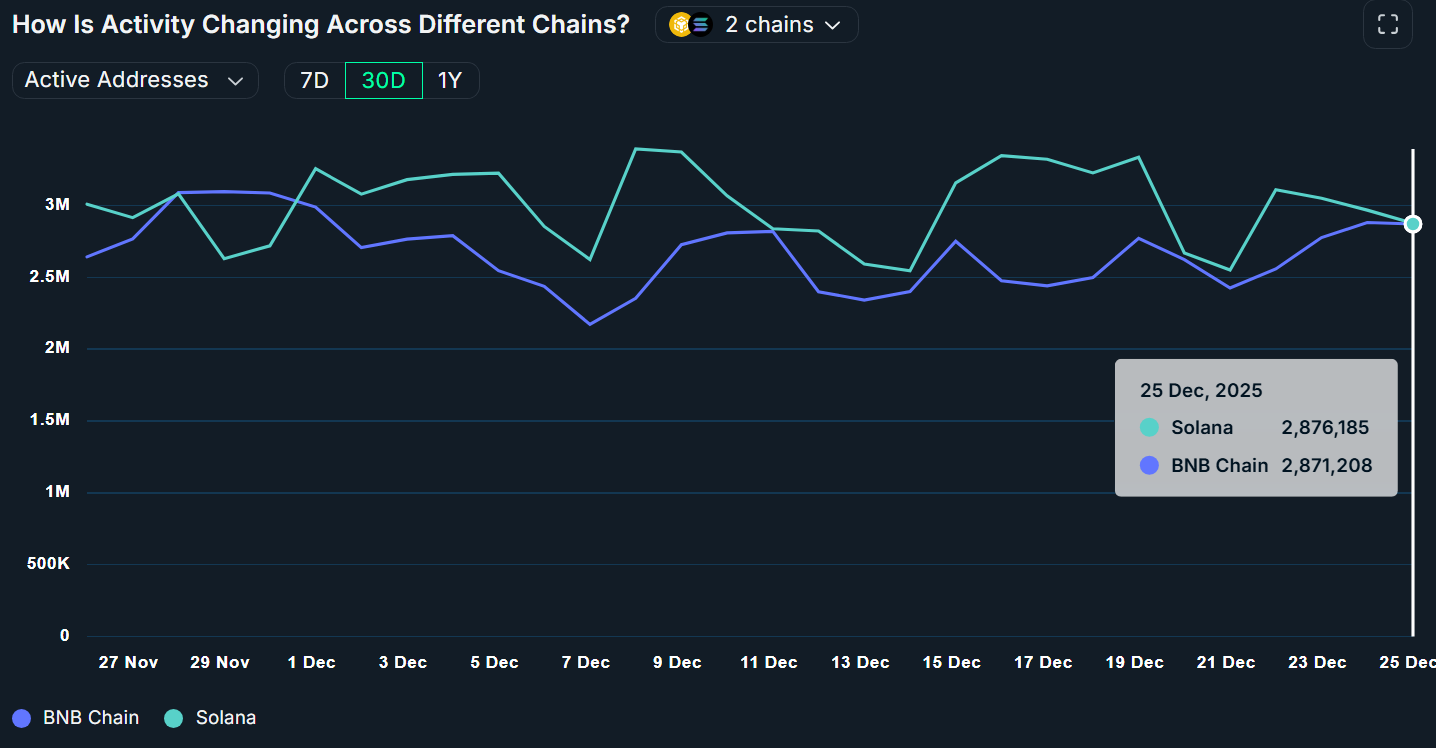
BNB Chain’s active address count has climbed to 2,871,208, nearly matching the high-throughput layer-1 blockchain Solana’s active address count, according to crypto market analysis platform Nansen.
Blockchain networks with longer block times and lower TPS also make decentralized finance (DeFi) applications prohibitive by creating lag, which can create slippage or poor transaction execution for the end user.
Slippage occurs when a market order is not filled at the spot price, typically due to technical issues in communication or network congestion.
Magazine: Is measuring blockchain transactions per second (TPS) stupid in 2024? Big Questions
Read the full article here
Fact Checker
Verify the accuracy of this article using AI-powered analysis and real-time sources.